


How a Vietnam Veteran and His Wife Adapted to Life Without His Legs
Veterans Day 2022
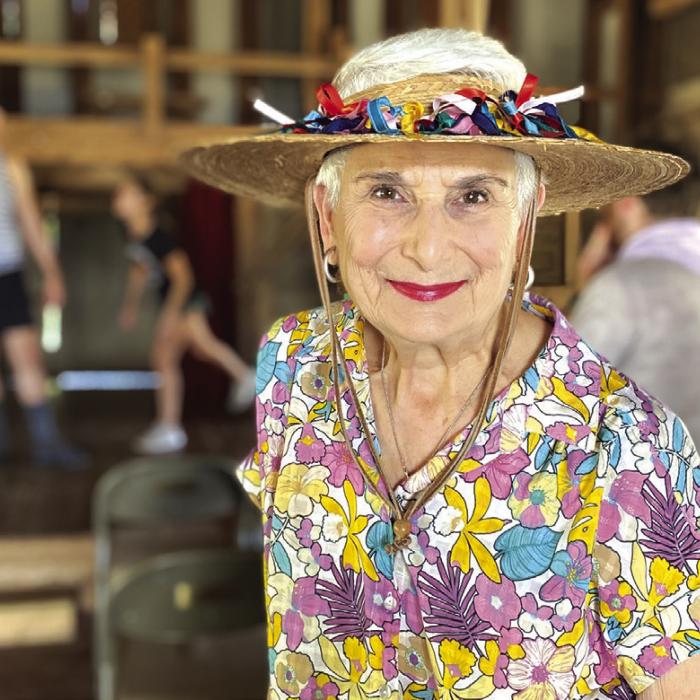
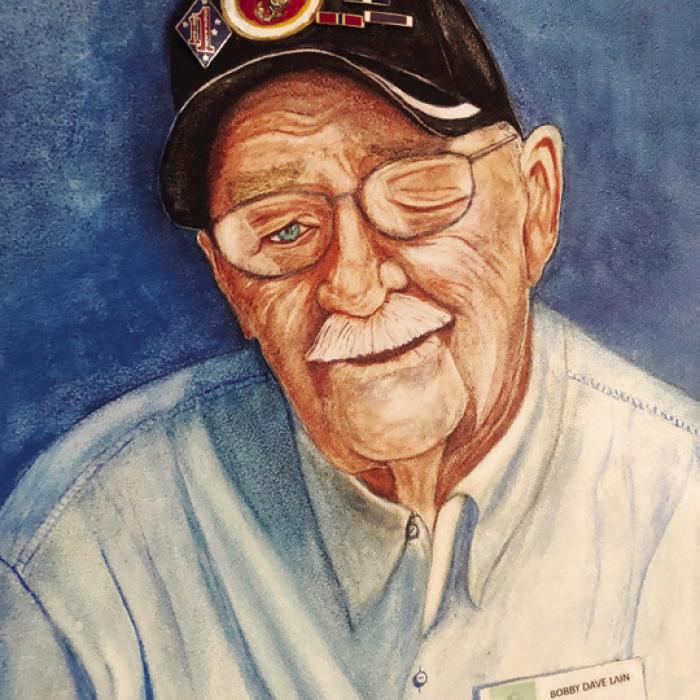
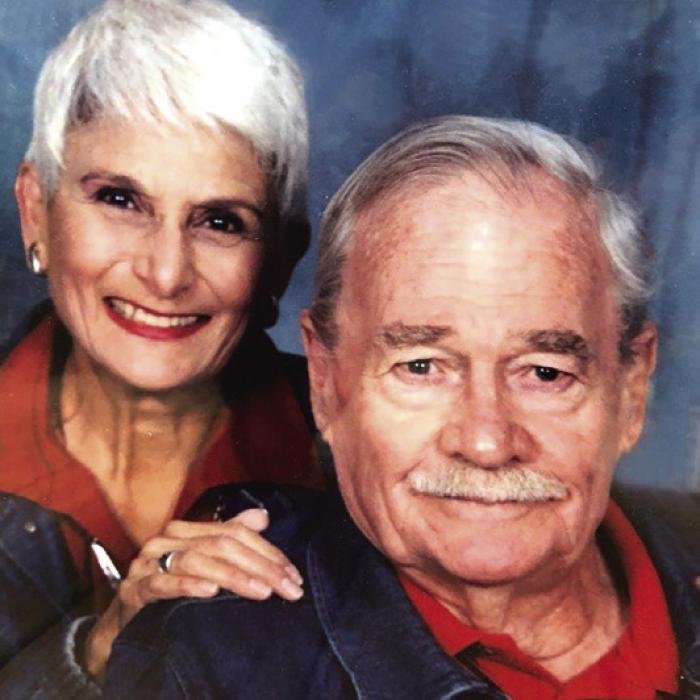
Maxine Lain’s portrait of her late husband, Bob, depicts a Marine who never complained that he lost his legs in service to his country during the Vietnam War. In the following years, whenever the couple traveled to Washington, D.C., Bob visited the Vietnam Wall. From his wheelchair, he found the names of Marines he had known and shed tears for them. Maxine, who has shared her sewing talents for more than 20 years with students in the University of Texas Shakespeare at Winedale program, is pictured at the barn where the plays are performed. After retiring to Round Top in 2000, Bob and Maxine Lain took an undeveloped tract of land and made it their own. In the close-knit community, the Lains found peace and contentment. Over the years, Bob collected 868 military history books, many of which are now out of print. Maxine donated this impressive collection to the Texas Heroes Museum in La Grange where they are available in the Bob Lain Memorial Library.
It was 5:30 on a February evening in 1967 at the Lain’s rented house outside of Jacksonville, North Carolina, near Marine Corps Base Camp Lejeune. Maxine’s baby, David, whom her husband, Bob, had never seen, was sleeping. Maxine was sewing, and two-and-a-half-year-old Rob was playing with his toys.
A knock on the front door didn’t worry Maxine because hers was a close-knit community where everyone knew one other. On Maxine’s street, 11 families had husbands fighting in Vietnam. When Bob left for Vietnam in the spring of 1966, Maxine had a premonition that he wouldn’t come home alive.
“But when I opened the door, standing there was a major in full uniform that I didn’t recognize. Right away, I knew,” Maxine says.
“The major asked, ‘Mrs. Bobby Lain?’and I replied, ‘Yes. It’s about my husband, isn’t it? But he isn’t dead.’” ‘Yes, Ma’am. Bobby is alive and he will be coming home.’
Focused and in control, Maxine unlatched the screen door and invited the major in. If Bob was alive, she could handle anything the officer had to say.