


Historic Marker Dedicated at the Fayette County Poor Farm & Pauper’s Cemetery
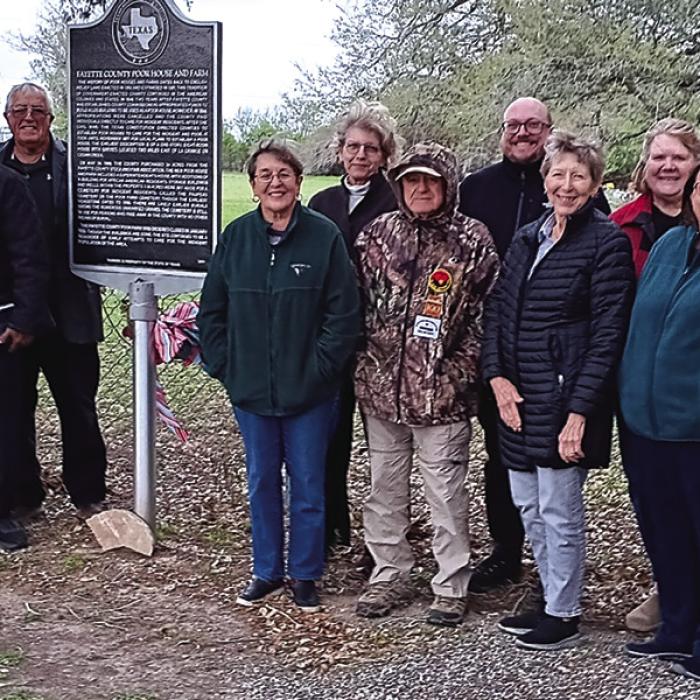
On March 16, 2026, the Fayette County Historical Commission met to dedicate this historical marker as a reminder of the efforts made by the county to care for the indigent population of the area. Many elder, or physically and/ or mentally disabled without families to care for them went to the poor farm to live out their lives and were then buried in the cemetery that was part of the farm. The 24 acres where the poor farm was located is where the AMEN Food Pantry and Second Chance Emporium sit today. The last remaining building which was the dormitory for the county indigent population, sat between these two buildings and was razed at the time the Second Chance Emporium was built. At that time, we lost not just a building but a reminder of the time when the county strived to allow its indigent population to continue to feel they were contributing to their own welfare, by working a farm, helping to produce the food they ate and providing care for each other. While the county provided medical care, housing, supervision and care givers. At its closing the poor farm was sold to the city, but the Paupers cemetery remains in use today for the burial of Fayette County citizens who have no funds for their burial.
The marker reads: “The history of poor houses and farms dates back to English relief laws enacted in 1594 and expanded in 1601. This tradition of governmentenacted charity continued in the American colonies and states. In 1840, two years after Fayette County was established, county commissioners appropriated funds to build a log building to be used as a poor house. However, in 1844, appropriations were cancelled and the county paid individuals directly to care for indigent residents. After the civil war, the Texas constitution directed counties to establish poor houses to care for the indigent and poor. It took until November 1877 for local plans to establish a poor house, the earliest description is of a one-story, eight-room house with garret, located two miles east of La Grange on Cedar Creek.
On May 24, 1888, the county purchased 24 acres from the Fayette County Stock and Fair Association. The new poor house and farm included a superintendent’s house, with additions of a building for African American residents, storage buildings and wells. Within the property, 1.18 acres were set aside for a cemetery for indigent residents, call the Pauper’s Cemetery or the Poor Farm Cemetery. Though the earliest headstone dates to 1900, there are likely earlier burials among the numerous unmarked graves. The cemetery is still in use for persons who pass away in the county with no other means of burial. The Fayette County Poor Farm was ordered closed in January 1959. Though the buildings are gone, the site continues to be a reminder of early attempts to care for the indigent population of the area.
The Fayette County Historical Commission is a commissioned entity of the county Commissioners Court, tasked with the responsibility of assisting county commissioners courts and the Texas Historical Commission in the preservation of Texas’ historic and cultural resources. The mission of each county historical commission is to preserve, protect, and promote these resources. Texas Local Government Code, Chapter 318, establishes work that county historical commissions may pursue appropriate to their county’s size and resources. CHCs consult with county officials, partners, and the Texas Historical Commission to establish preservation priorities. County historical commissions are the primary points of contact for individuals seeking information about county history and historic sites.