

Farewell to Fayette County Patriot Charlie Ripper
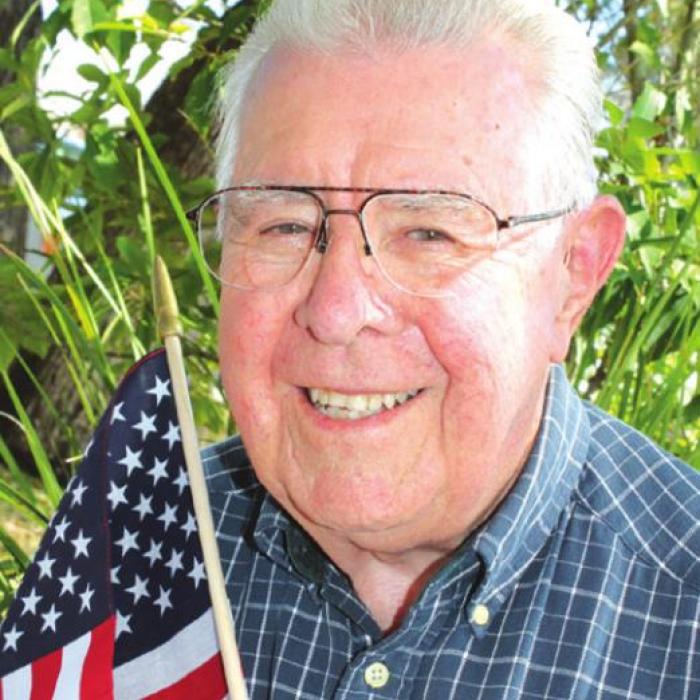
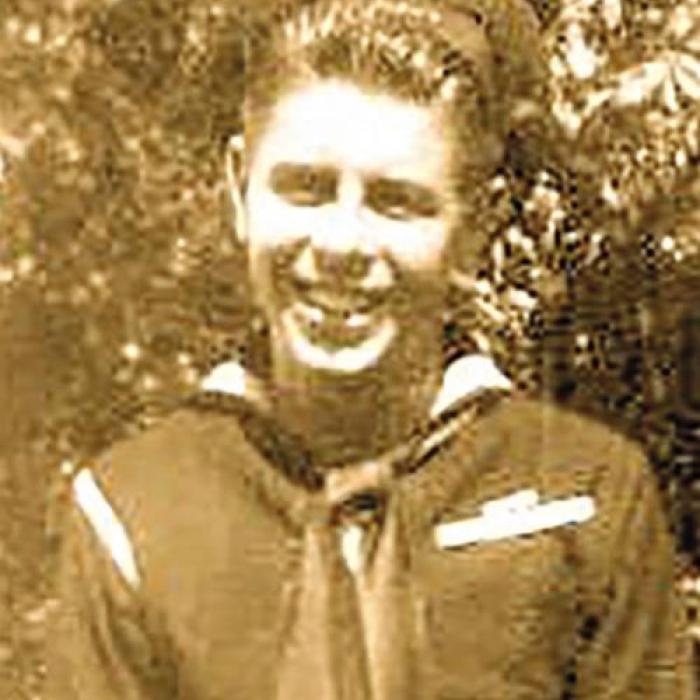
Although I promised Charlie Ripper I’d never call him a hero, it’s how I will remember him.
Emil and I met Charlie Ripper following the Flag Day Ceremony at the Fayette County Courthouse lawn in 2008. We were standing in line for hot dogs and chips. One of the participants in the commemoration, a distinguished older veteran in uniform, stepped away from a group and ambled over to where we stood.
“I understand you are the Thomases, and you, Mrs. Thomas, write about the news from 50 years ago in The Fayette County Record,” the gentleman said in a soft, friendly voice. Charlie smiled when I nodded, his eyes reflecting warmth and genuine interest.
“I’m Charlie Ripper,” he said, putting out his hand. “Your Remember When column is the first thing I turn to in the paper every Tuesday. I really enjoy reading about old friends and old times.”
I was pleased to meet such a faithful reader and even more pleased that from that day forth Charlie Ripper considered us his friends. It didn’t matter where we saw him or who he was with, Charlie was glad to see us and always shared a few kind, thoughtful words. He liked to laugh, too, but never, ever sought to be the center of attention.
In 2014 when I started writing a series of more in-depth articles about Fayette County people for my Stories I’ve Been Told column, I called Charlie to ask if he would talk about his wartime experiences. He hesitated and then said he would if I promised not to call him a hero.
I agreed, so Charlie shared his memories of being a young sailor on the front line in World War II in the Pacific. It took mul tiple visits and drafts before I had a story that earned his approval.
During our times together, more than once I heard him grieve for the lack of respect shown to the American flag and the veterans who carried it in local parades.
“Don’t they know they’re supposed to stand with their hands over their hearts?” was a rhetorical question he asked more than once. Since the lapse in flag etiquette was a sore point with Charlie, he didn’t expect our combined effort would elicit much response. After all, who cared about old men and their war stories?
Our Community Cared
However, after the article entitled “The Boy Who Went to Sea Returned Home a Man” appeared in the paper, Charlie called me in a state of near shock. He had received phone calls and letters. Local folks had stopped him on the street, in the grocery store, and came up to him at meetings and in restaurants to thank him for his service. He was overwhelmed and humbled by the attention and respect he was accorded.
I should have suspected Charlie would still prefer to share the limelight. He called again, this time asking me to do him a favor.
“Of course, Charlie, how can I help you?” I replied.
“I want you to talk to all of the boys.”
“What do you mean, Charlie?” I responded, confused.
“I want you to interview all the local World War II veterans still living here. I don’t care if they served on the front lines or behind the lines. I want you to talk to them all. Otherwise, future generations of Americans will never understand the sacrifices that were made to preserve our country’s freedom because we’ve never talked about it.
“I’ve given haircuts to these veterans for 50 years or more and they’re my friends. Yet I don’t know where they were stationed during World War II or what they did. We have never discussed the war. You need to ask these boys about their experiences and write them down because time is running out.”
“That’s a pretty tall order, Charlie!” I sputtered. “How many veterans are still living in Fayette County and how would I find them?”
“I’ll help you,” Charlie replied. “Meet me one afternoon next week at Care Inn and I’ll introduce you to some of the veterans there. Then I’ll make a list of others you need to talk to and I’ll call them and tell them that you’ll be contacting them.”
With my head still reeling, I touched base with Jeff Wick, editor of The Fayette County Record, to share Charlie’s wish. Jeff readily agreed that The Record would publish the interviews I collected as a community service. Charlie, of course, upheld his end of the bargain. I’ll never forget following him down the hallways of Care Inn. He would poke his head in each door looking for his old comrades, but offer a cheerful word to every resident he encountered. I was introduced and shook hands with a number of aged men who had given up some precious years of their youth to serve their country. I scribbled down their names and room numbers on my notepad, promising to return on my own.
In the following months, I felt as if I was caught in a whirlwind. My list of veterans grew. I booked appointments from one end of the county to the other. I listened to stories at kitchen tables and beside nursing home beds. I asked questions. I copied photos. I followed up on leads and added more veterans’ names to my spiral-bound notebook.
Personal Moments
My veterans, as I began to think of them, were astonishingly brave yet modest and deeply caring men.
Telling me their stories, they sometimes laughed. But sadly, they also cried. At first, when tears trickled down the wrinkled, weathered cheeks of the old gentlemen, I was unnerved. Then I realized that those long-buried feelings represented the core of their experiences that they had never before shared. I learned to wait patiently, no longer anxious about giving the veterans time to recover their composure.
After two back-to-back interviews in which infantry soldiers shared horrific memories of hand-to-hand combat, I called Charlie back. I was unsettled at what I’d been told and had seen the emotional toll sharing these grizzly stories had taken on the narrators.
“Charlie, I don’t know if we ought to be doing this,” I said. “I don’t want to cause pain.”
“Oh, Elaine,” Charlie responded, “Unless a veteran says he doesn’t want to talk, just be patient. It will be all right.”
And Charlie was right. I kept working. I wrote drafts of the veterans’ memories and returned to read aloud to them and sometimes their wives. I remembered the names of their dogs. I saw each veteran several times, one five times. We bonded. I suspect I may have been one of their last new friends.
Charlie’s dream was realized on Aug. 14, 2018, the 70th anniversary of the end of World War II when The Fayette County Record published a special supplement entitled “Veterans Voices.” Unfortunately, some of the veterans I interviewed didn’t live to see it, but for those who did, the publication was a source of great personal and family pride.
“Veterans’ Voices” was not only well-received here in Fayette County, but the following year won area, state and national newspaper association awards.
However, my work wasn’t finished. Some veterans had been missed and I’d received additional information and photos for others. To round out local coverage of World War II, I decided to add memories from women who had waited on the home front. Also, over and over, readers told me, “Put all those stories in a book so they don’t get lost.”
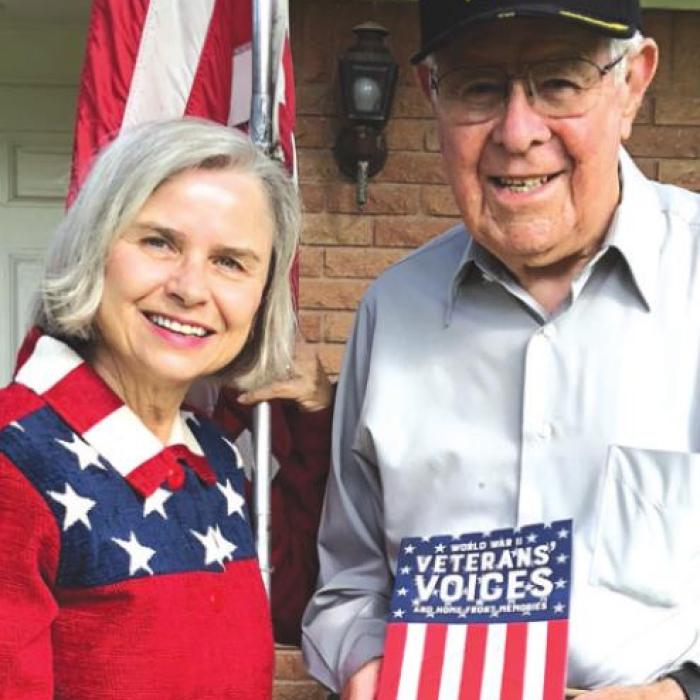
So I did. On Nov. 10, 2018, the Fayette County Public Library and Heritage Museum and Archives hosted a gala book signing for “Veterans’ Voices and Home Front Memories” at the Historic Casino Hall in La Grange. Charlie was there, along with more than 20 other veterans and women whose stories appeared in the book. That glorious afternoon a host of volunteers made it possible for 300 to 400 community members to meet local World War II veterans in person and thank them for their service.
When Charlie heard that Emil and I had decided to donate proceeds from book sales to help fund Blinn College student scholarships in honor of the veterans’ patriotism and courage, he was well pleased. We thought it was a fitting way to acknowledge the sacrifices of Charlie and all the other World War II veterans who had defended our country and way of life.
Charlie was a fine man whose character reflected a rare blend of selflessness, integrity and faith. A genuine people-person who found joy in putting others first, Charlie was instrumental in his own quiet way of backing many positive efforts like my collection of World War II veterans’ stories. I’m sure his many friends will attest to other instances where his contributions have made a lasting difference.
That’s why I will always consider Charlie Ripper to be a hero. I know I’m not the only one.
A limited number of the newspaper supplement “Veterans’ Voices” are available at The Record’s office, as well as copies of the book “Veterans’ Voices and Home Front Memories,” which also is available on Amazon.com.