


‘This Closes an Open Wound’
Family Members on Both Sides Console Each Other After Life Sentence Given to C.J. Lehmann Shooter
An incredible thing happened in Bellville on Tuesday, Aug. 9.
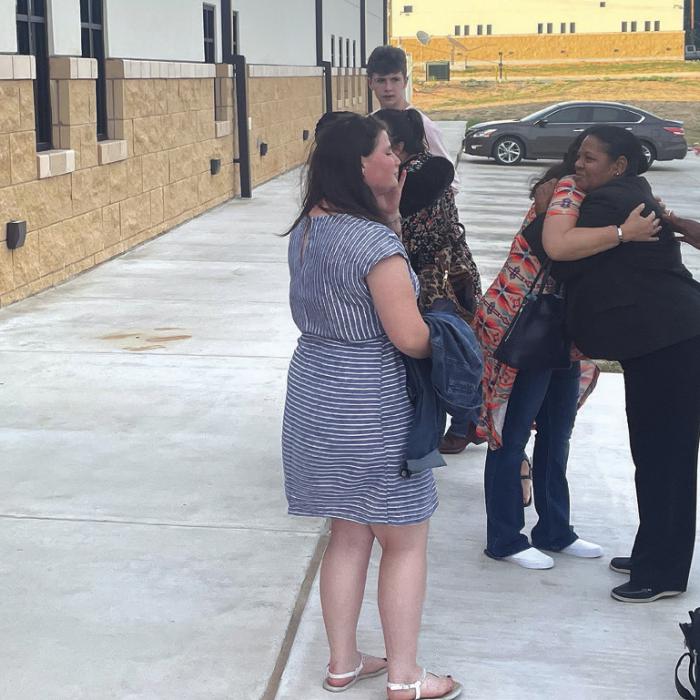
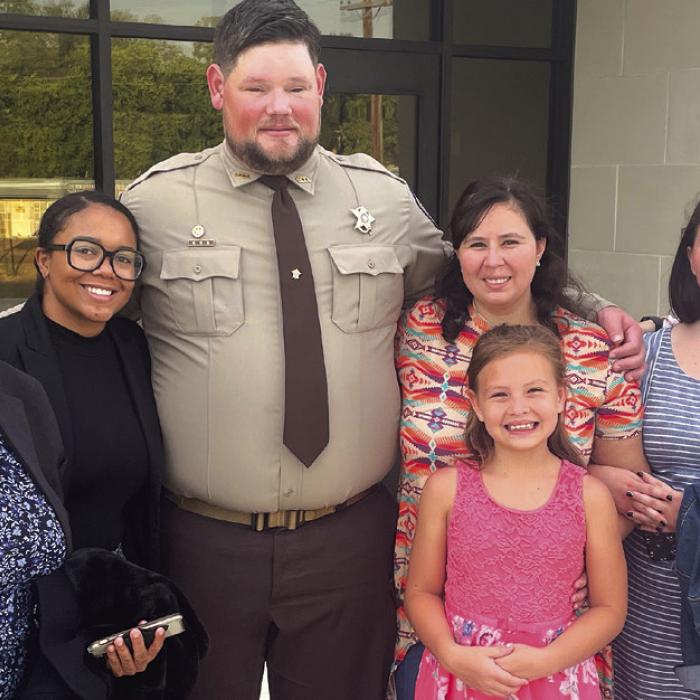
Fayette County Sheriff’s Deputy C.J. Lehmann, who was shot and blinded in the line of duty four years ago, hugged and cried with the family of a man who was just minutes before sentenced to life for pulling the trigger.
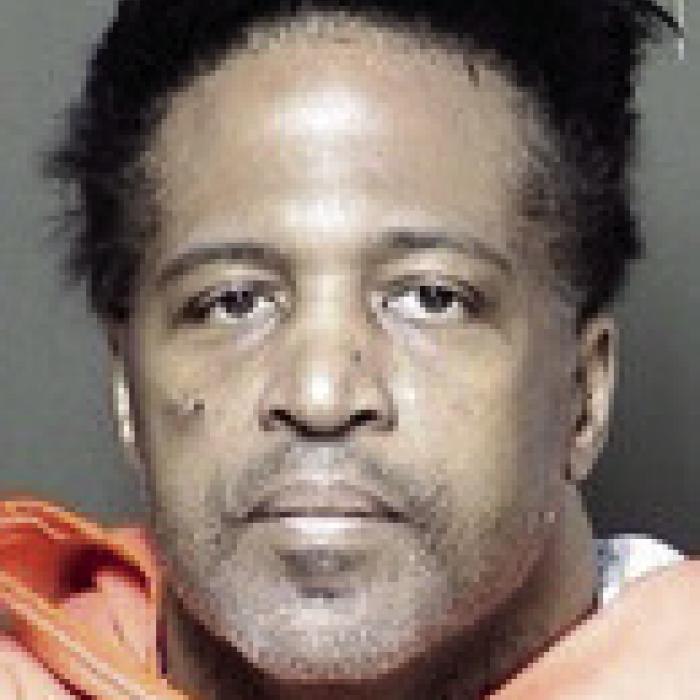
An Austin County jury convicted Shazizz Mateen of aggravated assault of a public servant for shooting and blinding Lehmann on Nov. 1, 2018. They sentenced Mateen to life in prison plus a $10,000 fine. It was the maximum punishment allowed by law.
“This closed an open wound,” Lehmann said in an interview with the Record after the trial. “It closes a chapter, not just for me, but everyone in Fayette County. I have a life sentence of blindness, and he’ll have a life sentence to think about what he did.”
“We appreciate the service and sacrifice that C.J. provided for the citizens of Fayette County, and we’re happy to see he got the justice he deserves,” said prosecutor Joshua Somers of the Texas Office of the Attorney General.
Mateen, 53, could be eligible for parole after serving 30 years, according to the instructions to the jury from the presiding judge, District Judge Jeff Steinhauser of the 155th District Court.
The two-day trial began with opening arguments on Monday, Aug. 8. Plenty of folks in La Grange and Fayette County recall the events of Nov. 1, 2018 - that’s the reason the case was transferred to Austin County.
The trial provided the first opportunity for the public to see and hear what actually happened that day. The jury, along with everyone else in the courtroom, got to watch security camera video from the La Grange Dollar General and officer body camera video from the shooting at the Carter Motel.
Somers and fellow OAG attorney Andrew Rountree represented the State. Defense attorneys Calvin Garvie and Patrice Carrington represented Mateen.
The prosecution began by calling Sgt. Justin Koehne to the stand. Koehne testified that he arrived at the La Grange Dollar General around 5:21 p.m. to arrest Mateen for failure to register as a sex offender. Koehne said police knew Mateen lived at the Carter Motel. He said someone at the motel told police that Mateen left to go shopping at the Dollar General. La Grange Police Officer David Mohr also went to the store.
Upon arrival, Koehne went inside. Koehne said he spotted Mateen and asked him for his ID.
“He reached back and to the side and started to pull out a large knife,” Koehne testified.
“What were you thinking,” Somers asked Koehne.
“This is not good,” Koehne said.
Koehne said there were other customers in the store, so he didn’t want to draw his pistol. Instead, Koehne tried using his taser on Mateen, but it had little effect. A scuffle ensued and Koehne said Mateen cut his left hand with the knife. Mateen ran out the door, knocking down Mohr in the process, and ran down the alleyway between Dollar General and the old Bealls store towards the Carter Motel. The prosecution played security video from Dollar General showing the altercation.
Mateen took the stand later in the trial and said the blade was a ritual knife called an “atherme” from the Wiccan belief system.
“I tried casting a spell with it,” Mateen said under oath.
It was one of many unorthodox beliefs that Mateen expressed during the trial.
The video from Dollar Gen- eral showed Koehne chasing Mateen out of the store at gunpoint. At one point during the chase, Koehne said Mateen briefly turned around and threatened him again with the knife. Somers asked Koehne why he didn’t shoot Mateen right there.
“I did not discharge my firearm because there were customers around,” Koehne said.
Later in the trial, Rountree praised Koehne for showing restraint in that moment. Koehne followed Mateen through the field to the Carter Motel. Koehne caught up with Mateen at the door to Room 18 at the Carter Motel, where Mateen lived.
“I commanded him to drop the knife, and he refused,” Koehne testified. “I tried knocking the knife out of his hand with my baton, but Mateen was able to get inside the room.”
At that point, Koehne called for backup. The prosecution next called Kristi Anguiano to the stand. Anguiano, administrative assistant for the La Grange Police Department, testified about the numerous attempts she made to contact Mateen when his registration came up for renewal. Anguiano said she called Mateen several times and even drove to his apartment and left a business card on his door. Anguiano said Police obtained a warrant for Mateen’s arrest after he failed to respond.
Next to testify was Fayette County Sheriff’s Deputy Ken Kretz. Kretz testified that he was at Kort’s Korner on the Bluff with several other deputies when Koehne’s call came over the radio. Kretz said he and the other deputies rushed to the Carter Motel. Kretz arrived at the motel along with deputies Lehmann, Marc Bennett, Colin Godmintz and several La Grange officers.
The prosecution played the video from Kretz’s body camera.
In it, La Grange Police Officer Kenny Schmidt arrived at the door with a ring of keys he got from the motel manager. Officers stood around the door with weapons ready. Someone told Schmidt to back off since he wasn’t wearing a ballistic vest. Lehmann volunteered to open the door and took the keys from Schmidt. Near the door, to Lehmann’s left, stood Bennett with a non-lethal pepperball gun. Lehmann went to the door with his service pistol in one hand and the keys in the other. Lehmann stuck the keys in the lock and turned, but he realized that the door was unlocked and he just locked it. Lehmann turned the keys the other direction and unlocked the door. He opened the door.A second or two passed. Boom! A spray of lead pellets – birdshot from a 12 gauge Winchester Defender 1300 – hit Lehmann in the face at close range. The impact blew the cap off Lehmann’s head, spun him around and knocked him to the ground. Lehmann screamed in pain. Shaken for a split second, deputies and officers fired back with dozens of shots. Another lull in the gunfight passed, and then another blast from Mateen inside the doorway. The lawmen returned fire again.
Texas Ranger Brent Barina, who investigated the officer-involved shooting, testified that six officers fired a total of 60 rounds. Seven of them found their target, Mateen. Barina said he recovered seven spent shells from Mateen’s shotgun at the scene. Bennett gave gripping testimony about the shooting. Bennett spoke about serving as Lehmann’s field training officer early in the young deputy’s career and the rapport they had built together. Bennett stood right next to CJ at the door to Mateen’s room that day. “He opened the door, and it was peace and quiet,” Bennett testified. “The next thing you know, a gunshot.” The prosecution played Bennett’s body camera video.
“He’s reloading! I can hear him!” Bennett yelled in the video as Lehmann laid screaming on the ground.” “We’ve got to pull him out from the line of fire,” someone yells. Under cross examination, Garvie asked Bennett whether he could see Mateen through the doorway. Bennett said he could not see Mateen.
“So you didn’t know where he was at this time?” Garvie asked.
“No,” Bennett responded. LaGrangePoliceChiefDavid Gilbreath told the Record that the rounds Mateen used were loaded with No. 9 birdshot, which have a very small pellet size. The point never came up during the trial, but if Mateen had loaded his gun with larger buckshot, Gilbreath said, Lehmann would not likely be alive today. Gilbreath said he believes Mateen chose No. 9 shot with the mistaken assumption that a higher number meant a larger or more powerful round. Larger, more lethal pellet sizes are indicated by lower numbers.
The Texas Rangers routinely investigate officer-involved shootings. Ranger Barina interviewed Mateen four days after the shooting while the defendant was recovering at Dell Seton Hospital in Austin. The prosecution played the 30-minute interview during the trial.
In it, Barina asks Mateen why he shot at the officers. “I’m a Moor,” Mateen said in the recording. “I’m a sovereign Moor. They broke down my door and I defended myself. “They violated the sovereignty of my room,” he added. “I didn’t have any spells to protect myself, so I shot them.” Barina asked Mateen if he pointed the gun at anyone in particular. In the interview, Mateen said he pointed it at the door.
“I fired it,” Mateen said. “At a person?” Barina asked. “I just blasted it,” Mateen said. Barina went on to question Mateen about some unusual items found in his room at the Carter Motel. They included an altar, maps of Texas on the wall that Mateen described as “aboriginal territories,” a black uniform with a Texas Ranger badge on the chest, a tinfoil hat that Mateen described as a “God helmet,” and numerous journals with cryptic writing, some of them calling for the killing of government and police officials.
The prosecution presented several of the writings as exhibits. One of them stated the following: “Death to all my enemies, FBI, CIA, NSA, DARPA, and the likes of all sheriffs, deputies, constables and anyone working against me is my enemy.” Barina testified that some of Mateen’s writings expressed racial animosity toward people of Hispanic descent. In the hospital interview, Barina questioned Mateen about his religious and political beliefs. Mateen described himself as a Muslim and a Moorish sovereign citizen. Mateen claimed that the United States of America ended in the 1950s when “Roosevelt’’ signed a letter selling the country to Morocco. Mateen claimed that law enforcement are “bullies of the Pope” and did not have jurisdiction over him. However, Mateen told Barina he respected the Texas Rangers because they were formed before Texas entered the United States and because they fought against Mexicans during the Mexican-American War.
Mateen told Barina that he was “factually innocent” of his past conviction that led to his duty to register as a sex offender.
Later in the trial, Garvie called his client, Mateen, to the stand to testify in his own defense. Garvie asked Mateen about his original conviction.
“The state law books say Shazizz Mateen is not a sex offender,” Mateen testified. “I haven’t committed a crime, but I’m still punished for it.” Mateen was convicted in a Galveston County court of burglary with intent to committ sexual assault in 2003. In an interview with the Record after the trial, Garvie said Mateen’s accuser in the burglary with intent case later recanted her accusation in court. Garvie said she testified that she and Mateen had consensual sex. He said the woman was Mateen’s ex-common law wife.
“It really upset him that he had to register as a sex offender when she said in open court that it was consensual,” Garvie said.
“This man should not have had to register all those years,” Garvie added. “I think that’s what made him give up.” Back on the stand, Mateen testified that he was trying to commit “suicide by cop” at the Carter Motel after failing to get help from the criminal justice system. “Did you intend to hurt any officers?” Garvie asked Mateen.
“No, I shot at the door to draw their fire,” Mateen said.
Under cross examination from the State, Rountree asked Mateen whether he felt justified in shooting at police that day.
“I did not feel justified,” Mateen said. “I felt sad I had to defend myself.”
The State called C.J. Lehmann to the stand on Monday. Somers asked him about the events that led up to the shooting at the Carter Motel. Lehmann said that just before Koehne’s call came out on the radio, he went to see his family at the Trick-or-Treat event taking place on the courthouse square that day. He spoke about his blended family with wife Sonya Behlen Lehman and their five children ages eight to 18. Lehmann said he was with his family for about a minute on the square when the call came over the radio. Lehmann said that was the last time he saw his family. Somers questioned him about his decision to take the keys from Officer Kenny Schmidt. “Someone asked if he had a vest, and he said no,” Lehmann testified. “So I was like, ‘Give me the keys and get over there.’” What prompted you to do that?” Somers asked. “He didn’t have a vest and I didn’t want to see anyone get hurt.” Lehmann went on to describe accidentally locking the door and then unlocking it. “I glanced at Bennett who was forward and to the left of me,” Lehmann said. “I looked back at the door and got shot. It spun me around and I fell face down.”
“What do you remember next?” Somers asked. “A lot of gunfire,” Lehmann said. “I could tell it was hitting the building. Then a lull.” “Could you see anything?” Somers asked. “It was red, black but red,” Lehmann said. “What was going through your mind?” Somers asked. “I was worried about Bennett, because he was right there,” Lehmann said, Lehmann went on to describe officers pulling him away and getting him on his feet. “I’m a big guy and they were having a hard time carrying me,” he said. With the help of other officers, Lehmann walked to an ambulance waiting in the Bealls parking lot. His injuries required multiple surgeries. Doctors pulled hundreds of pellets from his face. The blast completely destroyed his left eye, which surgeons later removed. He has never regained sight in his right eye.
Lehmann said now he can only see when he dreams. He called his dreams “a doubleedged sword.” Lehmann said when he wakes from his dreams, “everything fades to black.”
Lehmann spoke about the everyday problems of living with blindness.
“You set something down and forget where you put it, and you can never find it back again,” he said.
He spoke about his frustration with relying on others to care for him. During closing arguments, Garvie tried convincing the jury that Mateen was not trying to shoot officers but instead tried drawing their gunfire to end his life.
“(Mateen) may have said some odd things, but people who have a delusional belief system can still be held accountable for their actions,” Somers said during closing arguments.
“(C.J.) is the kind of man you want out there protecting us,” Somers added. “Now it’s your turn to protect him. Return a verdict of guilty.”
The jury deliberated for just 30 minutes on Tuesday morning before delivering the verdict of guilty. The prosecution called Lehmann back to the stand during punishment. Lehmann spoke about his love for fishing on the coast. He said he often took his boat to Matagorda to “unwind” by himself. Now he only gets to go when someone can take him.
He spoke about his service with the Sheriff’s Office. “I look for the good in everybody,” Lehmann said. “No matter what the call was, I want everyone to be safe and happy. People call us in their darkest times. I tried to leave every call with someone smiling, whether it was cows in a yard or a couple fighting.” He spoke about once pulling over a vehicle speeding at over 100 miles per hour and letting the driver off with a warning. “This was way different,” Lehmann said. “A deadly game was played. No matter how I look at this from the other side, this dangerous game can’t go again.”
Garvie called Mateen’s sister Dorothy Williams to the stand during punishment. Williams testified that Mateen served in the U.S. Army during the First Persian Gulf War. She said he was honorably discharged early from the military due to a back injury in 1991. He later married and attended college at Texas Southern University and Texas A&M Prairie View, she said. Williams testified that Mateed worked for the Texas Department of Crininal Justice and later as a teacher at Galveston College and Houston I.S.D. Williams also testified about Mateen’s mental health decline after his divorce and subsequent common law marriage to the woman who would later accuse him of buglary with intent. Williams said Mateen lived with their mother after his legal troubles.
“Around 2016, he left from living with our mother and we found out he moved to La Grange,” she said. “We didn’t know where he was. We found him on the internet.” Williams said she and Mateen’s two daughters from his first marriage tried visiting him at the Carter Motel in 2017. “He wouldn’t let us in because he said we were reptiles,” Williams said. Garvie also called Mateen’s two daughters to the stand, Khadijah Bowers, a U.S. Navy recruiter, and Tabrea Bowers, a critical care registered nurse.
“He wouldn’t open the door,” Khadijah said in emotional testimony. “He said our eyes were changing and someone took over us – the reptilian stuff. That was the last time I saw my dad until today. It’s not him who did all this. I wish he got the help he needed.” Tabrea testified about the last time she saw her dad before he moved to La Grange. “I went to my grandma’s house and he was there, but he wasn’t himself,” she said. “He’s usually loving on us, hugging us, but he wouldn’t do that at all. Then we went to La Grange and he wouldn’t come out to see us. I feel like he just got tired of fighting the system.”
Garvie also called an expert witness during punishment, psychologist Dr. Greg Hupp. Hupp testified that he examined Mateen along with numerous court records, military records, school records and other documents from Mateen’s life. Hupp testified that he diagnosed Mateen with schizophrenia combined with depression. Hupp said Mateen’s mental health condition was “treatable but not curable.” Hupp said he believes Mateen would make a good candidate for rehabilitation.
“I give Mr. Mateen a lot of hope,” Hupp said. “He could be a success with the right treatment.”
Under cross examination from Rountree, Hupp conceded that the only way to ensure Mateen got the treatment he needed was in prison. “While he has a mental illness, is he able to tell right from wrong,” Rountree asked Hupp.
“Yes,” Hupp responded. The jury spent almost an hour and a half deliberating the punishment. They returned with the maximum sentence of life in prison plus a $10,000 fine.
Sonya and C.J. Lehmann gave victim impact statements after the trial. Sonya spoke first.
“I wanted to come up here and scream and yell about how much it hurts, but that won’t do anything,” said Sonya. “I see that it’s a loss on both sides. He’ll get the help he needs. I’m not a forgiving person. My grandma tells me I need to work on that. But now that it’s over, I can see I can do that. It might take some time. I’m trying not to focus on the anger. I’ll work on doing that. At least we’re not stuck in limbo. We’re not thinking about ‘what if’ anymore. I hope it brings peace to everyone else.” C.J. Lehmann thanked the court and his fellow officers at the Sheriff’s Office for their support over the years.
“I think I can finally start healing and not stressing about what this day will bring,” he said. “I wish I could say I forgive you, but I can’t right now. You took my career. I loved helping people and you took that away from me. I loved serving the people of Fayette County. Not only did my family suffer, but your family did, too, and I feel sorry for them. I’m glad we can put this behind us. I think what has been done today is just. Maybe one day I can forgive you, but it’s not going to be today.” The bailiffs placed Mateen in shackles and led him out of the courtroom. Members of the Sheriff’s Office hugged Lehmann and his family. Mateen’s legal team filed paperwork for an appeal. Then everyone walked out of the Austin County courtroom. Outside, the family of Mateen spoke with the Lehmanns. They shared hugs, tears, and even a few laughs. They chatted about their kids and what they wanted to do when they grow up. “I know that after that day, Nov. 1, 2018, I know Deputy Lehmann’s life changed forever,” said Tabrea Bowers. “He’ll never get to see his children again. They have a beautiful family.
“For my dad, I hope the verdict will get him some help while he’s inside,” she added. “Life verdict is of course a long time. I may not ever see my dad on this side of the justice center. But I hope while he’s inside, he gets the help he needs. I still love my dad. I’ve never stopped loving him even after what happened. I just want him to get help.” “They’re really good people,” Khadijah Bowers said about the Lehmann family. “We’re not bad people. We feel for them.” “I hope today brought them some closure,” Tabrea said. Garvie said the case illustrates the great need for mental health services in the criminal justice system. “We need to make a commitment to mental health in this country,” said Garvie. “We really need to make that commitment so we don’t have individuals who need help, and years down the road, you see what happens.”