


City Ponders Major Renovations to Trio of La Grange Facilities
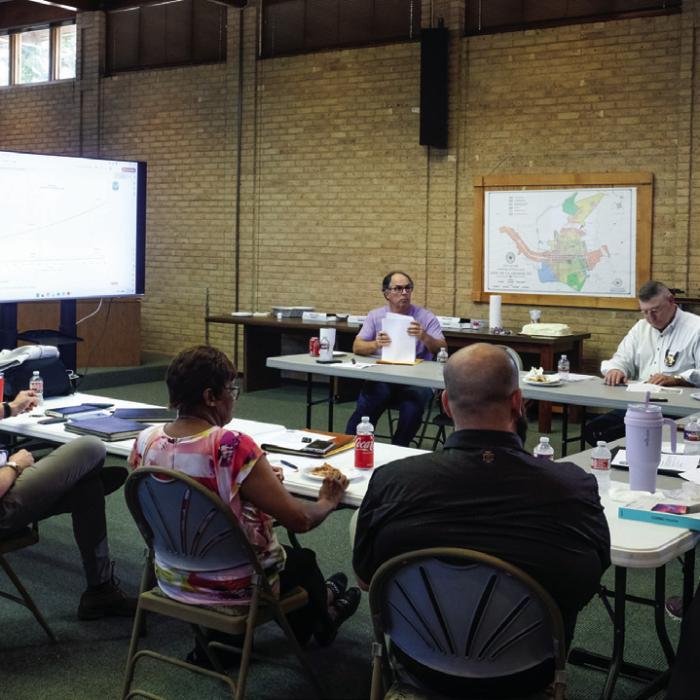
La Grange City Council pondered some big renovations to City facilities at a special workshop meeting Monday night.
The Council met with Chris Casey of the design firm Parkill, who presented various options for improvements at the La Grange Police Station, City Hall and the Randolph Recreation Center. Parkhill provided three conceptual designs for each of the three facilities: 1) a low-cost option to meet near-term needs, 2) a midrange option to enhance the existing structures, and 3) a top-tier option with major improvements.
All three facilities need mold remediation and weatherproofing, especially the Police Station. The low-cost option for the three facilities would mainly address those issues. The midrange and high-end options include improvements to support future growth.
“What we’re looking for in doing these master plans is trying to forecast the best we can to see what our space needs would be looking out for the next 15 years,” Casey said.
The most expensive options, such as rebuilding the police station entirely, would cost millions of dollars. City Manager Jack Thompson said he and City staff are investigating multiple funding sources including a possible bond election in November of 2027.
Councilman Ken Taylor said the City needs to prepare for growth.
“We’re going to look something like what Bastrop does now,” Taylor said. “It’s coming, folks. It’s coming for us from every direction.”
“Just wait until they get those three overpasses done west of Bastrop,” Thompson said, referring to construction work on State Highway 71. “That’s a gamechanger.”
Thompson regarded the Police Station as the highest priority, and Police Chief David Gilbreath agreed. They said the current location on College Street suits the Police Department well, but the facility falls far short of modern standards. Of the three facilities, Thompson said the Police Station suffers the most from mold and water infiltration issues. Gilbreath said some parts of the building are unusable due to the mold conditions.
Moreover, he said the building doesn’t have enough space. He said patrol officers have to share desks and computers. In addition, the building doesn’t have enough space to conduct training classes. Nor does it have adequate fitness facilities, locker rooms or showers.
Gilbreath said the poor condition of the building hampers recruiting and retention of officers. He described a recent episode in which he interviewed an experienced candidate for a job as a police officer.
“He came for a job interview,” Gilbreath said. “When he walked in I thought he was going to step back out the door.”
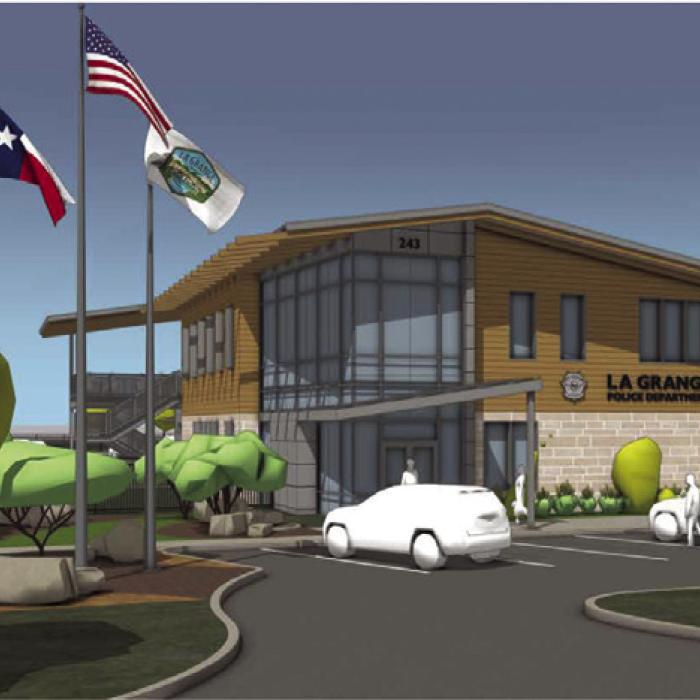
During part of the discussion, the Council weighed a mid-range proposal from Parkhill, which would involve gutting and rebuilding the existing building, versus building a new two-story Police Station from the ground up.
“You can put lipstick on a pig, but you’ve still got a pig,” Gilbreath said.
Parkhill estimated the cost of the midrange improvements at about $4.1 million. The new two-story Police Station would cost about $14.6 million.
“You could probably get by with the midrange, but just know at the end of the day, you’re probably falling a little short of what their needs are,” Thompson said.
Concerning the Rec Center, Parkhill’s top-tier option called for a $30-plus million upgrade that would transform both the function and appearance for the facility. The Gymnasium would be replaced with a two-story building to house a full-size basketball court and an upper level walking track.
The Council seemed more interested in their mid-range proposal, which would also expand the court to full size but with less-costly architectural improvements. Parkill estimated the cost of the midrange option at around $3.5 million.
The proposals for City Hall ranged from about $2 million for the low-cost option, $3.4 million for the midrange upgrades and almost $5.3 million for the high-end improvements. Thompson said the City could fund the midrange upgrades without incurring any debt. He proposed selling the 121-acre tract of land the City owns on Baumbach Rd. west of town. The City obtained the tract in 2008 with the intention of drilling a water well there. However, the site proved unsuitable for a well.
Thompson said he believes the City could get $2 to $2.5 million for the property. Those proceeds combined with available funds in the City’s capital improvement fund could pay for the midrange improvements.
As for the Police Station and the Rec Center, Thompson said the City would likely need to borrow money through a general obligation (GO) bond. GO bonds are paid for by increasing the local property tax rate, and they require voter approval.
The Council discussed appointing a citizen advisory committee to review the bond proposals and make recommendations to the Council. Some of the Council members expressed interest in opening the bond discussion to other projects, such as a swimming pool and drainage improvements.
“Our recommendation in moving forward with any kind of bond package would be to break out items so that the residents can thumbs up or thumbs down them individually,” Thompson said.
Thompson said he and staff would pursue other funding sources as well, including a possible $750,000 matching grant from Texas Parks and Wildlife as well as naming rights and donations for the Rec Center.
Thompson said a bond election would take place no sooner than November of next year. Thompson and Casey said they will provide Council with more detailed cost estimates at a future meeting.
The old Fayette Electric Cooperative headquarters, which the City purchased last year, could be used as temporary offices for City Hall and the Police Station during construction.
Council discussed the projects for nearly two hours but took no action Monday night.
“This is a big deal,” Thompson said. “This is a lot of information. That’s why we did not put any action item on this thing tonight because we want to give everybody an opportunity to discuss it and digest it.”