

Candidates Go Country Clubbing for 2nd Forum
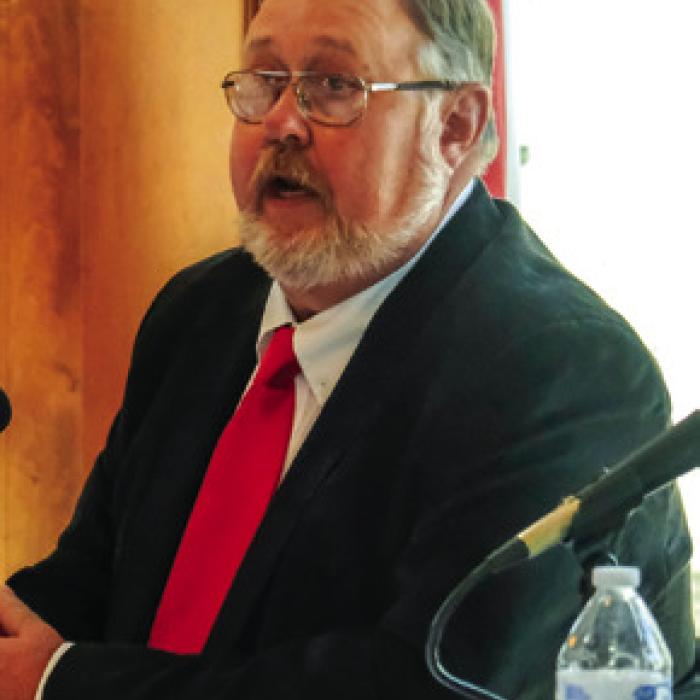
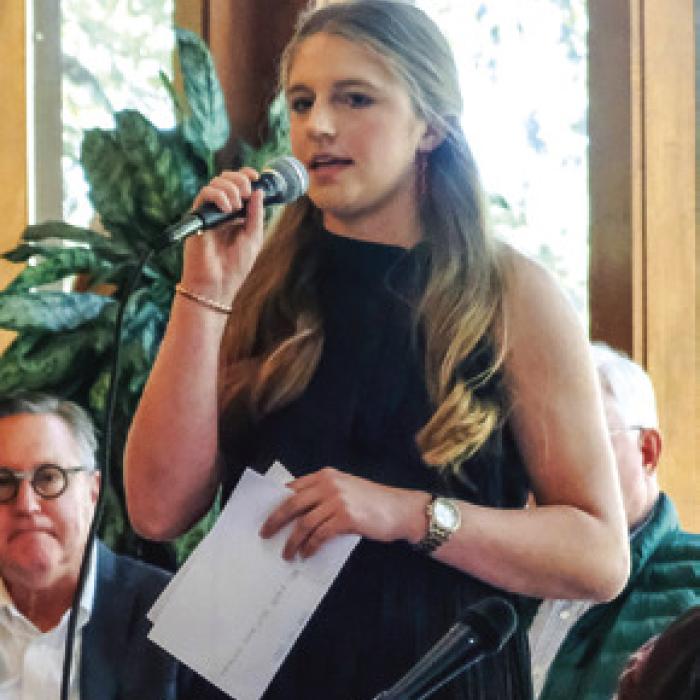
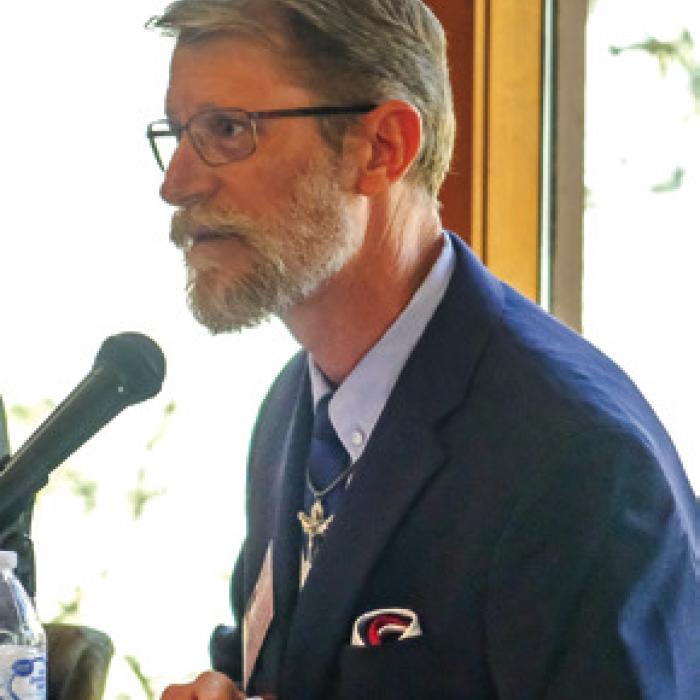
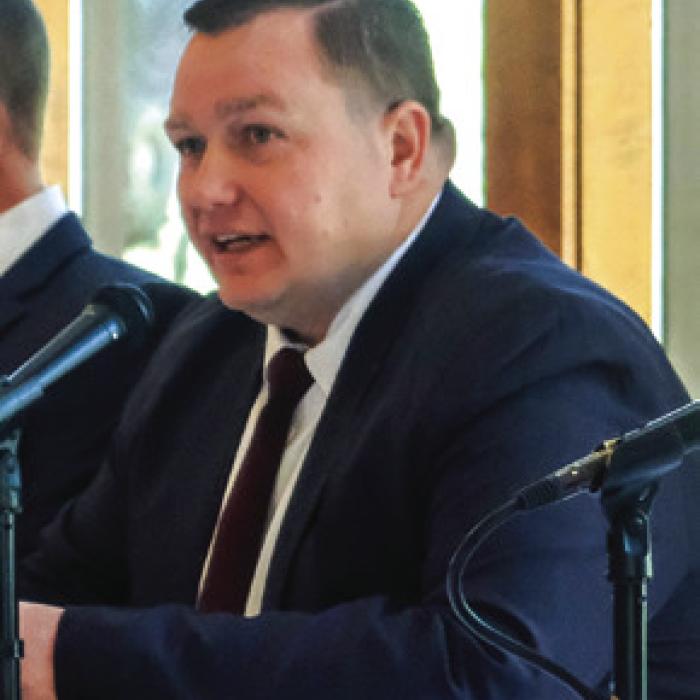
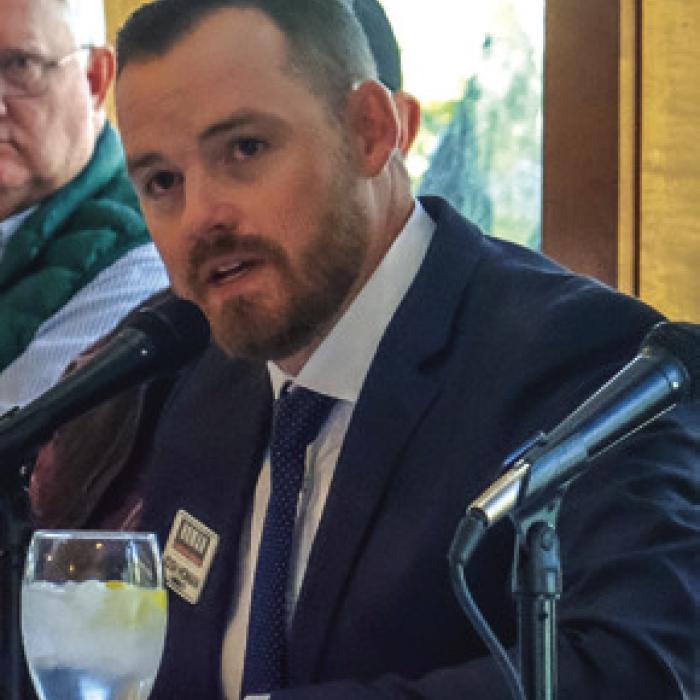
The Fayette County Republican Party hosted their second candidate forum of the 2026 election season at Frisch Auf Valley Country Club in La Grange on Saturday, Jan. 31.
The forum included four candidates from the Fayette County Judge Race: Josh Homan, Josh Vandever, Michael Zweschper and William Bernsen.
In a repeat of the Ellinger forum two weeks ago, the other Republican candidate, Craig Moreau, was absent at Frisch Auf. His daughter Reagan delivered an introduction and closing remarks on his behalf.
One of the questions asked the candidates about one of State Senator Lois Kolkhorst’s bills in the last legislative session, SB 819, which would have provided some protections to private property owners in regard to green energy projects such as wind, solar and battery storage. The moderator, Ken Dernehl, stated that no elected officials from Fayette County attended the public hearing, and the bill never became law. Dernehl asked the candidates how the County Judge can be an advocate for the citizens of Fayette County in Austin.
Vandever spoke about his advocacy at the Capitol for bills that affected his profession in the EMS service.
“This year I went to the Capitol multiple times,” Vandever said. “I spoke with multiple different representatives, multiple different senators and worked with them to understand the ballooning costs for us healthcare equipment, ambulances specifically. When I was hired in Fayette county in 2020, we paid $239,000 for an ambulance. And in 2021, that same ambulance was $329,000. We did not buy it. We found something cheaper. But telling that story to our state representatives – with this renewable energy thing – going to Austin and saying, ‘Hey, people are beating down the doors of Commissioners Court because they hate this idea of a windmill popping up in their backyard or a battery system showing up at their neighbor’s house that may catch on fire and not be able to be put out, and the county has nothing to leverage to stop it. Help us. Help us, Lois (Kolkhorst). Help us, Stan (Kitzman). Help us.’ Whoever those people are that we need to go advocate with, help us do it. And you better believe that I’ll be there when the hearing happens. If I’ve asked for help and you put that thing on a hearing, I’m going to be there to testify for it, as I’ve done multiple times already.”
Zweschper spoke about his experience as a Schulenburg I.S.D. school board member advocating for his district in meetings with state lawmakers.
“When I announced to run, several of my closest friends asked me, ‘Why would you want to put yourself through this?’” Zweschper said. “So I had some self reflection. I put together a list of reasons why, and this is one of the reasons why. I do not believe that Fayette County has a real seat at the table when it comes to some of these discussions. I think it’s of the utmost importance for the citizens of Fayette County to have that voice. I’ve talked to Mrs. Kolkhorst over the years, multiple times. Last year, facing problems with the school, between ourselves, Flatonia, La Grange, several of the other school districts, I reached out to Mrs. Kolkhorst and Mr. Kitzman, and we had a little forum in Flatonia. We met with Mr. Kitzman to talk about some of our concerns, because we have to do that. We have to cultivate those relationships with whoever our representatives are. And that can go one of two ways. Hopefully, you can cultivate a positive relationship. They’re under a lot of strain. Everybody wants a seated table. Sometimes you have to be a pest. And I have no problem being a pest. You can ask some of my closest friends, if I am committed to something, I will be there. And that’s one of the things that we have to do as a County. We have to have a voice. We can’t sit and take what’s given to us. We have to go out and strive to attain it ourselves.”
Bersen said advocacy at the state level is one way the County Judge can make an impact in areas beyond local control.
“I’ve been to the Capitol,” Bernsen said. “I’ve participated in hearings. I’ve met representatives and senators before, and I’ve done lobbying for private property rights at the State Capitol. Advocacy – whether it’s water, chemicals in the river, or sound pollution – there are many areas where the county just doesn’t really have any control over anything. But you always have advocacy and the political power of the office. There’s only 255 chief executives in the state, and the County Judge is one of them. And it’s quite a bully pulpit to stand behind and advocate for the citizens. So whether it’s at the state level or locally, for instance, when the pipeline, when the oil and gas company had created a sound nuisance out in Fayetteville, there was nothing really the County could do about that except politically lobbying those who were causing the pollution. And they found, I think, some kind of resolution for that project. It was another opportunity for the County Judge to advocate on behalf of the citizens regarding private property rights. That goes both ways. So I want to say for sure, I do not support the green energy scams in any way. I do support the people’s right to do what they want on their own private property, so long as it does not interfere with the rights of the neighbors to enjoy their property.”
Homan said the County Judge needs to carefully assess what the community actually wants when advocating for the County.
“I think most importantly, you’ve got to understand the community,” Homan said. “What is important to the community? What’s important to the people? And that doesn’t just come from our own personal echo chambers, of the people we talk to on a daily basis. That comes from being connected to the community. That comes from understanding the issues in the community. And what I can tell you is that the community is far more diverse in what those issues are than I think a lot of us give it credit for. When you’re speaking to somebody from the very north of the county or the very south of the county, there are very real issues, but they’re not necessarily the same. So that’s number one: understand what the issues are in the County. Number two is to understand the role of County Judge. So after the administrative roles as specified in the constitution and after the judicial roles, the next role is really as a representative and as an advocate. So that is, in my mind, the third role of the County Judge. And I understand that in order to be a good advocate, you’ve got to go where that discussion is happening. And in this case, it was Austin. And then lastly, I’ve got a track record in the military with working with different agencies, three letter agencies, different services, different branches. But regardless of the organization, people are people. And connecting with people doesn’t really change. It may look different from one meeting to another. But understanding how to speak, how to influence, and really how to connect with people is vitally important for all the reasons that I just said.”