


Black History Month: LG Schools for Black Students From 1872-1903
Footprints Of Fayette
Fayette County is one of the most historic counties in Texas. In this weekly feature from the County Historical Commission, a rotating group of writers looks back at local history.
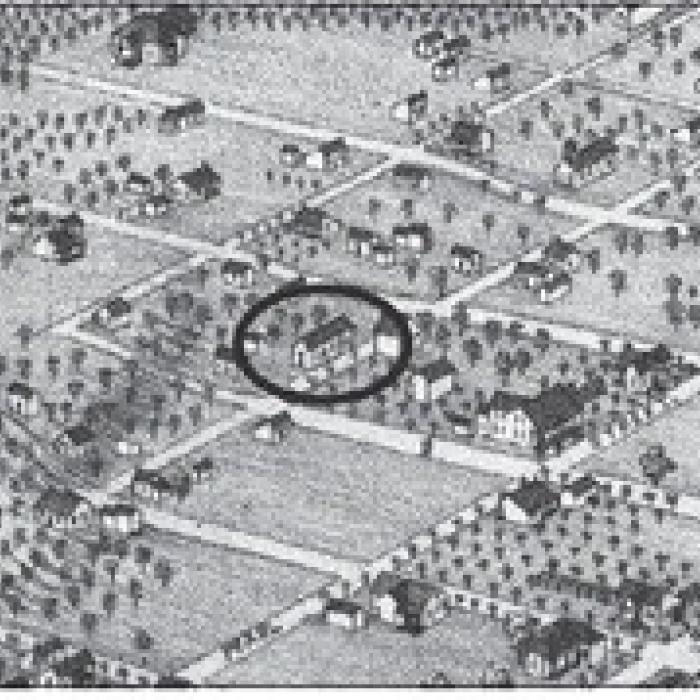
The first known school building for La Grange’s African American children was built in 1867 at the northeast corner of the intersection of Camp and Madison Streets. It had been run by the Freedmen’s Bureau in Texas until that group was terminated in 1872. Later that year the property was transferred to the Superintendent of Public Instruction of the State of Texas in a deed that described the school as measuring 22 by 40 feet. The last teacher at the former Freedmen’s School, Prof. J. G. Schermack [often seen as Shermack], remained in charge of the school. Much of what we know about this school comes from a description written by his eldest daughter, Louisa E. Schermack Moore (1874-1938): “This building had two rooms and a hall. I have been told that, at one time, this same structure served as a church for the various colored denominations. It was in this same school I received my early training under the tutelage of my father, who was principal and had only one assistant teacher.” While Schermack was a German immigrant, most of the later teachers, including his daughter, were African American.
The March 3, 1880 issue of The La Grange Journal stated, “The colored school, now presided over by Prof. J. G. Shermack, has over one hundred scholars in regular attendance.” By September 1881, the same newspaper stated there were two schools for black students in operation. The one near the African Methodist Episcopal Church was taught by Schermack and a second school at the eastern edge of the city near the cemetery was taught by “Parson Davenport,” believed to be J. Davenport, a preacher who had been at Winchester in Fayette County the previous year. This second school appears to have been short-lived.
By 1885, a Colored Teachers Institute had been organized for the county’s African American teachers providing instruction in motivating and disciplining students, as well as in the various subject areas.
Professor Mack M. Rodgers moved to La Grange from Schulenburg about 1885. According to Louisa Moore: “He was a teacher of no little fame, and a second colored school building was erected near the M. M. Rodgers home. It, as I recall, was a two story frame building. Prof. Rodgers was principal, with an assistant teacher.” The Rodgers family lived on Guadalupe Street.
She continued: “Both schools were in operation for a short time (probably until about 1891). The two story frame building was torn down and moved to the old school site on the hill where the old building there was torn down and remodeled, converting it into a much larger building with five rooms, a hall and front porch. It was at this time it donned a coat of red paint and was generally known as the little red school house on the hill. Here, we had the long wooden benches and desks. These were not days when boys and girls were furnished with books and given every possible encouragement to make better men and women, not days when boys and girls were called to the stage and given a diploma for having completed the High School Course, by the superintendent or some designated member of the school board, but days when, in stead, each student was given a rigid test, as I remember, by Judge Haidusek.”
On October 20, 1888, William Burton, George McCauley, and Sam Moore, trustees of “colored School community No. 2 in the City of La Grange,” for the sum of $400 conveyed to the City of La Grange Lot 1, in Block 512 of the Faison & Ligon addition. This lot at the northeast corner of the Camp and Madison Streets intersection was the same location as the 1867 and 1872 deeds and shows that, while the building remained the same, the way in which school properties in Texas were owned had changed.
“With Prof. A. R. Jefferson, principal, having four assistant teachers, it was in this little Red School House I had my first experience as a teacher, teaching three months at a salary of $35 per month. School terms were shorter with principal and primary teacher beginning and other teachers called into service as needed.”
In the 1890s and early 1900s Prof. M. M. Rodgers, Prof.A. R. Jefferson and Prof. C. Newsome all served as principals. Some of the teachers during this time at “the little red schoolhouse on the hill” were Miss Louise E. Schermack, Mrs. Fannie L. Lavender, Miss Perninia Vera Lockhart, Mr. H. L. Vincent, Miss Pender E. Rodgers, Mrs. Minnie Hewett, and Miss Ellen Alexander.
Unfortunately, the school was destroyed by fire early on Saturday morning, February 7, 1903. The fire had been discovered too late to allow anyone to enter the building, leaving both the school and its contents a total loss. The origin of the fire was unknown, though some contended it was the work of an arsonist.
Mrs. Moore elaborated: “In the year 1903, February 7, our little Red School House was destroyed by fire...the school lost a library well fitted with books, charts, maps and other equipment. The term was completed, all teaching done in the Baptist church... On February 9, 1903, a committee was appointed by Mayor Robert Sample to buy a lot for a colored school.” The lot chosen was on Pearl Street where the Randolph Recreation Center now stands.
Sources: “Lest We Forget: History of the La Grange Negro High School—1934,” La Grange Journal, September 25, 1941, page 7, containing a manuscript written by Louise E. Schermack Moore for the 1934 dedication of the new brick school building that currently serves as the Randolph Recreation Center.
Fayette County Deed Records, Volume 33, p 308 [10/2/1888, colored school trustees to City of La Grange, lot 1 Faison and Ligon Block 512] Census records at Ancestry.com Files at Fayette Heritage Museum and Archives, La Grange