


Armchair Chats
The late Bobby D. Lain of Round Top and his wife, Maxine, refused to allow a wartime double amputation to dominate the rest of their lives
The major informed Maxine that Bob had lost both legs to a Viet Cong land mine during intense fighting. He had been treated on a hospital ship and then transported to the Philippines for critical care.
Three days after he was injured, Bob called Maxine from the Philippines. When she somewhat hesitantly asked him what they were going to do next, he reaffirmed his long-time plan for retirement.
After graduating from A.C. Jones High School in Beeville some years before, Bob Laine had attended the University of Texas in Austin, earning a Bachelor’s degree in 1959 on a full Naval ROTC scholarship. He’d always intended to return to UT to get his Master’s and Doctorate degrees and teach college history. That’s what he wanted to do.
However, that goal was farther down the road. The Marine Corps’ immediate plan was to fly Bob to Washington, D.C., and then on to Philadelphia. There he would enter a rehab program at Philadelphia Naval Hospital, a center for amputation, orthopedic and prosthetic services for Navy, Marine and Coast Guard veterans.
Could Maxine be there to meet Bob when he arrived in Philadelphia? Of course!
Bob’s sister-in-law, Betty, who had a toddler of her own, flew from Corpus Christi, Texas, to stay with the Lain children. Maxine’s mother-in-law, Donna, who was afraid to fly, rode a bus from Beeville, Texas, to Jacksonville, North Carolina, to relieve Betty and help care for her grandchildren.
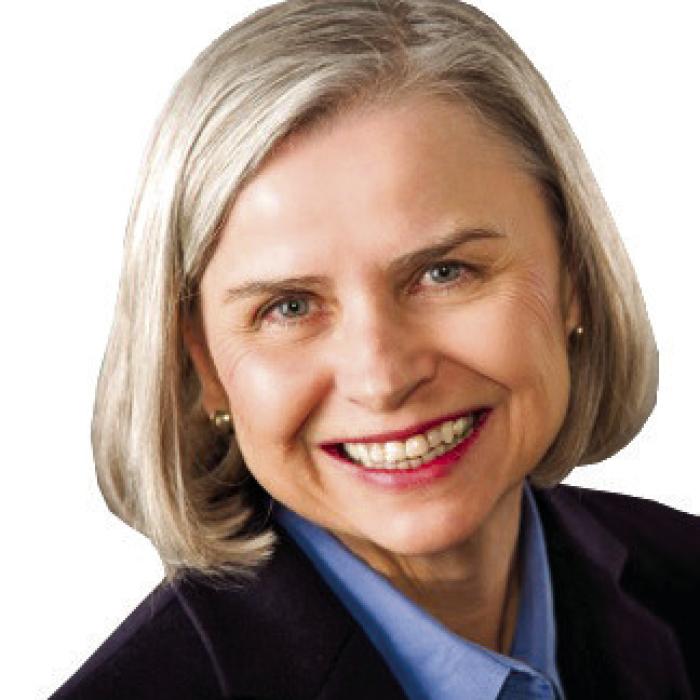
“Before I went to see Bob, I’ll never forget, I went and had my hair done, but I looked like a ghost. I’d never worn makeup before, but I decided I needed to then. I wanted to look my best,” Maxine recalls.
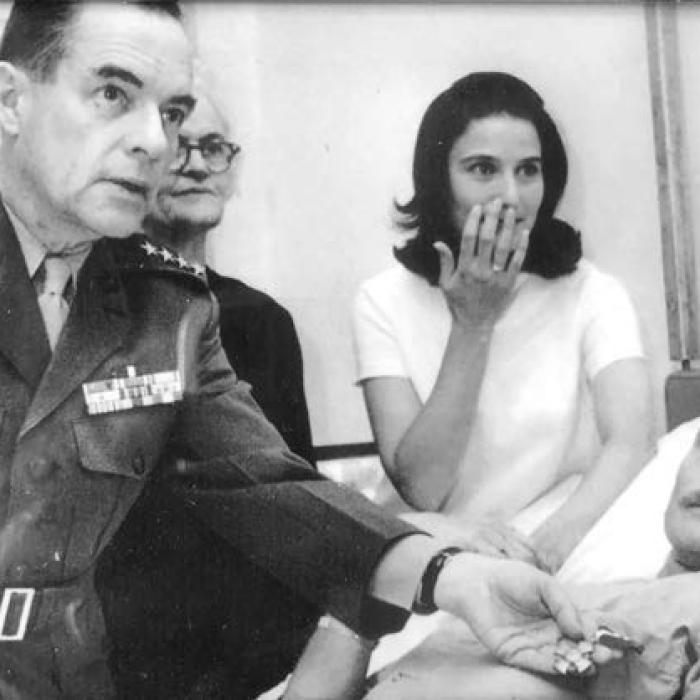
It was an emotional reunion. The following week, Maxine was ready to head back to North Carolina to start packing. However, Navy personnel asked her to delay her trip so she could be at Bob’s side when he was presented with the Navy Cross.
The Navy Cross is the second- highest award for bravery after the Medal of Honor. It is the United States Navy and the United States Marine Corps’ award for sailors and marines who distinguish themselves by exhibiting extraordinary heroism in combat with an armed enemy force.
Bob’s Navy Cross had been fast-tracked through all the official channels. In fact, Marine Corps Commandant Wallace Martin Greene Jr. had been prepared to meet the critically ill Texan when his plane landed in Washington, D.C. However, medical personnel declined the offer, strongly recommending that Bob and the other injured personnel be moved immediately to the hospital in Philadelphia, where the presentation could be made a few days later. Bob’s mother, Donna Lain, bravely flew to Pennsylvania to see her son and be there for the ceremony.
The citation accompanying the medal Bob received reads, “The President of the United States takes pleasure in presenting the Navy Cross to Captain Bobby D. Laine, United States Marine Corps, for extraordinary heroism as Commanding Officer, Company B, First Battalion, First Marines, FIRST Marine Division (Reinforced), Fleet Marine Force in Vietnam on 19 February 1967. During Operation STONE, the battalion encountered a main force Viet Cong battalion. Company B was assigned the key mission of closing the last route of escape available to the enemy. Although suffering from a wound in the foot from a punji stick, Captain Lain refused evacuation and gallantly led his company through 5,000 meters of heavily mined and booby-trapped terrain to completely surround and entrap the enemy battalion which suffered more than 250 casualties.
“While aggressively advancing against the enemy to establish final contact with a friendly company, Captain Lain was critically wounded by an enemy mine, causing the ultimate loss of both lower limbs. Although stunned by the severity of his wounds, he thoroughly briefed his executive officer as to the situation, and only after ensuring that the company’s tactical integrity was maintained and the entrapment of the enemy force complete did he relinquish command of his unit.
“By his indomitable courage, superb leadership and valiant fighting spirit, Captain Lain served to inspire his men to heroic endeavor in their successful elimination of the enemy battalion as a fighting force. His great personal valor reflected the highest credit upon himself and was in keeping with the highest traditions of the Marine Corps and the United States Naval Service.”
Not long after he received the Navy Cross, Bob was inundated with sacks of cards and letters from well-wishers. The couple had no clue how quickly Bob’s story had made national headlines.
Dan Southerland, a United Press International war correspondent, had been listening to the live radio transmission in the battalion headquarters as the operation unfolded. The Texan’s call to his company commander to report on the battle was suddenly drowned out by a deafening explosion followed by an anguished cry. Bob’s next words were forever etched in the reporter’s brain. “I’m sorry, Sir,” said Bob. “I’ve lost my legs.” Those words reported in the U.S. media resonated with Americans of all ages and all walks of life. Even popular radio broadcaster Paul Harvey picked up Bob’s story.
“Bob was injured before the media turned against the war in Vietnam. He didn’t endure the humiliation that some returning veterans later faced,” Maxine adds.
Life following amputation
Because Maxine’s neighbors knew the Lain family would not return to Camp Lejeune, they began packing the family’s belongings as soon as she left for Philadelphia.
When the neighbors first learned that Bob had been wounded, Major Al Bressler, one of the few men left on the street, arranged for Maxine to stay with his parents, who lived in an historic part of Philadelphia. The elderly Mr. Bressler met Maxine at the hospital and took her back to the couple’s home.
Maxine arrived at their door after midnight on a frigid night. Her hosts ushered her into their huge dining room, where Mrs. Bressler served refreshments. Up to that point, Maxine had not cried, but somehow, the gentle tune that the musical teapot played broke through her defenses. Maxine sat at the table, sobbing, unable to suppress her anxiety and grief any longer. Quietly supportive, Mr. and Mrs. Bressler helped Maxine regain control.
Weeks later on the drive back from Jacksonville, North Carolina, to Philadelphia, her neighbor, Al Bressler, once again provided assistance. Maxine is eternally grateful that he took leave to accompany her and the children on the one-way trip. Maxine and Bob’s mother, the two children and a poodle moved into a guest apartment at the hospital. A Naval officer was then assigned to help her find an apartment in a nearby complex where the gracious landlord installed a wheelchair ramp. Bob started coming home on weekends, returning to the hospital for prosthetic measurement and therapy.
“I saw Bob every day in the hospital, but a big part of his real rehab began when he moved home and we as a family began to work through the reality of the adaptations that were necessary,” Maxine recalls.
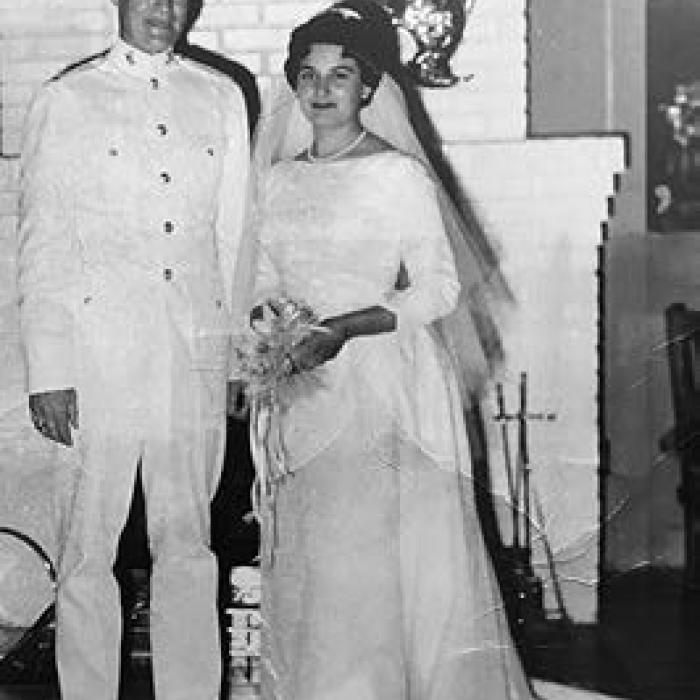
The two had met in 1962 when Bob was already a first lieutenant, and Maxine had just been commissioned a second lieutenant. They danced together at the Marine Corps Birthday Ball at Recruit Depot Parris Island, South Carolina, and then started dating. Although she grew up in New York City and he was a country boy from South Texas, Maxine and Bob complemented each other.
Since Maxine was on board with her husband’s decision to continue his education, the family relocated to Austin, where Bob reenrolled at UT. The couple’s third son, Jeff, was born in 1969. Maxine’s immediate plan was to focus on caring for Bob and the boys, but she also went back to school. Maxine had a Bachelor’s degree from Queens College City University of New York and earned her Master’s at UT in 1975, the same time Bob received his Doctor of Philosophy degree.
For the next 25 years, Bob was an outstanding American history professor at Austin Community College. He made a point of taping his lectures and making them available in the college library for other students and the faculty. Maxine, as well as the couple’s boys, was among his students. When Bob taught the coursework on the Vietnam War, his classroom was standing- room-only with an audience well beyond his own students. Bob poured time and passion into his classes and found his students’ responses rewarding.
Because he would be seated behind his desk when they entered his classroom, some students didn’t realize Bob used a wheelchair. He would sometimes read shock on their faces when they saw him in the hallway using it.
“Bob liked to tell a funny story about himself,” Maxine recalls. “He would push his chair back and lean it against the wall to stretch his body. One time, he tipped over and wound up on the floor. At that point, everyone in that class knew he was in a wheelchair.”
Years later, when Bob looked back on his career, he was most proud that a number of students sought him out long after they had graduated from Austin Community College. Many went on to earn advanced degrees. Bob appreciated knowing he had made a positive impact on their lives.
To honor Bob’s commitment to education when he retired in 1999, the Bob Lain Endowed Scholarship was created at Austin Community College through the efforts of fellow faculty members and friends. Bob specified that recipients were to be women who were returning to school.
What was Bob like?
“I would use the adjective stalwart to describe Bob, as well as dignified. He had a commanding presence, a natural charisma. He could put up with everything and anything and make the necessary adjustments, and he exhibited a strong code of personal conduct.
“I’d also say he was stubborn, independent, totally fair and a very private man,” Maxine says.
When Bob and Maxine met, he had narrow shoulders and measured 6-foot-3. Back then, she describes him as a ‘long drink of water.’ After losing his legs, Bob stood 5-foot-2-inches from the top of his head to the bottom of his stumps. Through the constant use of a wheelchair, Bob developed hefty shoulder muscles.
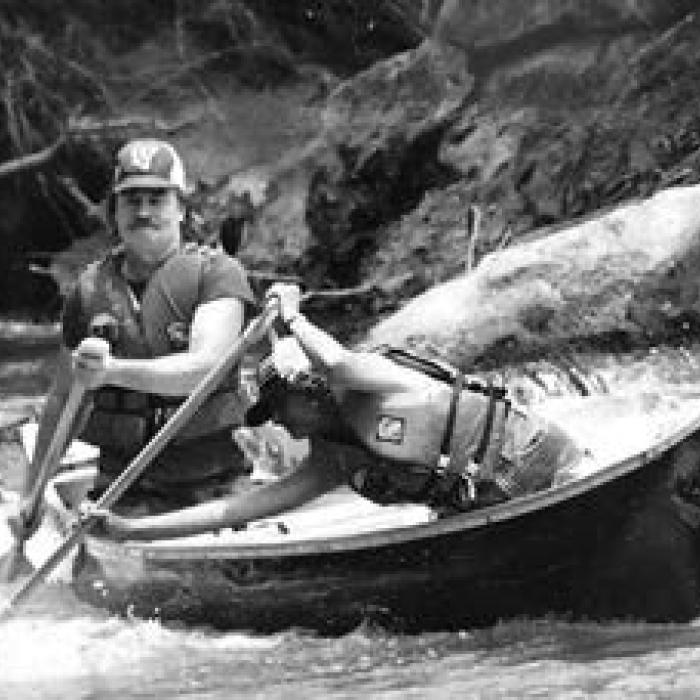
Although he tried prostheses, Bob found artificial legs too confining. He felt more mobile in a wheelchair because he could hop out to undertake activities on the floor, as well as in a canoe or even climb a ladder to fix the roof.
For the rest of his life, Bob dealt with varying pain levels with minimum use of painkillers. (He was terrified of addiction.)
Despite his injury, Bob never expressed anger, frustration or bitterness at losing his legs in service to his country. In later years, his perspective on the war changed as he changed; Bob became critical of U.S. involvement in the Vietnam War.
“I was only in the Marine Corps a year before I married Bob, but I understood that we were there for a reason, and there were risks involved. Bob knew that far better than I. He never felt sorry for himself and he was always proud to be a Marine,” Maxine says.
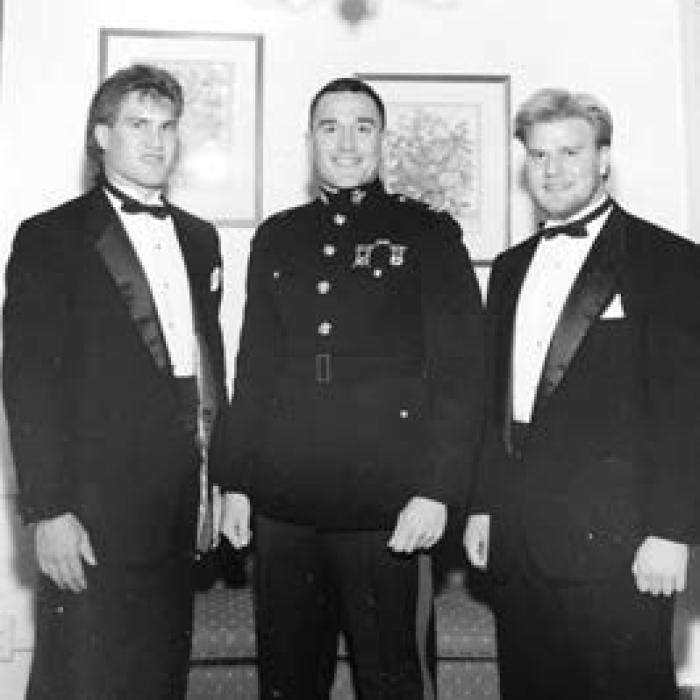
Bob and Maxine passed their commitment to the Marine Corps down to their eldest son, Rob. (The family joke is he followed in his mother’s footsteps, not his dad’s.) Rob has since retired as a full colonel. Rob’s wife, Lisa, also served as a naval officer, retiring as a commander in the U.S. Navy Reserves.
During Bob’s tenure at Austin Community College, Maxine enrolled in a Ph. D. program at UT, taught college classes and then began working as a special education consultant at the Region 13 Education Service Center in Austin that serves Austin and surrounding school districts.
Retirement time
When Bob and Maxine were preparing for retirement in 1999, they decided to buy a new motorhome to tour the U.S. and Canada. However, traditional layouts of those units could not accommodate Bob’s wheelchair. Undaunted, the Lains contacted Winnebago, a leading American manufacturer of travel vehicles that had a specialty motorhome division.
“We didn’t get a big vehicle, only a standard 8-foot wide, 30-footer. It had a big open door on the side with a wheelchair lift so Bob could easily enter and exit. I did the whole design, and Winnebago constructed it.
“Bob could build anything. He made the bed, all the oak cabinets, everything up front for the motorhome. We didn’t want carpet because it was harder for Bob to move around on, so we paid extra for linoleum. Then we were ready to go. We took our two big dogs with us as we traveled throughout the United States and Canada. It was great,” Maxine recalls.
That love of camping is what compelled Maxine and Bob to fall in love with an open meadow east of Round Top. The property had an enormous oak and a gurgling creek and was surrounded by towering oaks and cedars.
“I took one look and said to Bob that it was exactly the kind of place where we liked to camp. Bob, who didn’t get out of the car, pulled out his checkbook and asked the realtor what amount of a deposit did we need to make. We had made up our minds to buy that land.”
In 2000, the Lains parked their motorhome at a local RV park and did some clearing so they could enter the woods above the meadow. Taking the advice of a wise local resident who warned that the meadow would flood, they decided to build their home on the side of a hill in the trees.
They began cutting dead trees in the woods above the open field to create a lane. Sitting on the ground, Bob would use a power saw to down the trees. Then he measured and cut them into 9-foot lengths. Next, he tied a chain on each tree and Maxine pulled it out with their van. With the trees they cleared, Bob and Maxine built a fence that’s still standing.
When electricity, water and telephone were installed, the Lains moved their RV to their land and sold their home in Austin. Maxine designed and worked closely with the contractor to create a house plan that not only fit Bob’s physical needs but was also open and filled with natural light. A local craftsman milled cedar planks from trees on the Lain’s property for the floors, cabinets and trim.
“The 17 months we spent living in the RV while our house was being built were some of the best of our lives,” Maxine says.
During that time, the Bethlehem Lutheran Church pastor, Arnon Lundborg, and his wife came out to visit and invited the Lains to their church. Bob and Maxine felt comfortable with the congregation and became parishioners. Neighbors stopped to talk and, before long, Bob and Maxine felt accepted; they belonged in Round Top.
“Bob was raised in a rural community, so Round Top was like coming home. He loved it and became so much more comfortable socially here. He was in his element. Bob also had stayed in close contact with a lot of his friends from high school and at their 25th reunion, he was named the honor graduate,” Maxine says.
Maxine finds her niche
Sewing has been one of Maxine’s favorite pastimes since she learned the craft growing up in Queens, New York City. Primarily self-taught, she isn’t intimidated by challenging projects.
When she left the Marine Corps because she was pregnant with their first child, Maxine took her last pay of $50 and bought a used Singer sewing machine. She made not only her maternity clothes, but the baby’s entire layette a year or so later. After retiring from the Region 13 Education Service Center, she opened her own sewing business, making custom items for the home. From then on, Maxine’s projects included sewing curtains and slipcovers, and quilting them.
When the Lains closed on the purchase of their Round Top property, realtor JoAnn Ayres represented the seller. Her husband, James “Doc” Ayres, a former English professor at The University of Texas at Austin, believed the best way to understand Shakespeare’s plays was to perform them.
In 1970, he founded and directed Shakespeare at Winedale, an annual summer program that brings a group of English students together to learn about and perform Shakespeare. In 2001, when JoAnn discovered that Maxine was an accomplished seamstress, she introduced her to Laurel Loehlin, the wife of the program’s newly installed and current director James Loehlin. Soon after, Maxine found her special niche in the Round Top community.
“The Winedale students need to be exposed to the entire range of putting on a Shakespeare play, including making costumes. That’s where I come in,” Maxine explains. “The experience is great because the students also learn some life skills in addition to acting!
“These days, I teach with a colleague, Renae Jackson, a former program student and an Austin high school teacher. I have the expertise in sewing and she works really well one-onone with the students, so I usually supervise while she helps them cut out their patterns and make costume pieces,” Maxine explains. “However, when students are severely ‘sewing challenged,’ I make their very difficult costumes.
“A few years ago, I sat down and wrote a training manual on sewing a man’s reversible doublet. It’s a very complicated garment, but taking it step-by-step with photos I took along the way, most students end up proudly posing in their well-made completed garments,” Maxine says.
Wardrobe pieces ranging from coarse fabric tunics to handsome gowns embellished with braid and trim are now part of the Shakespeare at Winedale inventory.
Farewell to a hero
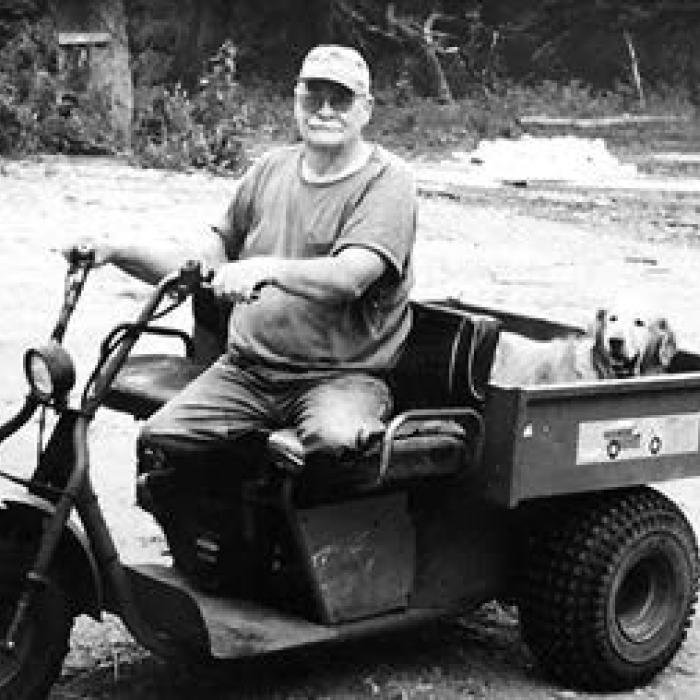
The strong sense of community that Bob and Maxine discovered at Round Top continued to be a joy and comfort, especially when his health began to fail. Sadly, Bob died on July 4, 2012, at the age of 75. Maxine held his service, attended by approximately 200 friends and family members, on the property she and Bob had claimed for themselves. Bob would have liked that.
Today, Maxine still appreciates the refuge that she and Bob built. Lots of good memories keep her company and if you listen intently, you might hear her sewing machine still humming.
For more stories, please visit www.elainethomaswriter.com/ blog/ and sign up to receive new posts or call Elaine at 979-2635031.