


Where Have All the Shorthorns Gone?

I grew up in Schulenburg, Home of the Shorthorns - the athletic kind, not bovines.
As far as I know, no one around Schulenburg or anywhere in Fayette County raises Shorthorn cattle. So how did our beloved high school sports team get this name? This question has puzzled me for many years.
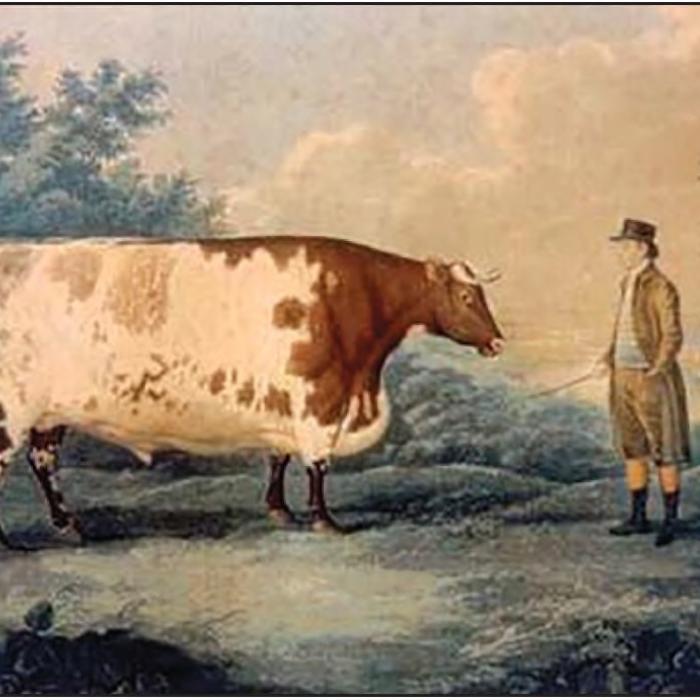
Shorthorn cattle are a British breed from the northeast of England. They coalesced into a distinct breed of cattle in the late 18th century. Originally, they were dual-purpose they could be raised for beef, but the females exhibited good milking ability as well.
This made them a popular breed of cattle for smaller, diverse farms. A farmer could grow some crops and raise chickens, pigs and sheep alongside a few head of Shorthorn cattle. The calves provided meat and you could milk the cows.
Over time, the breed split into Beef Shorthorns and Milking Shorthorns, but some of both traits remain in each. Beef Shorthorns are more common in the United States, but not really in Texas.
For a long time I’ve wanted to buy some Shorthorn cattle, but they mainly show up in states north of here. They have made an important contribution to the ranching industry in Texas. The venerable Santa Gertrudis breed of cattle, developed on the famous King Ranch in South Texas, came about by crossing Brahman cattle with Shorthorns, and to a lesser extent Hereford cattle.
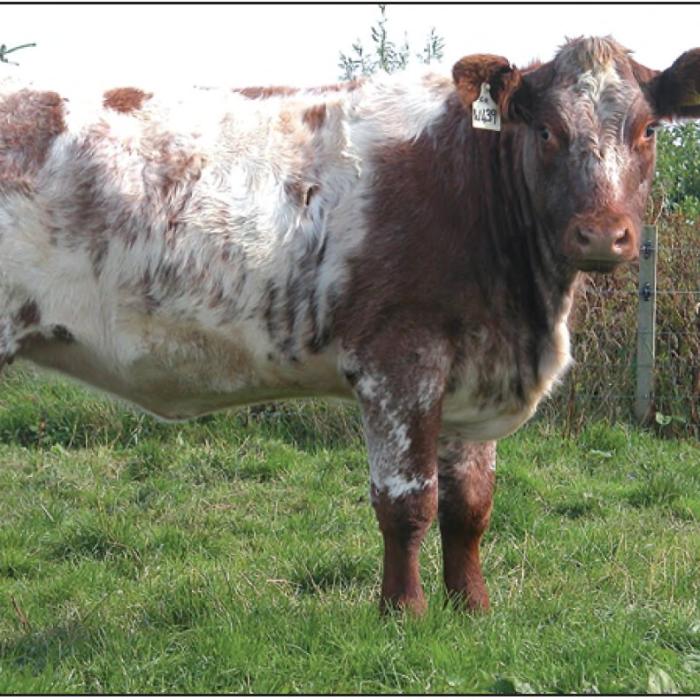
Shorthorn cattle are typically colored red, white or roan, or a combination of those. The roan coloration pattern is particularly beautiful, I think.
They produce superior marbled beef that rivals the well-known Angus breed. When I first went to college after high school (it took a couple of tries), I was an Animal Science major at Texas A&M University. One semester I took a meat science class. It was probably the best college class I ever took. For a whole semester, we got to butcher cattle, graded the meat for quality and yield, and then sample steaks, hamburgers and barbecue. It was pretty awesome.
I remember one segment of the class in which we drove out to the school farm just outside College Station and inspected a pen of steers that were being fed out for slaughter. There were three Angus steers in this pen and one Shorthorn. I remember the instructor asking us which calf would grade the highest for quality and marbling. Everyone in the class, including me, picked one of the three Angus steers. We were surprised by the instructor’s prediction that the Shorthorn would grade the highest. He turned out to be right.
I learned a valuable lesson from that class: almost all of the British beef breeds – Angus, Hereford, Shorthorn, etc. – produce high-quality, wellmarbled meat. Angus just has a better reputation because the American Angus Association has an excellent marketing department – so much so that many restaurants go out of their way to serve only Angus beef (although what qualifies as “Certified Angus Beef” these days is an entirely different subject).
My dad and I have raised Angus cattle for many years, mainly due to the higher prices they typically bring at sale. But they’re also good momma cows. They’re polled, so we don’t have to worry about messing with horns. And they don’t suffer from the skin and eye-related problems like some of the lighter-skinned breeds (or maybe that’s just a prejudice we have). On the other hand, Angus cattle are slower to mature than other breeds.
When you crossAngus cattle to Shorthorns, the resulting calves sometimes end up with a color pattern called “Blue Roan.” This might be one of the most beautiful color patterns exhibited in any cattle. I’d love to have some in my pasture one day.
But back to my original question, why doesn’t anyone around here raise Shorthorns? If anyone knows the answer, I’d love to hear it. Are there some problems with the breed related to our heat? If anyone knows where I can find some Shorthorns for sale somewhat nearby, especially ones with the roan pattern, please let me know. You can email me at andy@fayettecountyrecord. com.