


I’ve Been Harvesting Prickly Pear Fruit
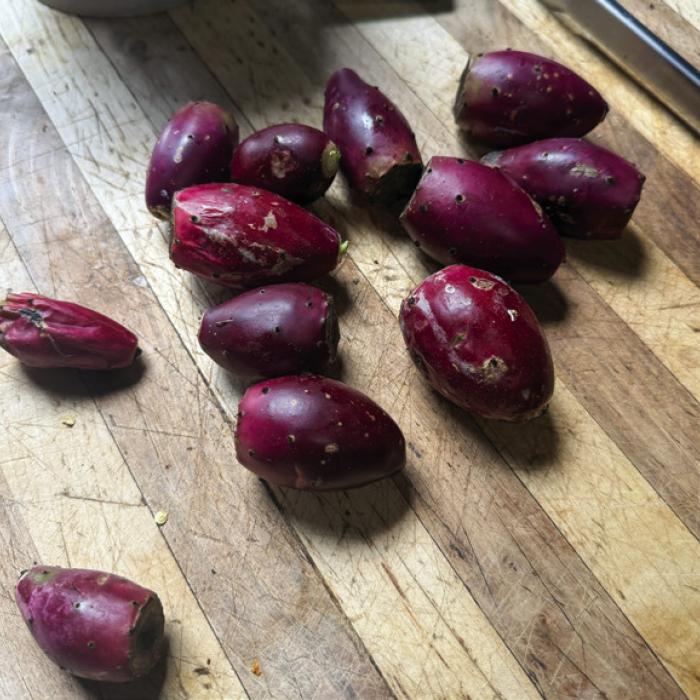
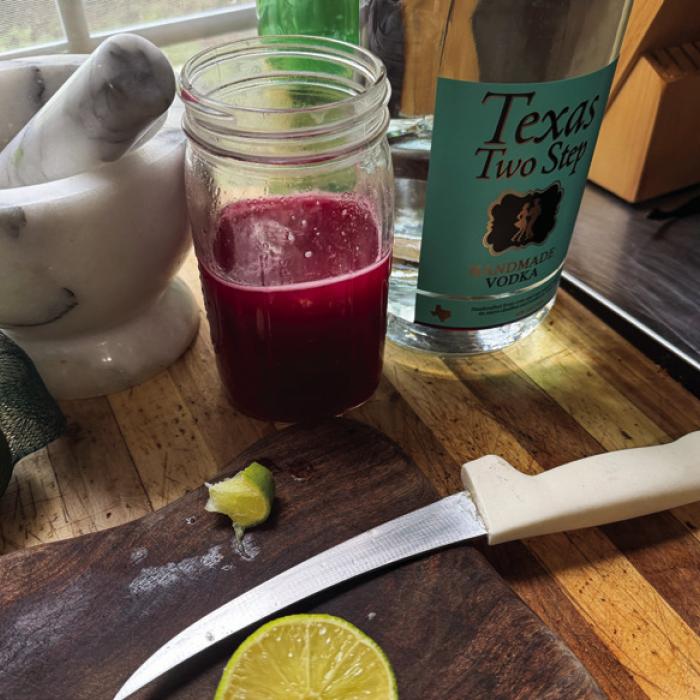

The prickly pears at my place are starting to ripen. I picked a few and juiced them last weekend.
Prickly pear has enjoyed a resurgence in popularity lately as a superfood. I say “resurgence” because they were consumed for centuries by the natives who occupied this part of North America. The fruits, known as “tunas,” are full of antioxidants and vitamin C. They’re slightly mucilaginous, which imparts a cooling effect. It’s said to soothe stomach ailments.
The Spanish explorer Cabeza de Vaca famously got lost and wandered through this part of Texas in 1528. He didn’t reach his fellow countrymen in Mexico until eight years later. Thankfully, he spent a lot of that time observing and writing. He documented coastal tribes who traveled great distances to harvest prickly pear fruits from groves far inland.
Curiously, Cabeza de Vaca wrote that the tribes he encountered harvested tunas in the spring and early summer. At my place, the prickly pears ripen at this time of the year, late summer.
Birds love them, too.
Whenever I hunt doves I often keep and clean the gizzards. I’ll save them to make a pot of soup at the end of the season. When I split the gizzards to clean them, I often find the insides stained purple and full of prickly pear seeds.
You can eat the fruits fresh or dry them for later consumption. I usually juice them. They’re full of tiny, hard seeds that sometimes clog up my juicer. The seeds are perfectly edible, though.
The fruits do require a little preparation. Obviously, they’re covered in tiny needles known as “glochids.” If you touch them, they break off the plant and stick to your skin, causing irritation. Whenever I harvest tunas, I use a long pair of grilling tongs to break them off the cactus pads and then place them in a paper sack. I have a gas stove in my kitchen, which I use to burn off the glochids. I just hold the fruits over the fire with the tongs. You can also use a blow torch in the field to burn off the needles before harvesting the fruit. I’m kind of scared of starting grass fires this time of year, so I usually burn them off indoors.
After burning off the glochids, I wash them in water. Birds love to hang out around cactus patches, and the fruits I harvest are often covered with a little bird poop. After washing, I usually trim away the scabby blossom end of the fruit where the flower had formed. It’s not really edible.
Now you have a clean fruit. You can eat them whole or cut them up for a fruit salad. You can peel them if you like, but I usually don’t. Too much of the sweet flesh comes away with the skin.
Most of the time, I juice them. The juice makes a wonderful cocktail with vodka or tequila. I usually start with a glass full of ice and add one shot of liquor, about two shots of prickly pear juice, and then fill up the glass with Topo Chico or any other sparkling mineral water. Add a slice of lime or lemon if you wish, and maybe a few mint leaves. It’s refreshing.
Alternatively, add some of the juice to your favorite barbecue sauce recipe. You can also make a delicious hot wing sauce out of the juice.