


VE-Day Remembered - 75 Years Later


By ELAINE THOMAS Special to the Record
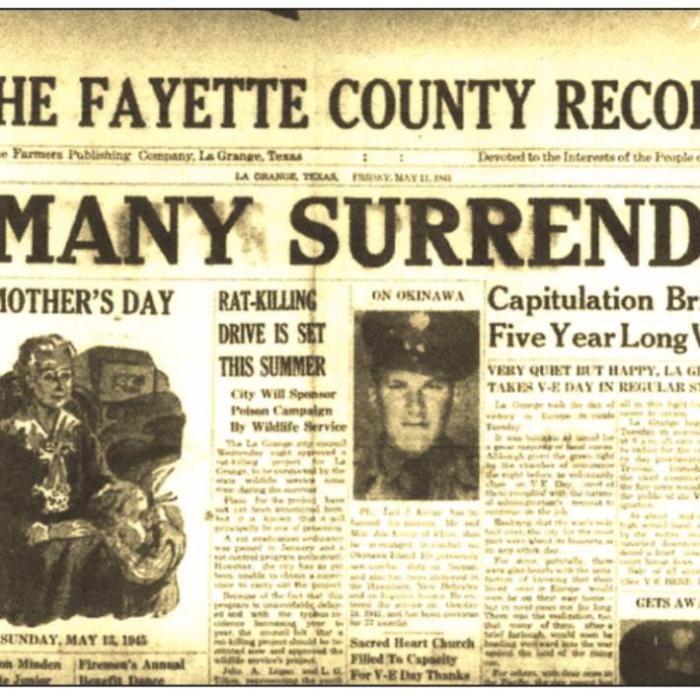
May 8, 2020, marks the 75th anniversary of VE-Day, the end of World War II in Europe. La Grange residents Jo Knox and Mildred Todd both were attending school elsewhere in Texas at the time. The late Major Edward Mattingly Jr. of La Grange provided a first-hand account of VE-Day and other events leading up to this significant historical event in a long letter he wrote to his parents, Mr. and Mrs. Edward Mattingly Sr. of La Grange.
Here is an overview of Jo, Mildred and Major Mattingly’s recollections.
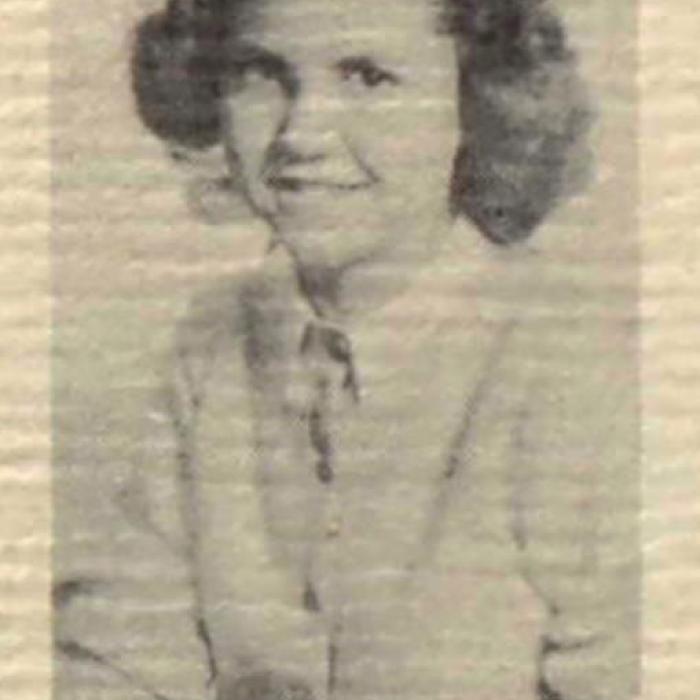
Jo Knox
Jo Knox, who was born Marguerite Josephine “Margie” Brown, heard the news that the war had ended when she walked into an old, old grocery store in Alpine, Texas.
“The adults were all excited,” she recalls. “Everyone seemed relieved and glad. I was happy for them, but I was very worried about my mother.”
It had been a bad year for Jo’s family. Her father, Charles Casreal Brown, was such a skilled sheet metal worker that he kept getting deferments from active duty. His valuable contribution to the war effort was attaching wings on aircraft at NAS (Naval Air Station) Corpus Christi, a trade he had started learning as a 12-year-old to help support his family during the Great Depression.
During World War II, when the federal government authorized the military to build new bases in Arizona, Mr. Brown transferred to a base near Tucson. Jo, her dad and mother, Marguerite Mary Brown, and younger sister, Barbara Corrine, lived in a trailer like all the other families because no other housing options were available.
“My sister’s sinus problems got so bad in the dry climate that Dad decided we should move back to Corpus Christi where we had family and the climate would agree with her. Then Mom got sick in Alpine, so we stayed there and Dad got a job. Mom didn’t get any better even though the Alpine Hospital eventually called in a surgeon from the Marfa Army Air Field.”
V E-Day was May 8, 1945, and Jo’s mother died less than two months later on July 4, 1945. She was 29 years old.
Mildred Todd
In 1945, Mildred Willmann Todd was a sophomore at Mason High School in Mason, Texas. Although the family’s ranch was only 10 miles from town, Mildred and her cousin had to board with a family in Mason in order to attend high school. On Fridays after school, the girls’ parents would come to pick them up for the weekend and bring them back Monday mornings.
On Tuesday, May 8, Mildred remembers the great excitement when word passed through the high school that the war in Europe had ended. She joined some friends, one of whom had a car, and they drove to the Mason Methodist Church. They wanted to attend a special service of thanksgiving that would celebrate the end of the ordeal in Europe.
There were smiles on every face except one.
“There was a lady sitting in a pew near us who had her hair pinned up and a scarf around her head. The sorrow written all over her face was unforgettable.
“The rest of the congregation was grateful and upbeat, but that woman was grieving because her son had been killed in the war.
“I remember leaving the church with mixed feelings. It was good news that the war in Europe had ended, but that woman’s life, and the lives of other mothers like her, had changed forever.
“It almost makes me cry to think about it even now.”
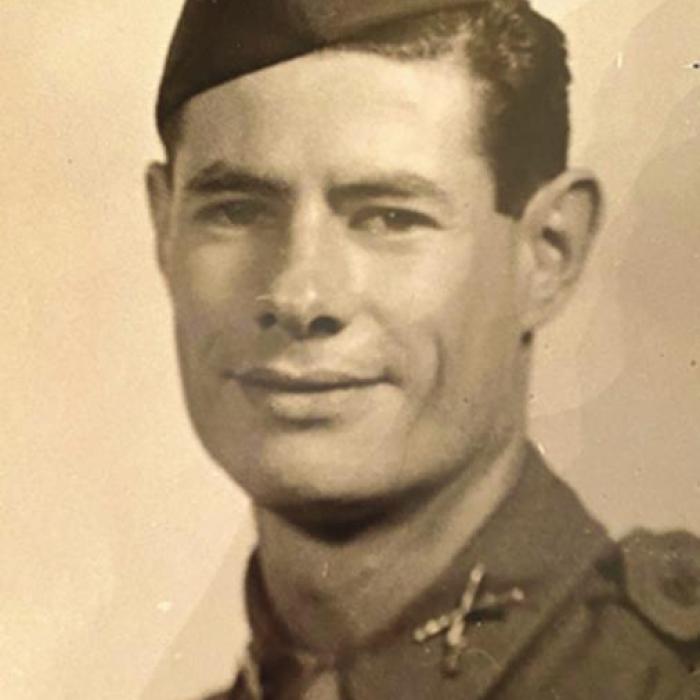
Major Edward Mattingly Jr.
Since the winter of 1944- 45, Major Mattingly had been assigned to the staff of Commander of Allied Forces General Dwight D. Eisenhower’s Europe Supreme Headquarters Allied Expeditionary Force in Reims, France. Major Mattingly’s parents shared the letter their son wrote with John L. Sulak, The Fayette County Record’s managing editor. It published in three parts in the June 19, 22 and 26, 1945, issues.
Major Mattingly, who was conducting liaison work in Germany in the weeks leading up to the end of the war in Germany, described the heart-rending sights on the roads at that time.
“I wish I could put into words this pageant of all the peoples of Central Europe going home. I saw it in France, too, but there it was simply French families. Here (Germany) you see almost every nationality of the world, all on the road, trudging listlessly north, south, east and west, going home – and you know, already what they will find at home – a few smokeblackened bricks – a few bomb craters and nothing else...
“It may take months, or even years, but eventually these people will make it. There was an overtone, an overall spirit – I almost said holiday spirit, but it lacks a holiday’s joyousness, of irresponsibility, of losing one’s individual identity in this conglomerate mass of humanity. Life for these people is stripped of all the niceties of conduct – simply to live and eat – and to make love is the end and all of existence.
“I’m not talking of the American soldier. The army lent the only touch of order to this chaos. For one thing, they are too busy. The trucks move day and night moving rations and gas and DPs (displaced persons) and prisoners, but they can’t handle or feed everyone...”
Major Mattingly also wrote about the events of VE-Day.
“The declaration of Germany’s surrender was to be announced as effective at midnight of the evening I got back from my trip. It was anti-climactic. Everywhere I’d been, there were rumors that the war was over. And the war had been over for several days for most of the troops. On our sector, the objective had been reached days before.
“It was not like the last war when, at a certain hour, great masses of troops facing each other suddenly stopped firing, and where a minute before there had been the fury of battle, there now was silence. This war simply pooped out gradually. One battalion might have been out of opposition long ago, while the battalion on its right might still be running into a few snipers. You really couldn’t give a day when World War II ended it ended at different times for different people.
“Anyway, a few of us got together at the hotel and celebrated victory night with some Scotch and a poker game.
“But I didn’t really get that New Year’s Eve feeling of the war being over yet until I heard the broadcasts from London – the sound of the crowd’s hysteria and Churchill’s crusty voice – Big Ben – and then I felt that the European war was over.”
After the Allied nations heaved a sigh of relief on VE-Day, all eyes turned to the war still being waged in the Pacific. But that is a story for an Armchair Chat column in August.
If you’d like to read more of Elaine’s stories, visit www. elainethomaswriter.com/blog/ and sign up to receive new posts twice a month. You can also call Elaine at 979-263-5031.