


Stories I’ve Been Told
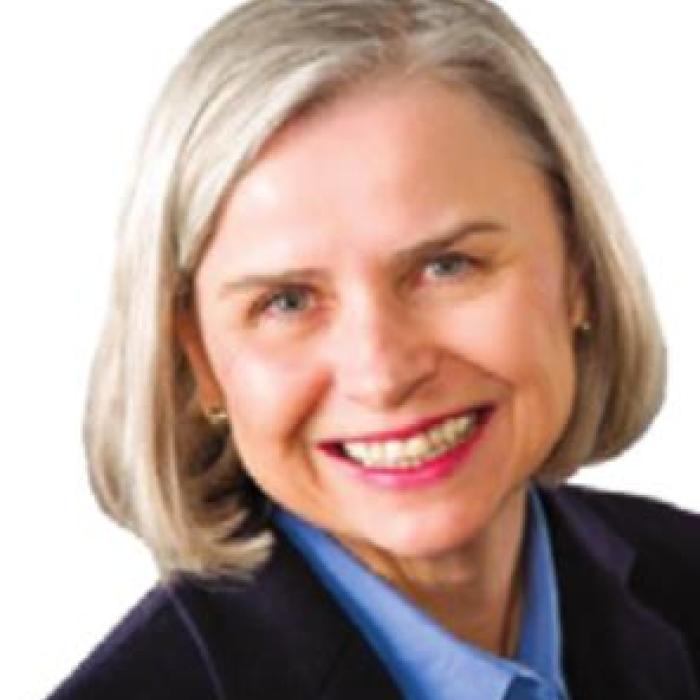
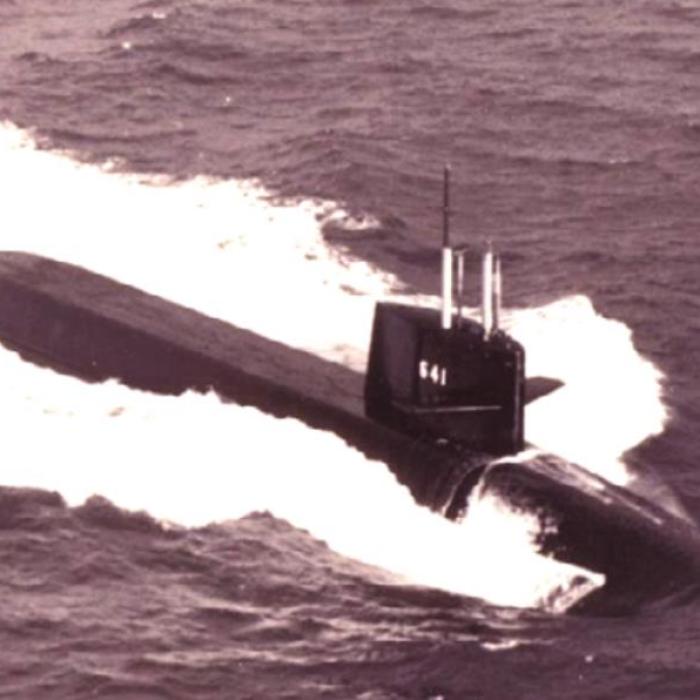
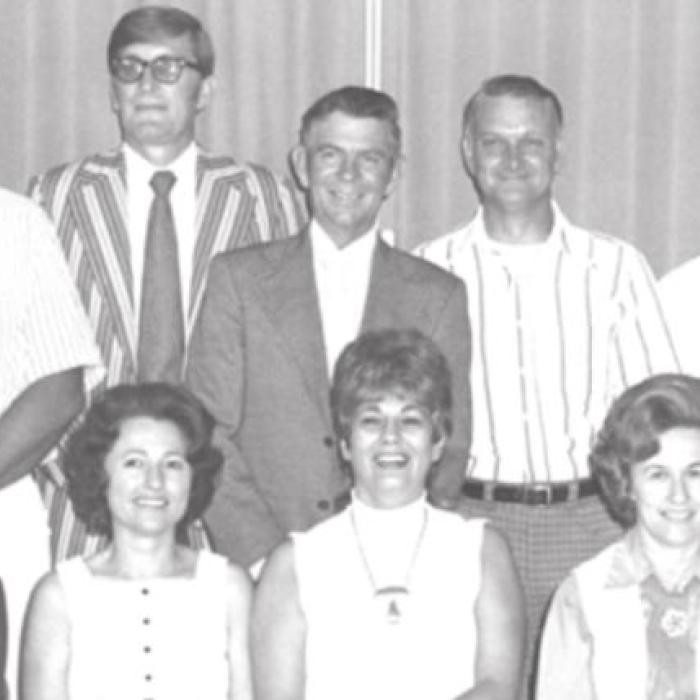
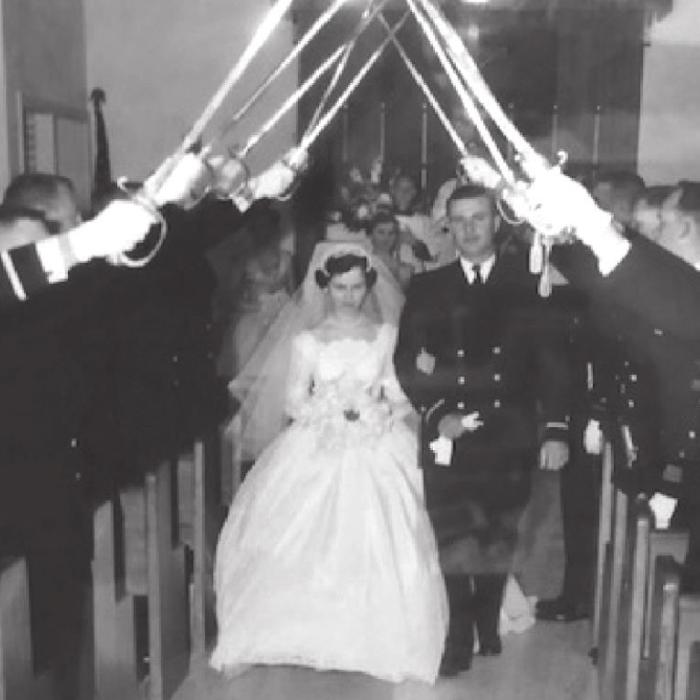
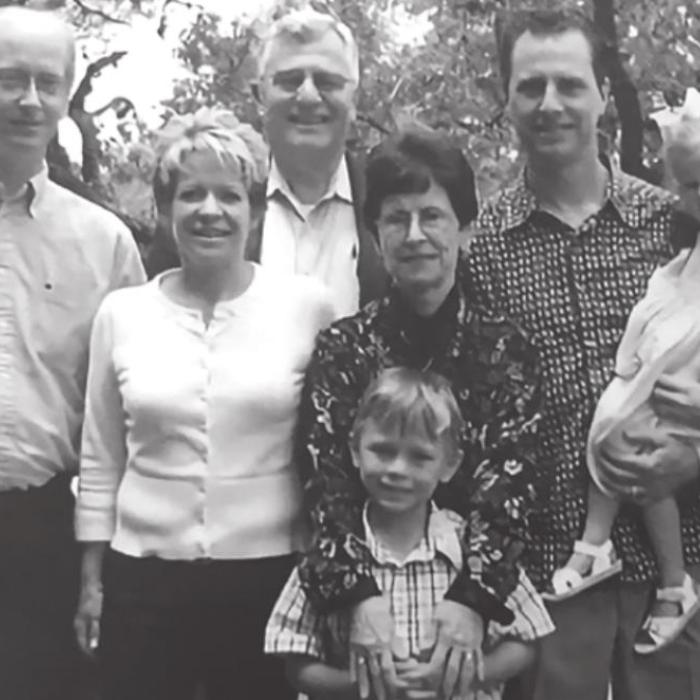
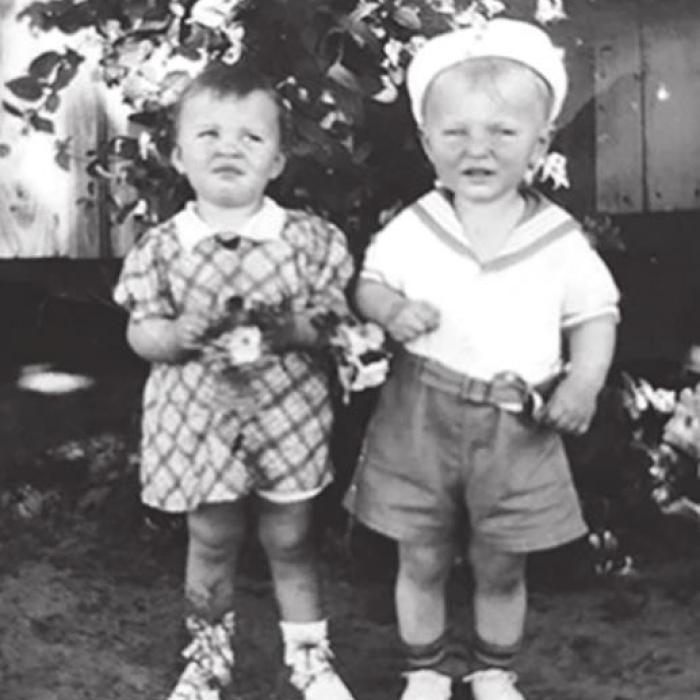
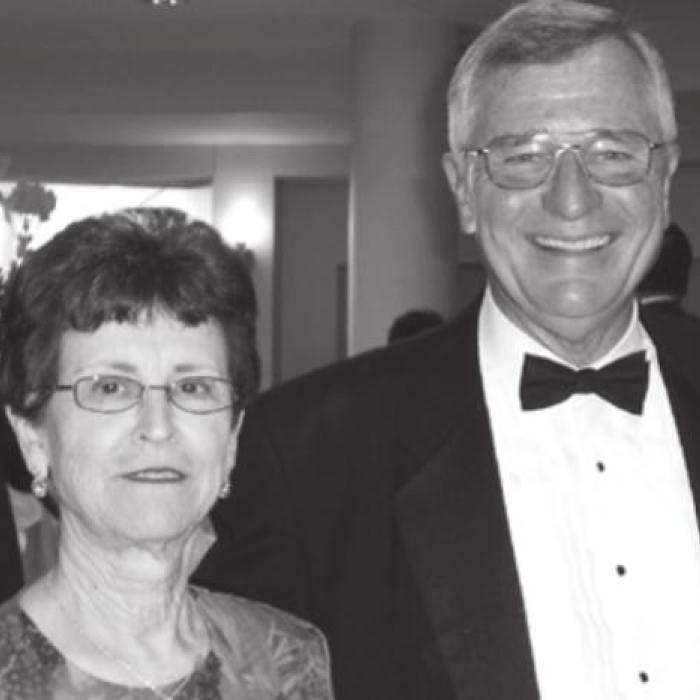
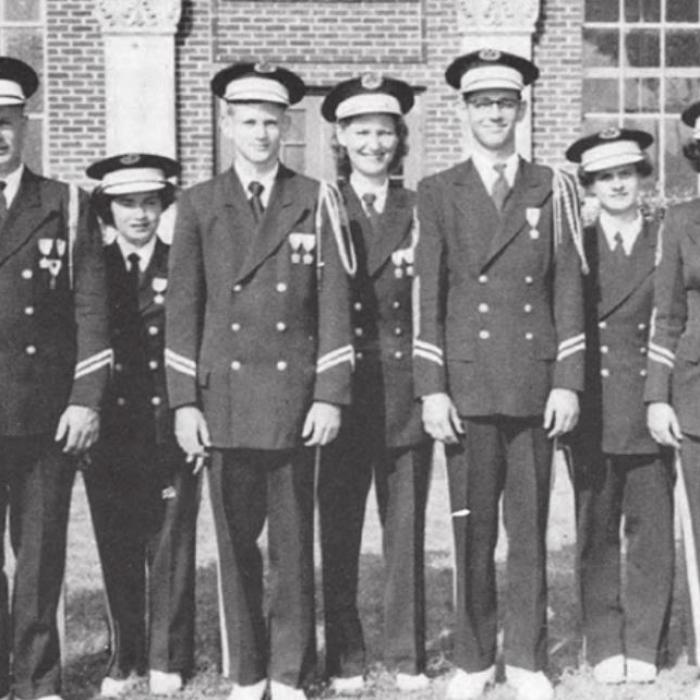
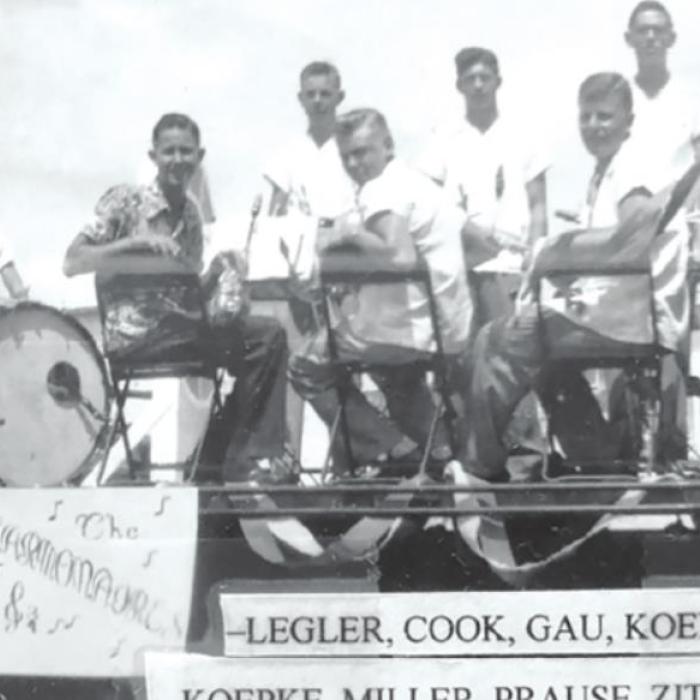
The nuclear ballistic missile submarine USS Simon Bolivar that Weldon commanded in 1973 was a far cry from the first submarine he ever saw when he was 10 years old. It was newsreel footage of German U-boats at the Cozy Theater in La Grange during World War II. Attending the 20 year-reunion of La Grange High School’s class of 1953 were (back row, left to right): Donald Hagemann, La Grange; John Roy Koepke, Houston; Weldon Koenig, Charleston, South Carolina; J.C. Niemeyer, Edmond, Oklahoma; John Hofmann, La Grange; Edward Freudenburg, Houston; Jack Hart, Giddings; Matt Buscha, Houston; G.R. Thurman, Humble; Lawrence Hatfield, La Grange; Don Williams, Houston; Alfred Drescher, Fort Walton Beach, Florida; and Leniel Harbers, Manhattan, Kansas. (Front row, left to right): Marilyn Wessels Neisner, Victoria; LuBeth Meyer Sexton, Victoria; Jo Ann Albers Mueller, La Grange; Barbara Schneider Bathe, Houston; Irene Antosh Richter, Schulenburg; Delores Melcher Mann, San Antonio; Delores Freudenberg Toll, Houston; and Lucille Blume Strickland, Schulenburg. Photo courtesy of Fayette Heritage Museum and Archives Weldon and Nancy left the altar of Christ the King Catholic Church under an arch of swords provided by a Navy honor guard on Feb. 1, 1958. The Koenig family circa 2006 (left to right): Christopher Scott Koenig, Jennifer Anne Koenig Hill, John Weldon Koenig, Nancy Louise Sowa Koenig with hands around the shoulders of Andrew Lee Koenig, Jr. (Drew), Kelsey Dawn Koenig held by Andrew Lee Koenig and Dawn Alexis Oldham Koenig. Weldon’s first sailor suit was a gift from his uncle, Archie Oeding, who served in the U.S. Navy during World War II. He’s pictured with his cousin, Lois Carby. Weldon and Nancy moved to Fayette County after he retired from a second career in the cogeneration energy industry. They built a home on the land where he had grown up and got involved in the community. Weldon chaired the St. Mark’s Medical Center project and Nancy was a faithful hospital volunteer as a Purple Angel for many years, choosing to serve in the emergency room lobby. Photo by Elaine Thomas 1953 La Grange High School Band officers were (left to right): Virginia Brandt, drum major; Weldon, sergeant; Rose Janda, reporter; John Roy Koepke, corporal; Margie Morris, head librarian; Daniel Zitterich, president; Jackie Kubena, secretary-treasurer; Betty Jo Sabrsula, vice president; and Lu Beth Meyer, librarian. Photo courtesy of Fayette Heritage Museum and Archives. In high school, Weldon and some friends had a band called the Harmonaires. They’re pictured riding Hruska’s truck in an October 1952 parade at Ellinger.
Plum Proud
When fall classes at the La Grange Independent School District began on Monday, Sept. 15, 1947, near Plum, Texas, a new student waited for the school bus. When it stopped, Weldon Koenig got on.
“I had asked my maternal grandparents, John August Koenig and Mary Klevelmann Koenig, if I could live with them near Plum, so I could go to school in La Grange. They agreed with the understanding that I would help my grandfather around the farm before and after school to earn my keep,” Weldon recalls.
“When Mr. Liefeste stopped at the school in La Grange, I got off with the other kids, but I had no idea where I was supposed to go. I’d never been to the school before. Finally, Mr. Giese helped me find the right classroom where my teacher welcomed me.”
Weldon’s school wardrobe consisted of one pair of jeans, one pair of shoes and several shirts his mother had made. He stood out among the other more affluent, urban students, which wasn’t a good thing.
“A couple of my schoolmates started picking on me. It was a trying time. The ugly treatment continued until one Saturday when I was with my Dad who had taken eggs to sell in La Grange. The guys that had been making my life miserable saw me and started in on me again, not realizing that I wasn’t alone.
“When Dad saw what was going on, he walked up behind my tormentors. He grabbed one by the scruff of the neck, lifted him up and told them both that he didn’t want to see this behavior again. When Dad let go, the boy collapsed on the sidewalk.
“So that was that. In later years, those same schoolmates and I laughed about it, although it wasn’t funny at the time.”
This experience made such an indelible impression on Weldon that throughout his career, he would not tolerate bullying of any kind. He still won’t. Weldon believes there’s no excuse for not treating others as you wish to be treated.
Back Home Again
In 1949, the La Grange Independent School District annexed Luck School and Weldon could live at home. He and his brother caught the school bus that stopped at the corner of what today is known as Knape Road and Ohnheiser Kaase Road.
Weldon liked school and joined the band. Under the direction of Ernest Clark, Weldon attended the Region VI Interscholastic League Contest at Alamo Heights High School near San Antonio in 1951. He brought home a medal for his baritone saxophone solo. In 1952, he, along with other quintet members, Daniel Zitterich, Marjorie Morris, Edward Freudenberg and Leonard Miller, was awarded a purple school band jacket with gold trim.
In February 1953, Weldon and Marjorie Morris attained the state’s highest scholastic musical honor; they were selected to play in the Lone Star Band in Galveston. The 90-piece band performed in conjunction with a 125-voice choir and an all-state orchestra. By that time, Weldon also was playing with the Harmonaires, a high school group of his pals: Leonard Miller, Daniel Zitterich, John Roy Koepke, Edwin Gau Jr., John H. Cook, Clarence Legler and James Prause.
Graduating with 60 other seniors in May 1953, Weldon was one of the top six students in the class, along with John Roy Koepke, Jo Ann Albers, Beatrice Stoerner, Lucille Blume and LuBeth Meyer. Weldon’s good grades suggested he was college material.
Off to College in Austin
“My cousin, John C. Niemeyer, and I were the first students in our family to attend college, so I really didn’t know what I was doing. With guidance from my teachers, I got accepted at the University of Texas at Austin in electrical engineering,” Weldon recalls.
In an effort to qualify for a regular Navy scholarship, Weldon took the Naval Reserve Officer Training Corps (ROTC) entrance examination but didn’t make the cut. He joined the unit as a “contract,” meaning he could take the naval science courses, but received no assistance with tuition and books.
Weldon’s interest in the Navy went back to his childhood. His uncles, Sam Koenig and Archie Oeding, both served in WWII. His parents wrote to them and when the sailors came home, they visited the Koenigs.
Finding college more intense than high school, Weldon struggled to make decent grades.
He joined the Longhorn Band and played the tenor saxophone. It was during his tenure with the band that “Big Bertha,” the largest drum in the world, came to UT. In May 1954, Weldon had a thrilling experience. He made his first airplane trip when his Navy Drill Team called The Buccaneers flew from Austin to Corpus Christi for drilling maneuvers.
The second time he took the ROTC exam, Weldon made the cut. He started his second year of college on a scholarship that covered tuition and books, plus $50 per month spending money. During his third year at UT, Weldon realized that he wanted no part of a future in the electrical engineering field. It took some finagling, but he transferred to UT’s business school to pursue a Bachelor of Business Administration degree.
An annual summer cruise was a component of the ROTC program. Weldon left Norfolk, Virginia, on USS Missouri on June 7, 1954, and arrived in Europe 12 days later on an eight-week adventure. Although this was to be the majestic battleship’s last cruise before it was decommissioned, Weldon spent many hours scrubbing decks and polishing brass. This included a plaque recognizing the ship’s place in history; on its deck in September 1945, the Japanese Instrument of Surrender was signed, formally ending World War II.
When Weldon was a midshipman in 1955, he met his future bride, Nancy Louise Sowa, in Corpus Christi. They finally were allowed to marry on Feb. 1, 1958.
“Sometimes, we servicemen take for granted those whom we leave behind when we deploy. The daily routine of managing family, home and finances was demanding and stressful. It takes a special breed of woman to manage it and Nancy always did a superb job,” Weldon recalls.
Career Building
Ensign Weldon Koenig reported to his first active duty station, the USS Edisto, a Navy icebreaker stationed in Boston, Massachusetts. His salary of $222.30 per month, plus $47.88 for subsistence, was less than Nancy earned in her civilian job.
On their first wedding anniversary, the icebreaker was in port at Ellsworth Station, Antarctica. Through good fortune, one of the personnel, a ham radio operator, agreed to place a call to Nancy for a short conversation.
“It ended with ‘I love, you. Over,’” Weldon says.
After Weldon volunteered for submarine duty, in New London, Connecticut, he spent 18 months attending submarine and nuclear power schools, as well as nuclear power training. The first submarine he ever boarded was a diesel boat named USS Diablo in New London when he was 25 years old.
“This was very technical, very difficult training,” he remembers.
Lieutenant Junior Grade Koenig’s first submarine assignment was the USS Swordfish, an attack submarine, homeported in Hawaii. When Weldon and Nancy arrived in Hawaii to get settled over the next couple of weeks, he was informed that the Swordfish’s schedule had changed. He was deploying the next morning. “That left Nancy literally
“That left Nancy literally on the pier with no car and no household goods, alone in a strange place for an unknown amount of time. With the help of other Navy wives, Nancy survived and was on the pier to meet me when the Swordfish returned to Hawaii several months later.”
When the Cuban Missile Crisis occurred in October 1962, the Swordfish went into port in Naha, Okinawa. At the time, Weldon had to complete his final qualification in submarines before reporting onboard the USS Andrew Jackson, a nuclear ballistic missile submarine, still under construction in California. It took more complex jockeying to complete the tests before he and Nancy could settle down in the Golden State.
A highlight of Weldon’s service on the Andrew Jackson came when the submarine was ordered to launch a missile for John F. Kennedy, the President of the United States. A week later, when the submarine was en route to Charleston, South Carolina, a flash message delivered the news that the president had been fatally shot in Dallas.
“We found it so hard to believe. We had just seen President Kennedy and he had made a great impression on us.”
Welcome Home
In June 1964, the Koenig’s adopted their son, Christopher Scott, and in late 1965, their daughter, Jennifer Anne. Shortly after that adoption, Nancy realized that she was pregnant and in April 1967, their son, Andrew Lee, was born. Shortly afterward, Weldon got orders to report to USS Kamehameha.
“We flew to Hawaii with three kids under three years of age. Nancy managed everything associated with that move beautifully, too,” Weldon recalls.
While in Pearl Harbor for the second time, Nancy made her first trip to sea on a submarine when a cruise to take the families of the crew was approved. She learned what it was like to depart port, submerge and operate the ship at sea. “Nancy was so impressed
“Nancy was so impressed and enjoyed the trip so much that she wanted to go to sea with the crew!”
We flew back to the mainland on Pan Am 1, the first operational Boeing 747, when Kamehameha changed its port to Charleston, South Carolina.
During his career of more than three decades, Weldon also commanded the nuclear ballistic missile submarine USS Simon Bolivar. As his tour on that vessel neared its end in 1976, Nancy and the children were able to go on another dependents’ cruise, a memorable trip for the entire family.
Weldon went on to serve on the Nuclear Propulsion Examining Board for the Pacific Fleet, attaining the rank of captain.
A Long Way From O’Quinn
At the end of 1979, Weldon assumed command of Submarine Squadron Eight in Norfolk, Virginia, and had responsibility for a second squadron, as well. For about 90 days, Weldon’s two squadrons, along with those in the New Port News Shipyard, brought about a 30-submarine total and was the third largest force in the world!
“While we were in Norfolk, Nancy and I had the opportunity to meet Vice President George H.W. Bush and his wife, Barbara, who christened the USS Houston in Newport News Shipyard. Nancy rose to the occasion, as usual, and ended up being Mrs. Bush’s assistant during their visit.
“I’m glad Nancy had some memories like that to look back on because she went through so many ordeals during my career,” he says. “I was always very proud of her. Despite the fact she’d never attended college, Nancy could hold her own talking to the secretary of defense or foreign leaders and diplomats.”
Weldon’s next orders meant a move to Washington, D.C., as director of Navy Nuclear Personnel Programs and Director Submarine Personnel Distribution. He had responsibility for submarine officer service assignments and Navy nuclear personnel program issues.
When Weldon was selected as a flag officer in the U.S. Navy, both he and Nancy attended a class teaching them flag officer community protocol and educating them about the Army, Navy, Marine Corps, Air Force and Coast Guard organizations. In 1984, Weldon was promoted to Commodore, formerly the Rear Admiral title. He received his first orders as an admiral: Director of Logistics and Security Assistance on the U.S. Navy Pacific Command staff in Hawaii. This duty involved activities associated with military logistics and the sales of military weapons to allied forces in the Pacific Theater.
Unfortunately, Weldon’s father passed away from cancer in May 1964. Two weeks later, Nancy’s father, George A. Sowa, died. Following the funerals, with heavy hearts the couple proceeded to Hawaii for the fourth time.
As Director of Logistics, he had responsibility for all service personnel and activities associated with military logistics in the Pacific Command area. During this period, the title of his rank changed; he was renamed to Rear Admiral by the Secretary of the Navy.
Weldon’s final set of orders arrived in Hawaii and sent him back to the mainland to the state of Florida. Nancy became the unofficial event coordinator for a lengthy list of distinguished visitors and guests of honor at recruit graduations.
In January 1989, when Weldon and Nancy decided to retire, they returned to their home state of Texas with truly incredible memories.
Throughout his career, Weldon relied on Nancy’s inherent interest in people and polished skills to assist him in increasingly important, more frequent and complex social situations.
“Nancy never seemed to make people feel conscious about the difference in rank among the officers. She was always friendly and could talk to anyone she met. Nancy had a talent, a knack, of making an event special for all concerned. She also could remember names, a skill I always admired,” he says.
Unfortunately, Nancy passed away on April 10, 2015.
“If the definition of a Texas hero is someone who selflessly serves their country with great courage and patriotism, then Nancy Louise Sowa Koenig certainly qualifies for that designation,” Weldon says.
He smiles at the memory of that Fayette County youth who once was so anxious to see the world. After doing so, Weldon found coming home was just as inviting.
If you’d like to read more of Elaine’s stories, visit www.elainethomaswriter.com/blog/ and sign up to receive new posts twice a month. You can also call Elaine at 979-263-5031