


A Second Cucumber Surge and Experiments With the Three Sisters Method
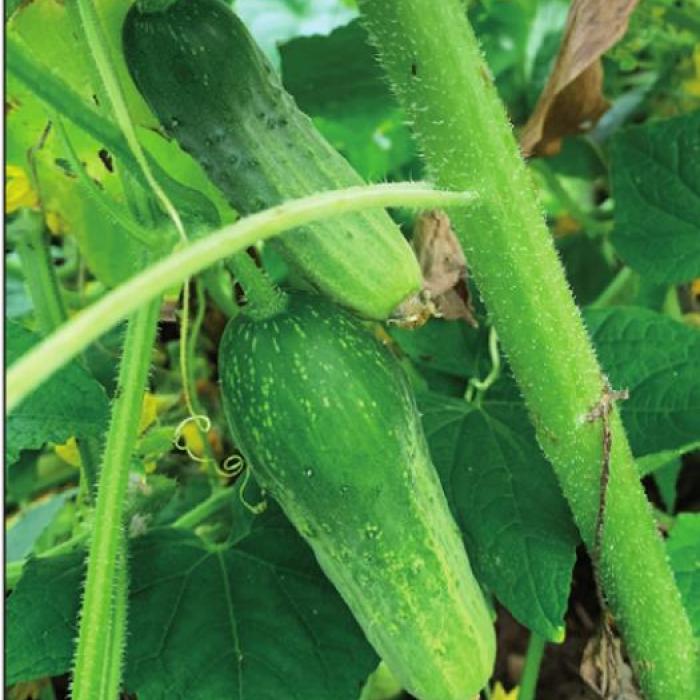

I started picking my second crop of cucumbers this week. I am so impressed with the variety I’m growing - “Sumter.”
These are the same cucumbers I planted in the spring. That crop played out after I let it get too dry back around the beginning of July. Around mid-July, as I recall, I planted some more Sumter seeds in a raised bed. I had to water them sometimes every day to keep them healthy in this blistering summer heat.
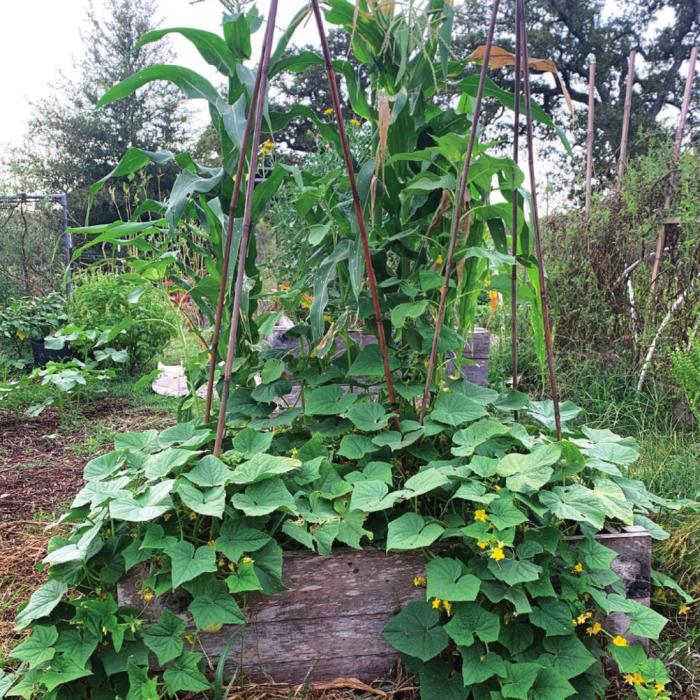
As you can see from the picture, the plants are loaded with flowers. I’ve been picking about a dozen cukes every day. Now my only problem is that all of our dill has all died. I planted some more dill this week, but I don’t know if I’ll get enough to start pickling again before this cucumber crop runs out.
Fortunately, the “Sumter” variety, though considered a pickling cucumber, is wonderful eaten fresh from the garden. I love using them to make a salad with thinly sliced onion, chopped hot chilies, ginger, Vietnamese or Thai fish sauce, rice wine vinegar, fresh basil and a few drops of sesame oil. It never gets old. Throw in some chilled cooked shrimp and you have yourself a meal.
“Sumter” takes only 56 days to reach maturity, so you can still plant it now and you should get a good harvest before the first frost arrives.
I find that my raised beds need much more water than my in-ground beds. For that reason, I plan on deconstructing some of my raised beds. I built most of them from 1x12 rough-cut pine and cedar attached using 2x2s at the corners. Those beds are several years old now. I never painted sides, and the wood is starting to fall apart. I’m letting them transform into ground beds as the sides fall off.
The bed growing this crop of cucumbers is a litter sturdier and nicer-looking, so I plan to keep it. But I need to find a better crop to grow in it. Perhaps lavender or something similar that needs especially well-drained soil. If you have any ideas, please share them with me. However, I love the way the cucumber plants look in this bed, spilling over the sides.
As you can see in the photo below, I’m growing a few other plants in this bed – a variety of gray-stripe seed sunflower called “Mammoth,” which is supposed to produce flowers the size of a human head on stalks 10-12 feet high, and an heirloom variety of field corn called “Texas gourdseed.”
Gourdseed corn, named for the tooth-like shape of the kernels, was once popular in south Texas for making the masa used in tamales and corn tortillas. It was also prized for as a turkey feed. Most ears are white, but some ears produce red kernels. The kernels are also loosely-attached to the cob, making them easy to shell.
I’m growing it because the stalks reach ten feet or taller. I want to use it as a bean trellis for the “three sisters” method of gardening. I’m having germination problems with this variety, however. I bought a package of “Texas Gourdseed” from Southern Exposure Seed Company. In the past, I’ve always had good luck with the company’s seeds. For some reason, I’m getting less than 50 percent germination with this variety. The parent stock probably grew in a much different climate. It may take a season or two of seed saving on my part to make this a viable crop.
But as you can see (in the photo on Page C1), the plants that managed to germinate are now quite impressive. They put on tassels last week. I sidedressed the corn stalks with some organic granular fertilizer this week. I expect to see silk any day now.
About the Three Sisters Gardening Method
Native Americans developed the “three sisters” method centuries ago to maximize production and health of the plants. First, they planted corn. That serves as a trellis for the second sister, beans. Beans, like all legumes, have a symbiotic relationship with certain microorganisms that allows the plant to take the nitrogen from the air and store it as a nutrient in the soil. The third sister, squash, shades the ground with its sprawling vines, acting as a living mulch.
I started a “three sisters” bed about two months ago, but I made a mistake. The corn I planted was a popcorn variety called “strawberry.” As the name implies, it produces red kernels. After I planted the corn, I realized the plants are some what slow-growing and will only reach a maximum height of four to five feet. The beans I planted were an Asian yardlong red bean variety. They produce beautiful purple flowers followed by red bean pods that can literally get a yard long. The problem, however, is that I later learned these beans need a very tall trellis. The plants can easily reach eight to ten feet tall. It’s starting to look like my “strawberry” popcorn plants will not get nearly tall enough to support this bean variety.
If you try using the “three sisters” method, be sure to research how tall the beans will get, and then pick an appropriate corn variety.
If you have any questions or comments about gardening, please send them to andy@fayettecountyrecord.com.