Time to read
12 minutes
Read so far

How John D. Marburger Keeps His Composure

Zipping through LG on his Harley or bottling homemade wine, he always displays an unruffled calm

How John D. Marburger Keeps His Composure
John D. says that by entrusting great responsibility to young servicemen and women, the U.S. military teaches lessons, such as paying attention to detail and self-discipline, that carry over to civilian life.
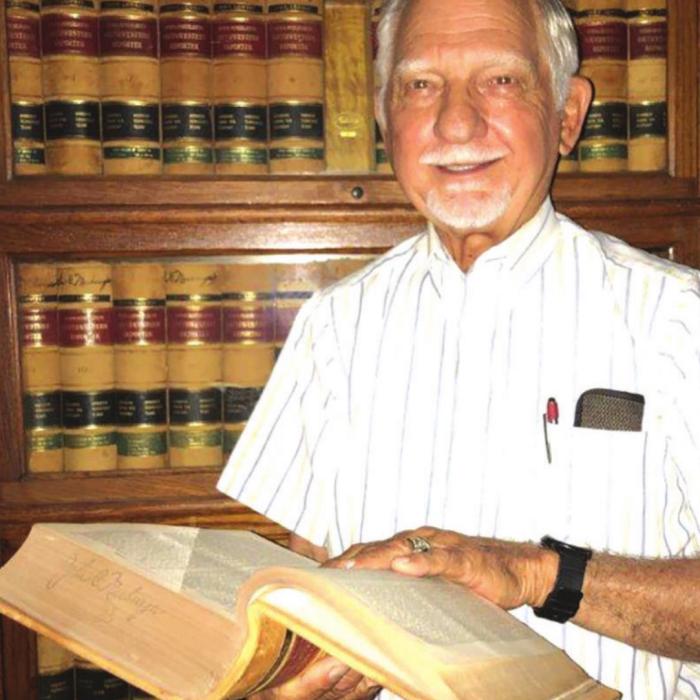
Retired La Grange attorney John D. Marburger began practicing law when manual typewriters were used every day. Also early in his career, research required scouring bookcases filled with law books like the one he’s holding. When a pertinent case was identified, the pages were copied one at a time on the office Xerox machine. Although technology has undoubtedly altered law office administration over the years, human nature has not changed much since the days of Jesus, John D. says. Photo by Elaine Thomas
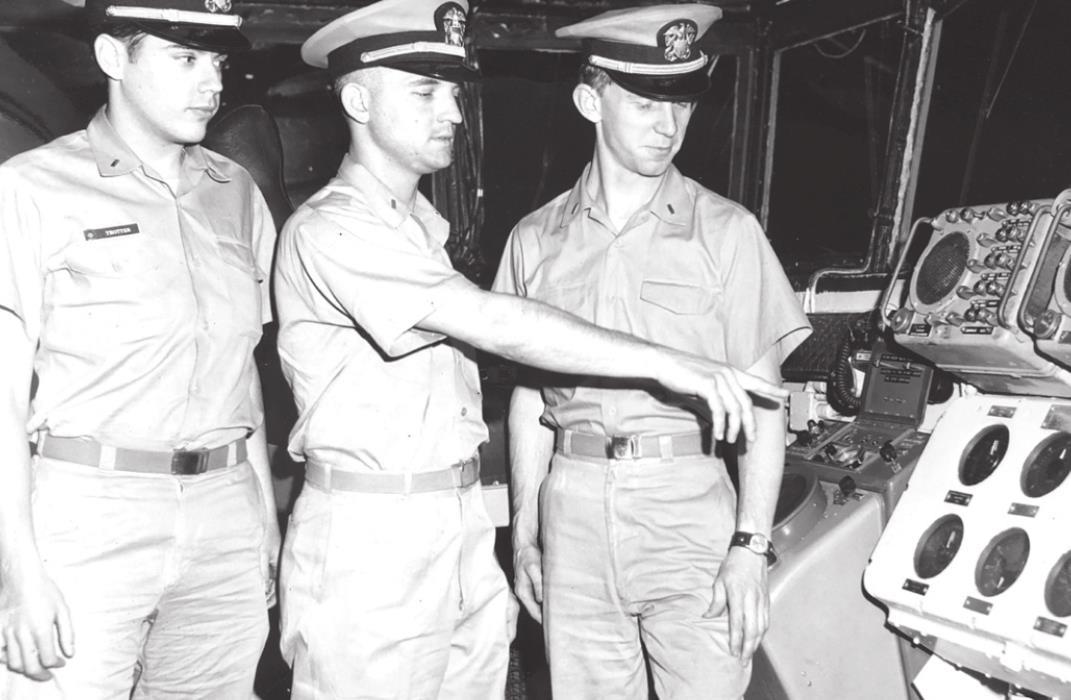
When John D. (center) has faced difficult decisions, he reminds himself, “When you were in the Navy and 25 years old, you drove an aircraft carrier through all kinds of weather, day and night, with 5,000 men aboard as officer of the deck. You can do this!”
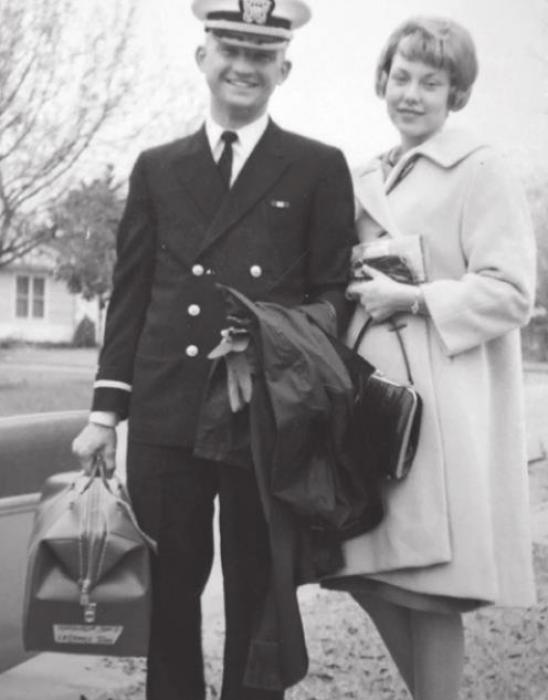
When John D. and Kay Giese were married on June 15, 1968, he was on active duty in the U.S. Navy. Five months later, he was sent to Vietnam for 12 months.
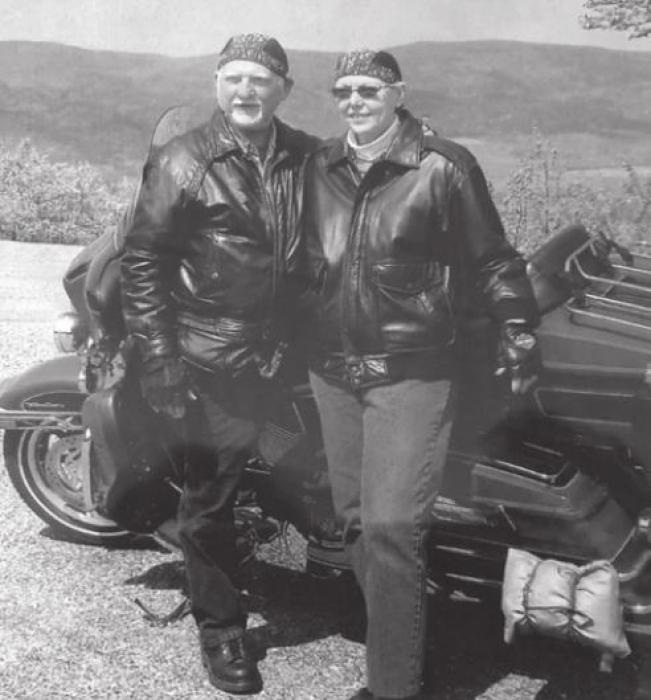
Since the 1990s, John D. and Kay have enjoyed long-distance adventures such as this tour to the Arkansas Ozarks in April 2011 on their Harley Davidson. Their longest and most memorable journey was a 17-day trip to Yellowstone National Park in September 2008. Kay, an avid quilter, ensures she has the opportunity to shop at multiple quilting stores on every trip.
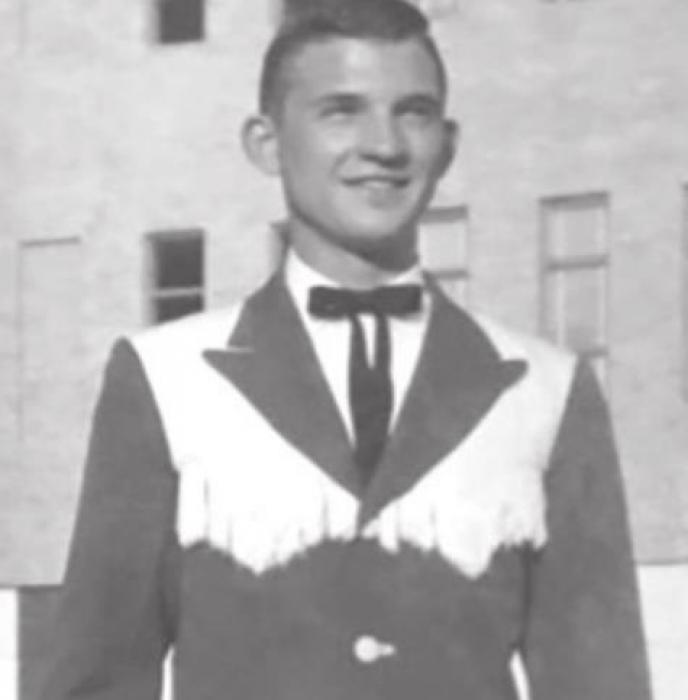
John D. played in the University of Texas Longhorn band. He and Kay’s daughter, Jennifer, and granddaughter, Katy, made it a family tradition by following in his footsteps.
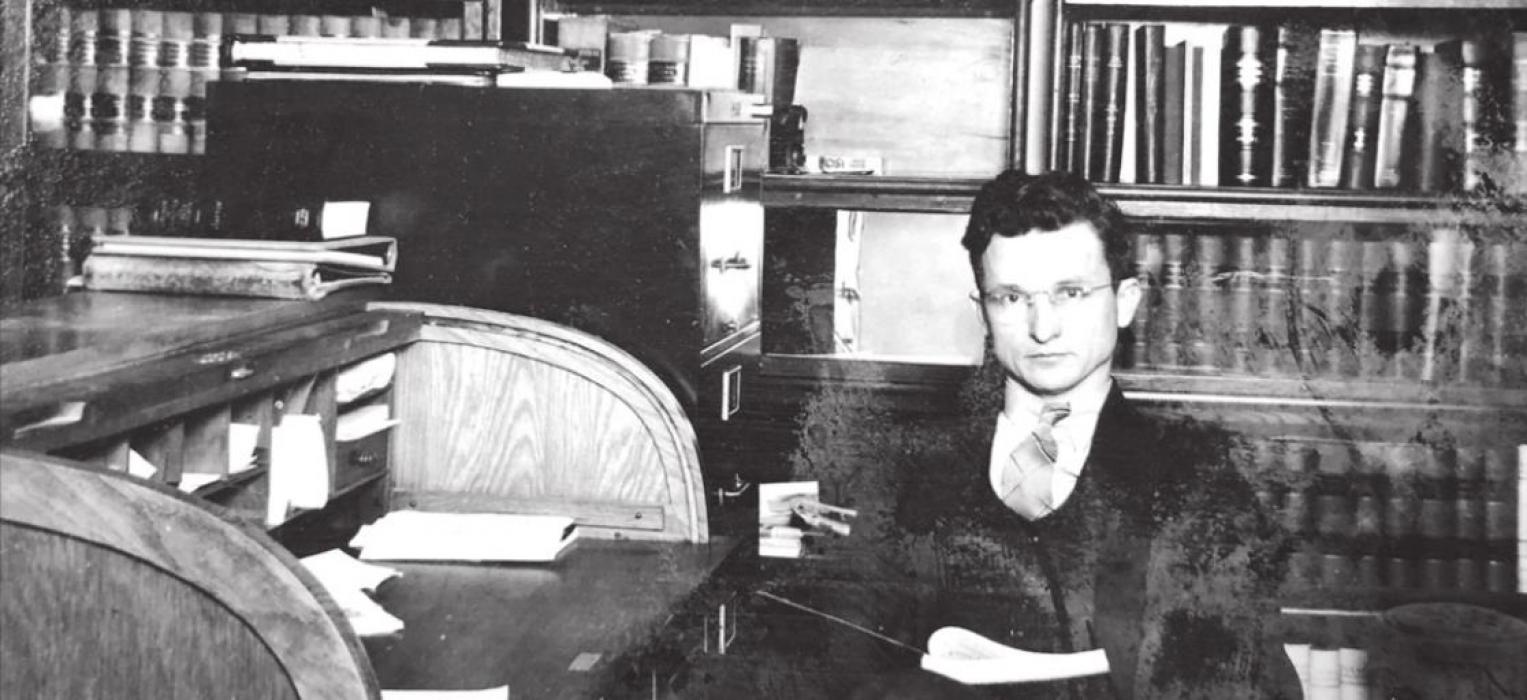
John D. Marburger’s father, John Charles Marburger, served as a justice of the peace and county attorney in Fayette County before opening a law practice on the square in La Grange in 1948.

Some years ago, La Grange attorney John Daniel Marburger was leaning through the bars of a cell in the Old Fayette County Jail conversing with an incarcerated client when a deafening 410-shotgun blast echoed through the historic structure. Had an inmate overpowered a guard and grabbed his gun? Was a jailbreak in progress?

After John D. ascertained that the racket was simply a deputy sheriff gunning for pigeons on the roof of the South Main St. landmark, he coolly resumed his interview.

John D. is like that. This La Grange native son, who practiced as an attorney for almost 40 years, doesn’t rattle easily. He listens more than he talks. He takes careful mental notes and jots keywords and phrases on a legal pad, some in shorthand. Gracious and professional at all times, he thoughtfully deliberates before speaking and means what he says when he does talk.

John D.’s calm demeanor reflects his experience in weathering the storms of life.

His first role model

John D., who has an older sister, Marian, and a younger brother, Thomas, is named after his father, John Charles Marburger. Born in Lee County in 1903, John D.’s father was the eldest son in a typical Texas farming family of German descent. Surprisingly, he decided that scratching a living from the land was not for him and, despite the sacrifices that he knew it would require, Mr. Marburger was determined to get an education.

Because the school in Lexington, Texas, offered only 10 grades, John D.’s father arranged to complete his education in La Grange at what is now the Historic Casino Hall. He stayed with a family who lived in a small house next door to the Bradshaw-Killough mansion. Then Mr. Marburger pursued his teaching certificate at Southwest Texas State Normal School in San Marcos.

In the fall of 1925, John D.’s father was in charge of the recently enlarged Round Top School that was employing three teachers. By the fall of 1927, he was on the faculty of the La Grange Public School as the seventh grade teacher.

In 1929, he married a local girl, Rose Marie (Rosie) Docekal of Czechoslovakian heritage. Her father, Frank Docekal, was a tailor who owned a shop at 113 North Main Street. (Years later, it would be John D.’s law office.)

The La Grange school superintendent encouraged John D.’s father to continue his education. Mr. Marburger entered law school at the University of Texas. In 1932, the La Grange Journal’s social news noted that John Marburger was visiting in La Grange for several days, indicating that his wife did not accompany him to Austin. He, no doubt, was working hard to balance studying and earning money to cover his college expenses. Mr. Marburger achieved his goal, graduating in 1934.

Back home in La Grange, John D.’s father served as a justice of the peace and later successfully ran a number of terms as county attorney from 1937 to 1948. His office was on the second floor of the courthouse in the northeast corner during the era when the atrium was open to the elements.

In a reelection newspaper ad dated April 30, 1942, John D.’s father stated, “I certainly do not wish to be boastful and in order to satisfy myself, I earnestly invite you to investigate my life and record as a public official. I shall be deeply grateful for it and regardless of what the circumstances might be, my promise to you is to serve you loyally and faithfully to the best of my ability.”

In the early 1948, John D.’s father left the county attorney’s job and entered private practice at 117 North Main Street. By employing his sharp mind, knowledge of rural life and uncompromising ethics, he served his clients and the community well for several more decades.

“I was lucky to be born here in 1942,” John D. says. “La Grange was a peaceful town. I rode my bike to school from 1948 until 1956 when my dad bought me a Cushman Eagle motor scooter. That was my transportation all through high school. I even carried my baritone instrument on the scooter.

“My dad told me, ‘Daniel, if you get hurt on that scooter, we are selling it, and I knew he meant it. I never got hurt.”

La Grange High School Principal Mr. H.C. Giese maintained discipline and John D., who served on the student council, thought a lot of him.

“We didn’t have police at school in those days. If a student went down the hall and was a little too loud or wearing a shirt that wasn’t tucked in, Mr. Giese would take him by the arm and they would have a short visit in his office. Then the youngster straightened up.”

Several teachers made a lasting impression on John D. One of those was Miss Rosa Meinecke, who taught more than English from a textbook.

“Miss Meinecke taught us about life. She would talk to the girls and say, ‘Now when you get a honey and you start thinking about marriage, you look at his daddy because that’s what you’re getting.’ And then she would talk to us boys and say, “Now you boys, when you get a honey in mind and start thinking about marriage, you look at her mama because that’s what you’re getting.’

“Miss Meinecke had a way about her of making you want to do what was right. She had a way of teaching you to be a good person, although she also taught us to diagram sentences. It was a sad day when Miss Meinecke died on Jan. 26, 1960.”

John D.’s other favorite teachers included: Frau Johanna Heise, who taught him German; Mr. Charles Larrimore, who provided instruction in biology; and Mr. J.G. Banik, who picked up where Miss Meinecke left off with English. For interested students like John D., Mr. Banik offered an intensive course in extemporaneous speech. This skill has proved helpful throughout the La Grange lawyer’s entire career.

When John D. looks back on his high school years, he is most proud of having been president of the junior class, president of the band and vice president of his senior class, as well as playing in the band.

During his senior year, he also attended Texas Boys State on the UT-Austin campus, graduated in the top 10% of his class, served as president of the student council and was chosen as first runner-up for Mr. Yearbook and Best-All-Around by his classmates.

“Around the dinner table at home, my parents didn’t talk about ‘if you go to college.’ They talked in terms of ‘when you go to college.’ Since my dad had graduated from UT, there was no doubt in my mind. I was going to UT and that’s what I did in 1960.”

John D. entered the school of business and lived in an all-male co-op house where the students were assigned jobs. He was assigned to do the dishes during his freshman year.

In the spring of 1961, John D. joined the Longhorn Band and loved every minute of the opportunities it offered. At the time, the Longhorns had a long string of wins, so the team and the band went all the way to the Cotton Bowl.

“The comradery in the Longhorn Band was very memorable and positive,” John D. says.

However, John D. had reservations about attending law school at the University of Texas.

“I was taking a writing course in the business school from an instructor who was a UT law student, so I asked him what law school was like. He told me, ‘Oh, John, the first year they try to bust you out. After you get through that, it all begins to look the same.’”

John D. also talked to the dean, who answered the same question by saying, ‘John, it’s just a lot of reading and writing.’

So the La Grange native took the plunge in June 1963. His fourth year of undergraduate study was to count as his first year of law school. That would allow John D. to complete college and law school in six years.

In the summer of 1964, he took a break from his studies to join his high school pal, Paul Cronenberger, as a counselor at a horse camp for junior high school-age Jewish boys in New Jersey.

“At Thunder Mountain Ranch, we were expected to shoe horses. It was one of the most dangerous, stinkiest jobs you could ever have. Sure as the world, before we could get those eight nails through a horse’s hoof and bend them over, it would kick. We were always covered in blood,” John D. recalls.

He graduated from UT Law School in January 1966, number 31 out of 101 students. After passing the bar exam, John D. was sworn in at the Texas Supreme Court and received his license on May 12, 1966.

About that time, his draft notice arrived.

Answering the call

“I thank God that I was able to get into the Navy OCS program,” John D. says, mindful that Uncle Sam’s invitation to report for induction in the U.S. Army at San Antonio coincided with the arrival of his Navy orders.

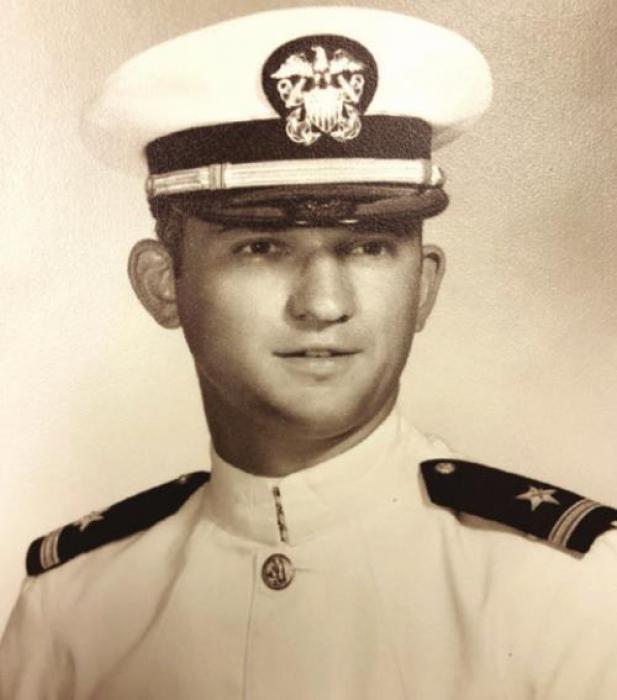
He reported to Providence, Rhode Island, on Aug. 20, 1966, for a four-month program. After being commissioned an ensign on Dec. 16, 1966, John D. was sent to Naval Justice School to study the Uniform Code of Military Justice for six weeks. In early 1967, he was ordered to report aboard the aircraft carrier USS Randolph CVS-15, a ship similar to the USS Lexington CV-16, which is now anchored and on display at Corpus Christi, Texas. The USS Randolph had approximately 5,000 men onboard, split between the ship’s company and Navy pilots and support personnel.

As the ship’s legal officer, John D. dealt mainly with discipline: sailors getting in trouble, coming in late, not doing their jobs or fighting. He was involved with several court-martials, as well.

“I remember in the port of Naples, Italy, going down many, many steps at a jail that was way underground. I would call it a dungeon. When one of the officers turned over the sailor I had come for, he said, ‘I’m going to let you have this sailor, but I want you to promise me you will never let him come ashore again.’ I agreed and passed that word on to the division officer when I got back to ship.”

However, the most memorable part of John’s assignment of the USS Randolph was standing bridge watch every day. As junior officer of the watch, he started out manning the radar and tracking the course and speed of all contacts it picked up. Then he moved up to junior officer of the deck. As an ensign, he qualified as officer of the deck, which was most unusual on an aircraft carrier.

“Here I was 25 years old, serving as the officer of the deck of a carrier underway, giving the orders for course and speed, day and night. The pilots in charge of multi-million dollar aircraft were young, too. The military entrusts tremendous responsibility to young people! I would stand right next to the captain, who only came to the bridge occasionally.”

The most stressful experience John D. faced as officer of the deck was sailing into Norfolk, Virginia, when it was so foggy that he couldn’t see the front of the flight deck. According to the blips on the radar screen, on the mid-watch, 12 to 4 a.m., 12 other ships were in the area, all traveling very slowly at three to four knots. Occasionally, John D. heard foghorns, which indicated imminent danger. He was very relieved when the ship docked.

Another time, when the USS Randolph was pulling out of Naples, Italy, the captain was standing next to John D., who was again officer of the deck, when a small fishing boat appeared. With a putt-putt engine blowing blue smoke, the fisherman came within decreasing range, meaning the big ship and the little ship were going to collide if one of them didn’t take action.

John told the captain that he wasn’t turning the big ship.

“Keep an eye on him, John,” the captain said, his standard answer to anything John D. reported to him day or night.

“We watched the little fishing boat disappear from sight under the flight deck. Then the next thing we knew, the fisherman was shaking his fist at us as he putt-putted away in his little boat, blowing blue smoke.”

Personal plans

Before John D. entered law school, his father warned him that the law was a jealous mistress who would demand all his time and attention. He was reminded of his father’s words when he began dating Kay Giese, whose grandparents, Roy and Meta Giese, lived in La Grange. Kay was enrolled at Texas Lutheran College (TLC) in Seguin, but John D. didn’t have the time to pursue the relationship due to his workload.

“We kind of lost contact for several years, but I went to visit Kay in July 1966 after I’d passed the bar and joined the Navy. Kay graduated from TLC in 1967 and got a job teaching in Alvin. I proposed to her in December 1967 and we were married in June 1968, just before I learned my ship was going on a cruise to Brazil.

“While we were on that cruise, I got a card from the U.S. Government saying my services were required in Southeast Asia.”

In no time, John found himself, along with other servicemen, crammed like sardines into an aircraft. The plane refueled in Guam before arriving at Tan Son Nhut Air Base in Saigon. Exiting the aircraft was like walking into an oven, John D. vividly recalls.

“It happened to be Thanksgiving, so I had some turkey right there in the mess hall. Then we were herded aboard a bus with windows surrounded by chicken wire to keep sappers, surprise attacks by elite Communist units, from throwing in grenades at us.

John D.’s duty station was a support base on the island of Phu Quoc. He served as first lieutenant and assistant officer with three other officers: the lieutenant in charge, a supply officer and a dentist.

“I was in charge of the deck, which meant keeping the swift boats and coast guard cutters safe when tied up our barge, which had a generator to make fresh water. We supported the swift boats that went up into the canals and rivers to interdict enemy movement of troops, ammunition, supplies, etc. Occasionally, they got shot up, so when they came back to us, we would fix them up.

“If the barge needed to move because of the monsoons, we had to find a tugboat or boat to pull us around.”

Also serving as a Registered Publication Custodian, John D. was in charge of all the codes that the boats used to send messages. Every month when the codes changed, the men would turn in their codebooks. John D. would burn the outdated versions and issue new ones.

John D. served in Vietnam for one year.

“When I left Vietnam in November 1969, I remember getting on the plane, which again was packed. When it rolled down the runway, you’d think there would have been shouts of joy and hell-raising. There wasn’t. All you heard was the engines and the thump, thump, thump of the tires going up. Maybe everybody was thinking, ‘Thank God we are leaving.’ I know I was.”

Destination: La Grange

By June 1970, John D. and Kay were packed up and heading back to La Grange where they planned to stay.

“My dad renovated his office at 117 North Main Street a bit to give me a desk area and I started working for him as a lawyer. Kay and I rented a house from Marguerite Willmann on W. Cedar Street for $65 a month. I thought to myself, ‘How in the world am I going to pay rent and utilities, as well as buy food?’”

John D.’s father served as his mentor but shortly after the rookie started, his parents packed up their travel trailer and left on a month-long trip. Although La Grange’s newest attorney had no clients of his own yet, he was anxious to serve anyone who walked through the law practice’s door. However, John D. wasn’t always certain how to do so.

“All the older, experienced La Grange attorneys were generous with their time and advice. If a client came in with an issue that I didn’t quite know how to handle, I would walk over and see Mr. Miles Moss or Mr. Hank Schovajsa or Mr. Walter Oeltjen. They were busy, but each one would put down his pencil, lean back in his chair and say, ‘What have you got, Daniel?’ (They called me Daniel because they called my dad John.) They’d hear me out and say, ‘Well, I think you ought to do this.’ They’d point me in the right direction and I’d go from there.”

Watching and working with his father and getting to know the other well-established La Grange lawyers left an indelible impression on John D.

“I wanted to be like them.”

John D. made a point of answering his office phone whenever possible, a practice that surprised and pleased many clients. As time went on, he discovered that checking land titles and estate planning and probate law appealed to him more than criminal cases or divorces. He received invaluable advice from Marguerite Willmann concerning land titles. He turned to another person for input on focusing on estate planning and probate law work.

“I asked my good friend, attorney Rodney Koenig, who is board certified in that area, if he thought a small town lawyer could/should specialize. He said, ‘Absolutely, John. You need to do it.’ I began attending annual estate planning probate seminars, took the exam and was board certified in 1982. I remained active until I retired in 2007.”

Throughout his 37 years of law practice in La Grange, John D. relied on capable and dedicated assistants like Doris Wottrich, Donna Schramm Faldyn and Jeanette Huelsebusch.

Community-builder

John D., who never had a complaint or grievance filed against him in all his years as a lawyer, has given back to the La Grange community in many ways, and still does. He has served as a municipal judge, dealing primarily with traffic tickets. He successfully ran for a seat on the La Grange Independent School Board in 1976 and retired in 1994. He served on the board of First National Bank in La Grange from 1973 to 1996.

John has been an active member of the American Legion and VFW and helps build wheelchair ramps as a part of the Texas Ramp Project. He has assisted several veterans submit applications to go on Honor Flight Austin to Washington, D.C. John also is part of the American Legion-VFW Honor Guard that performs the American flag folding ceremony and plays taps at veterans’ graveside services.

Until COVID-19 hit in the spring of 2020, John D. had 49½ years of perfect attendance in the La Grange Noon Lions Club. He has been a member of the La Grange Masonic Lodge, LaFayette Lodge No. 34, Ancient Free and Accepted Masons, for 53 years. As a Master Mason, John D. has conducted 57 Masonic graveside services for his fallen brethren including his father, a Mason for 56 years, who died Sept. 24, 1993.

Kay and John D., who have two adult children, Jennifer, and David, are members of St. Paul Lutheran Church in La Grange.

“God has been very good to my family and me,” John D. says. “Better than I deserve.”

To read more stories written by Elaine, visit www. elainethomaswriter.com/blog/ and sign up to receive new posts twice a month. You can also call Elaine at 979-263-5031.

Stories I’ve Been Told

A Monthly Feature by ELAINE THOMAS