


GARDENING

If you’re like me, you’re probably trying to figure out what to do with all the cucumbers you keep picking every day.
We’ve been canning a bunch of pickles, but canning is so boring. Sure, the water bath method of canning pickles is definitely the safest way to go. But I like to live a little. So last week, I started a batch of fermented pickles.
Some folks around here call them crock pickles, because you typically make them in a crock. Fermented pickles end up with a much more complex taste than plain old canned pickles (and they’re full of probiotics).
(Warning: what follows is a description of how I fermented a batch of pickles. Make sure you research this topic thoroughly and understand the risks before trying for the first time.)
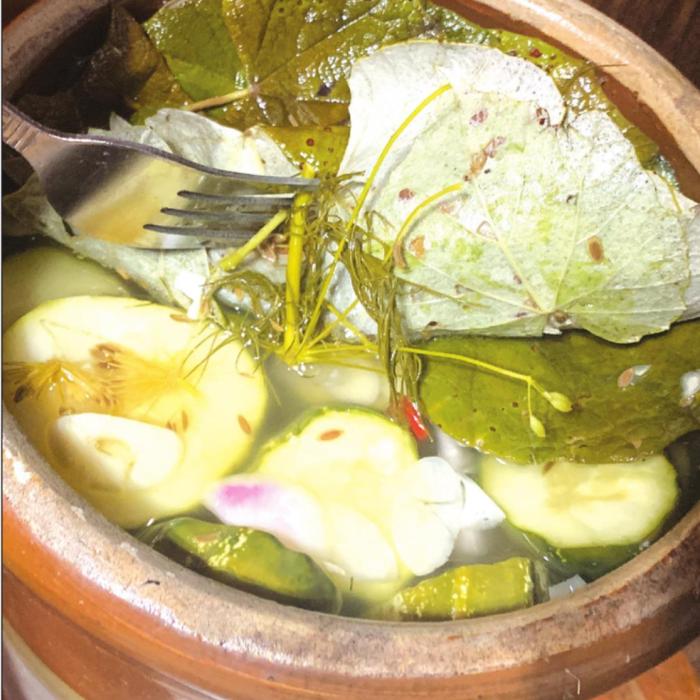
I started by packing a bunch of cucumbers into a crock with sliced onions, chopped garlic, red pepper, dill and black peppercorns. I used sliced cucumbers because I had a few gigantisized cukes that stayed on the vine too long. Then I covered the ingredients with a brine made up of one and a half tablespoons of salt to one quart of water. Canning salt, sea salt or kosher salt can be used but not iodized salt - it inhibits the fermentation process.
The ratio of salt to water in the brine is the most important part of the process. From what I’ve read, too little salt allows bad organisms to grow in the brine. Too much salt will kill the beneficial organisms. It seems there’s sort of a sweet spot. I have seen ratios as high as three tbs. per quart of water and as low as one tbs. per quart.
Old timers say to cover the top of the liquid with grape leaves. The tannins in the grape leaves supposedly make the cucumbers crunchier. I gathered some wild grape leaves from the woods and used them for this purpose.
The ingredients must stay below the liquid in the crock because the fermentation process can only take place in an anaerobic environment. Oxygen is not good for fermentation. A weight is needed to push the cucumbers, grape leaves and other ingredients down so they don’t float. Some people fill a gallon ziplock about halfway with water to use as a weight. Some companies make weights specially designed for fermenting in crocks. I happen to have a ceramic bowl that fits perfectly into the opening of my crock.
Fermentation needs to take place in cool space. The perfect place is a root or wine cellar, but I don’t have one of those. I set my pickle crock on the bottom shelf of a bookcase in my living room.
Now I’m waiting. It has to sit and brew for a couple of weeks. After a few days it started to bubble and froth. This is normal. I check for scum on the surface every day and scrape off any that I find.
After two weeks I’ll have to make a decision - whether to can them or put them in cold storage. Fermented foods contain probiotics that are especially beneficial to our digestive systems. Unfortunately, the hot water bath canning method kills the probiotic organisms in fermented foods. So I will probably just put the crock in my refrigerator and pluck out pickles as I need them. However, canned fermented pickles can stay on the shelf at room temperature for a year. They can also stay in the crock at room temperature, but the pickles will lose their crunch after a while.
Have you ever tried fermenting pickles or other produce from your garden? Let me know how you do it by emailing me at andy@fayettecountyrecord.com.