

Fayette County Becoming The Houston Hamptons?
City-Dwellers Increasingly Seeking to Escape Problems and Stress of the Cities
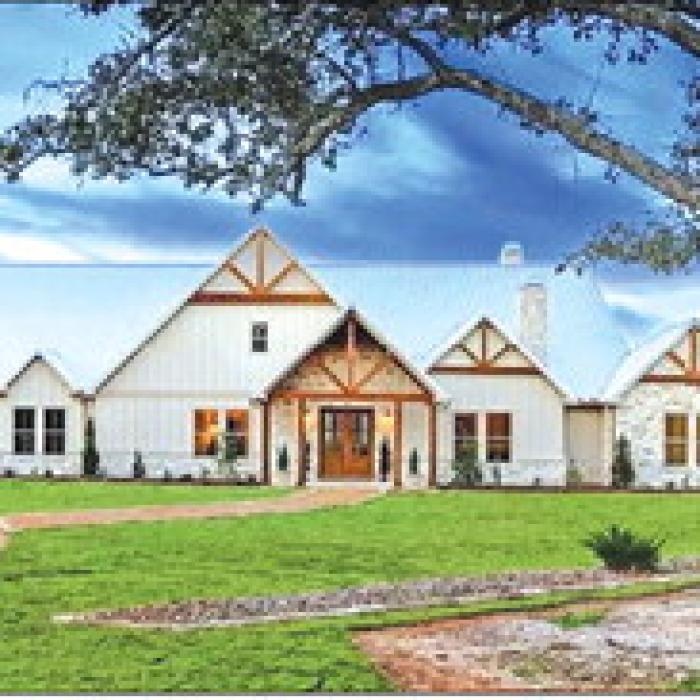
The Houston Hamptons – that’s what Gary Maler of the Texas A&M’s Real Estate Research Center calls this part of Texas.
Maler recently sat down for an interview on local Realtor Chip Bubela’s “The Entre” podcast for a wide-ranging discussion about issues in the local real estate market.
Maler spoke about the trend of small town revitalization efforts throughout Central Texas. He attributed some of that to a wave of city-dwellers seeking to escape problems and stress in the cities.
“They’re looking for a more relaxed, less stressful way of life,” Maler said. “But when you start seeing a preponderance of crime that we have in some of the major cities, people were repelled by that. They say, ‘I want to go to a place where I don’t have to worry about that.’ The pandemic accelerated this as well. People were already moving in this direction.”
About 35 years ago, while conducting a focus group study, Maler coined the phrase “The Houston Hamptons” to refer to the area stretching from Brenham to La Grange.
“You had absentee landowners buying up properties in that area because it was attractive just like The Hamptons are for New York,” Maler said. “One of the things we came to in that focus group was that the people just could not identify anymore with the dominant culture, the dominant values in some of those cities they lived in. It was a disconnect between what they believed in the heart.”
Much like the relationship between New York City and The Hamptons, Maler said these Houston residents no longer felt part of their communities. It’s not just crime that they’re fleeing, Maler said, but rather changes in culture, values and belief in the cities. So they fled to the countryside.
“They have businesses in Houston that are thriving,” he said. “They live in Brenham or Chappel Hill three or four days a week and the rest of the time they commute in.”
He spoke about the importance of people he calls “economic sugar daddies” in small towns.
“I mentioned this term, what I call ‘economic sugar daddies,’” Maler said. “Every town needs someone who is passionate about the community.
“Look at the Bass Brothers in Fort Worth,” he added. “They cleaned up Fort Worth, the downtown. They sprayed the streets, power washed the streets to keep them clean. The Bass Brothers started all this. Fort Worth began to thrive. It was going downhill. But the Bass brothers had a passion for it. That’s where they grew up.”
Maler said towns that succeed also need some entrepreneurs. He used the town of Shiner as an example, home of a Ranch Hand bumper manufacturing plant, Spetzel Brewery, a plastics manufacturing plant and more.
“I looked at the commuting data there, and it’s like 17 minutes,” Maler said. “So you have a few people commuting maybe to Victoria. But a lot of people are working right there in Shiner.”
Maler said he believes employment isn’t as big of a factor as it used to be for people looking to relocate. Remote working and flexible employment arrangements allow many people with jobs in the city to live in the country. In addition, Maler said some people looking to relocate to rural areas are willing to take a cut in pay. On the other hand, Maler said long-time residents might be opposed to growth. He mentioned a shopkeeper he interviewed in Fredericksburg some years ago.
“They said, ‘We don’t want it to grow so much. We want to maintain the character,’” Maler said. “They’d been in business there since the 1800s, so they don’t want the town to lose the character that makes it so special.”
“You see that in a lot of small towns,” Bubela said. “The local people don’t want to see it change. But it has to change, because if you don’t change and you don’t have growth, you die.”
Maler said towns need to find ways to grow at a modest rate. “If you grow 75 percent, you lose your charm,” he said. “Then you lose that attachment, that place-attachment.”
But even for modest growth, Maler said, rural communities need certain amenities.
“It needs to have a certain mix of facilities,” he said. “You need a drug store. You need a food store. You need a beauty shop. You need a barber shop. You can go on and on. You need a hardware store, a lumber company. You need places where people can take care of their property, take care of themselves, feed themselves – there’s just this basic list of needs that a community has to have and provide to thrive.”
He said most home buyers want some kind of medical care nearby – if not a hospital, at least a 24-hour urgent care clinic. Maler said you can judge the health of a community looking at the local schools.
“It’s critical to look at the population of children in prekindergarten and kindergarten,” Maler said. “If you don’t have a population there, you can tell the town itself is probably dying. Because there’s not a future there to replace the existing population. If you’re looking for an indicator of the town’s future – other than just recruiting people who are retirees – is looking at enrollment by age group. If you’re the leader of a town, the mayor, or others, you need to be monitoring this. You need to be talking to your schools to understand what the situation is.”
As cities become more congested, Maler said, economic opportunities can arise in the surrounding smaller communities.
“It costs a lot to start up a new manufacturing facility inside of a large city,” he said. “Just the sheer cost of acquiring the property to do that is huge. You can go out into the hinterlands and acquire property. You see that all the time. You see manufacturing moving well outside - 60, 70, 80, 90 miles outside of an urban area to do that. That means the population is going to follow at some time.”
Bubela asked Maler what advice he would give local leaders who want to grow their communities.
“Number one, don’t let the maintenance in the community slip so far that it appears its in decline,” he said. “If you’ve got any money at all, do the things, the low-hanging fruit, to keep the appearance of the town up. There’s a point of no return for some people. If the community slips too far, it’s hard to make it come back.”
“It’ll take an economic sugar daddy to come in,” Bubela said.
“You do if it goes too far, you’ve got to have somebody come in and clean it up,” Maler said.
Maler said beatification efforts through landscaping and horticultural projects can greatly improve a town’s image to outsiders.
“That can help overcome potholes in the street and things like that,” Maler said.
You can listen to Bubela’s podcast on most of the major podcast outlets like Spotify, Audacy, Podbean and the Apple Podcast App. Maler frequently writes articles about the rural real estate market in Texas. Learn more at https://trerc. tamu.edu/expert/gary-maler/.