


Dove Season Not What It Once Was in Fayette County
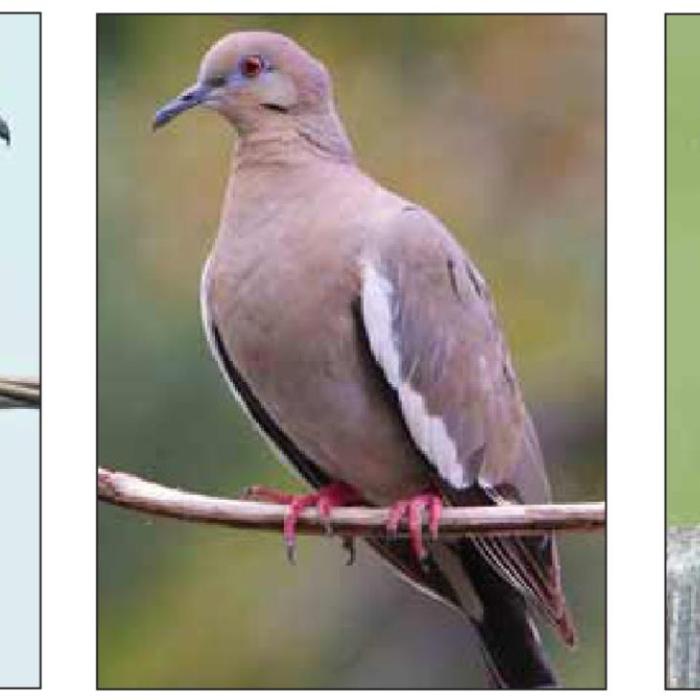
Dove season opened in much of Fayette County on Tuesday, Sept. 1.
The regular season in the central zone runs through November 1. A small portion of Fayette County south of Interstate 10 lies in the south zone. The regular season there opens on Sept. 14 and also ends on Nov. 1.
Local game warden Calvin Harbaugh with the Texas Parks and Wildlife Department said he was patrolling around Fayetteville Tuesday morning and came across a few hunters.
“I didn’t see any large numbers of doves flying or being killed, but they did kill a few doves,” Harbaugh said. “That’s a pretty typical opening day for us.”
For both zones, the daily bag limit is 15 white-winged, mourning and white-tipped doves in the aggregate, to include no more than 2 whitetipped doves. The possession limit is three times the daily bag limit.
“We get the question every year, ‘What is a white-tipped dove?’” Harbaugh said. I always tell people, don’t worry about white-tipped doves because you won’t see one around here.”
Harbaugh said white-tipped doves are only found in parts of the Rio Grande Valley. Whitewinged doves, on the other hand, are fairly common around here.
There will be a few special white-winged dove days in the south zone on Sept. 5-6 and Sept. 12-13. The daily bag limit for those days is 15 whitewinged, mourning and whitetipped doves in the aggregate, to include no more than two mourning and two white-tipped doves. Legal shooting hours on those days are noon to sunset.
“If you’re going to hunt on those days, make sure you don’t shoot more than two mourning doves,” Harbaugh said.
Legal hunting hours during the regular season are from onehalf hour before sunrise to sunset. Local hunters often come across Eurasian collared doves, which are not considered migra tory game birds. Hunters can harvest them any time of year as long as they have a basic hunting license. Eurasian doves do not count as part of the bag limit for the other doves.
Harbaugh said Fayette County no longer enjoys the large numbers of doves that used to migrate through.
“It’s not like it was 20 or 30 years ago, just ask the oldtimers,” Harbaugh said. “That’s mostly because we no longer have a lot of farming in Fayette County.”
Recently-harvested grain fields attract huge numbers of doves, but there are few such fields around this area. That doesn’t mean we have no doves. Landowners can create some good habitat by shredding strips in a weedy pasture, especially a field with sunflowers.
Harbaugh offered the following advice for folks who plan to hunt doves this season:
“Always be safe and be aware of which way you’re shooting,” Harbaugh said. “Every year we get complaints about people peppering neighbors’ houses with shotgun pellets. Be aware of where the boundaries are so you’re not shooting across a property line unless you have permission. There may be a house on the other of the property line that you can’t see.”
Harbaugh wished to remind hunters that they must have a migratory game bird endorsement on their hunting license in order to legally hunt doves in Texas. Super combo and senior citizen super combo licenses include the necessary endorsement.
Hunters who are age 17 or older and were born after Sept. 2, 1971, must also have proof that they have taken a TPWD-approved hunter education course. TPWD offers a one-time, oneyear deferment for the hunter education requirement. Hunters under age nine must be accompanied by a person at least 17 years old and properly licensed to hunt. Hunters age nine through sixteen must either complete the hunter education requirement or be accompanied by a licensed older hunter. People 17 and older can take an online hunter education course. TPWD provides a list of approved online courses at the following link: https://tpwd.texas. gov/education/hunter-education/ online-course-for-certification.
Harbaugh reminded hunters to make sure their shotgun has a “plug” rendering the gun incapable of holding more than three shells at a time. The late season in the central zone runs from Dec. 18, 2020 to Jan. 14, 2021. In the south zone, the late season runs from Dec. 18, 2020 to Jan. 23, 2021. The Fayette County Sheriff’s Office advised this week that people living in rural areas of the county may hear an increase in gunfire during dove season.
“The Fayette County Sheriff’s Office will handle all calls that are received accordingly and as timely as possible,” the Sheriff’s Office said in a post on Facebook Tuesday. “Every year around this time we have an increase in the number of calls we receive regarding discharge of firearms ... Game Wardens and Deputies will respond when called.”