

Back to Class: Memories of St. Mary’s School at High Hill Linger a Lifetime
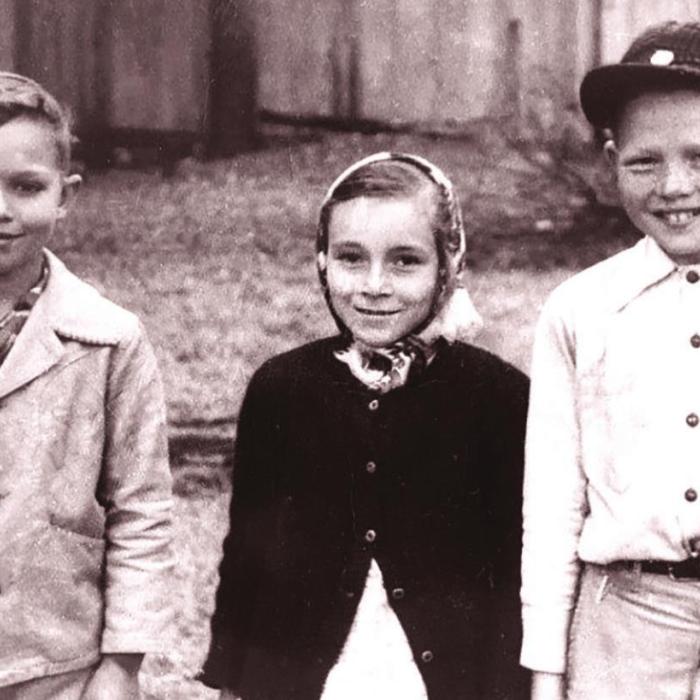
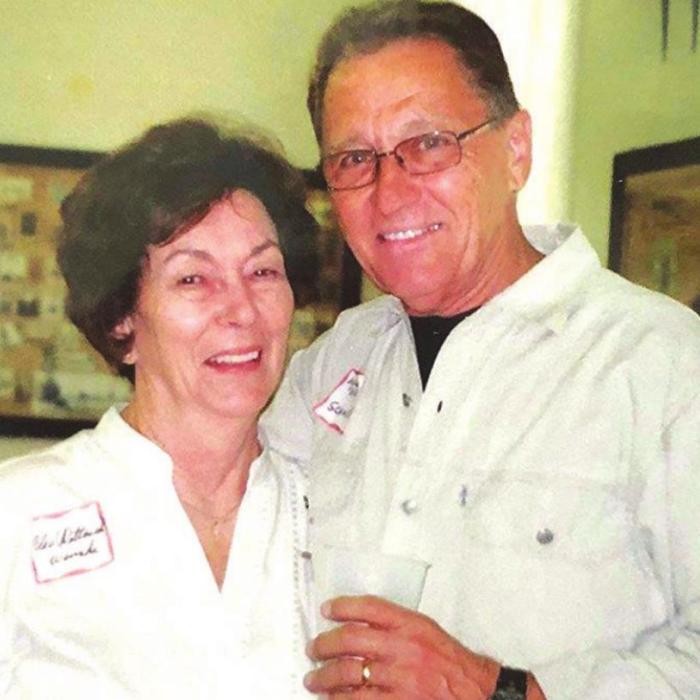

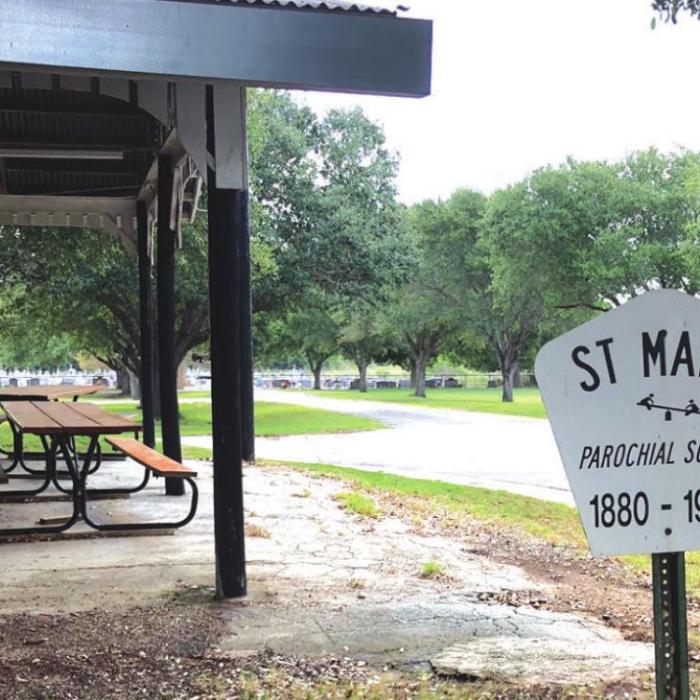
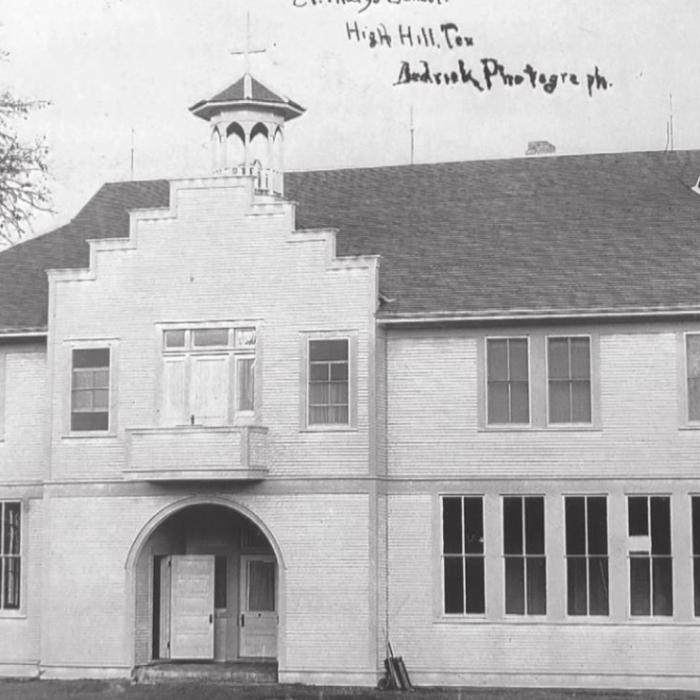
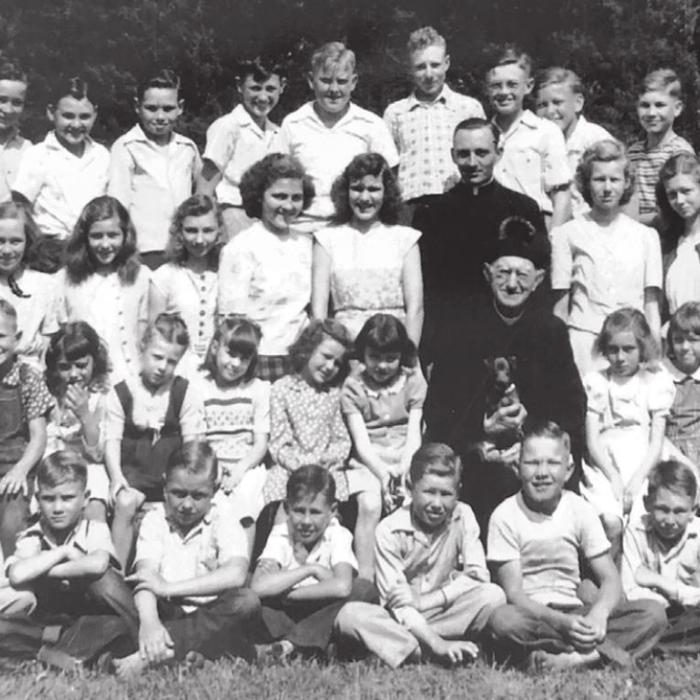
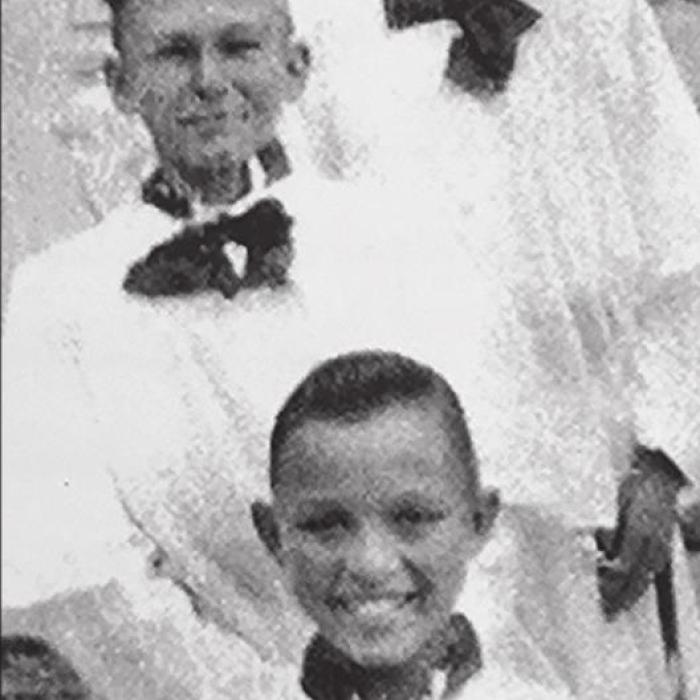
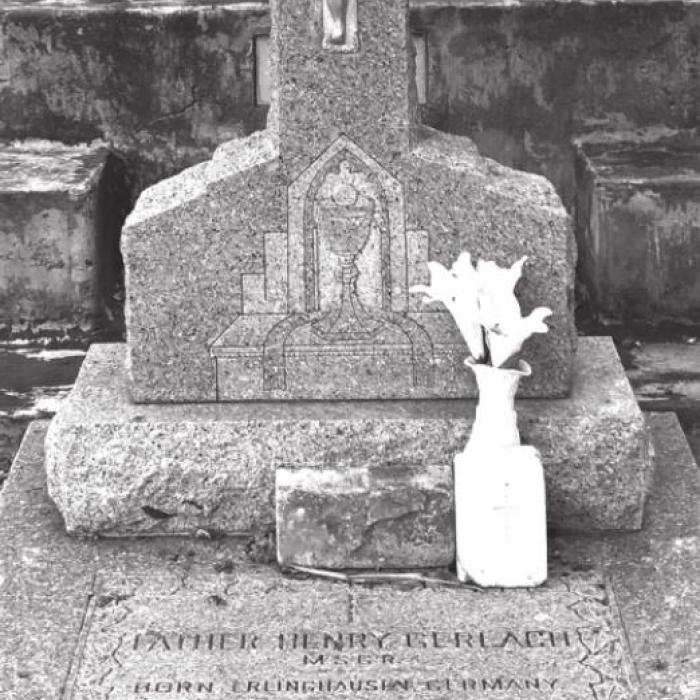
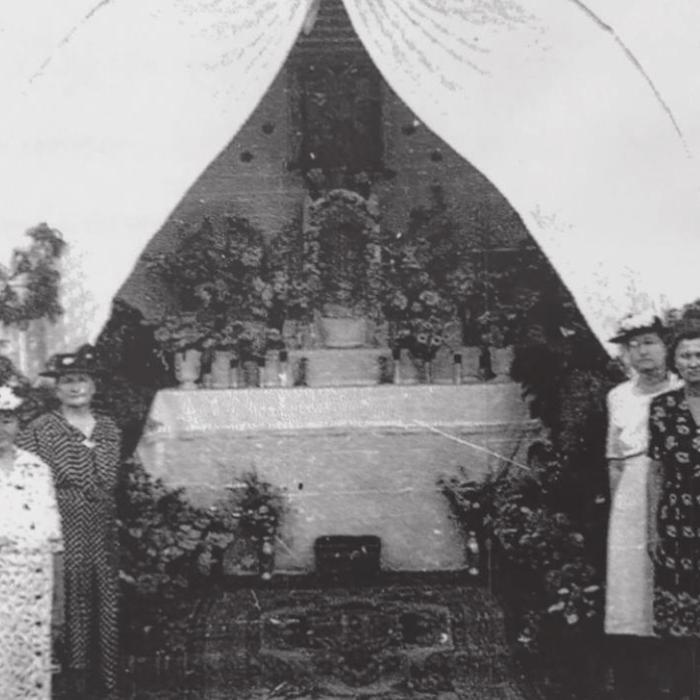
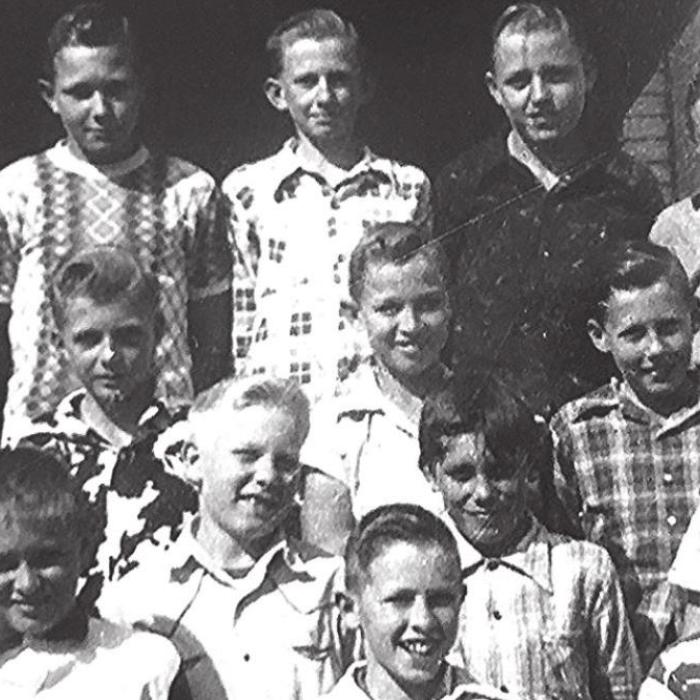
St. Mary’s School classmates (left to right): Willy Schmidt, Cleo Dittrich and Erwin Kainer grin for the camera when they were in first or second grade. About 75 years later, Willy and Cleo Wenske, who are second cousins, share some memories at a school reunion. Photos courtesy of Willy Schmidt A marker at the picnic pavilion behind the church marks the location of St. Mary’s School years ago. Elaine Thomas photo St. Mary’s School at High Hill had two classrooms on the ground floor. A third classroom and the convent of the nuns, who taught there, were on the second story. Built in 1923, the school offered grades one through eight. For grades nine through 12, students were bussed to nearby Schulenburg. After St. Mary’s School closed in 1959, the building was demolished. St. Mary’s School, High Hill - 1948 Front row (left to right): Harlan Hilscher, Erwin Kainer, James Kahlich, David Heinrich, Winfred Hollas, Wilbert Demel, Leroy Kahlich, Florian (Flo) Demel, Clarence Dittrich, Daniel Kainer, Alvin Winkler Jr. and Wilbert (Willy) Schmidt. Second row (left to right): Charles Muenster, Robert Georgi, Bobby Demel, Dolores Kainer, Julia Mae Cordes, Helen Hilscher, Isabel Kainer, Charlene Muenster, Msgr. Henry Gerlach holding his dog named Amme, Cleo Dittrich, Betty Lobpries, Billie Lobpries, Ruby Cordes, Leo Wick, Daniel Kahlich and Bennie Demel. Third row (left to right): Minnie Georgi, Doris Dittrich, Angeline Dittrich, Earlene Muenster, Gladys Vanicek, Annie Kainer, Bernice Schindler, Rev. Robert Schmidt, Alene Krischke, Dolores Lobpries, Ruth Zweschper, Darlene Heinrich, Marcella Krischke, Ruth Cordes and Marietta Stavinoha. Fourth row (left to right): Sister Prudentia, Wilbert Muenster, Elroy Demel, Delphine Ulrich, Marcus Stavinoha, Adolf (Sonny) Kainer, Melvin Kunz, Leon Popp, Leonard Berger, Arnold Heinrich, Robert Hollas, Wilbert Dittrich, Herman Popp and Sister Mary Alice. Altar boys waiting at the side door of the church for an Easter service (circa 1950) are (front to back): Willy Schmidt, Clarence Dittrich, Harlan Hilscher and Herman Popp. At the foot of the World War II statue in the cemetery at St. Mary’s Catholic Church at High Hill is the grave of the church’s beloved Msgr. Henry Gerlach, whom Willy and Cleo fondly remember. The words he chose to be engraved on his stone speak loudly to this day. Elaine Thomas photo St. Ann’s Society members decorate an outside altar in the school entrance for the annual Feast of Corpus Christi procession circa 1950. Left to right are: Mrs. Joe (Anna) Kainer, Mrs. Ferdinand (Christina) Berger, Miss Martha Kainer, Mrs. Hugo (Tillie) Berger and Mrs. Frank (Adie) Schmidt. In front of the cafeteria are some fifth through eighth grade boys in 1952. Front row (left to right): Richard Severa, Bennie Demel, Bobby Demel. Second row (left to right): Leon Zweschper, Robert Georgi, Leo Wick and Alvin Winkler Jr. Third row (left to right): David Heinrich, Erwin Kainer, Willy Schmidt and Wilbert Demel. Fourth row (left to right): Charlie Michna, Florian Demel, Joe Krischke, Winfred Hollas and Thomas Severa.
Although Wilbert (Willy) Schmidt was an only child, he was rarely alone on the twomile trek to St. Mary’s School in High Hill, Texas. Willy was usually in the company of his childhood friend, Cleo Dittrich Wenske, and some of her brothers and sisters: Angeline, Clarence, Helen, Paul and Andrew.
When Willy and Cleo started school in 1945, they were friends, neighbors and second cousins. Their families shared the Catholic faith, a German heritage and farming as a way of life. Frank and Adie Stanzel Schmidt were Willy’s parents, while Cleo’s mother and dad were Paul and Hedwig Ripper Dittrich. Willy and Cleo grew up on Dittrich Road off Hwy. 77 north of Schulenburg.
Each family had grandparents living nearby who spoke only German. However, Willy and Cleo’s parents could converse in both languages.
The old parochial school
Willy and Cleo started first grade at the imposing, white, two-story wooden structure east of St. Mary’s Catholic Church. Today, a marker under the church’s outdoor picnic pavilion marks the school’s location.
There were two classrooms on the ground floor. One housed grades one and two and the other five through eight. The classroom for students in grades three and four were upstairs on the north side. The remainder of the second story served as the convent for the Sisters of Divine Providence who taught at St. Mary’s School.
Willy and Cleo’s first grade teacher was a young nun named Sister Mary Alice.
“She introduced me to organized learning. I remember a lot of good times and learning the basics,” Willy recalls. “I give Sister Mary Alice credit for giving me a good start.”
Sister John Martin taught Willy and Cleo in grades three and four. Sister Clarita was their fifth and sixth grade teacher, while Sister Padua taught the seventh and eighth grades.
Behave!
“The nuns were firm and kept discipline, but I don’t remember a student getting a whipping,” Cleo says.
She does remember the boys daring to throw spitballs at the window shades when the nuns turned their backs.
“The nuns never indicated that they saw what the boys were doing, but I think they knew. Not much got by them,” she adds.
One of the few places offlimits on the school property was the fire escape on the second floor’s north side. It was designated for emergency purposes only, but the boys occasionally had to try their luck at running up and down it without being caught.
Cleo loved school, partly because it took her away from the monotony of an endless number of farm chores and fieldwork.
“Reading and writing were my favorite subjects,” she says. “I didn’t care much for math, but I can still add, subtract and divide without pushing any buttons, so I learned that, too.”
Willy preferred math.
“I was very interested in mathematics, which led me to my career as an accountant,” he says.
Getting there
Some days, the youngsters took a shortcut through the fields on the way to school. That decision was based on the location of the neighbor’s bull. More often than not, they followed the rutted dirt road that turned to mud after a rain to and from school.
Cleo remembers enjoying the walk, barefoot in the spring and fall, because it gave her time to observe nature.
“I recall picking up snails in the ditch water and wrapping them in my cotton handkerchief. Later in the day, I would take them out and study them,” she says. She can imagine what her mother would have thought of the improvised use of her clean handkerchief.
In the spring, the children sometimes filled their empty lunch pails on the way home with dewberries growing on the roadsides.
“I think we had a nice little snack ourselves and then took some dewberries home to our mothers,” Willy recalls.
Fun and games
Both Willy and Cleo were big fans of the games they played at recess.
“Two of my favorites were Flying Dutchman and Drop the Handkerchief. We’d also play kickball and dodgeball. There would be a picnic at the end of the school year and we’d have sack races. That was lots of fun,” Cleo recalls.
“I liked playing Rabbit, which I think was a made-up game,” Willy says. “One kid who had a rubber ball (about the size of a tennis ball) would be the hunter. The rest of us were the rabbits and we’d run around all over the playground to get away. When the hunter would hit someone with that ball, that kid was out and had to sit on the sideline. The hunter won when no one was left running around or recess was over. The next recess, another student would be the hunter.
“The hunter with the most hits had bragging rights as the best! It really improved our throwing skills for baseball and football that came later,” he adds.
In the seventh and eighth grades, St. Mary’s had a softball team. It’s a memory that Willy cherishes.
“What a proud moment it was when I put on my team jersey with our school name on the front for the first time. We were playing our rival school, Ammannsville. It was my first team sports experience and I loved it,” he says.
No indoor plumbing
The school’s outdoor toilets, one for the boys and another for the girls, were surrounded by a six-foot wooden privacy fence.
“There was no indoor plumbing at school, but we didn’t have indoor plumbing at home either, so we didn’t think anything about it. The outhouse at school was a three-holer if you know what that is,” Willy says.
Cleo remembers trips to the outhouse with her younger sister.
“I would run down to the bathroom with Helen and hold her so she wouldn’t fall into the pit, if you know what I mean,” Cleo adds.
Hand-me-downs
Cleo, the family’s middle child, inherited her school clothing and shoes from her older sister. The girls wore homemade dresses, skirts and blouses.
“Daddy took the eggs to sell in Schulenburg every Saturday. We would beg him to pick out sacks that had the same print when he bought feed. If he didn’t, a new shipment might have come in with a more vivid or faded version of the pattern by the following week. We wanted the material from those feed sacks to match because we used it make our clothing.”
Cleo also recalls that her father would request a written list of items to purchase at the grocery store.
“At the time, I wondered why Daddy needed that written down since it was usually sugar, flour and yeast. The older I get, the more I understand Daddy’s request!”
On the rare occasions that the Dittrich children accompanied their father to Schulenburg, they were going to the doctor or dentist.
“When Daddy went to town, Saturday was washday for the rest of us,” Cleo recalls. “With eight people in the family it was no small chore, especially without modern washers and dryers.”
Cleo wore hand-me-down shoes, too. That created a problem because Angeline had a wider foot. That made it uncomfortable for Cleo to wear her sister’s old shoes.
“One Easter, I threw one of those shoes behind a floor joist in the attic. We looked and looked but couldn’t find it, so I got a new pair of shoes,” Cleo says.
“You do what you have to do,” she adds.
Every Sunday the entire Dittrich family attended Mass, along with everyone else in the tightknit community. When the parish held its annual feast on the first Sunday in September, Cleo remembers that local people who had moved to the city to earn a living returned home to help. They were welcomed with open arms.
Msgr. Gerlach
In addition to their classroom work, students at St. Mary’s attended religion classes taught by High Hill’s elderly resident priest.
“Monsignor Henry Gerlach was a strict disciplinarian in the German tradition,” Willy remembers. “When he spoke, we listened. I was an altar boy and if one of us didn’t come up to Msgr. Gerlach’s standards, he would definitely let us know about it. Most of the time it was verbal, but occasionally, he’d grab one of us by the ear and give it a twist. We never forgot who was in charge!”
Born in Germany in 1863 and ordained in Belgium, Msgr. Gerlach came to the U.S. in 1886. After living in Kansas for several years, he moved to Texas for his health on the advice of his physician. He served High Hill from 1899 to 1913.
Msgr. Gerlach then was charged with simultaneously leading Catholic churches in five counties around Fredericksburg, Texas, often making his rounds on horseback. The demands were so onerous it began to undermine his health.
Msgr. Gerlach had the opportunity to return to High Hill in 1925, where he served a total of 40 years spanning two separate appointments.
On June 3, 1951, Msgr. Gerlach died following an operation in San Antonio several weeks before the 65th anniversary of his ordination to the priesthood. One of the oldest and most influential area priests, he was 87 years old. Approximately 100 priests, including several church dignitaries, traveled to High Hill for the funeral, many of whom had attended the seminary with his aid. Msgr. Gerlach is buried in St. Mary’s Cemetery at the foot of a statue that he and his parishioners erected to honor the young men of the parish killed in World War II.
Inscribed on Msgr. Gerlach’s tomb are the words, “If I did what I preached, heaven will be mine. If you did what you heard, heaven will be thine.”
“My parents and grandparents all thought very highly of Msgr. Gerlach,” Cleo says. “He was German like them and he could get things done.”
After the 8th grade
“It was an easy transition for us when we got to Schulenburg High School as freshmen in the fall of 1953. Sister Padua had done an excellent job of preparing us for high school. We weren’t out of place,” Willy recalls and Cleo concurs.
By the spring of 1959, enrollment at St. Mary’s School had dropped to 59 pupils. The decision was made to close the doors and withdraw the Sisters. Since then, all the students in the High Hill community have been bussed to Schulenburg.
Willy and Cleo, who began their faith journey and education at St. Mary’s School at High Hill, always will be grateful for that strong foundation.
If you’d like to read more of Elaine’s stories, visit www. elainethomaswriter.com/blog/ and sign up to receive new posts twice a month. You can also call Elaine at 979-263-5031.