


Accidental Planting Looks Better Than Planned Effort

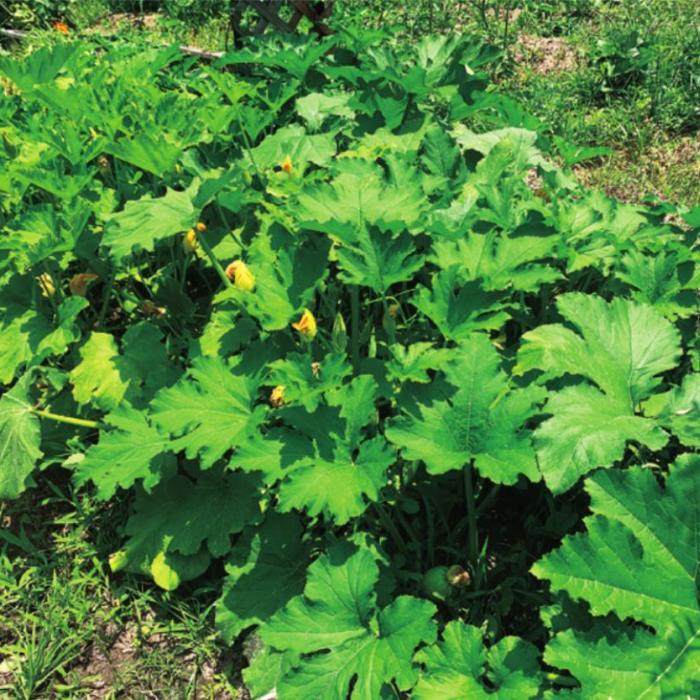
Notice how the pumpkin leaves in the foreground of the photo are much larger and healthier looking than the ones in the back left. The plants in the foreground grew from seeds that I accidentally dropped on hard ground and then walked all over. It’s hard to tell in this photo, but the plants in the foreground are much darker in color. The weak looking plants in the back grew from seeds that I carefully planted in a prepared bed. I think my pumpkin patch demonstrates the benefits of no-till gardening methods. Photo by Andy Behlen
A little over a month ago I accidentally began an experiment in no-till gardening.
Last year at Halloween, our boys carved a jack-o-lantern out of a pumpkin. It sat in our house for a few weeks until it began to get soft. I told the boys to throw it over the yard fence into the pasture and forgot about it.
Then last month one day I went walking around the pasture and saw where the boys threw the pumpkin. The fruit had decomposed into what looked like an orange, moldy cow patty. About a dozen sprouts were growing from this spot. I hadn’t thought about planting pumpkins this year, but with all these sprouts, I thought, “What the heck, I might as well put them in the ground.”
So I scooped up the orange cow patty and took it to my garden. I used a cotton hoe to break some new ground for a small bed. I worked in some organic fertilizer and compost to the bed. I pricked out four of the sprouts from the old pumpkin and planted them in the bed. While doing so, I clumsily dropped a bunch of unsprouted seeds on the ground around the bed. I picked most of them up and threw them in the compost pile, but I must have missed a few.
Every time I watered this bed, I walked on the ground around the plants, compacting the soil. Then one day I noticed a bunch of new sprouts coming up from the soil that I walked across almost daily.
“That’s cool,” I thought to myself, and left them alone.
To my surprise, those seeds that I dropped on the ground and walked all over are now growing leaps and bounds better than the sprouts I carefully planted into my prepared bed. Look at the photo. Those “accidental” plants are dark green. Their vines stretch out for feet and a few baby pumpkins are starting to appear.
The plants in the bed are light green, their leaves often show signs of wilt. They produce a bunch of male flowers, but I haven’t seen any of those four plants set any fruit yet.
Why is this the case? I have a few theories. I think breaking up the ground destroys the network of mycorrhizal fungus that is so beneficial to soil. It takes months for this network to rebuild itself. If you till the ground every spring and fall for your garden, the mycorrhizae never gets a chance to build back up. I think it also damages the earthworm habitat in the soil. It may also encourage nutrients to leach out of the soil faster.
What have I learned from this? I’m really trying to transition to a completely no-till garden using methods like sheet mulching. Whenever I plant seeds or transplants, I simply move some of the mulch out of the way and loosen a little soil around the area I’m going to plant instead of tilling up the entire bed.
If you’re thinking about putting in a fall garden, now is a good time to prepare the beds. I would chop out the weeds at the surface, but don’t till too deeply. Lay down a few layers of cardboard. Cover that with some native wood mulch, such as the kind you can purchase cheaply at the Fayette County Recycling Center. Lay down a foot or so of this mulch on top of the cardboard. In the fall, you may have to cut through the cardboard to plant if it has not decomposed by then. The mulch will slowly decompose over time. After each planting season, add a few more inches of mulch to replace the material that has decomposed.
If you give this a try, let me know how it goes for you. Good luck!
Questions or comments about gardening can be sent to andy@fayettecountyrecord.com.