

Winter Garden Still Yielding Tasty Fare

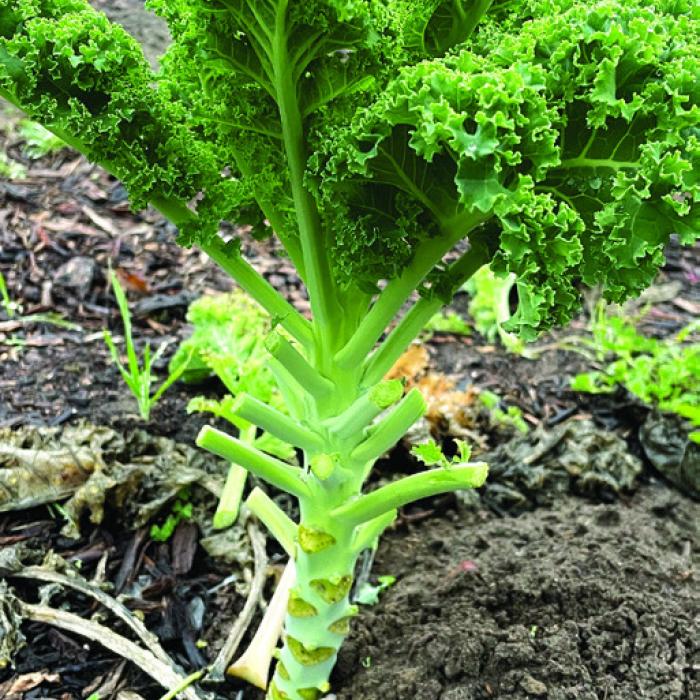
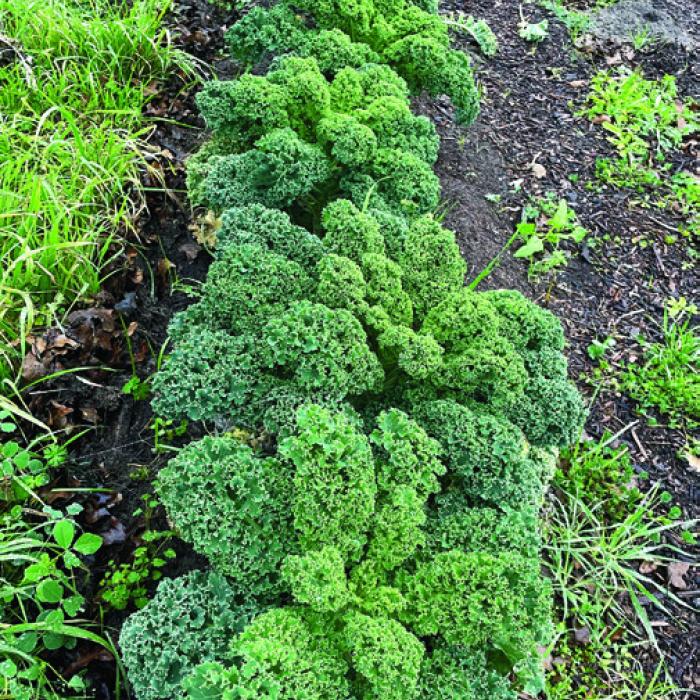
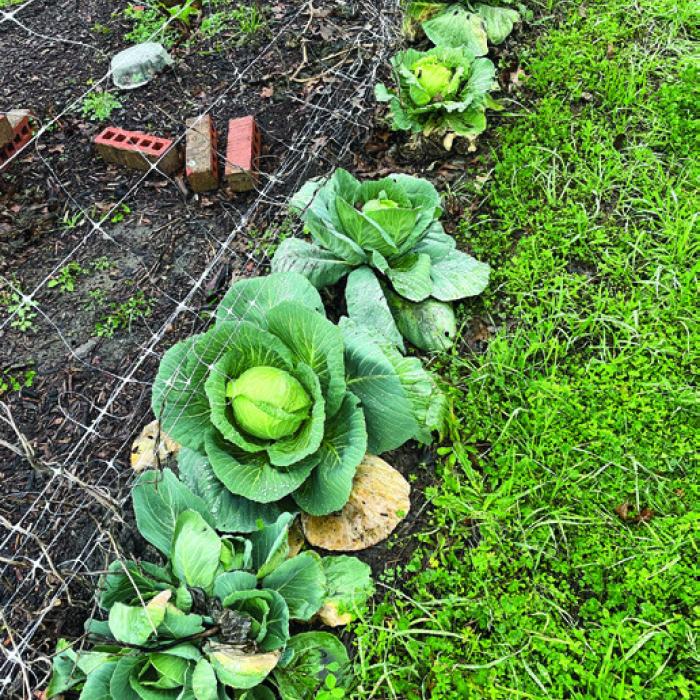
Our garden looks pretty bare this time of year. Kale and cabbage are the only crops still producing.
I planted some green peas and spinach on Saturday. I know the cold weather might set back their germination, but I think they’ll sprout eventually.
The peas I planted are a variety of snow peas called Oregon Sugar Pod II from Burpee Seed Co. According to Burpee, they are supposed to produce “extra-large crops of tasty 4½ inch pods, often with two pods per cluster.” Snow peas like this variety are harvested and eaten as whole pods. I love eating them in stir fries and soups. You can also harvest small pods and eat them raw in salads. Many gardeners never bother to harvest the tendrils from snow peas, but they, too, are delicious raw in salads.
Burpee says this variety grows to 28 inches tall. The vines need a trellis to grow upwards. We use trellis netting attached to t-posts. You can buy trellis netting at Farmer’s Lumber in La Grange. They offer rolls of 50 feet that are 48-inches tall.
This variety of snow peas is supposed to reach maturity 68 days after germination. If all goes to plan, I should be able to harvest the first peas sometime in April.
The variety of spinach I planted is called “Galilee.” As the name implies, it comes from the Holy Land. I first planted it three years ago and I’ve been saving seeds from it ever since. It can be hard to find in seed catalogs. It is available this year from Baker Creek Seed Co. ( rareseeds. com). Some sources describe this heirloom as a variety closely related to wild spinach. It is very heat tolerant. It grew well for us all of last year except for during the hottest and driest parts of the summer. It can also hold up to frost. I found a few volunteers around the garden that somehow survived the frigid temperatures at Christmas.
Galilee spinach grows triangular, arrow-shaped leaves. When it bolts, the seed clusters resemble sticker-burrs or brambles. Years ago, I used to think the spinach variety called “Bloomsdale Long Standing” was the best to grow around here. I now think Galilee might be better. If you can’t find Galilee, pick up some Bloomsdale seeds.
I’m also going to plant some radish seeds this week after the cold weather passes. Radish seeds can germinate in soil temperatures as low as 40 degrees. I love making salads from radishes with vinegar dressing. Asian varieties like “Daikon” can be cooked or pickled. For salads, I prefer the fingerling varieties to the round red varieties, although the round ones are much easier to grow.
Last week I found some seeds for a variety of radish called “Dragon Tail.” These radishes are not grown for their roots but instead for their purple and green bean-like seed pods. These seed pods supposedly taste like radishes with a nuanced spicy flavor. However they lack the harshness that some people experience with radishes. They can be eaten raw, cooked or pickled. I’m really looking forward to trying this variety for the first time.
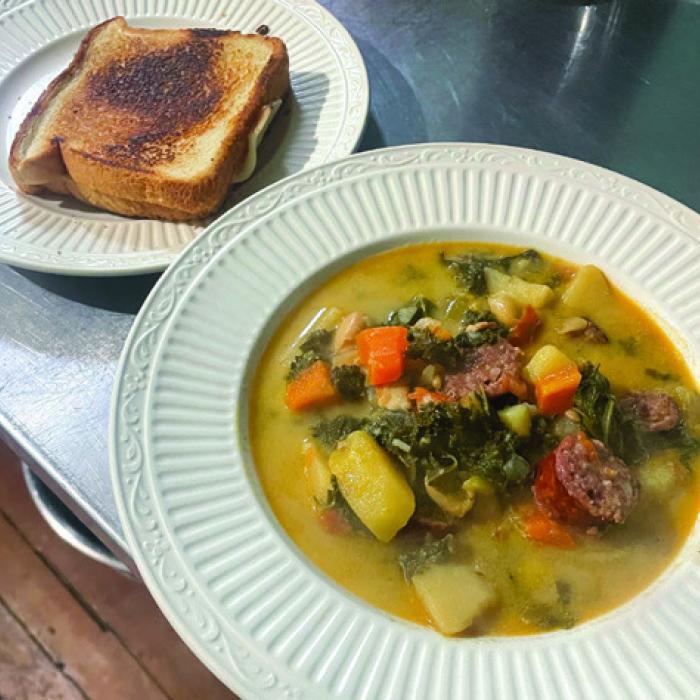
Tuesday night I picked some kale from the garden to make a delicious kale and sausage soup. Almost every culinary tradition from Europe has developed some version of soup like this. Many of us with Czech or German ancestors probably have a cabbage soup recipe in the family cookbook. The Portuguese, in my opinion, perfected this soup with a dish they call “Caldo Verde,” which literally means “green soup.” It’s based on kale and Portuguese chorizo sausage. Portuguese chorizo is nothing like Mexican chorizo. Instead, it’s more like a smoked hot Italian sausage.
Portuguese chorizo can be hard to find around here. I substituted hot Italian sausage that I smoked on a pellet grill at 275º for about an hour. If you don’t have a way of smoking it, don’t worry. You can take the Italian sausage out of the casing and fry it in a pan before adding to the soup. Or you can use any good local smoked sausage like V&V or Eckermann’s. Cajun Andouille sausage is also a very good substitute for Portuguese chorizo, and it can be found at H-E-B in La Grange.
Here’s how I made my version of Caldo Verde Tuesday night:
Ingredients
2-3 qts. chicken stock 1 package (five links) of hot Italian sausage, smoked as directed above and sliced into rings 2 lbs. kale, washed and roughly chopped 1 large white or yellow onion, diced 2 carrots, diced 2 stalks celery, diced 1 poblano pepper, diced 1 large potato, diced 4 cloves garlic, minced 2 medium tomatoes, diced 1 cup cream (optional) 1 can Cannellini beans (or any canned white bean), rinsed and drained Olive oil Salt Pepper Directions
Prepare the sausage as directed above. If you substitute with smoked sausage or Andouille, slice the sausage into rings and saute in a pan. Set the sausage aside.
Start the soup by sauteing the onion, carrot, celery and pepper with some olive oil in a large pot. Once they begin to cook and the onions turn translucent, add the garlic. Saute for a minute or two. Then add the kale. It may not fit in the pot all at one time. You can add half of it and stir. The kale will wilt and cook down. Then you can add the other half. Once the kale is wilted, season with salt and pepper. Add the diced potato and tomatoes, and add enough stock to cover everything in the pot. Heat the pot to a gentle boil.
When the potatoes begin to soften, add the sausage, cream and canned beans. Gently boil the pot until the potatoes and beans almost fall apart. This should slightly thicken the soup. If it’s too thick, add some more stock.
Ladle into bowls while piping hot. Garnish with Parmesan cheese and chili pepper flakes, if you like. Like most soups and stews, this dish tastes even better the next day. I hope you try it and enjoy!