

Victory Day in Russia

This is the latest in a series of columns from new Fayette County resident Julia Thiessen, who grew up in Russia.
In Russia, one of the main holidays is Victory Day – celebrating the end of WWII. Russia celebrates Victory Day every year on May 9 at 10 a.m. Moscow time. The president gives a speech, veterans from WWII are invited to be at the speech, new military weapons/ammunition are displayed, and typically a WWII tank is on display as the military branches parade on Red Square in review. If the weather is good, there is also an air show. It is an impressive celebration to help younger generations remember the feat of the Soviet people during WWII.
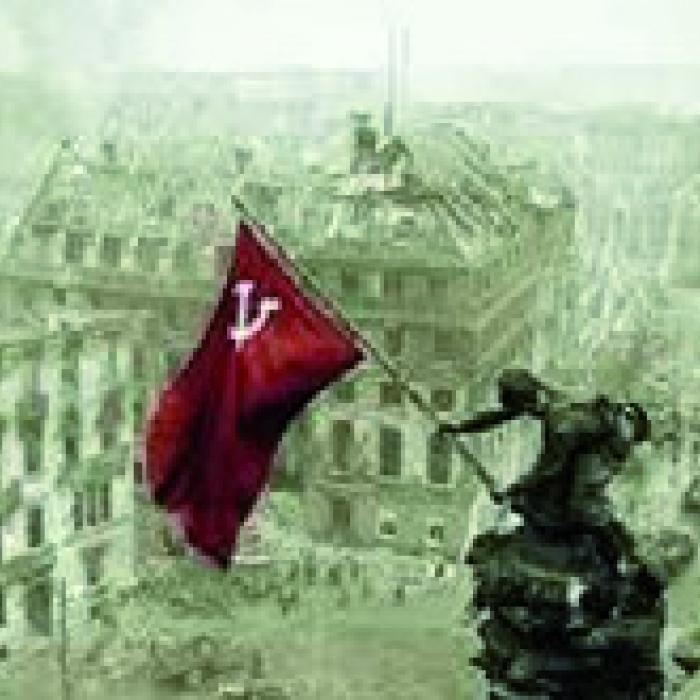
The Soviet Union lost over 26 million people during the war even though the war started a little laterthaninEurope.Germany attacked Soviet Union borders on June 22, 1941. Josef Stalin was very surprised that Germany attacked since he assumed initially that he had a friendly relationship with Germany. It was a very hard and dark time for the Soviet Union. Every family was touched by WWII in one way or another. My family was no exception. My grandfather served in a radio unit. My great-grandfather was captured two months after the war started and spent the rest of the war in a German prisoner of war camp. He returned at the end of war but was very sick and passed away shortly after returning home. My other great-grandfather was with the Red Army as the Allies reached Berlin and returned as a hero with a lot of medals for his service. There is also a historic photo showing a Soviet soldier placing a flag on top of the Reichstag in Berlin. That flag is now in a Russian museum. The point is that the Soviet Union was promoting to its citizens that Germany was defeated by the Soviet Union alone.
In our history classes in school, we were taught that the Soviet Union won WWII, even though history records that Germany was defeated by theAllied Alliance that included the Soviet Union; not just one country. There was some talk about alliances in our classes, but not very much and always in the context that the Soviet Union was the predominant country. That is what we were taught. Then, earlier this year, the truth hit me when we visited a military museum that the WWII victory involved many countries – not just the Soviet Union as was taught in school. I did not think much about it before, and I now understand it was part of raising patriots, but it was not right. Thankfully, the museum in Russia acknowledges that there were many countries involved in stopping Nazi Germany.
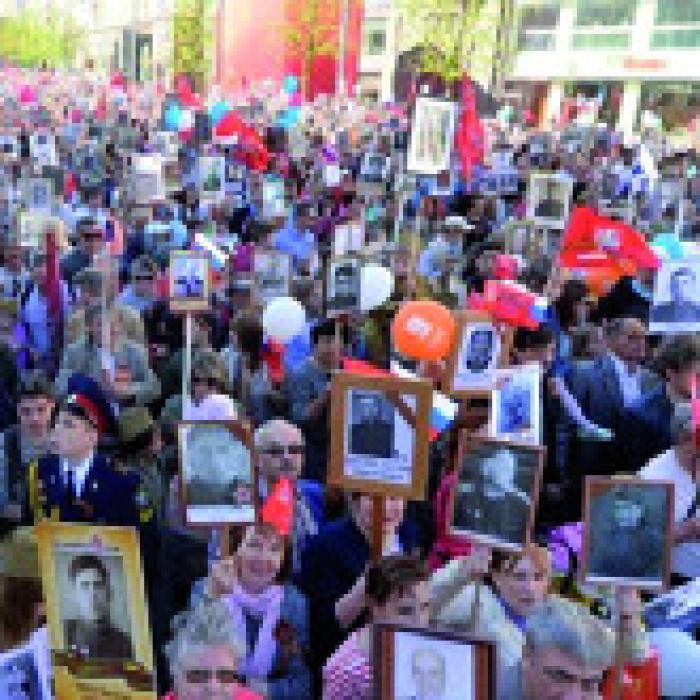
The very first Victory Day parade happened on June 24, 1945. Over thirty-five thousand people participated in it. Then during Soviet times, it happened only a few more times – in 1965, 1985, 1990. After 1995 the celebration and parage is held every year. Prior to COVID, people would gather and walk through the center of Moscow and other Russian cities, carrying pictures of relatives that served in WWII. It is called the Immortal Regiment. The tradition continues today after a brief hiatus due to COVID, although I have never participated in the walk. As a result of the tradition, this past year, my mother started researching information about our relatives and their involvement in WWII. She has found bits of information, and I look forward to seeing the results of her efforts.
I think it is important that we remember history and do not repeat past mistakes. I also think it is important to never forget those who have sacrificed so that we can enjoy a better world.