

Trying to Grow a Better Substitute for Cilantro

I love making fresh salsas and pico de gallo from tomatoes, peppers and onions growing in my garden. But by the time tomatoes and peppers are ripe enough to pick, one important ingredient is already out of season – cilantro.
I understand not everyone likes cilantro. My mom hates it. Oftentimes, these folks say the leafy herb tastes like soap. That largely comes down to genetics. Some people’s taste bids are wired to detect a soapy flavor when they come into contact with cilantro. Poor souls. To me, cilantro tastes citrusy and bright.
But cilantro only grows in cool weather. If you try planting it now, it will quickly turn fern-like and bolt to seed, which is the spice known as coriander. But I want cilantro leaves for pico de gallo. In hot weather, the plant dies before producing any significant amount of foliage.
While it is used in Mexican cuisine, cilantro is not native to the Americas. It comes from the Mediterranean basin. Before the Spanish introduced cilantro to the New World, people living here used an herb that tastes very much like cilantro, Porophyllum ruderale. It goes by a variety of common names: papalo, yerba porosa, Bolivian cilantro, summer cilantro, and quillquiña are just a few. I have mostly heard it referred to as papalo, so that’s what I’ll call it here.
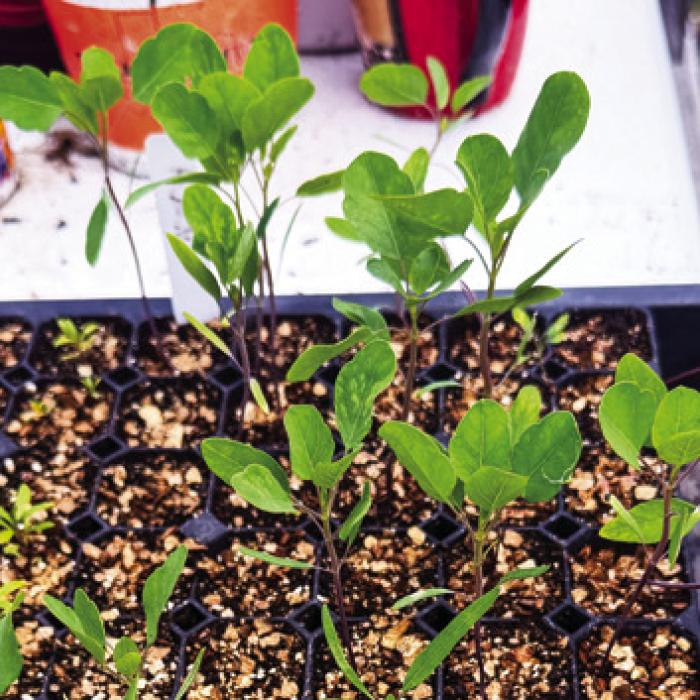
I’ve never grown it before. It’s supposed to love the heat. A few weeks ago I sprouted some seeds in a tray. They look like marigold seeds. I read that papalo seeds suffer from poor germination. But that wasn’t really the case for me. My germination rate was better than 50 percent, although they may have benefitted from the heat mat I placed underneath the tray.
A few days later I had a tray of papalo seedlings. They’re ready to pot up right now. I want them to get a little bigger before planting them in a permanent location.
And I mean permanent. From what I’ve read, these plants can acclimate to our climate and grow as a perennial. The tops may freeze back to the ground. But many Texas gardeners say the plants return to life in the spring. In some places, papalo may even overwinter.
At maturity, papalo can grow into a shrub five feet tall by three feet wide.
But what does it taste like? A few days ago, my wife and I each tasted a bit from a seedling I thinned out of the tray. It does remind me of cilantro. It’s a little different, though. When I think of the citrus flavor of cilantro, my mind goes to lemon, lime or even orange. But with papalo, I think grapefruit, or more accurately albeit obscure, Yuzu, the super-aromatic Asian citrus fruit – definitely citrus, but not in the same way as lemons, limes or oranges.
At first, Janessa said she thought she tasted, or rather smelled, the aroma of fresh shrimp. Not in a bad way, but in a very delicious way. It didn’t quite remind me of shrimp. But I think I detect some flavor of the ocean in it – almost like watermelon. Saltwater fishermen will know what I’m talking about. It’s the smell of speckled trout feasting on baitfish close to the surface.
I know my description may not seem appetizing, but believe me, it is. Interestingly, I have also read that some people who think cilantro tastes like soap do not get the same sensation from papalo.
It looks like this herb grows fairly fast. I’m looking forward to making some salsa with it. I’ll keep you posted.