

St. Mark’s: The Community Health Needs Assessment
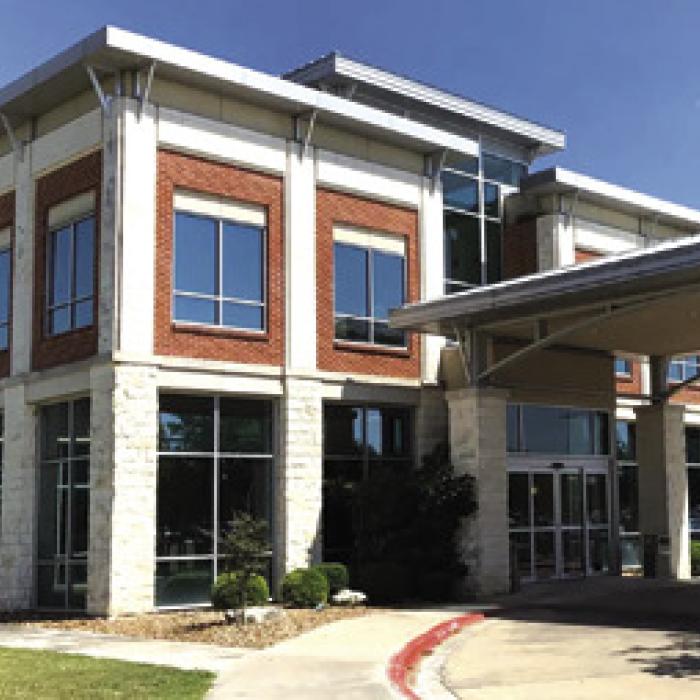
This is a recurring column sharing public information and insight on St Mark’s Medical Center, the needs for health care in Fayette County, and a path forward written by La Grange businessman Sam Wilson.
The Internal Revenue Code, Section 501(c)(3)(A) requires a not-for-profit hospital to conduct a Community Health Needs Assessment (CHNA) every three years, and to adopt an implementation strategy to meet these needs as defined through the CHNA.
To meet IRS requirements, the assessment must take into account input from persons who represent the broad interests of the community served by the hospital facility, including those with special knowledge of or expertise in public health, and be made widely available to the public. The IRS requires a CHNA to ensure that a not-for-profit is indeed redirecting net revenues that would normally go to taxes, are truly redirected to address community need, as the tax exemption is purposed to do.
St. Mark’s Medical Center contracted with Community Hospital Corporation (CHC) to conduct an assessment and that assessment, completed in 2021, was adopted in April of 2022. The 165-page report is available to be viewed at https://www.smmctx.org/chna.
Follow the link to a google drive that provides the assessment report for viewing. (Downloading and printing is not available and the report can only be reviewed online.)
The report involved a sixstep process and relied on interviews of 17 individuals. Only one individual, a nurse from Bastrop Clinic TX-DHHS Region 7, fell into the IRS category of a “health department or agency with knowledge, information or expertise relevant to the health needs of the community.” Eleven individuals were members of or represent the “medically underserved, low income, and minority populations.”
Five were people that included the county judge, the chief of emergency management, an intern homeland security assistant, a pastor, and a retail pharmacist. Interestingly enough, on page 98 the report states that the hospital made every effort to solicit feedback from the community on the recently conducted CHNA and implementation strategy by providing a feedback mechanism on the hospital’s website, but not even a single comment was received. (The hospital did issue a press release on July 21, 2022 and posted on its Facebook page on July 25, 2022.)
Based on the CHNA, SMMC leadership has developed an implementation plan (matrix f actions) with individual executive responsibilities assigned to address the five priorities that emerged from the assessment, including 1) continued recruitment of primary and specialty care services and providers; 2) access to affordable care and reducing health disparities among specific populations; 3) access to mental and behavioral health care services and providers; 4) continued focus on COVID-19 prevention and response; and 5) prevention, education and services to address high mortality rates, chronic diseases, preventable conditions, and unhealthy lifestyles. Those five priorities summarize the salient health needs of our community, according to the CHNA completed by CHC and adopted by SMMC. The striking omission from this report is a direct assessment of need for a hospital. Interviewees mentioned a “challenge with oncology (cancer), endocrinology (hormones), nephrology (kidney), gastroenterology (stomach/ colon/pancreas/gallbladder / liver), cardiology (heart), pediatrics (child medicine) and chronic pain management.” All would appear to translate in specific ways to a quantified need based on population for actual hospital services and patient beds. CEO Mark Kimball states “The purpose of a CHNA is to comprehensively study the health needs of the community: it is not a study or assessment of the need for a hospital or for medical staff. Other studies can address those specific needs.”
The SMMC matrix of implementation activities to address the five overarching pri- ority needs in the community includes 45 specific items, and all but one is noted as “ongoing”, with one noted as “on hold.” The 45 specific items include almost no strategic implementation activities that directly result in increasing services through direct hospital patient services. Members of the community should review the specific 2022 matrix of items found on pages 101 to 115 of this report, and the same for 2023 listed on pages 150-160 of the report. All but two of the 2022 activities are an exact copy of the actions from 2021, noted as ongoing then. And all but 15 are an exact copy of the actions from 2020, yet only three of these 15 action items have any material difference. These are also almost the exact same needs identified and prioritized in the now eight-year-old 2016 needs assessment. The 2023 matrix of implementation actions in which no progress is noted or key results identified, are also almost verbatim identical as the prior eight years of prioritized needs. It is surprising that in four years of matrixed implementation items, there have effectively been no material change in implementation tactics, let alone strategy. The preponderance of action items suggests efforts to recruit physicians and establish partnerships with other local healthcare providers like Bluebonnet Trails and the county Mental Health and Mental Retardation (MHMR) authority, sponsoring the MS-150 bike ride, serving in leadership roles as volunteers with organizations like the Rotary Club, offering educational classes, providing meeting space, hosting lunch and learns, and providing flu vaccines to employees and their families. The implementation plan covering FY 2020 - FY 2022 is meant to cover three years; therefore, it might be expected that some activities would remain the same and be ongoing. Yet every item is ongoing, with no material changes over three years during a healthcare environment that continues to see considerable changes, including the well documented shift from inpatient to outpatient surgery. SMMC CEO states “the FY 2023 - FY 2025 implementation plan is currently in progress; hospitals are encouraged to internally keep track of their updates. The updates to this plan will be posted in FY 2025.”
The report states that SMMC is a 65-bed, 100,000 square foot 501(c)(3) not-forprofit hospital with a clinical affiliation with St. David’s Healthcare, and is part of the Community Hospital Corporation family of hospitals (presumably not to be confused with Community Hospital Consulting, Inc, the for-profit consulting company.)
Afew interesting points include the fact that in 2021, 66 percent of inpatient discharges were from Fayette County, 16 percent were from Lee County, and 18 percent were from other counties. And the hospital serves a population of roughly 43,500 people growing just over 3 percent to 44,900 people by 2026. The age cohorts are similar among all ages, with slightly fewer children below the age of 18. We are in the middle tier of the distressed community index with a lower index of 35.4 in Lee County as compared to Fayette Count at 48.1 (0 is more prosperous while 100 is more distressed.) Of the 243 counties ranked for health status, Fayette County ranks 36th in Health Outcomes and 36th in Health Factors. That is very good except the worst ranking was in Physical Environment, where Fayette County was ranked 139th and Lee County was ranked 162nd, driven by air pollution, drinking water violations, severe housing problems, and driving alone to work. Like the rest of Texas, by far the leading causes of death in the counties are diseases of the heart, and malignant neoplasms (cancerous tumors), followed distantly by accidental death. While the report covers in some detail the figures for a broad range of diseases, conditions, and disorders, one of the more significant findings is that in 2019, roughly a quarter of our population was uninsured, one in ten people faced a medical cost barrier to care, almost one third of our population had no personal doctor, and this lack of adequate and available primary care resources in some way leads to increased preventable hospitalizations.
Our population is growing, our access to primary health care providers is extremely limited leading to increased hospitalization, we have roughly as many people over 65 that we have under 18, roughly the same in the middle-aged cohorts, and our population is suffering most from diseases of the heart and problems with cancer, both of which often lead to the need for hospitalization. Why does the hospital implementation plan have little or no direct implementation strategies to meet the need for physician and hospital care related to these diseases, conditions and disorders? While few would argue that any of the tactical implementation actions are not appropriate, where are the high-level strategies that target growth in new patient services needed in the community, market penetration, changes in hospital operations, increases in revenues, staffing enhancement, cost control, facility changes, and qualitative and quantitative key performance indicators (KPI). Why, after eight years of implementation actions, all very similar from year-toyear, are almost all ongoing, and none completed? There must be a range of services, with hospital environment facility needs that St. Mark’s Medical Center in keeping with their tax-exempt status, can and should offer to better serve the community, address the health needs and improve health outcomes of our community, and ensure a viable rural acute hospital serving the community for generations to come, profitably.
Understanding hospital types, the REH hospital designation, and the Community Health Needs Assessment, the next article will look into research on not-for-profit hospitals and the advantages and disadvantages with respect to serving community need.