

Russian Orthodox Easter

This is the latest in a series of columns from new Fayette County resident Julia Thiessen, who grew up in Russia.
Easter is the main holiday in the Russian Orthodox Church as it is in the Catholic/Protestant belief. I would like to share with you my experience with the Russian Orthodox traditions as I grew up in Moscow.
The Russian word ‘Paskha’ (which means Easter) is derived from the Jewish language meaning to pass, or to pass by. In the Orthodox tradition it eventually acquired a different meaning – transition from death to life, from land to the sky.
The Orthodox Easter date doesn’t always coincide with the Catholic/Protestant Easter date; there is a complicated way of calculation. They all depend on the moon/sun calendar and is after the first new moon after spring equinox. Typically, Orthodox Easter happens between April 4 and May 5 while Catholic/ Protestant Easter happens between March 22 and April 25 since Eastern and Western Christians use different calendars, Grigorian and Julian. Last year in 2025, the dates were the same. This year, 2026, Orthodox Easter is one week later on April 12.
Before the revolution in Russia in October 1917, Easter was a national holiday all across the country including the first couple days after Easter. After the revolution the church was not viewed favorably by the government as there was ‘religious prejudice’ where many churches were destroyed and pastors killed. There was no official government prohibition against celebrating Easter but going to church became dangerous where you could be fired from your job or be criminally prosecuted for political reasons. Only once after the revolution was Easter celebrated and that was at the beginning of WWII on April 5, 1942. Today, 35 years after the fall of the Soviet Union, the Orthodox church celebrates Easter with purpose and passion.
Preparing for Easter begins during the last week of the Great Lent; Passion Week or Holy Week. Every day of the week is dedicated to the last days of Jesus Christ’s walk on Earth, the same as with Catholic/Protestants. The important days of the week in the Russian Orthodox calendar are Thursday, Friday, and Saturday.
Passion Thursday or Clean Thursday is about the Last Supper andthehumilitydemonstrated by Jesus when He washed the feet of His disciples. Even though called Clean Thursday, the name is for reflection more than physical cleaning although many believers also clean their residences as a part of observing Passion Thursday.
Friday is the day to remember the crucifixion, being the most solemn day of the year. This is the only day of the year when the church bells do not ring. This is also the day of the strictest fasting.
Saturday is the last day of the Great Lent and it is also eve of Holy Sunday. During the day believers will take food prepared for Easter meals to the priests for blessing. Later in the evening just before midnight believers are gathering at church and waiting for services that bridge the sadness of the crucifixion to the celebration of the resurrection of Christ. Afterwards the congregation returns home.
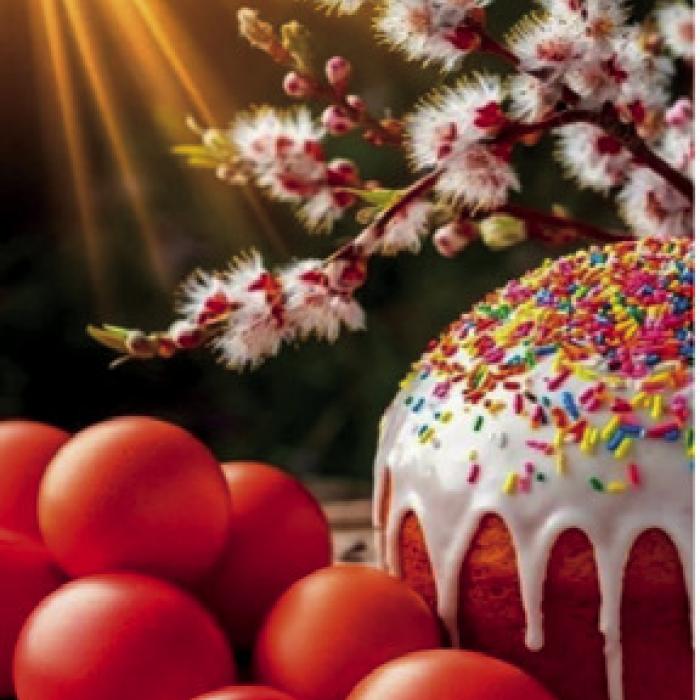
During the Passion Week, there are special foods people make or buy such as kulich, colored eggs, and cottage cheese paskha. Kulich is a sweet bread and is very similar to a muffin, cooked with raisins, nuts etc. Cottage cheese paskha is molded in the form of a cut pyramid to symbolize Christ’s tomb. On top of the paskha is written ‘XB’ (which in Russian is short for ‘Christ Arose!’) and symbols of Christ’s suffering on the sides. Believers also color eggs as part of the traditions, most notably with the color red. The egg is a symbol of life with red symbolizing the blood of Christ. Traditionally you can give eggs as gifts to friends and relatives.
Easter is a church holiday in Russia where there are no egg hunts or egg rolling, but families do color eggs together. When I was a child I would draw something on eggs with regular child paints. Now as an adult I use natural colors from onion skins, turmeric, purple cabbage, etc. Regular food dyes can also be used, but for me it is more fun to put a white egg in the water with purple cabbage and pull out a blue egg. Easter Sunday is the day when you get with family and enjoy family fellowship eating foods prepared for the gathering.
There are many similarities between Orthodox and Catholic/ Protestant Easter with minimal differences, but the main similarity is the celebration of the resurrection of Christ. He is Risen. He is Risen indeed!