

Plant Some Borage, You Won’t Regret It
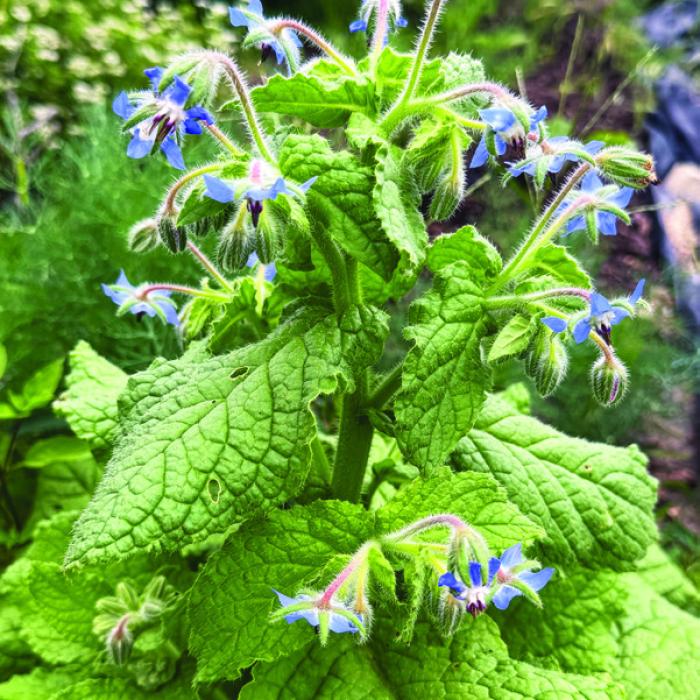

I planted some borage from seed a couple of months ago, and it started blooming this week.
I love this herb. The scientific name is Borago officinalis, and it is native to Mediterranean regions. Observers from ancient times to the modern era have written about borage’s ability to gladden hearts.
The Roman writer Pliny the Elder believed borage was used in the potion that Homer called “Nepenthe” in the Odyssey. This potion was given by Helen, daughter of Zeus, to “quiet all pain and strife, and bring forgetfulness of every ill.”
The Greek physician Dioscorides prescribed it to “cheer the heart and to lift the depressed spirits.”
The 17th century botanist John Gerard suggested its consumption “for the comfort of heart, to drive away sorrow, and increase the joy of the minde.”
In contemporary times, a group of researchers from Spain and Portugal published a study on borage in the journal “Antioxidants” in 2022. The researchers were looking into potential benefits of fresh borage flower extract related to antioxidant, neuroprotective and anti-aging properties. They found that “ B. officinalis flower extract showed promising antioxidant activity in the selected models, without causing toxicity.”
Maybe the ancients were onto something.
The big, fleshy, fuzzy leaves taste just like cucumber. And the blue flowers carry the sweetness of honey. I like to pluck a few flowers and add them to drinks. They brighten teas, lemonades, and, of course, cocktails. The leaves can be used in the same manner to infuse drinks with the essence of cucumber.
The leaves are also used as a vegetable in some culinary traditions. The leaves can be added to salad mixes. In Italian cuisine, they’re used like spinach to stuff in raviolis or added to soups and stews. In Germany, borage is used to make “Grüne Soße,” or green sauce, especially in the region around Frankfurt. It’s a traditional accompaniment to potatoes and hard boiled eggs. I’ve seen recipes for chimichurri sauce that replaces the traditional parsley with borage.
I mostly love this herb because of its beauty. Few plants produce truly blue flowers. In Germany, “die Blaue Blume” (the blue flower) became a symbol of the Romantic movement in the arts owing to its rarity. Borage flowers bloom in a vivid blue color before fading to purple as they age. It’s a stunning sight.
Plant some borage. It grows easily from seed. You won’t regret it.