

Nature Meets History
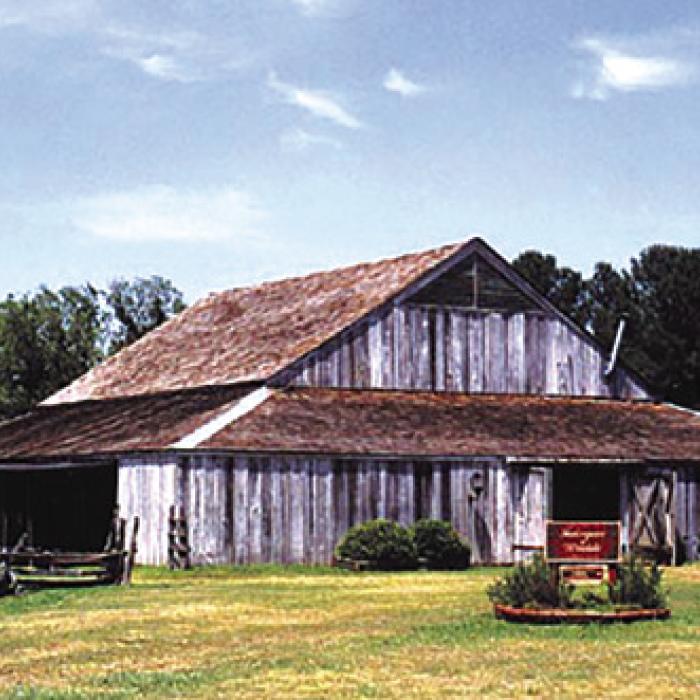

All it takes to remind you of why you like country living is a quick trip from Houston or Austin.
I think the clarity dawns as I turn off 290 onto the Greenvine Road, a two-lane country blacktop. Pastures roll away on both sides. Familiar pastures I pass in every season, while a part of me tabulates the changes.
This process of being aware highlights country life for me. The changes have a rhythm, a calendar of their own expectation. Gold, gray, beige grasses bitten short as the pile on a velvet carpet—that was three days ago. Today, coming back from town, I see a pale greening like thin watercolor has been spilled across them.
I’m paying attention to such things, now, but did I always? Didn’t I once barely notice because it was all so predictable?
Predictability can be comforting, in many ways. I’ve learned that truism by losing it. So little is predictable now. So little follows the schedule of seasonal change we grew up with.
In the city we barely notice such things. The noise and mechanized activity all around us prevents it. They create a destructive interference, much as noise-cancelling headphones do. They buffer nature by throwing up so much anti-nature that we are left unaware, unmoored.
Here in Winedale we have the gift of woodland, with its oaks, yaupon, cedar and thorny growth like briars and native yucca to keep us grounded.
And the further gift of the Winedale Historical Site where nature is free to tell its stories side by side with ours.
This Saturday, members of the Master Naturalists will show visitors how the two entwine. How Texans nearly two centuries ago made friends with those cedars, oaks and yaupons in order to survive and flourish.
How the nature they brushed against gave them their morning caffeine without a coffee plant in sight; how Travis got the ink he wrote with at the Alamo; how new stars are formed, right here in Texas, according to legend. A very old oak tree, here on the premises, holds in its rings the history of our state speeding past its solitary witness.
The men and women who came to Texas in the 1800’s carried a deep knowledge of nature, much of it acquired from Native Americans, but not as a hobby or pastime. They knew it because they needed it.
It was their raw material, sure, for use and survival. It built their houses, fed them, gave them what they had to drink. Fed their animals, gave medicines for man and beast.
But those Texans needed it, also, for a reason they could not see clearly. They were too close to it.
Time would have to pass before that reason showed itself. The woods and nature in every guise would have to be diminished, damaged, endangered before human beings, under siege from the technology we create, could understand the deeper need.
Do we understand, yet? What do we see when we walk in the woods—if we have the opportunity, that is, to walk freely among trees. What do we feel?
What do we feel when we turn off 290, or Interstate 10, and those fields, those pastures begin to unroll beside us? And the sky reveals its many-colored landscape of cloud and air and light?
I know I feel almost airborne with the sense of freedom—a feeling that those early Texans took for granted.
“Nature Meets History,” Sat., Feb. 28, 10 a.m. Gather in parking lot near Theatre Barn. Winedale Historic Site, FM2417. No reservations. Free. Readers can contact Hale at bfhale2017@gmail.com.