

Mother’s Day Remembrances
The origins of Mother’s Day as a national commemoration date back to 1914, when President Woodrow Wilson, as the result of an influence campaign led by Anna Jarvis of West Virginia and by the wealthy Philadelphia department store magnate, John Wannamaker, signed a proclamation setting aside the second Sunday in May as a date for honoring motherhood. Never married herself, and never having her own children, Jarvis was inspired by her own mother’s sacrifices made for her children.
My father, from my very earliest years, always ordered corsages and boutonnières for the entire family to wear to church on Mother’s Day: red carnations for all of us whose mothers were living then, and white for those whose mothers were deceased (so my grandparents wore white carnations, and the five of us [my parents and siblings] wore red carnations. There was in those early years no need in our own family for a different color for a mother who had lost a child instead. . .
It wasn’t until I was in my late teens and already in college when I learned what deep loss could mean to a mother or father, when I watched my grandparents mourn the death of their oldest son in his early 50s. My Grannie and Grandpa would have gladly given up their own lives to avoid his death, but that was not possible, and they had to endure the agony of seeing their son buried before their own eyes, while still in the prime of his life, leaving behind seven children, and many grandchildren who loved him and never spent the time with him creating more memories that they longed to have.
The prevalence of too much violence in our society today, of too much serious illness, of too much untimely death, has led to many mothers who today will be mourning again the untimely loss of their sons and daughters. It’s unlikely to be a situation that will be changed for years to come, and certainly nothing we or our successors could ever do would lessen the loss of these mothers who cannot face the second Sunday in May without dread, much less celebrate it in happiness.
We remember with sorrow the pain of the mothers who lost sons and daughters in military service: I especially think of those I know or knew personally, Marcy Voss, a former educator of La Grange ISD, who lost her son Tyler during the Afghanistan conflict (US Air Force); and the late Oren Degner of La Grange whose son Harold died in Vietnam (US Army); plus the mothers of all the Fayette County soldiers, sailors, flyers, or other military support personnel who lost their lives in Afghanistan, Iraq, Desert Storm, Vietnam, or Korea, and all the other wars through the decades and centuries and millennia gone by. The pain of these mothers (and fathers!) ceases only at their own deaths, I am certain.And yet we live in hope and gratitude: hope that young people will take up the mantle of being mothers and fathers; will continue to risk the pain; will continue to want to nurture young lives, taking up the responsibility, the financial burdens; will sacrifice their sleep and their freedom from worry about young lives that depend on them for everything. . .
God bless them one and all, and give us all grace to thank these mothers and fathers for their courage and for their fortitude, beyond the ken of those who have not chosen, or otherwise not been blessed, to be parents.
And God bless you, too, dear readers, as we all celebrate another Mother’s Day.
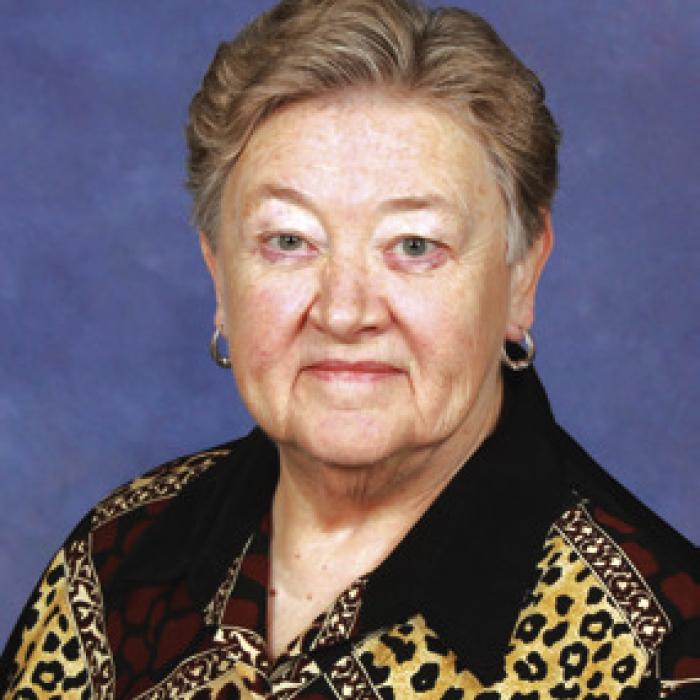
Annette Citzler is a La Grange native and former professor at Texas Lutheran University