

Maybe I Should Start Growing More Flowers
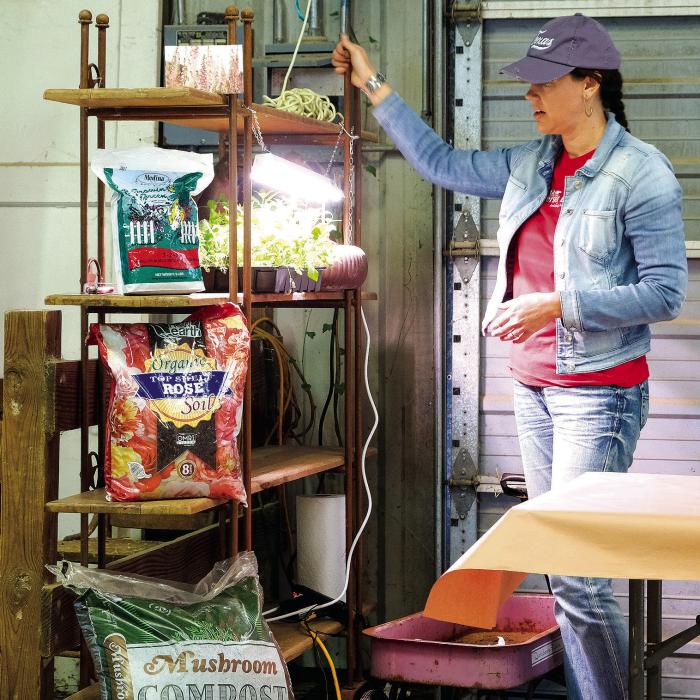

Last weekend I attended the first part of Shannon Ezer’s Flower Garden Seminar at The Jersey Barnyard.
I don’t think of myself as a flower gardener, but maybe I should. We always plant a patch of zinnias every year at our place. They’re beautiful and the plants can get quite big. But better yet, they attract a horde of beneficial insects such as butterflies, bees, and ladybugs. Some folks say they repel cabbage worms. They also attract certain beetles which can be a pest to vegetable plants. If you plant zinnias around your vegetables, the beetles will attack the zinnias instead of your vegetable crop.
Zinnias make great cut flowers. The stems are long and sturdy, perfect for a vase. And they come in thousands of colorful variations.
That’s pretty much all I know about cut flowers.
Well, I also grow a few sunflowers most years. I planted some a week ago, as a matter of fact. A few years ago, I grew a giant Mongolian blackseeded variety that produced a seed head bigger than a baby. But I’ve always thought of them more as a novelty in the garden. I’ve never grown them as a cut flower.
Most sunflower varieties produce a ton of pollen. If you put them in a vase, they’ll drop their pollen all over the table or table cloth. I learned about ProCut sunflowers at Ezer’s class last Saturday. ProCut varieties don’t produce pollen, so they’re perfect for cut flowers.
The class was mostly about starting seeds and picking flower varieties. Her advice about seed starting applies to all types of gardening, not just flowers.
Ezer recommends starting seeds in seed starting mix. This is a very fine and fluffy soil that has been sterilized. It does not have bits of woody material like potting soil. Seed starting mixes typically do not contain any fertilizer, either. In my experience, seeds germinate better in an inert soil like seed starting mix. Sungro Black Gold is a good brand that’s easy to find.
When starting seeds, Ezer begins by dumping some seed starting mix into a large shallow pan. She then waters the soil before filling the seed trays or containers in which she plants. In my experience, this step is vital. When you pack dry soil into a tray and water it, the soil never gets evenly moistened. You end up with dry pockets in the cell that never seem to soak up moisture. You end up with a poor root system if the plant even germinates.
She then fills her trays with moistened soil. Next, she makes a divot in each cell with her finger. Ezer uses a simple rule of thumb for planting depth: she plants the seeds twice as deep as their diameter. Large seeds like sunflower can be planted a half-inch deep. A tiny mustard seed only needs a sprinkle of soil, if any,
See covering it.
But instead of covering the seeds with soil, she covers them with vermiculite. This whitish mineral material keeps mold and algae away from the young seedling as it emerges. She starts her seeds indoors under grow lights. She places a humidity dome over the trays in the early stages of growth to keep the soil moist while the seed germinates. She removes the dome once half the seeds have germinated.
As for varieties, she recommended zinnias for many of the same reasons I outlined above. She likes their long vase life. In addition, they can take our Texas heat.
“Their beauty stands up heat in the high 90s,” she said.
She also recommended strawflower. It can be used as a cutflower all summer long. When fall approaches, Ezer said you can harvest all of the flowers and dry them for use in wreaths. They can also withstand frost. Ezer plants them in the fall. She said they can survive over the winter and bloom early in the spring before anything else starts growing.
“It’s a smaller flower head, but it packs a punch,” she said.
In addition, she recommends apple mint, which has a strong stem, for foliage mixed with vase flowers. Apple mint can also bloom. She said basil also makes a wonderful filler flower for vase arrangements.