

Fall Foliage: Some Thoughts and Tips
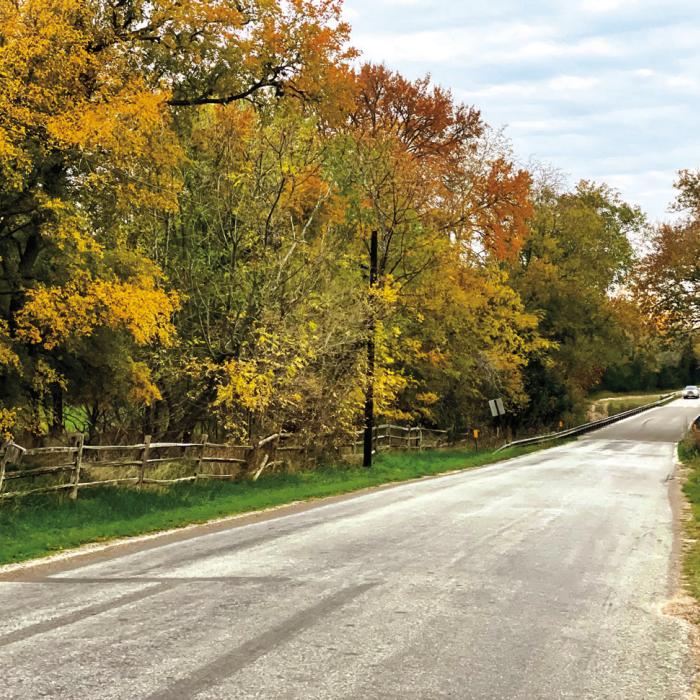

Fall must have arrived, because the leaves are changing color and falling off the trees.
Here in Central Texas, we don’t usually see a whole lot of fall color. But this year seems better than most.
I’m probably going to make a bunch of landowners cringe when I say this, but some of my favorite trees for fall color are the Chinese tallow, chinaberry and Bradford pear. I know, most folks think of these trees as weeds. That’s probably true. But they put on an incredible display during the fall. Chinese tallow trees turn from green to yellow to orange-red before falling. Chinaberries put on some of the brightest yellow color to be found in this part of Texas during the fall. And the leaves of the Bradford pear turn almost purple.
All three of these trees are considered invasive in Texas or a nuisance to landowners. Chinese tallow trees pop up like weeds everywhere in the spring due to the copious amount of seed produced by mature trees.
Chinaberry trees don’t live very long, and their fruit is kind of nasty when it falls to the ground and gets stepped on. Bradford pears were once planted ornamentally in Texas. But many landscapers have given up on them because strong winds mangle the canopies. Plus, the spring flowers of the Bradford pear put off an unpleasant odor.
Among the oaks, the Shumard oak is considered the best in Texas for fall color. The foliage turns a bright red during the fall. It is part of the red oak family, which do not grow the best in this area. They absolutely hate soil that does not drain well. Red oaks are more susceptible to oak wilt disease than those of the white oak family. If you decide to plant a Shumard oak for fall color, I would plant it far away from other oaks to prevent infection.
Crepe myrtles, which are more known for their colorful flower displays, also produce some nice red fall color.
The Chinese pistachio tree produces an blaze of red color in the fall. But these trees are considered very invasive in Texas. Birds love to scatter their small seeds. Unlike their desert cousin that produces the pistachio nut, these trees tolerate humid environments. Accordingly, they grow fast in Texas. Many landscapers recommend against planting them, however, due to their invasiveness.
Another interesting fall and winter tree is the native dogwood ( Cornus drummondii), not to be confused with flowering dogwood ( Cornus florida). The native dogwood grows shorter than its flowing cousin. It grows smaller flowers that appear in the late spring, unlike flowering dogwood which produces big flowers early in the spring before the leaves appear. Native dogwood really shines in the fall and winter, however. That’s when its woody parts turn a deep crimson red. My neighbor has quite a large specimen growing near my driveway on his property, and it just turned red this week.
Japanese maples famously produce beautiful fall color. I hear they grow quite well in the Dallas-Fort Worth area, but I hardly ever see them growing around here. I tried planting one a few years ago and it died during the summer.
What are your favorite trees for fall color? I’d love to hear from you. You can email me at andy@fayettecountyrecord. com.