

Driving in Mountain Country
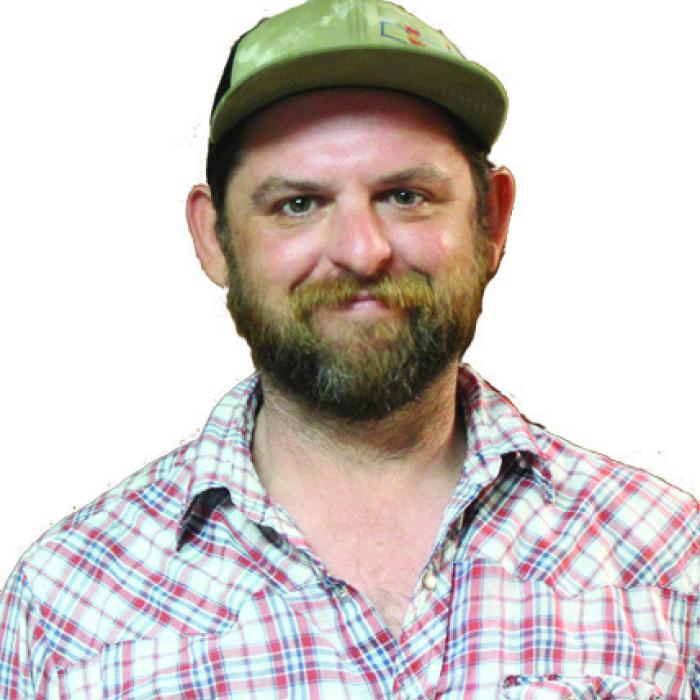
I woke up at a Motel 6 inAmarillo and glanced at my phone, squinting. I thought it was 8:30 a.m. Light was peaking through the blinds of the window next to the bed.
“We’re running late,” I thought. I got up, showered, brushed my teeth, put in my contacts, got dressed, and was just about to walk to the lobby for a cup of coffee when Janessa woke up.
“What the **** are you doing!!! It’s 3:30 in the morning!”
I took another look at my phone. She was right, like usual.
“Wow, I need to get my eyes checked again,” I thought to myself.
As it turns out, they really do keep the light on for you at the Motel 6 in Amarillo – shining through your window all night long. Janessa said a group of drunks fell down the stairs around 3 a.m. – that’s probably what woke me. We tried going back to sleep. Finally Janessa had enough around 5 a.m. We got up and started driving to Ft. Collins.
The stretch between Texline and Raton, New Mexico reminded us of a scene from Lord of the Rings.
“Riders of Rohan! What say
you!” Then through the Raton Pass.
“The dwarves dug too greedily and too deep. Did they awaken something ancient and evil in this mountain?” We started seeing signs that read “Fallen Rocks.” Uh oh.
And big nets draped on the mountainside that we assumed were there to catch the falling rocks. We could see some perched boulders the size of a Volkswagen. I don’t think the nets could catch those.
Janessa is from South Texas, and I’ve spent most of my life in Fayette County. We’re not used to being this high off the ground.
We traveled through the Spanish Peaks region of Colorado on I-25 and then watched the massive steel mills pass by in Pueblo before going through Colorado Springs. This was last Wednesday, Sept. 21, the second day of our week-long vacation to visit Janessa’s sister and brotherin- law in Ft. Collins.
I looked out the window to my left and saw Cheyenne Mountain, home to the North American Aerospace Defense (NORAD) Command Center, a military complex built deep inside the mountain to protect it from a nuclear blast. I had just read a news article on my phone about the Russian President, Vladimir Putin, hinting at nuclear war over the Ukraine Crisis. The whole experience was quite unsettling – especially seeing Colorado Springs, a beautiful city of a half million souls, lying in the mountain’s shadow.
The mountains disappeared into the distance west as we drove through Denver, but they reappeared when we got to Ft. Collins. Horsetooth Mountain, a summit in the Front Range foothills just outside the city, serves as the main landmark in Ft. Collins. One of the major streets in town is named Horsetooth Rd., and the summit rises almost in the center of the road as you drive west. The strange rock formation at the summit supposedly resembles a horse tooth. It didn’t look that way to me.
Ft. Collins is a city of many trees. They all seemed so strange and different from the oaks, pecans and other native Texas trees. The blue spruce trees reminded me of the illustrations in a Dr. Seuss book, or perhaps ancient architecture from East Asian. The aspen trees were just beginning to turn bright yellow. The Good Lord blessed the people of Ft. Collins with a climate and geography conducive to growing maple and cherry trees, the leaves from both of which were turning a deep, velvety purplered during our stay there.
A cold front brought some drizzly rain to Ft. Collins for the first two days we were there. That gave us a good excuse to drink beer. Ft. Collins, indeed all of Colorado, is a place of many breweries, both large and small. My brother-in-law Tim told me several times to try a Coors Light on draft. “It tastes better in Colorado,” he said. I never got the chance. We visited the Odell and Maxline breweries in Ft. Collins. Both craft an excellent brew. Perhaps it’s the cold, clean water from the Rocky Mountains. Many of the cities there, including Ft. Collins, get their water from huge, man-made reservoirs that collect spring water and snowmelt from the mountains.
Tim and Jennifer took us on a drive through the Poudre River valley on Friday. We took a few short hikes through some trails along the way. We saw lots of fly fishermen in the Poudre River.
We stopped and ate at The Mishawaka, a restaurant and music venue with a deck that hangs over the Poudre River. The food was good. However, the entire trip taught me that Colorado doesn’t really have a unique cuisine. The state’s idea of barbecue
is hamburgers and hot dogs. Their “Mexican” food largely consists of burritos like the ones served at a Chipotle or Freebirds restaurant. About the only unique menu item I saw were the famous Rocky Mountain Oysters. Janessa and I – both adventurous eaters – thought about ordering them at The Mishawaka, but they were really expensive, like $30 for an appetizer serving. I know they only come two to a steer, but wow.
Our last full day there was Saturday. We took it easy. Tim and I set up a TV in his back yard to watch college football, and we barbecued a tri-tip roast. (Tri-tip is my new favorite cut of beef for barbecue, by the way. Just rub it in salt, pepper and garlic and cook it like a brisket – smoke it with indirect heat around 250-275 degrees, wrap it when the internal temperature gets to 165, pull it at 203, and let it rest for an hour. It tastes like brisket, but better, and only takes five or six hours instead of 12 or more.) I also learned that it takes a long time to cook a pot of beans at high altitude. Janessa made her famous potato salad. I think it gave Tim and Jennifer a little taste of home. Janessa and I still had a long trip ahead of us. Tune back next week for the drive back home. I promise I’ll get back to gardening after that. Speaking of which, it’s time to plant some fall vegetables. Janessa and I went to the Hostyn Hill Greenhouses after we got back from our trip on Tuesday, and they have a huge selection of fall vegetable transplants right now.