

Cyclops: A Old Rooster Finds Purpose
This is a true story and one that could only happen in a place like La Grange.
My neighbors, the Bradleys, keep chickens––yes, inside the city limits. Their dominant rooster was a big, white fellow who clearly ran the show. Being the alpha male, he felt he could get away with anything he wanted. He bossed around the younger rooster and even decided to punish a certain hen. He began to pluck the feathers from and even bloody her back.
His owners decided he needed to be isolated from the flock for a while; maybe he’d get over his menacing ways after being confined in a cage for a few days. So, they penned him up.
His absence emboldened the younger rooster; maybe Junior could take over now that the bully was temporarily incarcerated. And that’s what happened.
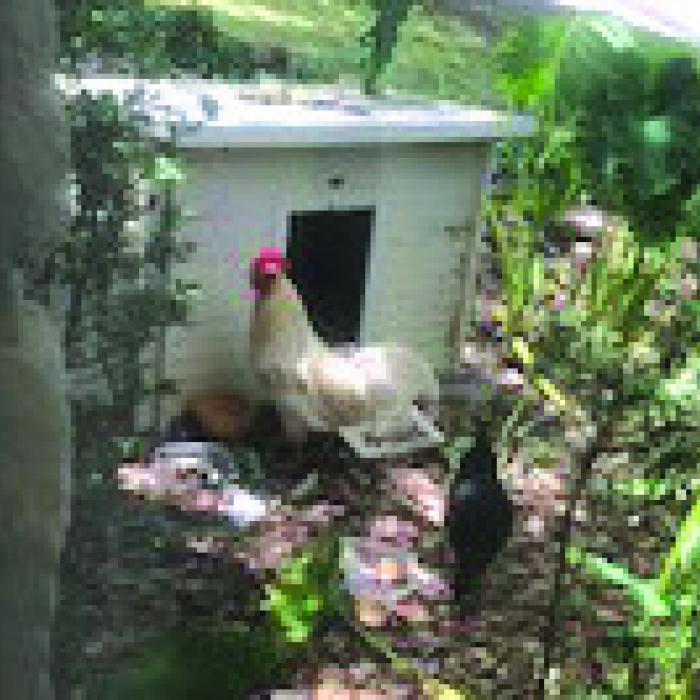
The younger, and apparently stronger, rooster attacked the old guy as soon as he was released. The result? The old guy lost an eye and was no longer able to rule the roost. Deborah and Railla Bradley nursed the old boy back to viability. But he was now handicapped; he could only perceive dangers from one side. Apparently, it takes two to reign as head bully. So, Cyclops––that’s what they started to call him for the obvious reason––left home. He couldn’t defend himself anymore. He came next door, to our yard to mope and look forlorn.
He’d lost his purpose in life. It was sad. Even my black Lab Zoey could sense his piteousness; she overruled her instinct and left the poor fowl alone.
Simultaneously, a little flock of feral chickens was frequenting my front and back yards, scratching up worms and bugs and scurrying around like ants at a picnic.
John Bradley had a bright idea for us: Why don’t we borrow their unused chicken coop and see if we can lure the pullets to it. Maybe someday they would lay eggs and we could raid the catch periodically. Any interest in free eggs there, Jimbo?
That’s what I did. I put the little coop in the front garden in the shade of the live oak and nestled in the elephant ears. I placed a bowl of water and some troughs of chicken feed around the entrance to the coop.
Sure ‘nuff, it worked. Several of the young chickens––two male and three female–– started poking around the coop area. I watched them often. For all I could tell, they just wouldn’t go in the enclosure that I had lined with shreds of the Record and shavings.
So, I asked my friend and chicken whisperer, Scott Baker, how to entice them into the coop. Simple, he said. Dangling piece of cabbage and they’ll go in to peck at it. They love to do things like that.
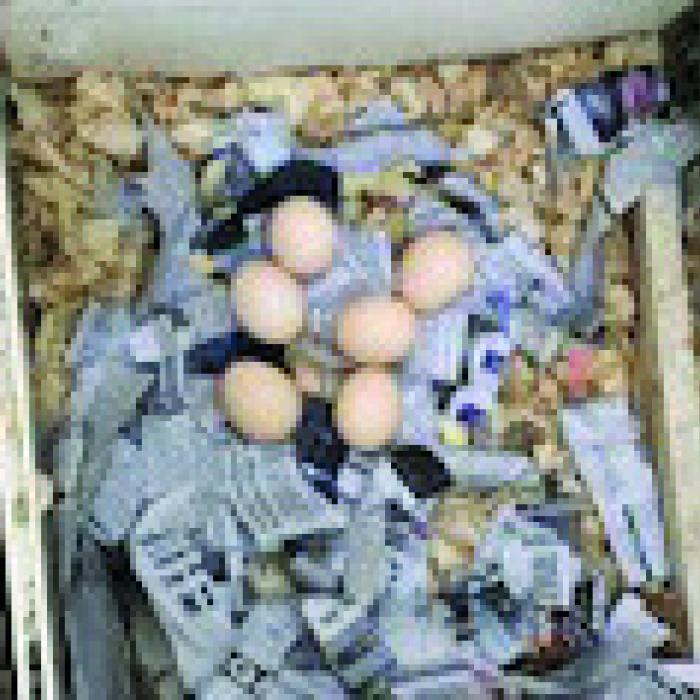
I rigged up a string, a nail, and a piece of cabbage with the core intact and went to the coop. When I opened the lid to attach the cabbage, I discovered six eggs in a neat, little cluster. At least one of the twenty-something week-old pullets was laying already. And she chose my setup to do it in! But that’s not the best part. The following morning, I noticed Cyclops stationed at the door of the coop, as if standing guard. He didn’t move for the longest time. In fact, he didn’t move until a black pullet emerged from deep in the coop, having laid the day’s egg. He had been protecting the chick while she was most vulnerable. Cyclops and the young chick walked off merrily––together.
The plan had worked. The food and water at the coop had attracted the young chickens and Cyclops lessening the time they spent in or crossing the busy street. The coop itself gave the young laying hen a safe place to lay. Most importantly, the setup allowed Cyclops to regain a purpose, a role in life as a protector.
Oh yeah, and Jimbo got his free eggs. Note: The true story was supposed to end there, but it didn’t. The next morning, I noticed what I took to be a large, white bag lying by the curb in my front yard. It was no bag; it was Cyclops. He was killed either by a car hitting him on his blind side or by the two aggressive, feral roosters who claim the yard as their territory.
I don’t know whether to feel sad the old bird’s demise happened just as he was getting his stride back or happy his last days allowed him to feel useful, a protector of a young chick.