

Americans Aiding Americans
Besides the COVID and Americans at each other’s throats, there’s also been beaucoup talk about race, race relations etc. etc.
This past Memorial Day, then shortly thereafter with the anniversary of the storming of the beaches of Normandy there’s been celebrated talk about honor, duty, sacrifice and courage. The Fourth of July is just around the corner.
But the celebrative and commemorative atmosphere has been drowned out by the disenchanted, along with angry pundits on TV. There’s the Black Lives Matter crowd and then those who scoff, snarl and counter with All Lives Matter. Proud Boys, Antifa, QAnon and the “Jews won’t replace us” loud and unstable contingents bringing up the rear.
Peering back in history during another defining and fragile moment race and prejudice came into play and somehow got teamed up with duty and courage.
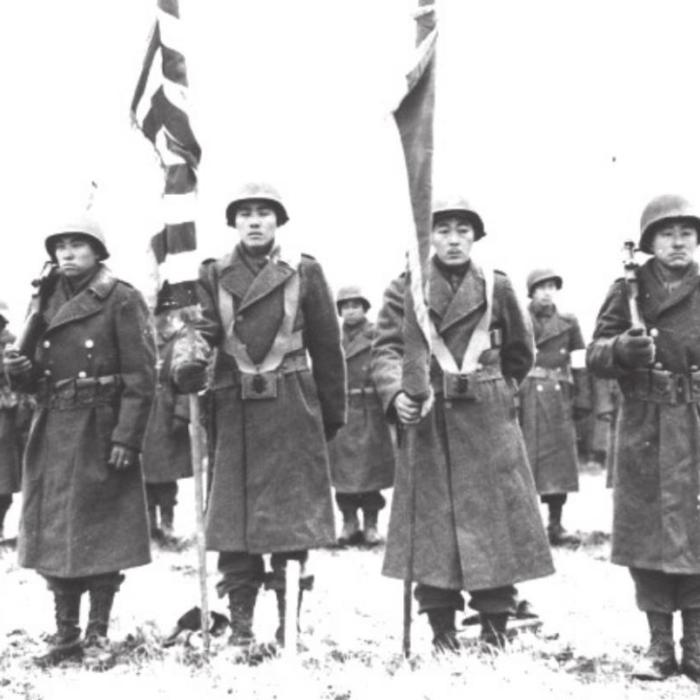
“Go For Broke” was the motto of the 442nd Regimental Combat Team, an Army unit during WWII, comprised of Japanese-American boys stemming from Hawaii and the mainland United States. The motto was derived from a gambler’s slang used in Hawaii to “go for broke,” meaning a player was risking it all in one effort to win big.
Just read the wartime accounts of Hawaii’s 442nd. It’s enough to give you what Hawaiians call “chicken skin.” Many of their own families were ordered to leave their homes by the government and forced into interment camps surrounded by barbed wire and armed guard towers far-far from their homes and other family members. They lost almost everything only because of their race.
Consider, when Pearl Harbor was attacked Japanese-Americans made up almost 40 percent of the population of the Hawaiian Islands. They responded in mass aiding the wounded, sorting through the rubble, giving blood, and burying the dead. Yet all Japanese-American men of draft age were officially deemed as “enemy aliens.” As enemy aliens, they could not enlist in the armed forces.
The Hawaii kids didn’t take it too kindly. “Hawaii is our home. The United States is our country. We were attacked! We know but one loyalty. Cut us and we bleed red white and blue,” they argued in fiery unison. Finally, the War Department announced it was forming an all-Nisei combat team and called for 1,500 volunteers from Hawaii. The kids in Hawaii jumped at a chance to get into action and an overwhelming 10,000 Japanese-American patriots volunteered.
At first the recruits were sent off to Fort Shelby, Mississippi in 1943. Not taken too kindly, they received heavy doses of stink eye from the local folk.
They had the fortune or misfortune while training, to hook up with a Texas National Guard unit. The good ole boys towered over the five-foot something kids. Often treating them more like an enemy than brothers in arms. They weren’t shown much military courtesy. They overheard insults. There weren’t many drawls of “Howdy Partner.”
There also was friction within the ranks. The kids from Hawaii were tagged as Buddaheads, while the Japanese-Americans volunteers from the States were called Kanocks. The Buddaheads were more happy-go-lucky, simple island boys, who loved to gamble, and who spoke mostly in island pidgin, Brah, while the Kanocks, were teased and considered sullen, and rigid. Better educated they looked down at the island boys seeing them as foolish and unsophisticated. Yet they were in the same fix together.
The Buddaheads had little knowledge that the Kanocks parents were both impoverished and interned. There was concern at high command. The caucasian line officers weren’t sure the Hawaiian boys could become a cohesive unit.
The brass determined they’d visit and see first-hand for themselves an interment camp, in Arkansas where their fellow Japanese-American brothers and sisters were interred to witness what the conditions looked like. They were shook, shocked and angered! A no-nonsense disposition spread through the ranks.
Their own people were corralled, in what may as well have been a prison, and imagine in the land of the free! German-Americans and Italian-Americans weren’t in any camps. Their fellow soldiers and the town’s peoples didn’t recognize them as fellow Americans, nor deem them as trustworthy, but more so as sneaky, slanted eyes, coconut heads who would turn and run or worse, turn allegiances’ faster than you could say banzai!
Within the ranks of the 442nd they diligently prepared for battle. Deployed to the South of France, a situation quickly unfolded, that would test the metal of the island boys. There was an Army battalion in deep trouble, completely surrounded behind enemy lines. They were already being referred to and presumed as the “lost battalion.” Remnants of their unit were staving off the German attack but getting picked off while having strict orders to hold the line at all costs. It was the 442nd Combat
Regiment Team given the mission to break through and reinforce what was left of the battalion and to then, as the Hawaiian boys like to put it, by performing, “onipa’a” (holding the line). Parts of the 442nd were already battle tested seeing action in Italy when teamed with the famed 100th Infantry Brigade who actions offered the higher ups, a preview of the fighting spirit of the Hawaiians.
Companies K & L spearheaded the attempted breakthrough. The first wave of 400 men dodged the shells of enemy artillery, then zigzagged through the mine fields, charged the hammering machine gun fire and finally having to fix bayonets for hand to hand combat. History accounts the unit they went to rescue, turned out to be the Lone Star Boys, from back in boot camp who didn’t treat them so kindly.
Forty from the initial 400 were still standing and fit for combat when they broke through. They not only bolstered the spirits of the survivors but join them and manned the defenses. Other units belonging to the 442nd broke through other German lines also fighting their way through the same gauntlets. While fostering the line they became an intricate part of a buttress that would hold and then throw back fierce German counter attacks. By the time the operation was over the 442nd had 200 dead and 800 wounded.
The Hawaiian guys gained enormous respect throughout the European theater. The men they rescued couldn’t say more about their fellow GIs, the men of the 442nd.
In total, about 18,000 men served, ultimately earning 9,486 Purple Hearts, 21 Medals of Honor and an unprecedented seven Presidential Unit Citations with our Hawaiian guys being the most decorated Regiment in the history of the United States Army. If visiting the Smithsonian in Washington, there’s an impressive permanent exhibit honoring the 442nd, the Go For Broke regiment.
Consider what those guys had to overcome and how do those events equate to our race and social problems we’re faced with today? What’s it going to take? What segment, party or movement is going to rise to the occasion? What faction is willing to maybe Go For Broke for the betterment of the nation and the republic?
Going back to that bloody day in actuality, it wasn’t those Hawaiians of Japanese descent rescuing those Texans, but it was gallant Americans coming to the aid of other Americans.
Lou Christine is a former Fayette County resident now living in Mexico.