


Why Erwin Sladek’s Work Ethic Just Won’t Quit
Although officially retired, Erwin Sladek Jr. continues to shape and support Fayette County’s quality of life
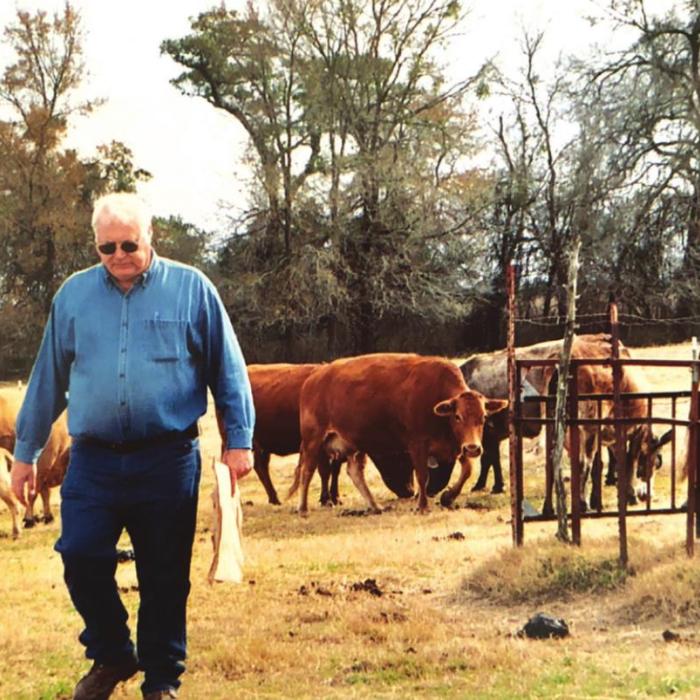
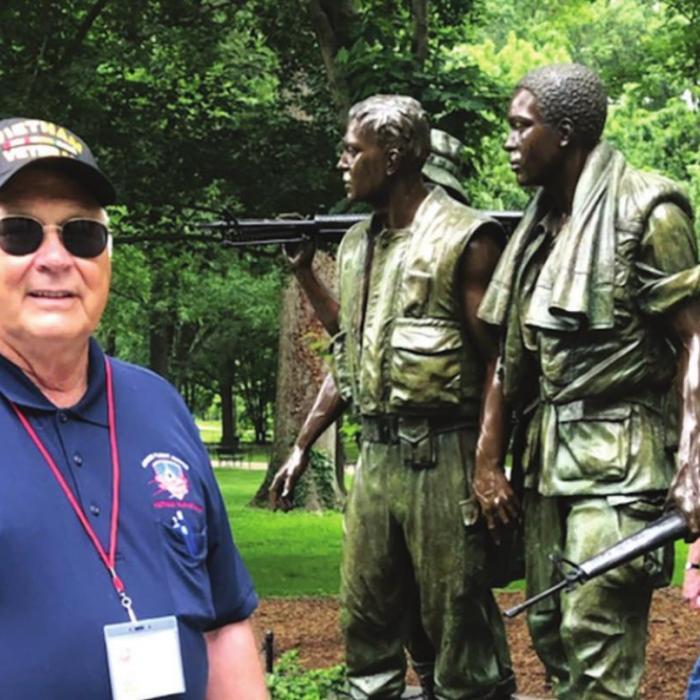


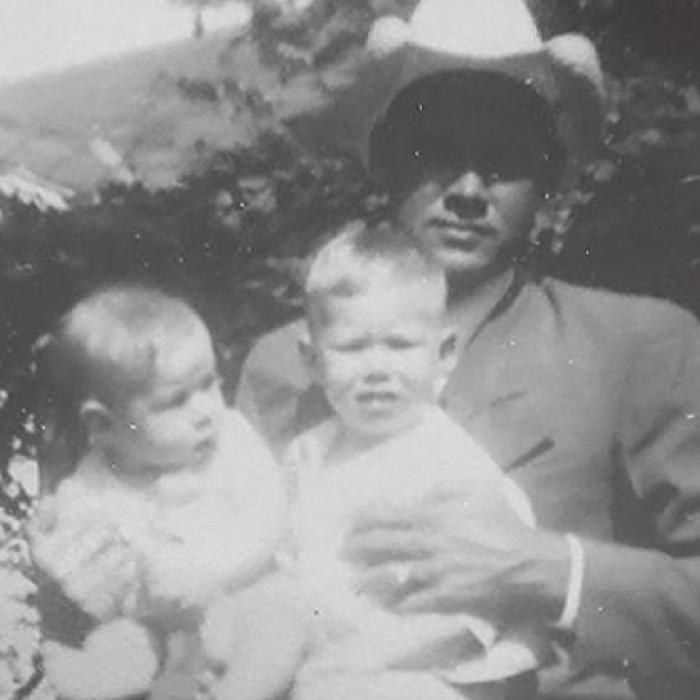
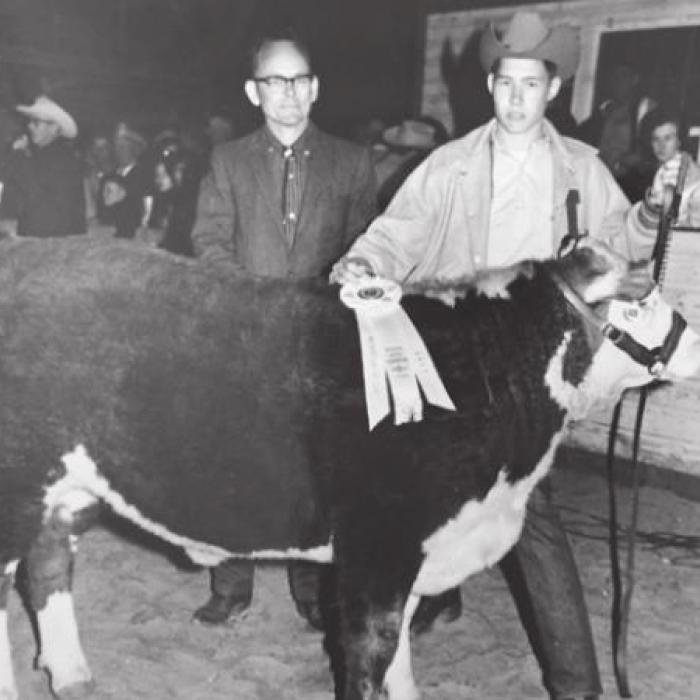
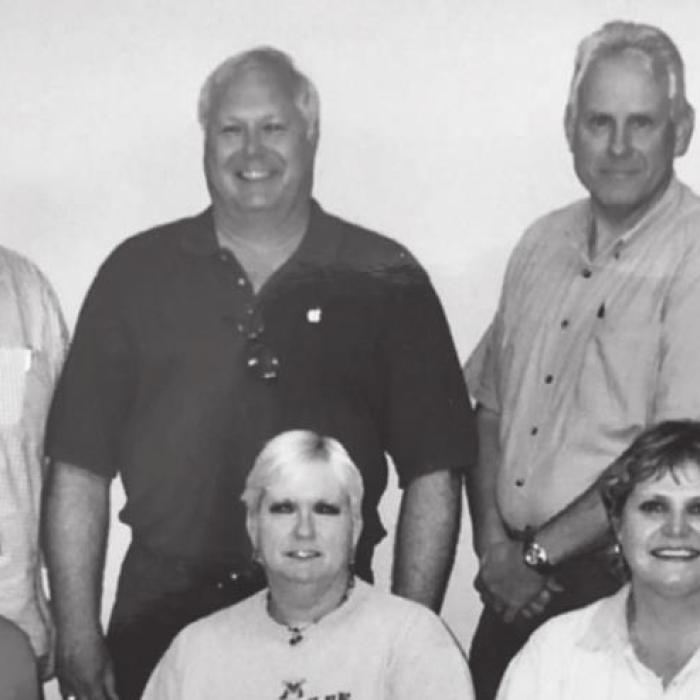
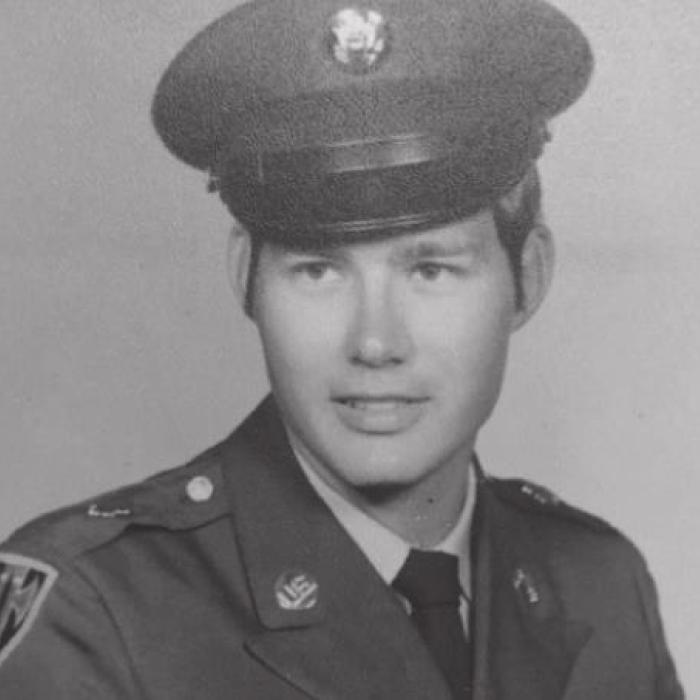
There’s more to the big man walking across his pasture after checking his cows than meets the eye. Erwin Sladek Jr., a former La Grange High School football star, Vietnam veteran and La Grange Independent School District educator, isn’t content raising a few cattle. While many senior citizens nearing their mid-70s look forward to taking life a little slower, he has too many commitments to slow down unless a health issue like back surgery temporarily sidelines him.
Erwin’s parents, Erwin A. (E.A.) Sladek Sr. and Frances Ventricek-Fagan Sladek of La Grange, taught him and his younger brother, Jim, and sisters, Patricia (Trisha) and Shirley, that productive lives were worthwhile lives.
Up and at ‘Em
“My dad always said, ‘Work hard. Put an effort into it. Do a good job whether you like what you’re doing or not.’ Those concepts are ingrained in us,” Erwin explains.
He was born in Bryan, Texas, where his father was attending Texas A&M after serving in the Pacific Theater in World War II. Erwin and his parents soon moved back home to the black land prairie near Fayetteville where his Fayette County roots run deep. Entering the Fayetteville cemetery on the left are graves of several generations of Erwin’s paternal ancestors from Moravia.
Erwin’s dad ran a 200-acre ranch for a Houston man before he began buying cattle and supervising the Kreuz Market slaughterhouse located off Hwy. 159 outside La Grange. The retail market, located downtown on W. Colorado St., was started by Mr. Kreuz and Erwin’s grandfather, Arnold S. Sladek. Erwin’s dad was a commercial cattle buyer, raised cattle, rented rodeo stock and produced the events, and offered commercial trucking services. Like many rural people, he had the multitasking concept down pat before it was touted as a time management technique.
Erwin started school at St. John’s Catholic School in Fayetteville, so when the family moved to a farm near Halsted, he stayed with his Grandmother Sladek until he’d finished first grade. The following year, when two little Sladek boys were going to school, St. John’s ran a bus to pick them up. Later, the boys’ sisters joined them at the bus stop. In the middle of Erwin’s seventh grade, the St. John’s school bus stopped running, probably due to a lack of funds.
“My parents talked to Monsignor Zientek at Sacred Heart in La Grange. (Father Harry Mazurkiewicz was his assistant at the time.) They said they would run a bus for us, so the Zapalac kids came to our house and we rode the bus together. The next year, the bus picked us up at our respective farms. After eighth grade, I went to La Grange High School.”
In his freshman year, Erwin was 5-foot, 4-inches and weighed 122 pounds, so he didn’t see much football squad action. By the time he turned 16 and was a sophomore in high school, he had grown and qualified for a commercial drivers’ license.
“I was driving 18-wheelers before that but DPS put a stop to it. When I got stopped, an officer told me, ‘Tell your Daddy to keep you out of these trucks.’ So I couldn’t drive legally for a while.”
Once Erwin had his license, he worked for his father during the evenings and on weekends driving 18-wheelers hauling hay, cattle, pipe, grain and rice. However, that wasn’t his first paying summer job. At the age of 16, Erwin started getting paid to work, filling in for employees on vacation. He earned 50¢ an hour in the slaughterhouse his dad managed for Kreuz Market. Although some of the other men like Nelson Darden and Wilbur Holmes were a good deal older than Erwin, they became lifelong friends.
“My brother and I assumed a lot of responsibility for kids our age. One time, my dad was supposed to move some cattle for a person here in Fayette County from around Lake Charles, Louisiana. These cattle hadn’t seen a human being in who-knows-when. They were bad, little and fast. They would eat you up. A driver who had gone down there to load them got messed up badly.
“My dad’s answer to that was, ‘I’ll send the boys.’”
So in his senior year at 17 years of age, Erwin and his brother, Jim, who was 16, played football Friday night, left La Grange at midnight, drove to Lake Charles and picked up that load of cattle. The Sladek brothers had them back in Fayette County by one o’clock Saturday afternoon.
Sometimes when Mr. Sladek agreed to haul freight over the phone, he had never been to the location and gave Erwin directions he had written down during a phone call.
“I recall backing up an 18-wheeler two miles because I wasn’t in the right place. That’s what we had mirrors for and I was pretty skilled at using them.”
No Excuses
“We had to get the job done. That was expected of us,” Erwin recalls.
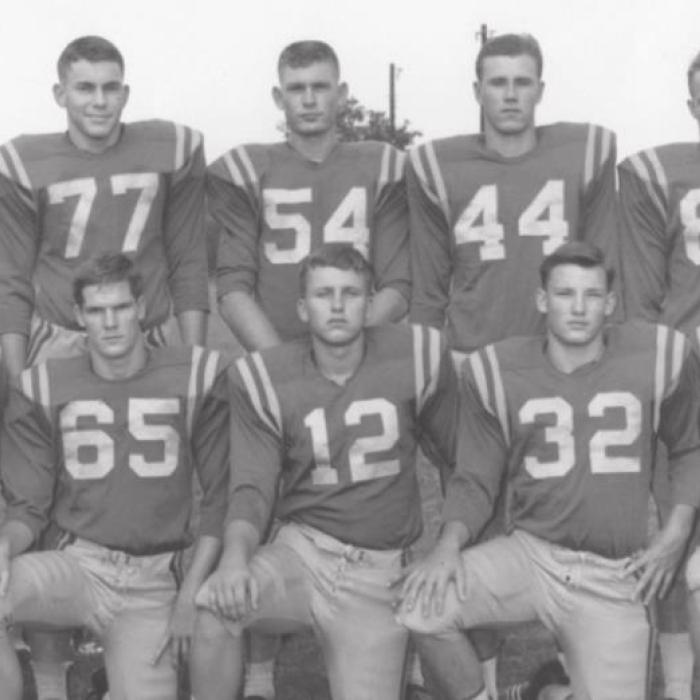
By his senior year in 1966, Erwin was captain of the La Grange High School football team. Although he received offers to play college football, he chose to focus on academics.
“That was one of the smartest things I ever did in my life because my knees are still good and other body parts, too.”
At first, Erwin considered coaching but decided on biological sciences, health and physical education to become a science teacher. The downside of following the academic path was financial. He didn’t have a car and very little cash.
“My parents didn’t have the money to send me to Texas A&M, so I had to earn it. I still was running trucks loaded with hay for my dad and during the summer I worked for the engineers in the highway department. The first year, I was on the survey crew. The next year, I worked on I-10 doing surveying and bluetopping. It was good money.”
During high school and later summers, the Sladek brothers drove 18-wheelers hauling rice during harvest season for their Uncle Lester Cranek in the Garwood area.
Erwin applied practically every penny he earned to pay his college expenses. Although he worked hard and lots of hours, he still had to borrow money to finish college.
“In March 1970, I had completed 144 hours with no summer school at Texas A&M. My first interview was with Victoria Independent School District on a Thursday. They told me to look for a contract in the mail by Saturday. I was one of the first two students in my graduating class to get a job. So I went down to Victoria as a science teacher, but I was back in the rice fields driving a truck that summer.”
Uncle Sam’s Greetings
Erwin was drafted during his first year of teaching in 1970, but was allowed to complete the school year. He got on a Greyhound bus at the Muster Oak in La Grange in 1971, carrying a box lunch from the Bon Ton Restaurant. He was accompanied by other young men from all over Fayette County who also had received greetings from Uncle Sam. Rather than returning like most of the recruits, Erwin found himself on an airplane headed to Fort Leonard Wood, Missouri. That’s where his hitch in the service started. Despite having a college degree, Erwin turned down Officer Training School because it required an additional one-year commitment. He had a job teaching school waiting for him.
Instead, he was sent to train as a military policeman (MP) at Fort Gordon, Georgia. There he was assigned to tutor other trainees to help them pass the military law exams. Erwin was then given 30 days leave to get his personal affairs in order before shipping out. He arrived in Vietnam at 3 a.m. on Nov. 11, 1971. After being stationed in Da Nang for 10 days, he was flown to Long Binh, a base in the south, where he was assigned to a military police unit that officially didn’t exist because of its mission.
A night hawk by nature, Erwin volunteered to work the graveyard shift in the stockade. He provided protection from the Viet Cong while guarding American servicemen under arrest in low and medium security, plus those who had committed heinous offenses such as killing their company commander, first sergeant or platoon leader. Some inmates were in dangerous, drug-induced conditions.
Erwin recalls a night when Viet Cong sappers blew up the fuel pumps, the flames turning the darkness as bright as daylight. If prisoners escaped, Erwin helped round them up. He went on duty with a .45 revolver, a 12-gauge shotgun, an M-16, a lightweight, fully automatic assault rifle, plus a radio. It was said the Viet Cong had a bounty of $50 on every MP. Although he didn’t think anything about the defoliating substance sprayed on the underbrush at the time, Erwin was exposed to Agent Orange.
Because the mess (kitchen) was closed at night, Erwin also remembers eating a lot of C-rations prepared canned/packaged meals. In his compound of 15 MPs, Erwin was the only Texan. It’s no surprise his fellow soldiers in the unit called him Tex.
It was a solitary existence in an environment that was never totally quiet. It also was stressful.
“Feeling alone is one of my memories about Vietnam. I had one classmate from La Grange, Roger Kraatz, come to see me and I was separated from the one guy I knew on the trip there when we got to Da Nang. So coming and going, I never saw anybody else I knew and I never got too close to anybody.”
Erwin remembers how thoughts of boarding that airplane aptly named “the freedom bird” and getting home kept him constant company.
“Our company of MPs is not a recognized group or unit that kept in touch and held reunions years later. Of all the soldiers I came into contact with in Vietnam, I have only seen one I remembered. In 1995, a guy seated across the room at a meeting of superintendents from mid-size Texas schools looked familiar. He was the only other teacher that I had gone to Vietnam with and the only person I knew on that airplane flying there. We had been separated since 1971.
“When we met up in 1995, my buddy said we looked like death warmed over coming out of what I called the hole. He said MPs from other units felt sorry for us and did not want that job, but when you’re in the pigpen with pigs you don’t know you’re dirty.”
Erwin weighed 190 pounds when he went to Vietnam and 178 when he got out. He was all muscle. When he returned stateside 10 months later, Erwin adapted quickly, using his high school typing skills as a clerk in the office of an operations sergeant at Fort Sam Houston in San Antonio to round out his required hitch with the U.S. Army.
It was a great relief in April when Erwin opened the door to a classroom in the same Victoria school where he’d taught before his Vietnam tour. He had been permitted to get out a short time before his two-year tour of duty officially ended.
Erwin later learned that out of the six boys in his class at Sacred Heart School, he and three classmates had all been to Vietnam and all made it back.
Lost Time
Using GI Bill educational benefits, Erwin set his sights on a Master’s Degree from the University of Houston in Victoria, at night and summer school. After earning that credential, Erwin decided to continue and complete an education administration certification. Not long after that, Erwin was appointed an assistant principal, a post he held for five years in a school with approximately 1,100 six, seventh and eighth-graders. His primary responsibilities were student discipline and attendance.
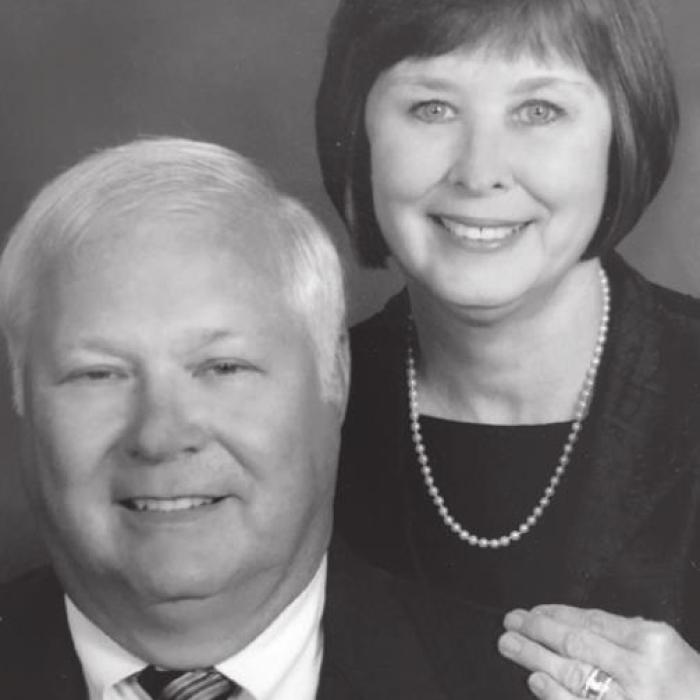
In 1978 at the end of his first year as an assistant principal, Erwin married Bonnie Koether, who had also graduated from La Grange High School, and had been teaching kindergarten in Flatonia for three years. After their marriage, Bonnie began teaching kindergarten in Victoria.
Return to La Grange
The death of La Grange High School principal O.B. Schoenemann and his wife in an accident shocked the community.
“Mr. Schoenemann really took an interest in his students and was well-liked. When I was in high school, he was one of my teachers and bus drivers. When Bonnie and I came in for the funeral, people asked if I was going to apply for the job and I told them no.
“I never thought about coming back to La Grange. I had a principal’s job waiting for me in Victoria the next year. Besides, I didn’t want to be perceived as some ambulance chaser. LGISD Superintendent Fred Weaver, whom I’d never met, called me on Sunday. He said my name had come up and he’d like to talk to me,” Erwin recalls.
He met with Mr. Weaver on Monday and was offered the job on Tuesday. Erwin accepted, but first had to work out how to honor his contract with the Victoria ISD. At the age of 33, Erwin was a very young high school principal in his hometown.
“I was the principal of some teachers who had taught me and other teachers who I went to school with, but I couldn’t have asked for better support. Fred Weaver was a great educator to work with, as well. It also was an honor to follow in the footsteps of long-tenured LGISD administrators such as C.A. Lemmons and H.C. Giese. I have always been blessed to be surrounded by really great people in Victoria and here.”
During that time, LGISD needed to offer school bus driver certification training. Erwin, who took on the responsibility for 25 years, has trained school bus drivers of LGISD and surrounding school districts for the Texas Education Service Center Region 13. It involves a 20-hour certification class, plus a refresher course every three years.
“I left the principal-ship because Mr. Weaver came to me and said, ‘What do you think about moving to the central office?’ I was happy doing what I was doing. Two or three months later, he asked again. I debated because I wouldn’t be working with students, but I took the job. So I moved to Central Office where Fred Oppermann also was an assistant superintendent. I did that for seven years, handling a wide range of responsibilities ranging from curriculum to federal programs and from special projects to technology.
When LGISD Superintendent Fred Weaver retired, Erwin turned in an application and was hired on July 1, 1995. He held that post for 11 years.
Rough Landing
In addition to the day-to-day challenges in a superintendent’s life, probably Erwin’s biggest hurdle was dealing with a predicament that transpired after Texas signed a new finance bill into law. Purportedly, it gave schools more money, but it didn’t work out that way everywhere.
“Of the 1,000-plus school districts in Texas, the new law negatively impacted five. We were one of the five listed as ‘abnormally wealthy’ because Fayette County had income from minerals. In fact, the state said we owed them money. I was forced to shut down programs, cut the budget by 12% and eliminate 14 positions. Retaining classroom teachers remained our number one priority, though. I had a school board that was most supportive.”
A tax rate increase in Fayette County from $1.13 to $1.48 was necessary for the school district to recover from the lost revenue. In presentation after presentation, Erwin explained to the local citizens why LGISD had lost so much funding. He made it work.
About that time, Erwin began the first district-wide recycling program in the state. Teachers, students and auxiliary staff were all involved. The effort cut the number of trash dumpsters utilized by LGISD by half and greatly enhanced the development of the newly formed Fayette County Recycle Center.
Another facet of his tenure was breathing life into the scholarship program for high school seniors. It has grown exponentially ever since. Erwin and his team also are credited with the acquisition of the old Fayette Memorial Hospital, which was converted into a career and technical center, as well as administrative offices. In addition, with the help of community partners LCRA, Fayette Electric Cooperative, Colorado Valley Telephone and the City of La Grange, he initiated the first initial fiber optics installation in La Grange. It ran between the K-8 campus to the high school.
“I was very fortunate to have Scott Toensing as LGISD’s ‘go-to-guy’ on technology. We relied heavily on his expertise to successfully implement computerization across the whole district.”
Although Erwin retired in 2007, he continues to serve the community from behind the scenes. He teaches six professional development courses for members of the Texas Association for Pupil Transportation that focus on student management, leadership and presentation skills.
He’s also very involved with Texas Education Service Center Region 13, serving as vice president of its board of directors. It is comprised of 66 independent school districts, 22 charter schools and 20 private schools in 16 counties, including the Austin ISD. Recently, Erwin was instrumental in seeing that a satellite training campus will be set up in the former Bealls department store building in La Grange.
Erwin’s other major focus is representing Fayette County on the Criminal Justice Advisory Council of the Capital Area Council of Governments. Its mission is to review, evaluate and score grant applications and make recommendations to the governor’s office.
In between meetings and workshops supporting these area efforts, Erwin looks after his cows and spends time in his garden and with Bonnie. After serving in Vietnam, he says he has a greater appreciation for what we have in this country.
“I really appreciate the heritage of Texas and especially Fayette County,” he adds.
Sacred Heart Catholic Church always has been a big part of Erwin’s life. For more than 25 years, he served as a commentator, doing the readings at Mass. He served on the church council for five years and after a finance council was set up, he joined Richard Cernosek, Dr. Bill Nolen, Rose Cernoch and Gus Lindemann and served a quarter of a century as its chair, working closely with Monsignor Harry Mazurkiewicz. In 2004, when Sacred Heart Church presented its first Lum Gentium Award, which recognizes those who exemplify the spirit of Christ, Erwin was the recipient. In 2015, he was honored with a Catholic School Education Service Award by the Diocese of Austin.
“I believe the Lord puts you where you need to be. I never, ever, ever planned to come back to La Grange, Texas. I could see myself in Victoria or a smaller district nearby, but that’s not the way it worked out.
“I’m just grateful and blessed to have had the opportunity to serve in LGISD and this community,” Erwin says.
“Advice? I guess I would go back to what my parents always said and modeled, ‘Work hard at what you’re doing. Keep your focus. Serve others. Keep the faith.’”
If you’d like to read more stories written by Elaine, visit www.elainethomaswriter.com/ blog/ and sign up to receive new posts. You can also call Elaine at 979-263-5031.