


What Makes Arnold Romberg Tick
Well-known La Grange civic leader Arnold Romberg has successfully engineered a long, gratifying life
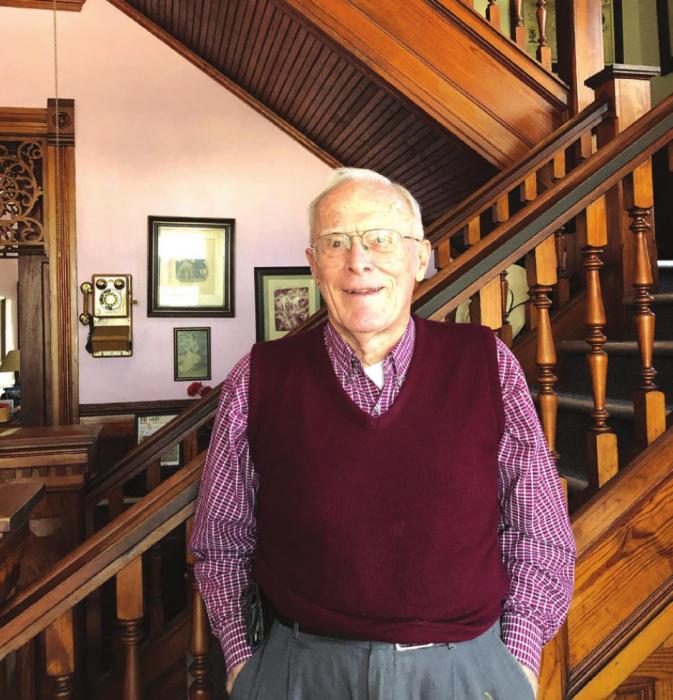
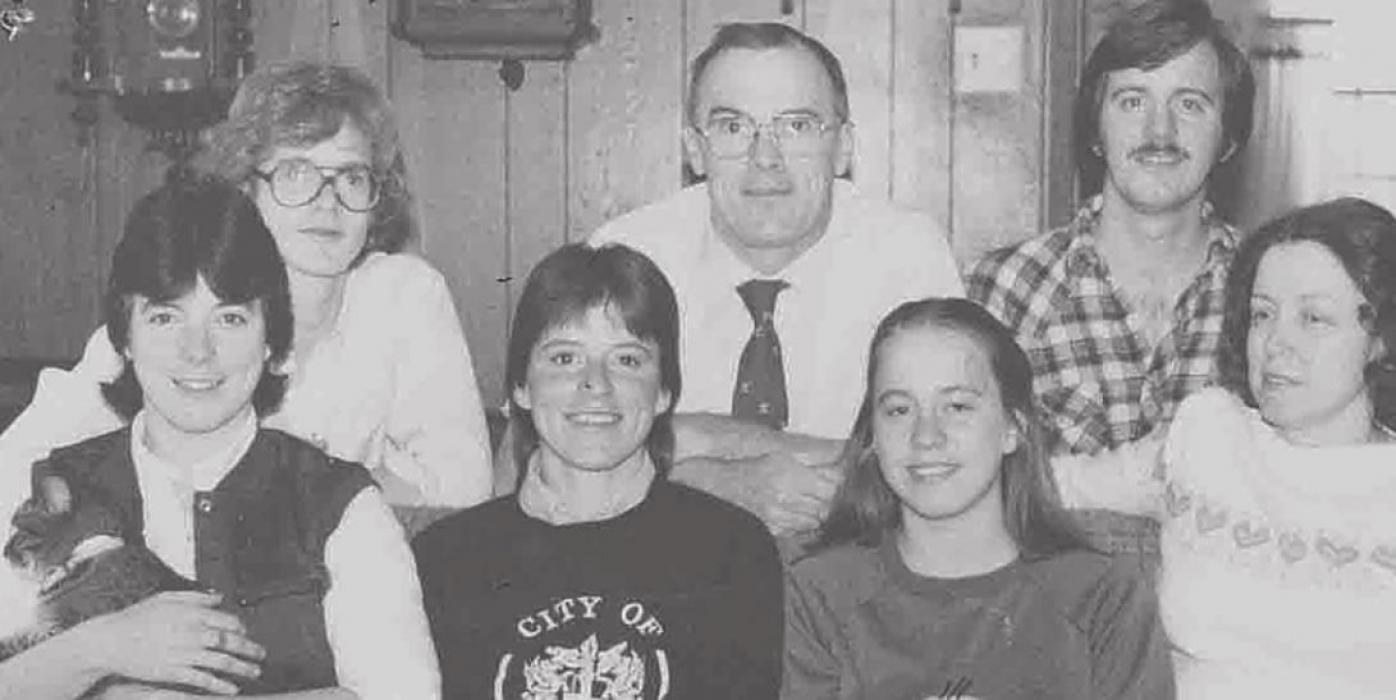
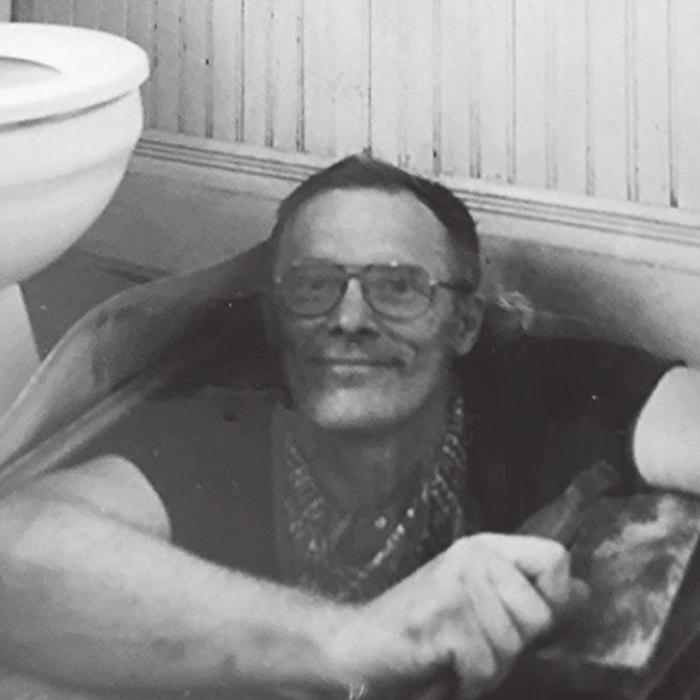
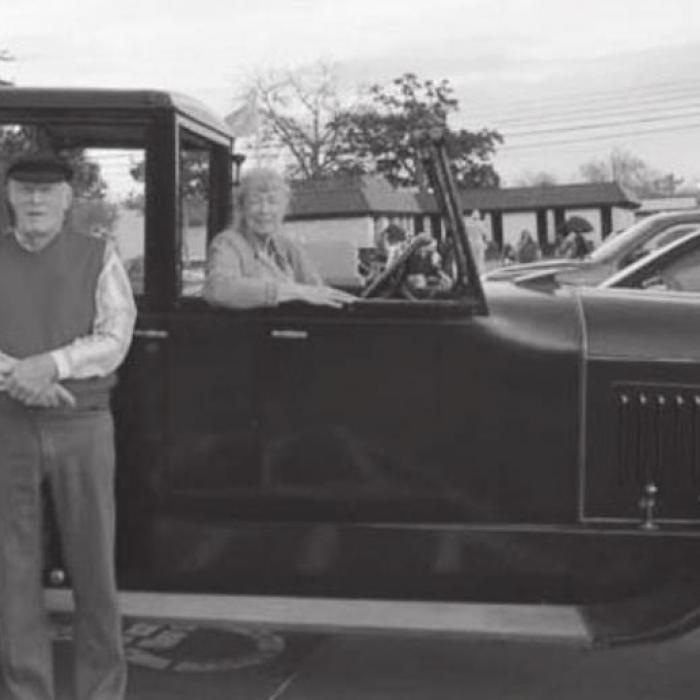

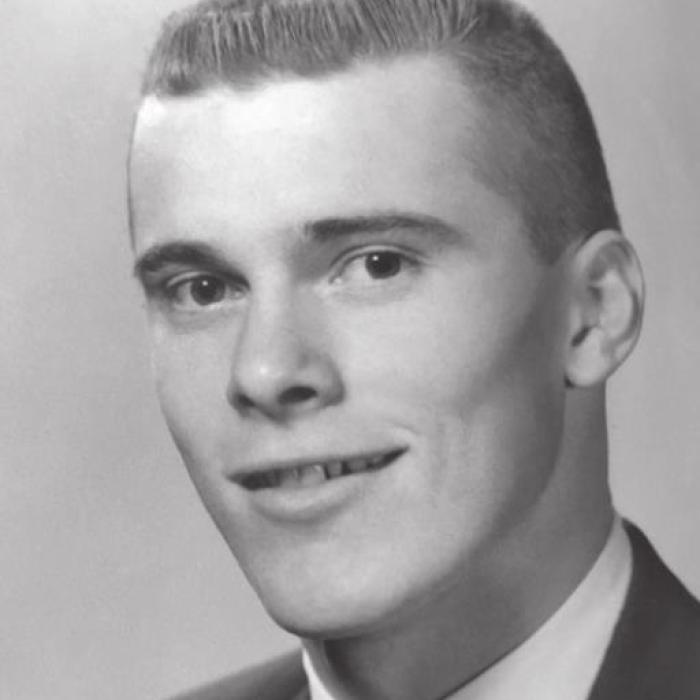

Arnold Romberg started programming computers 67 years ago because they fascinated his analytical, scientific mind. Contrast that to the 87-year-old’s gentle, empathetic nature that’s evident in how much he cherishes history. The combination of those two seemingly opposing approaches to life has made for some out-of-the-ordinary life jaunts and journeys for Arnold and his circle of family and friends.
Take, for example, the circumstances that brought Arnold and his late wife, Suzy, to La Grange. It wasn’t sentimental feelings that beckoned the Rombergs to Fayette County, where his great-grandfather, a German immigrant, had settled about 1852. The respected, hardworking German-Texas farmer and poet Johannes Romberg and his family thrived in Fayette County. He even established a literary society for the rural Black Jack Springs community during his lifetime.
No, Johannes Romberg’s great-grandson and his wife chose a retirement home in La Grange following a disciplined, systematic search.
“We decided to buy our last house in 1979 and wanted it to be between Austin and Houston where our older family members lived,” Arnold recalls. “So I wrote letters to a number of different real estate agencies in that geographic area. I made appointments, took a week’s vacation and each day we went to another small town.”
At first, Arnold and Suzy thought they might like living in the country, but soon crossed that desire off their list.
“We didn’t want to have animals. We didn’t want to raise crops,” Arnold recalls. “We decided we wanted to live in a town.”
On the last day of their seven-day fact-finding mission, the Rombergs arrived in La Grange. They had an appointment with realtor Gus Lindemann, who Arnold remembers as being very nice and helpful.
“It was a Sunday morning and Gus took us around to show us various houses.”
But nothing clicked. In fact, Suzy lamented that the houses the couple viewed were too similar to those where they’d lived growing up. The Rombergs sought a special home, a unique place that reflected their shared sense of purpose and adventure. By late morning when Gus went home for lunch and the Rombergs ate at the Bon Ton Restaurant, they were disappointed and a tad discouraged. Then Arnold read a real estate ad in The Fayette County Record aloud to Suzy.
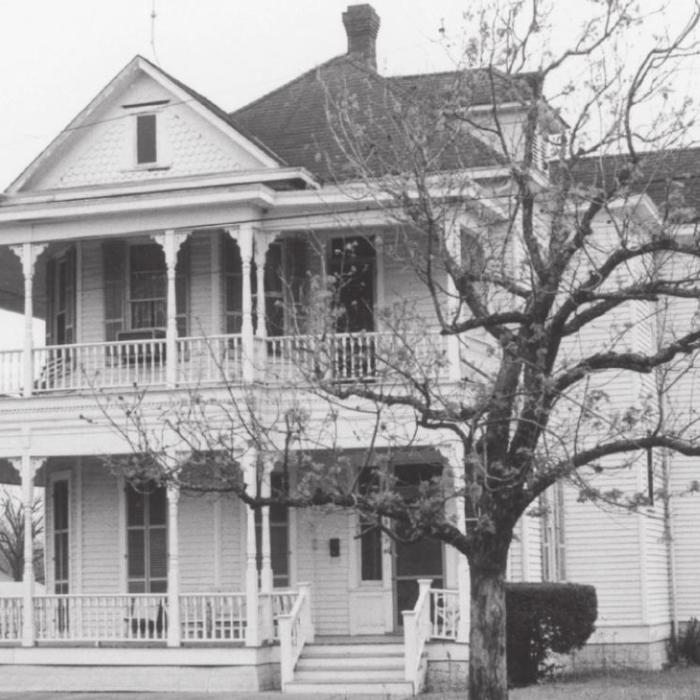
It read: Historical Kruschel Home – two story – in original architectural style of the 1800s with many hand-carved oak features – stairwell, dining room china cabinet, wainscoting. Ten large rooms – upstairs rooms have individual access to balcony. Antique fixtures, glass doors and side panels. Very large corner lot with garage and washroom.’
Intrigued, Arnold and Suzy pressed Gus Lindemann to show them the property, but the knowledgeable realtor balked. Gus wasn’t enthusiastic and that wasn’t just because another La Grange agency had the listing.
The Kruschel Home, built by Charles and Emma Kruschel in 1908 at the cost of $12,500, certainly was historic. It had served as the lifelong home of Charles’ widow, Emma, who died in 1943, and her four spinster girls, Agnes, Olga, Ella and Hattie. After the last daughter died in 1976, the majestic old home went on the market. While the house had magnificent bones, a lack of regular maintenance and updates over its long life had allowed it to drift into disrepair.
However, when Arnold and Suzy pulled up in front of the North Main Street residence, a block from the courthouse square, they experienced a revelation: The Kruschel House was just what they’d been looking for.
Nevertheless, Gus Lindemann still was shaking his head. Yet their realtor’s disdain didn’t dampen Arnold’s and Suzy’s excitement.
“I’d also seen an ad in the La Grange newspaper for a local architect named Ed Mattingly, who had the little office in the front of The Fayette County Record’s building. So I went over there that Sunday afternoon and Ed happened to be at work. I introduced myself and asked him if he’d come and look at the Kruschel House. He said he’d be delighted to help us.
“When Ed walked in the front door, he looked around and told us he remembered playing in the house as a young boy.”
Once the reminiscing ended, the seasoned architect got down to business and quickly offered Arnold and Suzy some straightforward advice.
“Ed told us there were two things in that house we didn’t have to worry about: the plumbing and the wiring. He advised as far as we were concerned, we should act as if they didn’t exist because it all needed to be replaced,” Arnold recalls.
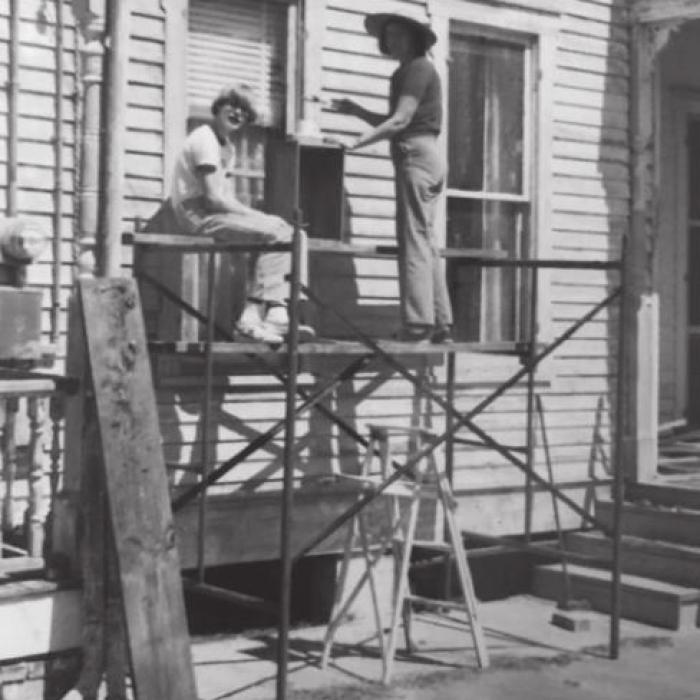
“That made good sense to me because I’d noticed lead pipe plumbing and porcelain knob and tube wiring in the attic. That didn’t deter us, though. We planned to do as much of the restoration as we could ourselves. As a teenager, I had worked on houses for friends of my father’s. I was a tool-fetcher and carrier. My father was a good craftsman. My grandfather had been a super craftsman, so I had learned a lot about that sort of thing from them.”
While it may be true that Arnold’s forebears were talented woodworkers, they were also very accomplished scholars.
Higher Education a Family Tradition
Around the turn of the 20th century, Arnold’s paternal grandfather, who also was named Arnold Romberg, attended the one-room Luck’s School at Black Jack Springs. He went on to earn a degree in physics at the University of Texas and graduated from Harvard University with a doctorate degree. Upon graduation, Arnold’s grandfather was hired in Hawaii as a volcanologist: a scientist who studies volcanoes. When he later was offered a tenured teaching post at the University of Texas, Arnold’s grandfather returned to his home state.
During his years as a professor, he collaborated with an extremely talented graduate student to patent an instrument called the LaCoste and Romberg Gravity Meter. For decades, geophysicists in oil exploration relied on it to investigate the subsurface. It was such an important invention that it went on a mission to the moon and earned a place in the Smithsonian Institution.
“My grandmother, Margaret King Romberg, told me one day my grandfather came home and said, ‘Margie, is there anything in the world you’d like to have?’ She told him, ‘Well, I have most everything we need, but I could use a vacuum cleaner.’ He told her, ‘Go out and buy one. We just sold our invention to Humble Oil Company.’”
Arnold’s father, Frederick Romberg, attended the University of Texas like his father and graduated from Harvard University with a master’s degree. While working as a representative for Geophysical Service Inc., the parent company of Texas Instruments, it was necessary to move his family every three or four months.
Arnold was homeschooled by his mother, Marcia Todd Romberg, for several years before the family settled in Austin, where he attended grade school at Robert E. Lee. He later went to University Junior High and Austin High, graduating in 1951. He placed sixth in a class of 506 students.
During his school days, Arnold took Latin and German lessons from his father and had pri vate French lessons along with his younger sister, Lucia.
When his father’s work eventually brought the Romberg family to Houston, they bought a home in West University. Arnold’s mother was delighted to find her new neighbor was a former high school friend whom she hadn’t seen for years. At the time, Arnold was at Harvard University working on an honors degree in physics.
“Because my mother and future mother-in-law had daughters going to the same high school, they carpooled. So my sister rode to high school with my future wife, Suzy Strickland, for a year before I knew her,” Arnold says.
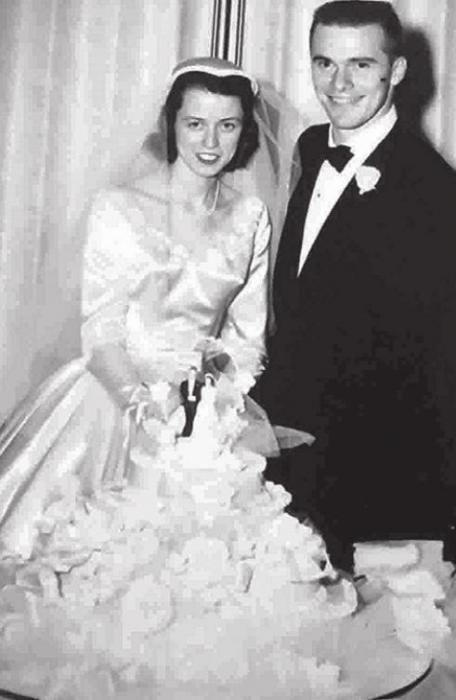
When Suzy graduated from Lamar High School, she attended Hollins College in Roanoke, Virginia, for her freshman year. She later transferred to Texas Christian University in Fort Worth to study journalism, graduating in December 1955. Arnold pursued her, although she broke off their long distance relationship at one point. But the fences were mended and Arnold and Suzy were married on Feb. 11, 1956, at St. Mark’s Episcopal Church in Houston. Their first son, John Marshall, was born a year later.
During Arnold’s junior year at Harvard, he worked for Shell Development Co. in Houston. He shared an office with a woman writing programs for something called an electronic computer. Arnold was greatly intrigued.
Computers of Old
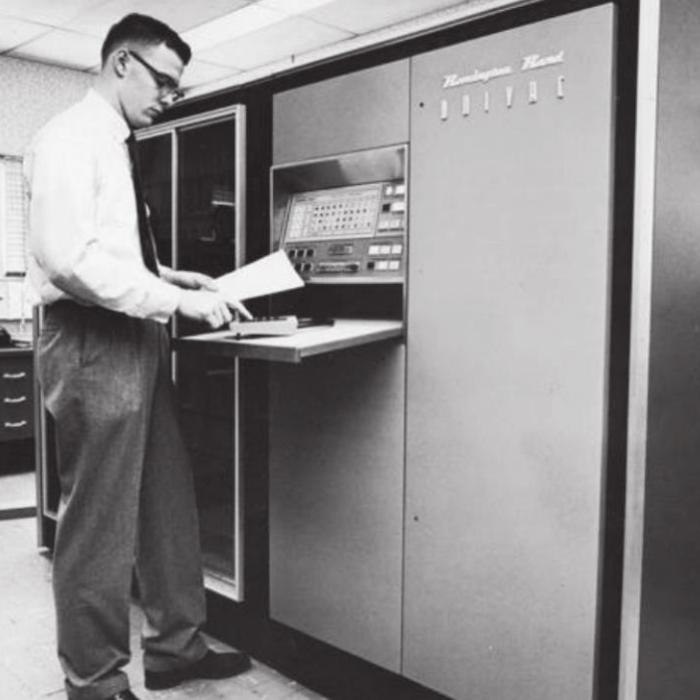
“I took a course in computer programing during my senior year, and during the summer of 1955, I worked for Shell as a programmer,” Arnold explains. “By that time, I had decided that I wanted to be a computer scientist.”
Harvard awarded Arnold a bachelor’s degree with honors in physics. Then he earned a master’s degree in physics at Rice University in Houston and later a second master’s degree at Harvard in computer science, which was then called applied mathematics.
“At the time, it was called applied mathematics with an emphasis on computer science.”
Shell sent the Romberg family to Midland, Texas, where they welcomed their second child, Alice Elizabeth. A year later, Arnold transferred to the Shell Development lab in Houston, where he supervised the computer science department of six employees.
“Shell got a brand new computer, the first of its kind, called a UNIVAC. A Houston consulting firm of Bonner and Moore Associates that specialized in planning refinery operations wanted some programs developed using this new computer, so they came in off-hours to use it. Then they offered me a job. When I joined the company, I was the 12th employee and 12 years later when I left, it employed 150.”
While he was on the Bonner and Moore payroll, an independent refinery in Germany was interested in increasing the value of its product through the implementation of mathematical methods. In the fall of 1965, Arnold moved to Germany and put in the new system. By that time, the Romberg family had welcomed Katherine King and Laura Todd.
Life in Germany
“We flew on KLM from Houston to Amsterdam, Amsterdam to Cologne. A taxi took us on to our final destination of Bonn, the federal capital at the time. We arrived on a Saturday morning in late August. A staff member at the refinery had arranged for us to rent a house in Bad Godesburg, a suburb of Bonn, but we couldn’t move in until September 1. So we were invited to stay at the man’s country place, which was actually a garage apartment in a little town not far away.
“Of course, we were all tired and collapsed into bed. The next morning, a Sunday, we decided it was time for all the kids to have baths, but there was no hot water. I phoned the proprietor and told him that. He replied, ‘We had the hot water on yesterday. Didn’t you notice? It is on every Saturday.’
“That was one of the few times I saw Suzy lose her cool. She broke down and cried, but I helped to console her by boiling water on the cookstove and carrying it to the tub so the kids could have their baths,” Arnold recalls.
Life soon fell into a routine and the Rombergs stayed in Germany two and a half years. Their fifth child, Hugh Lawrence, was born while Suzy was home in Houston the summer of 1967. When the Germany assignment ended, Arnold rejoined Bonner and Moore’s head office in Houston. He continued to enjoy his career as a computer programmer, solving problems as a consultant for various clients. By 1973, when it became apparent that advancement opportunities were limited, Arnold started looking for another job. He mailed a hundred copies of his resume to Texas companies. Although he only got one response, it was an ideal fit. Arnold went to work for Texas Instruments, a subsidiary of the same company his father had been with decades before. The family moved to Dallas where his work of supervising computer programmers was right up his alley. After 11 years, Arnold set up shop with his son, Marshall. Working together, father and son did consulting work under the company name of Romberg and Romberg for five years. When they dissolved the firm in 1993, Arnold went back to contract consulting for small Dallas companies. Then in 1994, a promising consulting opportunity presented itself in Austin. That’s also the year the couple moved to La Grange. Arnold officially retired in 1997.
By that time, the Rombergs had owned the Kruschel House for 18 years. Restoration efforts accelerated when Arnold and Suzy were home for good in La Grange. However, they still made time for extensive international, as well as domestic travel, wearing out three motorhomes touring the U.S. and Canada.
Putting Down Roots
In La Grange, Suzy soon began investing time in civic affairs, something she’d found rewarding in other places where the family had lived. She helped to get the Second Chance Emporium off the ground and was the shop manager for a number of years. Suzy was a leader in the Fayette County Republican Party back when the county was primarily still Democratic and volunteered at the Fayette Public Library. Moreover, it seemed she was always at her husband’s side. That was certainly true when Arnold agreed to run for La Grange City Council in 1999. He won his seat the first time by a margin of 17 votes and continued to serve for 18 years.
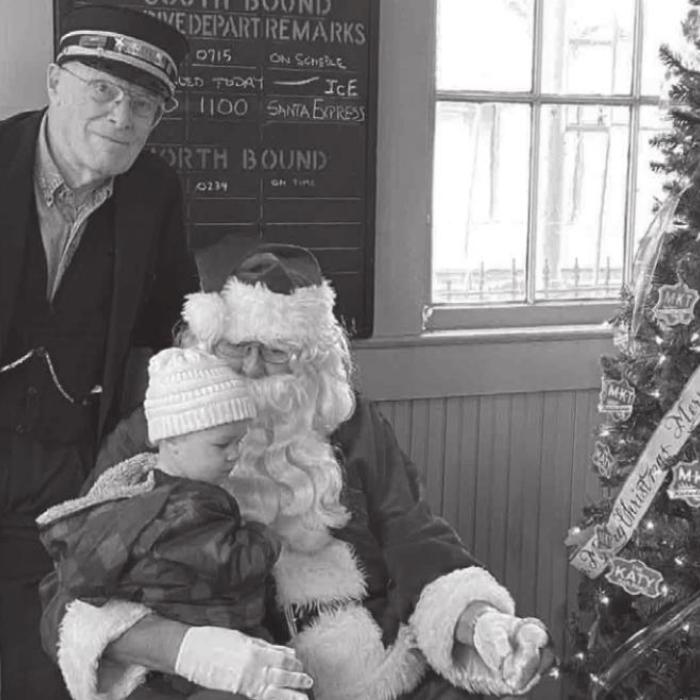
Today, Arnold is president of three important historic venues: the La Grange Railroad Depot Museum, the Faison Home and the Texas Heroes Museum.
“I am not kidding when I say that other volunteers do the work. I used to do the work, but not so much anymore,” he adds.
Nevertheless, Arnold Romberg, whose complex, cold logic is tempered with gentle, empathetic intuition, is a man that locals of all ages look up to. He has engineered his way into a community’s heart and wouldn’t have it any other way.
To read more stories written by Elaine, visit www.elainethomaswriter.com/blog/ and sign up to receive new posts, or call Elaine at 979-263-5031.