


Stave Off Boredom in the Garden: Keep Planting

Do you ever get bored with your garden? I hate just watching and waiting for things to grow. If the garden stays static for too long, I find myself disinterested. And that’s a recipe for disaster in the garden.
Doug Janda of Hostyn Hill Greenhouses once told me that your plants grows best when you cast your shadow on them every day. I think what he means is this: if you’re not out there daily, some pest or disease will pop up and wipe out a crop before you even realize it. Or your broccoli will bolt to seed, ruining the crop, because you failed to pick them at the right time.
So I like to plant a few things every week. That way I have something new to look at when I walk through my garden. It’s hard to do that during the heat of the summer when seeds don’t like to sprout. But right now is a great time to get some seeds in the ground.
This week, I planted some onion seed, garlic cloves, a few varieties of lettuce and radishes. I’m really excited about the radishes. I’m growing two varieties. One is a Czech heirloom radish called “Zlata,” which means “golden” in Czech. As the name implies, it is a golden-colored radish. The other is an heirloom from the Indian subcontinent named “Pusa Gulabi.” They are supposed to be rose-colored inside and out, and packed with lots of antioxidants. “Pusa Gulabi” makes a great cooking and pickling radish, from what I understand.
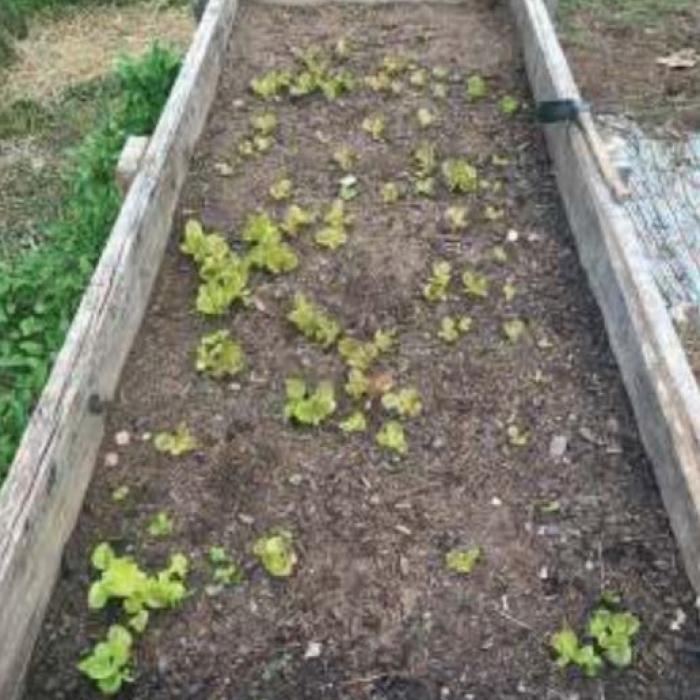
Most of the lettuce I planted is a French heirloom called “Marvel of Four Seasons.” I planted the first batch two weeks ago, and they are now about three inches tall. They came up kind of spotty in the bed where I planted them. So I replanted some seed in the bare spots. The weather might still be a little warm for good lettuce production, but the name of this variety intrigued me. Maybe it grows all four seasons in France, but I doubt it will take our summer heat. However, I’m hoping this variety will make a good early fall lettuce crop.
I prepared my lettuce bed by adding a couple of bags of store-bought organic compost to the soil. I amended with Medina Growin’ Green organic fertilizer, a poultry manure-based granular product you can buy from La Grange Farm and Ranch. I’ve been supplementing weekly with fish emulsion and seaweed extract in a foliar application for some extra nutrition. For lettuce, I mixing an ounce of each to a gallon of water in a pumpup sprayer. The Micro Life liquid fertilizer products are also great for foliar feeding. You can buy them at Sutherlands in La Grange. Spray the foliage in the early morning or evening to the point of a heavy drip. I’ve been treating my cabbage and bok choi plants the same way, and they are off to a great start.
Most people wait until the spring to plant onion sets, or transplants. This year I bought some onion seed to try and grow this fall. Onions planted from seed right now will produce bulbs during the early summer, just as if you transplant onion sets in the late winter. However, I’ve only ever been able to find one or two varieties of onion sets at the retailers around here. Planting from seed allows you to choose from many different varieties. If you decide to plant some onion seed, look for short-day varieties. They will be much more likely to form bulbs than the long-day and day-neutral varieties they grow farther north. The variety I’m planting now is “Red Creole,” which is supposed to be red onion well-adapted to Texas. I notice that the young onion seedlings seem to enjoy frequent watering.
You can plant garlic cloves anytime from now until the late winter. Howard Garrett, an organic gardening expert from the Dallas area, says he has the best production from garlic planted in late winter. It’s hard to find good seed garlic around these parts, so here is what I do: look for garlic at the grocery store that was grown in nearby regions, such as Mexico or Florida. Different varieties of garlic, just like onions, are sensitive to day-length. Right now at H-E-B in La Grange, they have three different kinds of garlic for sale. The label on bulk garlic in the bins say they were grown in Spain, so I avoid them for the garden. They also sell two kinds of garlic three-packs. The one in a purple wrapper says grown in Mexico and the other in a white wrapper says grown in Florida. I’ve been buying these two kinds of garlic for cooking and garden use.
I use them in the kitchen, and whenever I notice a green shoot emerging from the head, I break up the head and save it for the garden. I’m not sure if it matters, but I do not peel the garlic cloves before planting. Try planting the garlic with the root end down and the pointy end up. Laying the garlic sideways in the hole will work as well. If you plant it upside down, the clove might have a hard time emerging from the soil. I plant garlic around my trees to take advantage of garlic’s anti-disease properties. It can really benefit not just trees, but all the plants in your garden. For this reason, I don’t see a point in growing a big bed of garlic by itself. Instead, I pop a clove into the soil here and there throughout the garden as my kitchen garlic sprouts. Keep in mind, however, that garlic can stunt the growth of certain plants including asparagus, peas, beans, sage, parsley and strawberries. So avoid planting garlic near to those plants.
I just discovered that it might be past the time to plant green peas. The Old Farmer’s Almanac says to plant green peas about eight weeks before the first frost date, which in our area is around Nov. 17. According to that, I should have planted them a week or two ago. I’m going to try to plant this week and see what happens. Mature green peas should withstand some light frost. If I get a solid stand, I’m hoping I can still get a good crop. If you haven’t planted peas yet, you might consider planting some this week. Most varieties of green peas need a trellis to grow, so be prepared for that.
If you get bored easily, plant some different seeds each week and you’ll always find something to do. This week, while checking on my sprouting seeds, I noticed some orange eggs of what I think are Colorado potato beetles on my Thai eggplants. I’m glad I caught them before they hatched!
If you have any questions or comments about gardening, send them to andy@fayettecountyrecord.com. I’d especially like to hear about different varieties of lettuce and radishes others are growing this fall.