


That Sinking Feeling: Choosing a Sink for a Vintage Bath
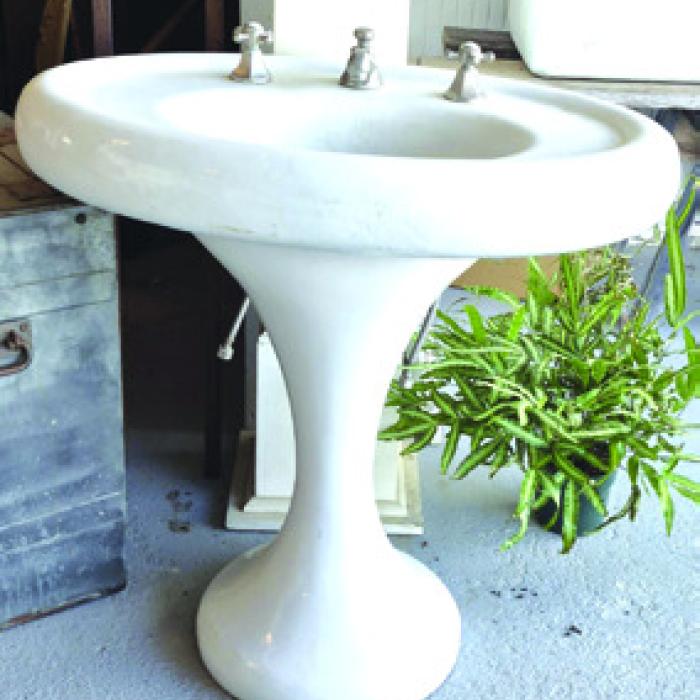

If you are doing reno on an old house, after the kitchen you are likely thinking about an interesting vintage sink for one or two bathrooms.
“A great idea,” says Jill Wilson of LooLoo Design, “and here’s a primer on things to consider.”
“By the 1870s plumbing had come in from the cold, and hot water on demand was an easy sell to new home builders,” Wilson continues. “For a long time, however, even big houses featured just one large bathroom, so most old bath sinks lean towards larger rather than smaller sizes.”
“The decades between the Civil War and WW I were the era of great American manufacturing,” she adds, “with many plumbing supply companies offering large catalogs filled with all manner of bath fixtures & accessories”.
“So here are some thoughts and tips to help you search for the ideal antique bathroom sink.”
Early Cast Iron 1870s &
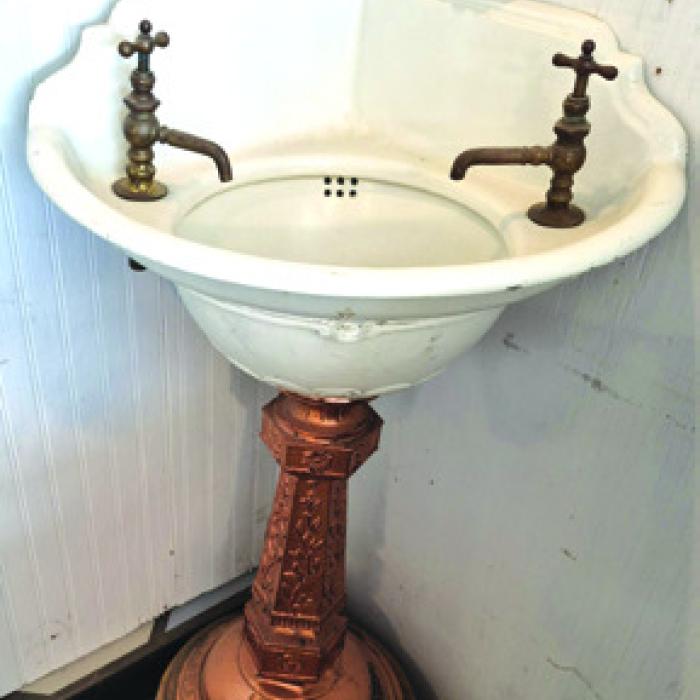
Industrial, institutional, and residential cast iron was a hallmark of mid-19th Century America, so producing plumbing fixtures was a natural extension of the industry. The earliest fixtures were raw iron but it wasn’t long before the application of a fired porcelain finish on the inside of the sink bowl became the obvious consumer choice. Most cast iron sinks of the 1870s and 80s were small and wall mounted, and many had elaborate embossed decoration on the underside.
Marble 1880s & 90s
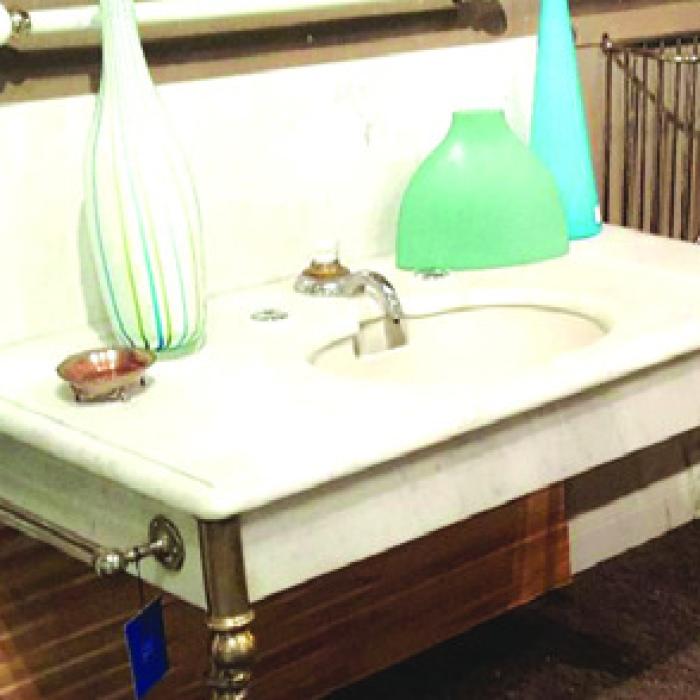
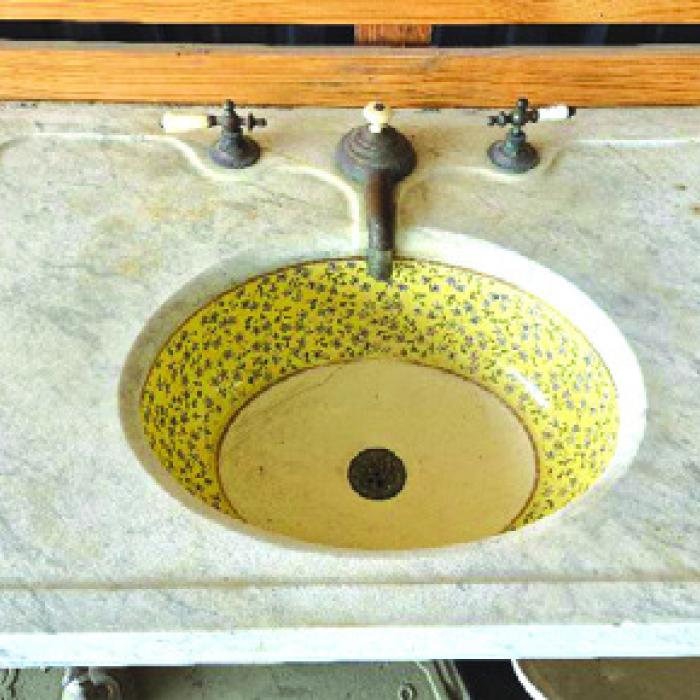
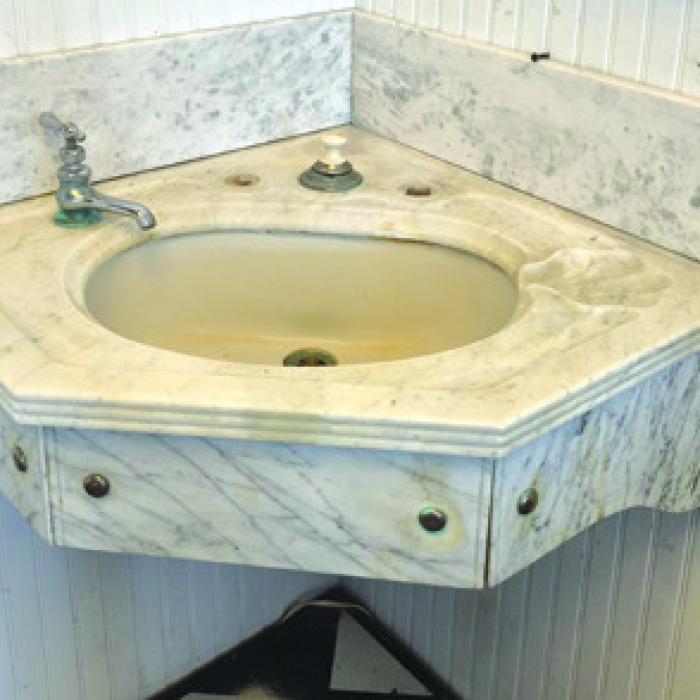
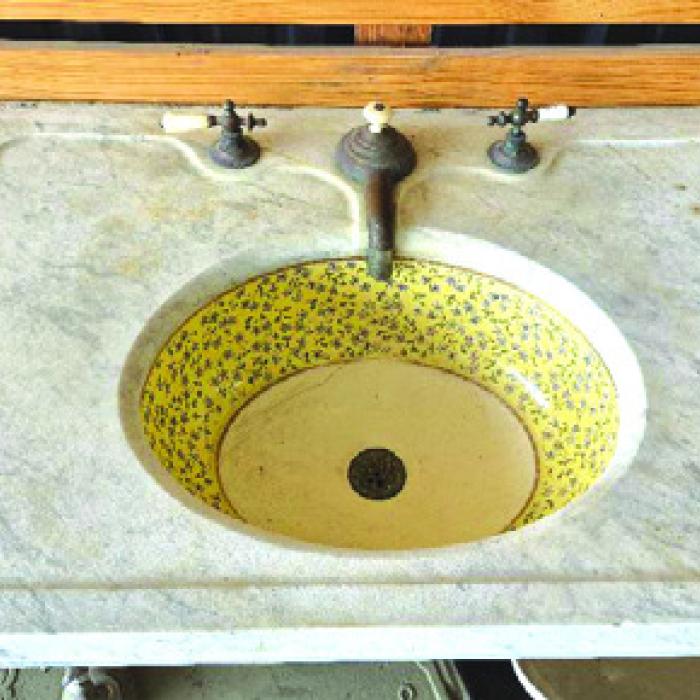
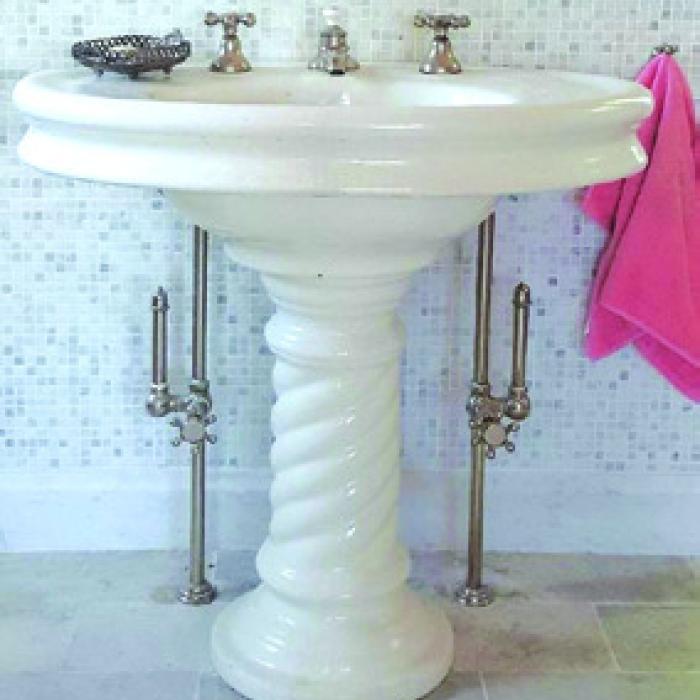
Marble slab bath sinks were ubiquitous in the 1880s. Round bowls, oval bowls, double bowls, decorated bowls, plus fancy legs and elaborate brackets provided unlimited options for domestic bathrooms that had evolved into a key space in domestic construction. Also, the plumbing shifted from just hot and cold taps to mixing units with fancy faucets and a spigot, as well as decorative shut-off valves and traps to complete the installation.
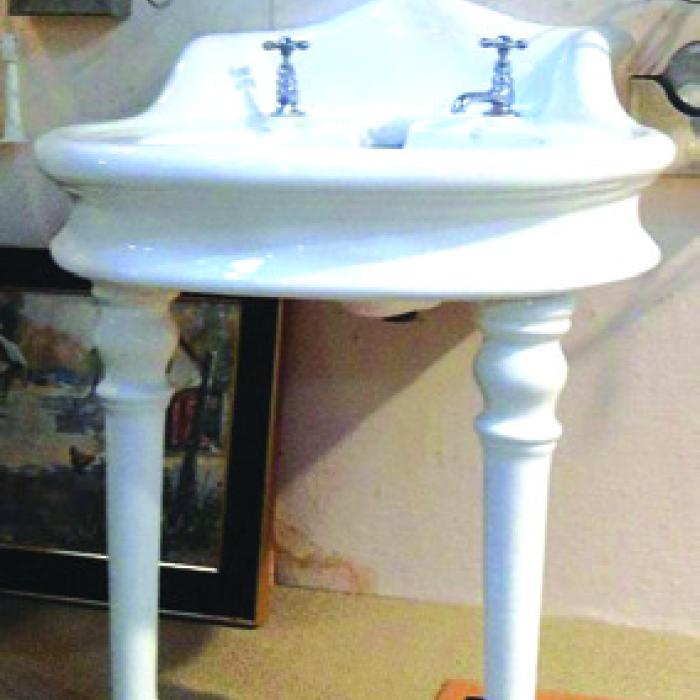
Earthenware 1890-1915 As with kitchen sinks, earthenware bath sinks are made from fired yellow clay with an off-white slip and glaze fired finish. Earthenware is top-of-the-line in terms of quality, style, and design. Some of these sinks sat on strong molded legs and some sat on pedestals. Peg-leg sinks had just one leg, but these are generally less sought after. Double bowl earthenware sinks are out there but scarce.
China 1900-present
China bath sinks are hard fired clay with a bright white finish. They were—and still are—less expensive to make and so were destined to displace earthenware & marble. Plus, styles were changing dramatically in the early 1900s so even vintage china sinks can have a modern look. One advantage to china is that it won’t stain or discolor, and if you search diligently you can find some unusual designs.
Later Cast Iron 1890-present
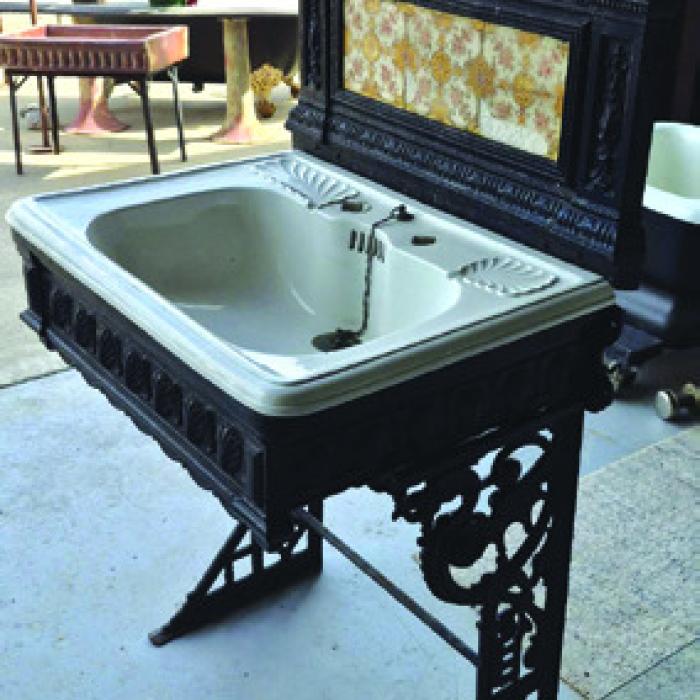
Cast iron bath sinks with a white enamel finish remained popular thru the turn of the 20th. Century, but due to costs—and diminishing demand for decorative design— they are generally quite plain. Porcelain on iron can stain and chip so hold out for examples with excellent, original finish. Wall mounted sinks of this era are plentiful, but generally of minimal designer interest; a few of the pedestal sinks had inspired designs.
Web & Jill Wilson live in Rutersville & love a good antiques story. Email them at hww@webwilson.com or text or call (401) 339-5522.