


Sheriff Asking for Big Raises for His Officers
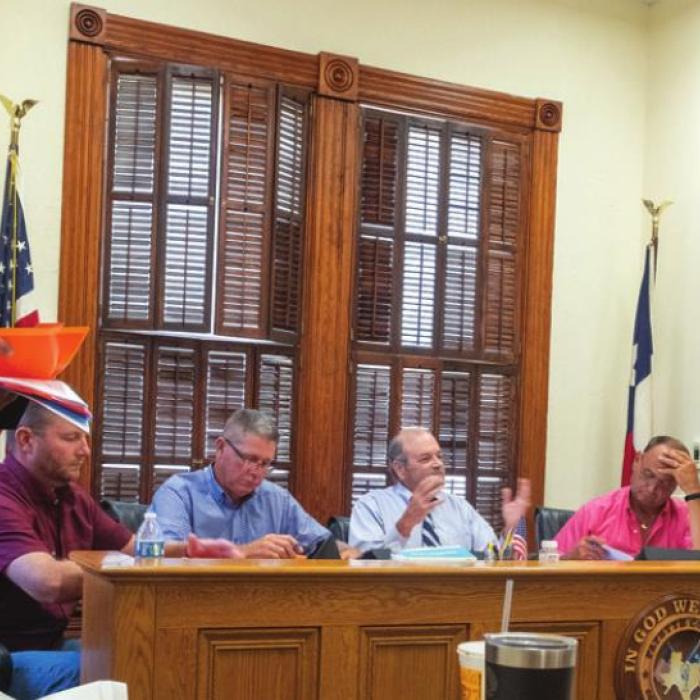
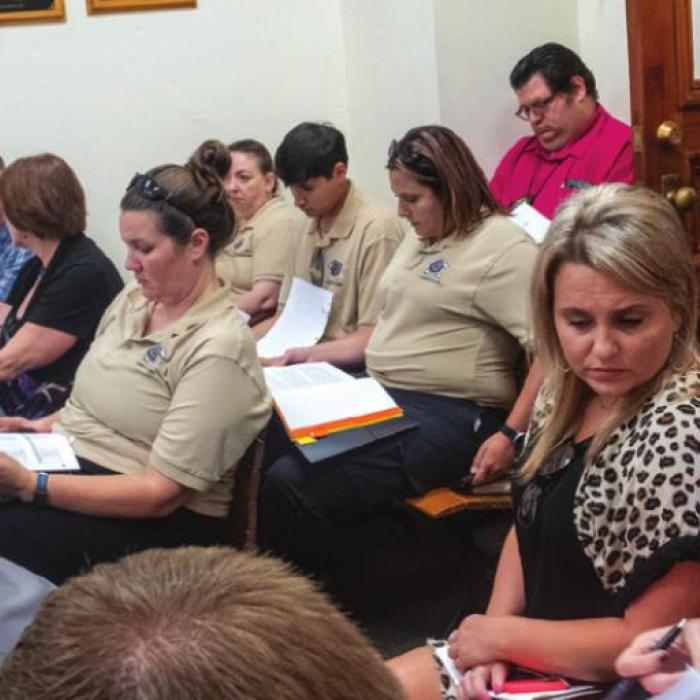
Fayette County Commissioners Court held its first workshop for next year’s budget on Thursday afternoon, June 9.
“I wanted the departments to come to me with everything they think they need,” said County Judge Joe Weber. “Are they going to get it? Probably not. But we need to know what you’re asking for.”
The rising cost of fuel, road building materials and equipment are expected to be major expenses for the County next year. Commissioners are also hearing calls from employees for raises during a time of record high inflation.
At Monday’s meeting, Fayette County Sheriff Keith Korenek proposed a budget including substantial raises for deputies, jailers and 911 dispatchers.
Base pay for entry-level deputies would go from $41,509 to $45,000, an 8.4 percent increase. The most experienced deputies would see their base pay go from $47,710 to $60,000, a 25.8 percent increase. The highest ranking officers would get pay raises of 31.1 to 36.2 percent, with salaries of $70,000 to $80,000 annually. The highest paid officer besides the Sheriff currently makes $59,122 annually.
Entry-level jailers currently make $35,700. They would get a 12 percent raise under the Sheriff’s proposal, bringing their base salary to $40,000. Salaries of the highest-ranking jailers would go from $38,368 to $50,000, an increase 43.3 percent.
The Sheriff proposed similar increases for 911 dispatchers. The base pay for entry-level dispatchers would go from $36,256 to $40,000, a 10.3 percent increase. The most experienced dispatchers would get a 37.5 percent raise, from $39,985 to $55,000.
“They’re worth it,” Korenek said.
Korenek said his department needs the raises to attract and retain quality personnel. He said negative media coverage about police discourages young people from entering careers in law enforcement. He said many veteran officers are taking early retirement due to anti-police attitudes in the public.
At one point in the meeting, Weber asked Korenek for the biggest thing the Commissioners Court could do help recruit employees.
“Change the public perception,” Korenek said.
The Sheriff presented the Court with a list of all the deputies and their years of service to the County. It totaled 309.5 years of combined service.
“You don’t have that many counties with that many senior officers and that much experience,” Korenek said.
“Why are they staying around here?” Weber asked.
“Because of leadership,” Korenek said.
Korenek said the County can afford the raises due to rising property tax appraisals.
“Everyone needs a raise, and I think everyone needs a substantial raise,” Korenek said. “I know we’ve got some funds, additional from before, due to the appraisals.”
Tax appraisals increased by 15 to 20 percent across the County this year, with some areas seeing even higher values. The rising appraisals could bring the County a bunch of new revenue, depending on how the Commissioners Court sets the tax rate for next year.
Weber questioned the current base pay numbers provided by the Sheriff, which he said were much lower than the salary numbers in County payroll records.
“Does that include overtime?” Weber asked. “Does it include benefits? When I look at that figure – what their current pay is – and I look at the W-2s, it’s much higher. These (numbers) don’t reflect what people are actually making.”
Weber gave an example of one Sheriff’s Office employee with a base salary of $59,000 annually. He said the employee actually made more than $80,000 with overtime and certificate pay, according to the employee’s W-2 form.
“They would be over $100,000 with the (pay) increase,” said Pct. 1 Commissioner Jason McBroom.
“I don’t think we can make it that much,” Weber said.
Deputies earn compensatory time (known as “comp time,” or paid time off) in lieu of overtime pay up to a maximum of 480 hours. County policy allows deputies to earn overtime pay if they accrue more than 480 hours of comp time.
“We don’t get overtime unless we exceed 480 hours of comp time,” Korenek said.
Weber said most of the Sheriff’s employees exceed the comp time limit and collect overtime pay.
“Not the majority,” Korenek said. “It would be a minimum of that.”
“I would say 90 percent are,” said Paula Vogel of the Fayette County Auditor’s Office, the office that handles payroll for the County.
“Really? They’re over 480 hours?” Korenek asked.
“I would say definitely,” Vogel said.
Weber asked whether the Sheriff’s Office would spend less money on overtime if commissioners approved the raises.
“Or do you think the overtime is caused by the fact that we don’t have enough people hired and we’re having to work overtime?” Weber asked. “If we get these large salary increases, and we’re still paying all this overtime, I’m just trying to figure it out.”
Chief Deputy Randy Noviskie said the jail and the dispatch center are currently understaffed by two employees each.
“As you go down, you have to move people,” Noviskie said. “During major incidents, we’re calling people out. When you’re short, you can’t take off as much as you need … If someone is sick, someone has to step up and they’re gaining hours.”
Korenek compared the salaries in his department to those in other departments.
“Look at EMS ... a paramedic makes $60,000 a year,” Korenek said. “I’ve got supervisors in the jail and supervisors in dispatch that make forty-something thousand dollars. Don’t you think they’re worth at least what a paramedic is?”
Weber proposed targeting salary increases for hard-to-fill positions in dispatch and at the jail.
“What solves the problem?” Weber asked. “Maybe going to the dispatcher and giving them a bigger raise than a road and bridge guy or a deputy. To fill the slot, that may be something to look at.”
Noviskie said targeted raises like the Judge proposed could lead to veteran employees leaving if they don’t also get a raise.
The Sheriff presented the Commissioners with a salary survey of the starting pay at the Fayette County Sheriff’s Office and the sheriff’s offices in six surrounding counties. The starting pay in Fayette County was the lowest of the seven.
“You just told me we have an incredible record of people staying here for such a long time, but yet our salaries have been traditionally lower,” Weber said. “I guess I would ask, why haven’t they fled? I think I know. I think it’s the benefits. I think it’s the overtime they’ve been able to accrue. I think it’s being in a county where they have opportunities to moonlight.”
“It’s also the job,” Noviskie said. “Being a dispatcher, it takes the special people we have. Not anybody can do it.”
Noviskie said the same goes for jailers and deputies.
“With the projected pay, some of them are going to make more than the commissioners make,” said Pct. 3 Commissioner Harvey Berckenhoff.
Berckenhoff said he knows of one deputy who left Fayette County for a job at the Bastrop County Sheriff’s Office. Berckenhoff said Bastrop County offered higher base pay, but the deputy later discovered his take-home pay from Bastrop County was actually lower than what he earned here due to Fayette County’s generous benefits package.
Fayette County offers medical, dental and vision coverage to all employees with a portion of the cost covered by the County. In addition, Fayette County offers a retirement program with a guaranteed seven percent return on contributions plus a 175-percent match from the County. Employees earn a week of vacation after six months of employment, and they can earn up to four weeks of vacation after 20 years. They can also accrue up to 360 hours of sick leave per year.
Commissioners took no action on the Sheriff’s request. The Commissioners Court will finalize a proposed budget by the end of next month. They will hold a public hearing on the proposed budget in August.
The budget must be approved by late September.