


Rod Koenig’s Black Jack Springs Roots Are Showing
Although Fayette County native Rod Koenig has seen a good bit of the world, the Houston-based estate and trust attorney has never lost sight of his origin
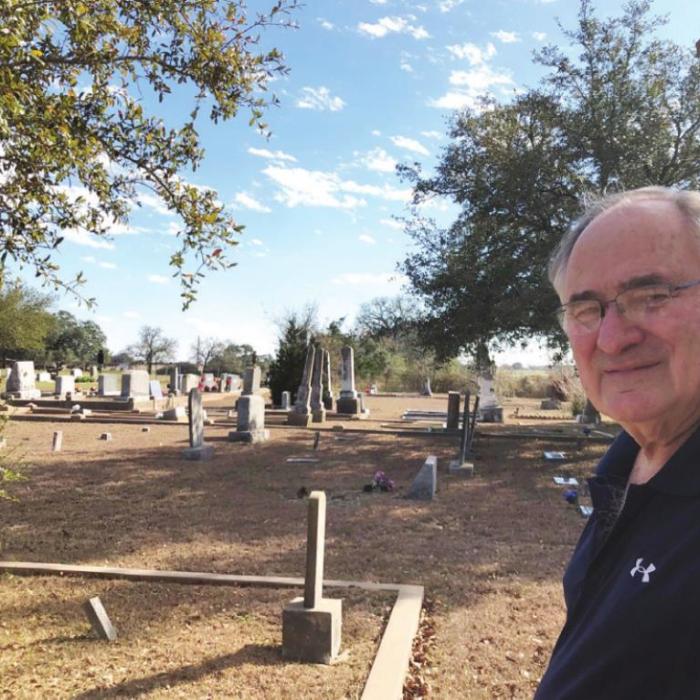


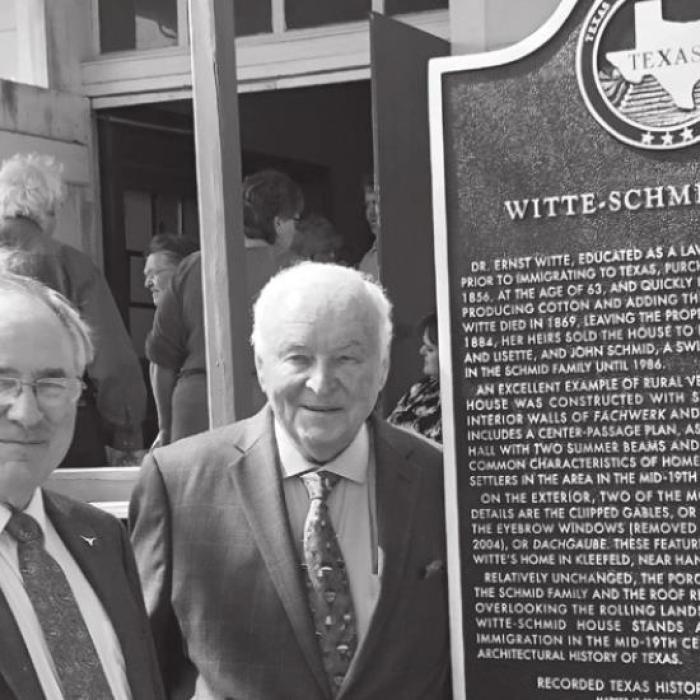
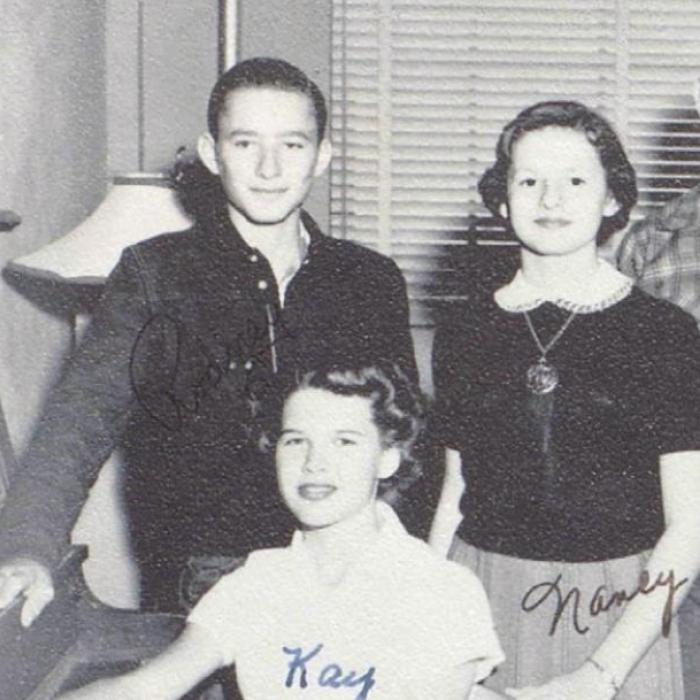
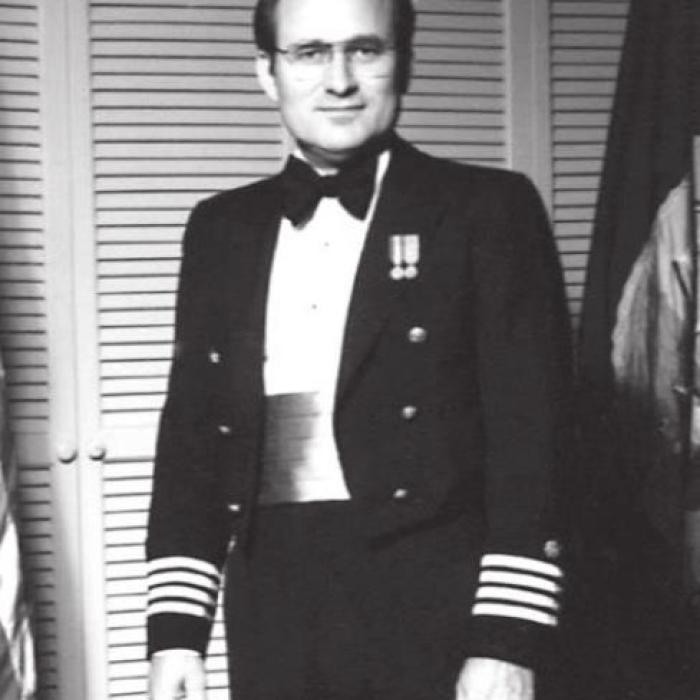

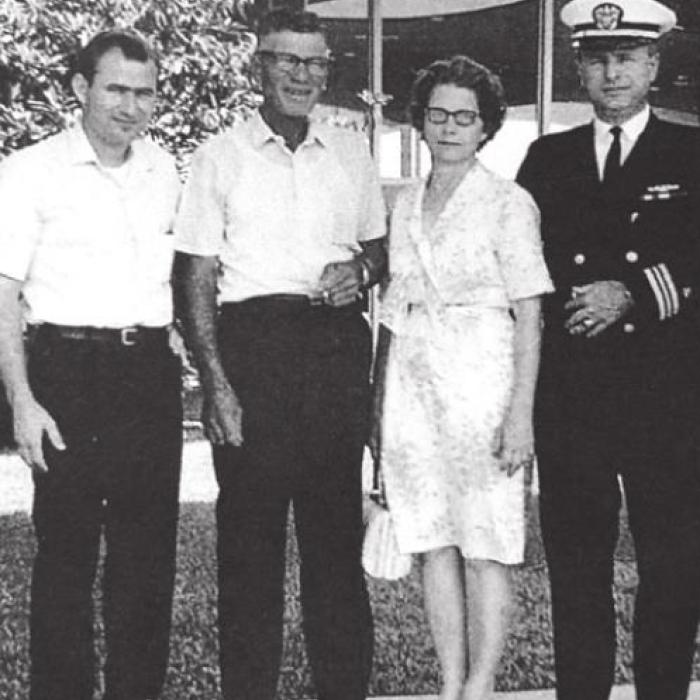
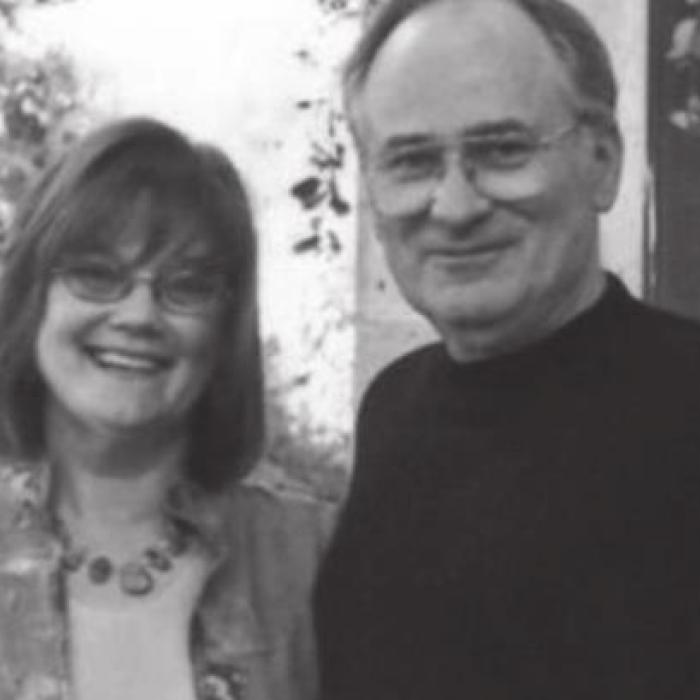
A chain link fence has surrounded Fayette County’s Black Jack Springs Cemetery for decades. However, one of these days that may change because native son Rod Koenig thinks it’s about time. The 80-year-old is accustomed to identifying opportunities, reaching agreement with those sharing common interests and getting things done.
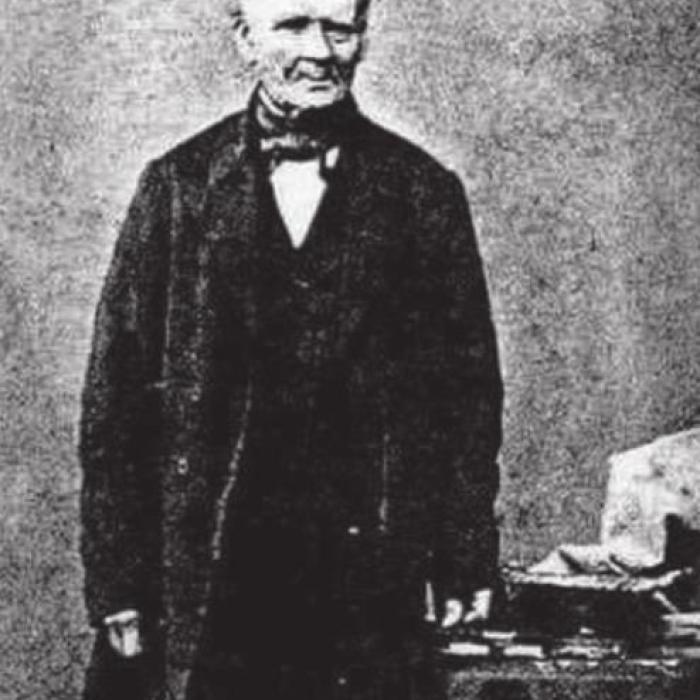
“I do love Black Jack Springs in the O’Quinn community because I grew up on a farm there. My great-great-grandfather, Thomas Hinrich Oeding, was the first person buried in the cemetery in 1867,” explains Rod, who sits on the board of 23 non-profit organizations and foundations.
Rod is the second son of John and Elva Koenig who both were born and raised in Fayette County. John attended Romberg School and later Luck’s School, while Elva went to Abbott’s Grove School close by at Freyburg. Rod’s only sibling is his older brother Weldon who retired to live near their old family farm.
Living off the land
“When I was a child, we didn’t have a lot of financial resources, but we had plenty to eat, shelter and plenty of love,” Rod adds. “I wouldn’t want to trade my childhood experiences.”
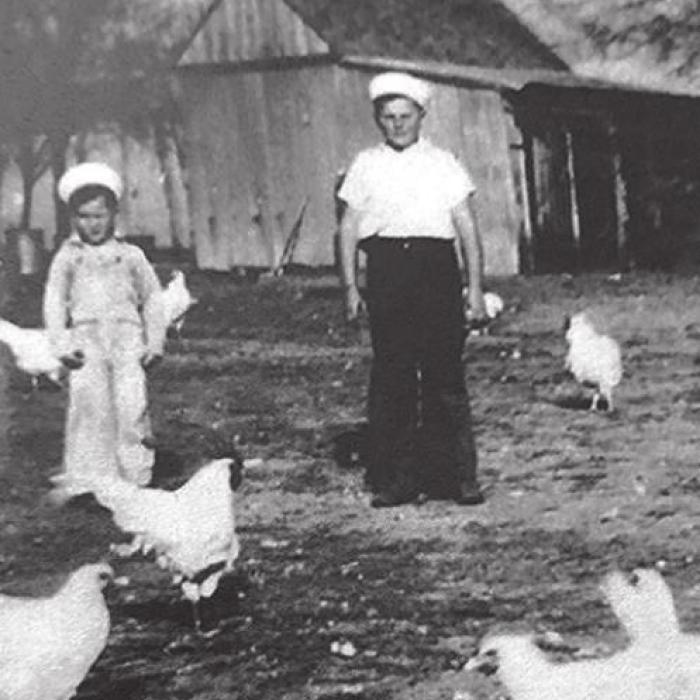
Rod’s family didn’t have electricity until he was eight or nine and never had a telephone or TV while living at home. His parents were cotton farmers who also raised corn, chickens, cattle and hogs. He still remembers a good bit about cotton farming, the Koenig family’s annual major cash crop, because he got involved at an early age.
“I’ve been told that my mother took me to the cotton field when I was an infant and left me at the end of a row to sleep while she picked with my dad and Weldon,” he says.
Rod started picking with a little tiny cotton sack at about the age of four and graduated to hefty full-size sacks when he got older. After the brothers’ backs ached from continuously bending over, they strapped on kneepads and picked more cotton on their knees, dragging their sacks behind them.
Rod and Weldon’s father distinguished himself as “a good picker” by bringing in about 400 pounds of cotton a day. The brothers each could harvest 250 to 300 pounds a day by the time they reached their teens. Their mother averaged 200 pounds a day, which was impressive considering she also had many daily farm chores and a steady stream of meals to prepare.
“Mom would bring us lunch to the field, which was sort of a mid-morning snack of ham, sausage, cheese, pickles, radishes or jam sandwiches. The cheese was ‘Koch Kase” that she cooked on the stove. We’d have a hot dinner for our mid-day meal followed by a mid-afternoon snack in the field similar to our morning lunch.
“Mom made all our bread because my dad did not like store-bought ‘baker’s bread.’ We invariably had eggs for breakfast because we had many chickens and often ate eggs again at night for supper after we were done in the field. We grew potatoes and stored them under the house. Mom made fig and dewberry jams and we were part of a ‘butcher club,’ so we had a cut of beef from a yearling weekly on Fridays.
“We also butchered at least one hog a year and smoked our own ham, bacon, and sausage.
“Mom was a great cook,” Rod recalls. “Picking cotton was hard,
“Picking cotton was hard, boring work and my heart was never in it, although I certainly felt for my dad when he lost a crop. One year a hailstorm wiped out our entire cotton and corn crops except for the small amount we’d already picked.”
Rod also had a job at the Michalk Cotton Gin in La Grange as “sucker” operating the suction pipe that pulled the cotton from farmers’ trailers. It was hot, dusty, dirty work with shifts running 16 hours at the height of the season.
Starting in late summer, cotton picking sometimes ran into September and October.
“We always picked several times since cotton bolls open gradually, not all at once. If we waited until they were all open, rain or wind could likely have spoiled part of the crop. That’s why we would pick the same field as many as three times and then did a last ‘scraping’ to get the remnants.”
But there was more to life on the Koenig farm than picking cotton and doing chores.
Little white schoolhouse life and beyond
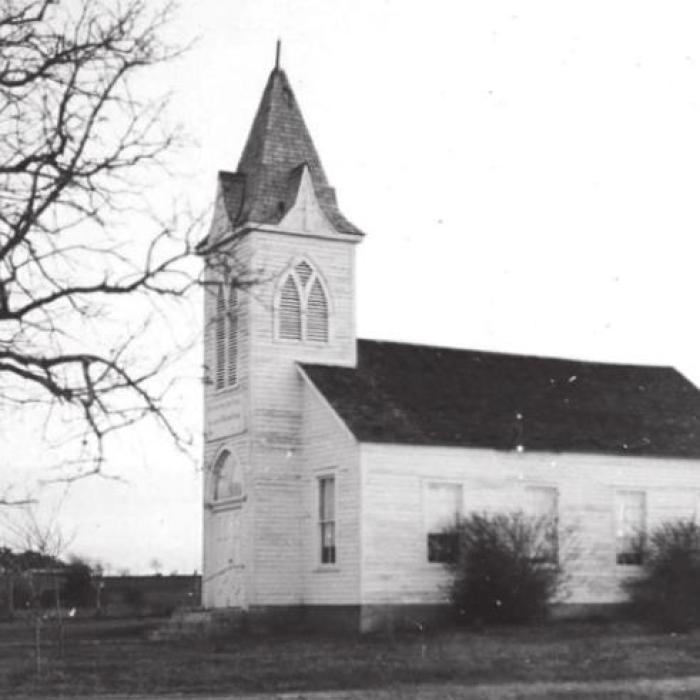
Rod and Weldon walked about a mile and a half to the one room Luck’s School located on Black Jack Lane across from Trinity Lutheran Church, less than a mile from Black Jack Springs Cemetery. Miss Eliza Lackey sternly ruled over a group of about 18 students from grades one through six in the little white wooden schoolhouse.
“Our teacher was the only one whose native language was English. We spoke German at home, as did some of our classmates. Others were from Czech or Hispanic families. I started school at the age of five because my father was one of the trustees and figured I was old enough to go. I could speak a little bit of English by then.”
Rod had two classmates in his grade: Wayne Anders and Claud Baumbach. They were in the third grade when Luck’s School closed. This measure was part of a statewide effort to close rural schools and bus students to larger, centralized campuses with more resources. From then on, a yellow school bus hauled Rod, his older brother and Wayne to La Grange. Claud Baumbach, who lived further west, rode a school bus to Flatonia.
“I was scared to death on the first day of school in La Grange because there were all these people I didn’t know. I was afraid to ask my teacher if I could go to the bathroom and, as a result, had an accident,” Rod recalls.
“I survived that and went on to enjoy town school quite a lot. Since I’d been listening to the lessons for the older kids at Luck’s School for years, as a practical matter I think I was ahead of my La Grange classmates.”
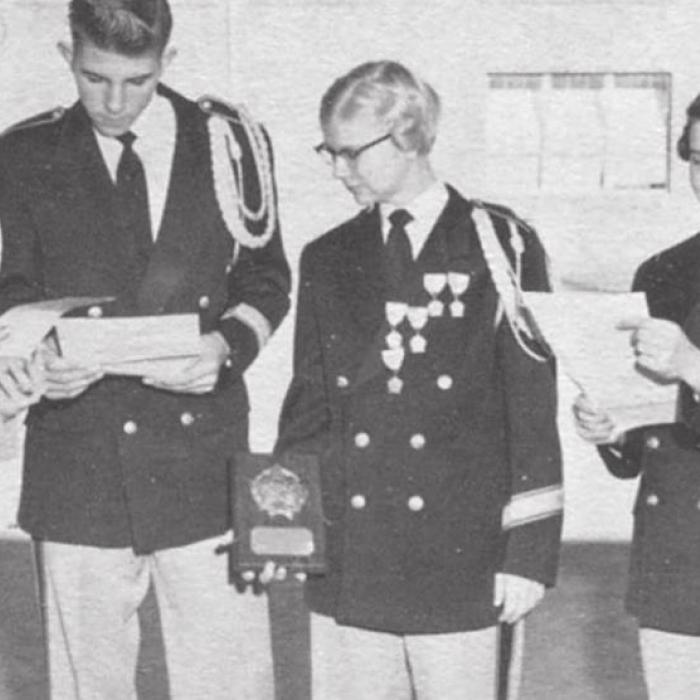
At his eighth grade graduation, Rod earned the American Legion School Award, a medal and a certificate signed by La Grange attorney C.C. Jopling, the adjutant of the local organization. Rod’s teacher, Emil Kern, urged Rod’s parents to attend, although they weren’t told why. It was a proud moment for the family.
Rod was elected president of his high school freshman class. He also ran, and lettered in, track in high school.
“I practiced by getting off the school bus about five miles from home and running the rest of the distance. I ran the 440-yard and mile relays, but my race was the half mile.
“Living on the farm and having to pick cotton and do all the other chores, my father didn’t want me staying after school to play football, but I probably wouldn’t have been any good at it anyway,” Rod adds.
Music was a family tradition
Rod’s deep affinity for music, which still is an important component of his life, is rooted in his childhood.
“My dad, who could also sing, played a little finger-button accordion, the violin and alto sax. Weldon played the alto sax and years later the tenor sax. My mother played the church organ for about 40 years, as well as the piano.
“When I had the opportunity to join the band at school in La Grange, I didn’t have an instrument, but a family at Plum named Leifeste had a trumpet for sale for $25. That price was doable for my parents, so I got my first trumpet and loved band.”
After graduating from La Grange High School, Rod attended the University of Texas at Austin on a Navy scholarship, following Weldon’s example. While in college, Rod’s summers included midshipman cruises aboard a destroyer, the USS Arnold J. Isbell, and the helicopter carrier USS Bennington. After college, Rod was on active duty for five years.
“When I graduated from UT, I was assigned to the destroyer USS Braine for three years in the Pacific,” he says.
“When President John F. Kennedy was assassinated on Nov. 22, 1963, I was on the Braine in dry dock in Sasebo, Japan. I think most people remember where they were that day.”
When he left the ship to teach in the Auburn University naval ROTC program in Alabama, Rod was chief engineer.
In addition to his five years of active duty in the Navy, Rod spent several decades in the reserve. Counting his midshipman service, his Navy career spanned 32 years.
Rod and Weldon’s parents watched both their sons achieve considerable success in their respective naval careers.
“My impression was that my parents were pleased and glad we had Navy scholarships. When I was at UT, I came back a lot of weekends to see them and played trumpet with the Ray Baca Czech dance band on Sat urday nights. Weldon came back as much as he could, too,” Rod says.
Post-Navy career aspirations
“While I was in the Navy at Auburn University, I was married to Rebecca Todd-Koenig from La Grange, the mother of my sons, Erik and Jon Todd, whom we call “JT.” She and her sisters had an extraordinarily bad accident near Kirtley when a man lost control of his car and hit her vehicle head-on.
“It was a terrible time. I was still in the Navy at Auburn and began negotiating with the insurance company on the accident. That got me thinking I might want to be a lawyer,” Rod explains.
Rod had been working on his MBA in Auburn but changed career directions when he was accepted into law school at the University of Texas in Austin. Finishing in an astounding 27 months, Rod passed the bar exam and was offered a job with the well-established Houston law firm of Fulbright, Crooker, Freeman, Bates and Jaworski.
“Since I’d been in the Navy and knew ships, I thought I probably ought to be a maritime lawyer, but I ultimately decided that I’d rather be in the estate, trust and foundation area. That’s what I’ve done ever since.”
Rod gets immense satisfaction from helping his clients pass on their monies and property to subsequent generations. He also nudges clients with the necessary financial resources to form charitable foundations.
“I’ve helped to set up somewhere from 70 to 100 foundations for clients over the years and still serve on the boards of six or seven. One that comes to mind is that of Hattie Jackson, whose foundation has probably awarded $5 million-plus in scholarships to medical students and university students, largely in the hard sciences.”
Rod is president of the Navy Midshipmans Foundation in Austin that has raised over $2 million and gives $100,000 annually in scholarships to midshipmen at the University of Texas.
In La Grange, he’s on the Luck and Loessin Collection Trust board that supports the Fayette Public Library/Fayette Heritage Museum and Archives.
Many different hats
“I’ve had a Navy life and I’m on a bunch of those boards. I had a university life and I’m on a bunch of those boards. I have a music life and I’m a bunch of those boards, too.
“When I was approached to join board number 24, I turned down the opportunity because I don’t want to overcommit and be unable to participate fully,” he says.
Rod still works full time as an estate and trust attorney at the same Houston law firm, although it is now Norton Rose Fulbright US LLP. He and Mary’s shared interests are their children, Erik, JT, Jill and Joshua, plus their three grandchildren; music, culture, traveling and Texas history.
As for a new fence at Black Jack Springs Cemetery, now may be the time to move forward with the project.
“Remember my classmate, Claud Baumbach, at Luck’s School? His wife, who survived him by some years, died last spring and left our association 5.63 acres just south of Black Jack Springs Cemetery. What do you think a stone fence around the perimeter of this historic property would look like?”
Rod visualizes it in his mind’s eye as a permanent tribute to his ancestors and others buried there. Black Jack Springs Cemetery will be his and Mary’s final resting place someday, too.
If you’d like to read more stories written by Elaine, visit www. elainethomaswriter.com/blog/ and sign up to receive new posts twice a month. You can also call Elaine at 979-263-5031.
Stories I’ve Been Told
A Monthly Feature by ELAINE THOMAS