


Raised Bed Gardening Reaching New Heights
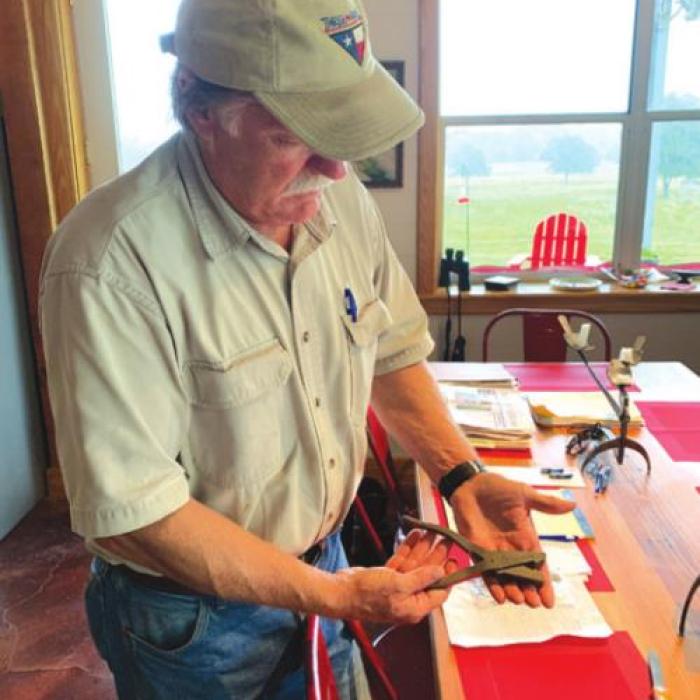

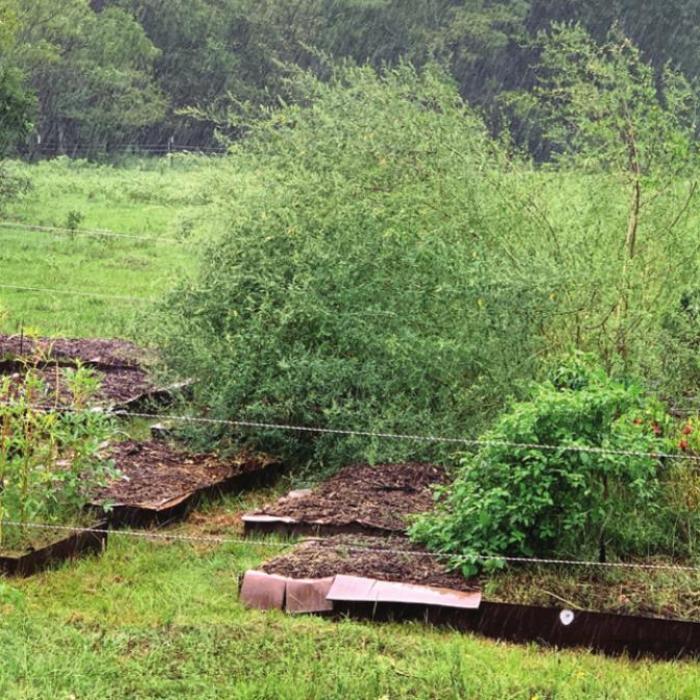
Last Tuesday, while Tropical Storm Beta was busy dropping about three inches of rain on my garden, I headed to Martin Payne’s place in the Ellinger-Fayetteville area. Payne’s company, Solitario Products LLC, designs and manufactures an incredibly simple and durable raised bed garden kit.
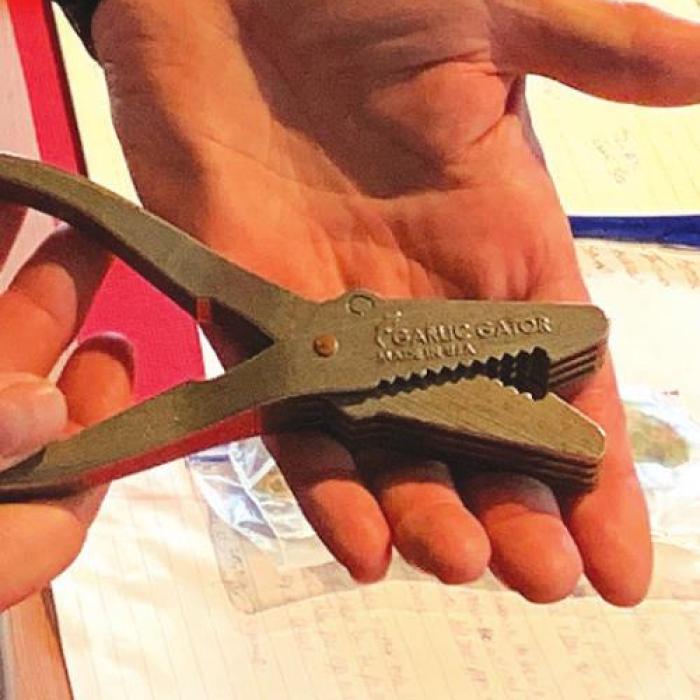
Payne, a mechanical engineer with a long career in the Permian Basin oil patch, settled in Fayette County a few years ago. As work slowed due to the downturn in the oil industry, Payne began looking for other projects to apply his engineering skills. He designed and patented a unique garlic press that he hopes to soon get into production (by the way, I think this device could revolutionize garlic pressing like the way the plow revolutionized farming; I can’t wait to get one).
He builds the raised bed garden kits from 3/16 inch steel plate. They come in four pieces, four foot long, that slide together to form a sturdy four foot by four foot raised bed that holds about eight inches of soil. Payne said he began gardening according to the Square Foot Gardening Method pioneered by gardening great Mel Bartholomew, who wrote several books about the topic.
“I made beds out of cedar and so forth, but termites got them after a while,” Payne said.
So Payne decided to build some out of metal.
“They should last many years unless you live down by the coast where they might rust from the salt,” Payne said.
You can paint the outside or leave it to build a natural patina. I think they look very attractive with their natural finish.
They work great for anyone using Bartholomew’s square foot method. This method involves dividing the bed into 12 inch by 12 inch squares. Most vegetable crops need about a square foot of spacing for optimal growth. Some plants like tomatoes need a little more space. Others like lettuce needless. Read Bartholomew’s Square Foot Gardening books to learn more.
Payne sells the kits for $120 each. You can purchase online at www.solitarioproducts.com. He offers free shipping in Fayette County and some surrounding areas. I think this is a great deal for someone who wants to get started gardening but doesn’t know where to begin.
Payne gave me a bed to try out. I set it up in a matter of minutes. The kit requires no tools to assemble. I scraped the grass away from the site where I placed the bed. I layered several sheets of newspaper at the bottom to prevent weeds from growing. I filled the bed with a mix of Lady Bug Garden Soil and Lady Bug Revitalizer Compost (five 1.5 cu. ft. bags of each). I mixed in some vermiculite I had laying around, dry organic fertilizer, whole ground cornmeal and dry molasses. I topped off the bed with a couple inches of wood chips from the Fayette County Recycling Center. It took me about thirty minutes to fill the bed. You can get all these products locally. The soil, compost and amendments cost about $100. So for $220, you can have a four foot by four foot garden ready to plant in less than an hour. The bed and soil will last many years. Bartholomew provides a
recipe in his books for soil to use in raised beds, famously known in the gardening community as Mel’s Mix. It calls for one third compost, one third vermiculite and one third peat moss. If you are a regular reader of this column, you know I’m not a fan of peat moss. Peat is a non-renewable resource. It’s also antimicrobial, but I want to encourage microbial life in my soil. You can replace the peat moss with coconut coir. It’s the natural fiber extracted from the outer husks of coconuts. You often see hanging baskets made from it. Sometimes you can find it in bulk at garden centers. It, like peat moss, helps with water retention while also providing good drainage and root aeration. It’s also pH neutral and does not have peat’s antimicrobial properties.
Cross-Pollination
Cross-Pollination I placed this bed far away from the main vegetable garden on the other side of my house. I needed another vegetable gardening space farther away for seed saving purposes. This spring, I grew three varieties of squash and saved seeds from all – yellow patty pan, “Romanesco” zucchini and “Tatume” squash. I planted some of my saved seeds from the yellow patty pan this fall and discovered that they cross-pollinated with one of the others, I think the “Tatume.” I thought I had the plants spaced far enough apart to prevent this from happening, but I was wrong.
These squash turned out pear-shaped, mostly yellow, with a distinct, half-dollar sized green spot at the blossom end. They taste fine, but the shape is kind of awkward for slicing and cooking. I might save some seeds from these plants just for the heck of it to see what happens next spring. If they are crossed with “Tatume,” a variety resistant to squash vine borers, it could be a very productive accident.
But I don’t want to leave my plant breeding program to chance. So I set Payne’s bed up far away so that next spring I can spread different varieties apart and have less risk of cross-politation.
I plan to grow some purple cauliflower in my new bed this fall. I sprouted some seeds last week, and I should be able to transplant them in a few weeks.
Pepper Problems
While visiting with Payne, he confirmed an experience I had this year with peppers. He told me about his less-thanstellar crop of Hatch and yellow banana peppers this year out of a certain bed, and theorized that his soil mixture might not have been optimal for peppers.
“Peppers have been a headscratcher for me this year,” I said.
I had the same experience this year with my Hatch (also known as Anaheim) and jalapeño peppers. None of them grew to the size I expected, although they taste delicious. But my bell peppers, on the other hand, produced bountifully. Payne only planted one bell pepper plant because he bought it by accident. I did the same thing. We never had luck with bell peppers in the past.. They always turn out small and thin-walled. So Janessa and I resolved to skip the bells this spring. But we grabbed one in a four inch pot by accident at H-E-B one day, so I stuck it in the ground, not expecting much. Low and behold, this one plant has produced seven or eight large, market-sized bell peppers so far, and I even let a few ripen all the way red. Seven more fruits are hanging on the plant now, with one ready to harvest green in the next day or two.
I’m kicking myself for not planting more this spring. We did purchase a six pack of “California Wonder” bell peppers two weeks ago when we visited Hostyn Hill Greenhouses. I stuck them in the ground right away in a different part of the garden. I’m not sure if there is enough time left before the first frost comes. Hopefully, I’ll get a chance to see whether my one productive plant was a fluke or if something else happened this year to make bell peppers more productive.
Did anyone else have the same experience with bell peppers this year? I would love to hear from you. Email me at andy@fayettecountyrecord.com.