


Mapping Arleas Upton Kea’s Inspiring Journey


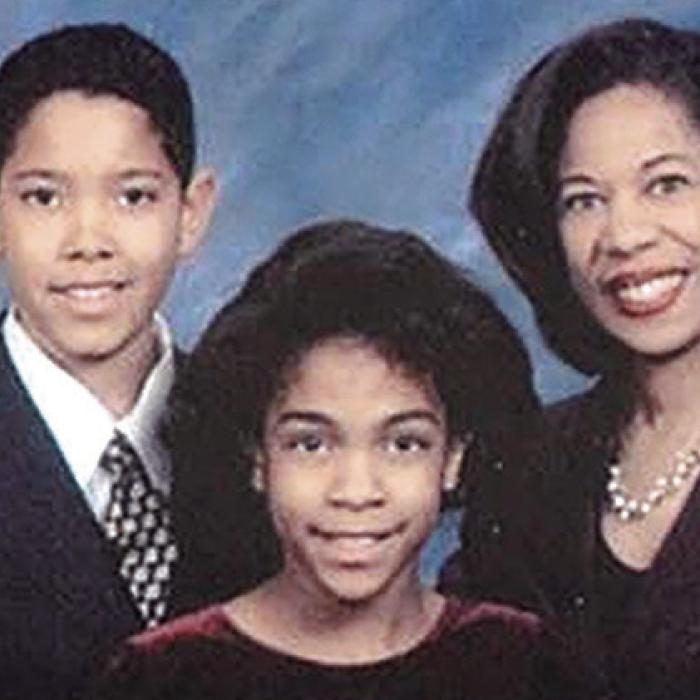
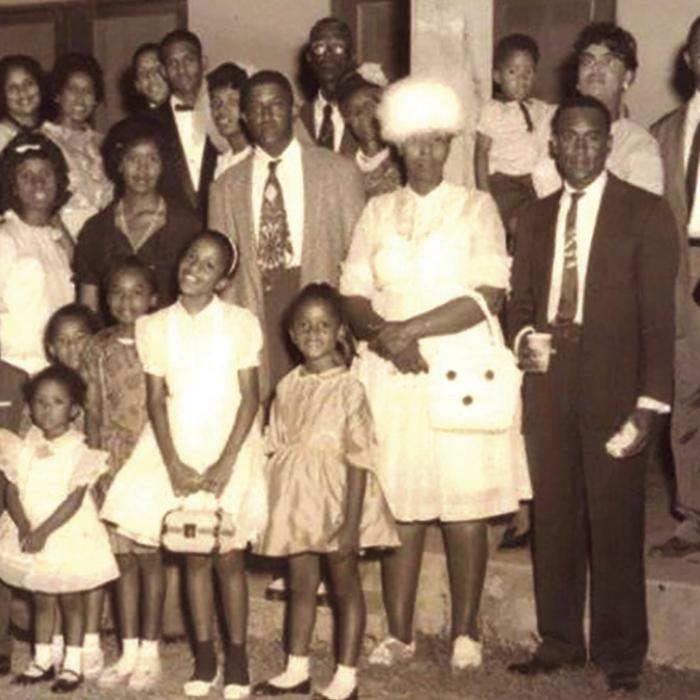
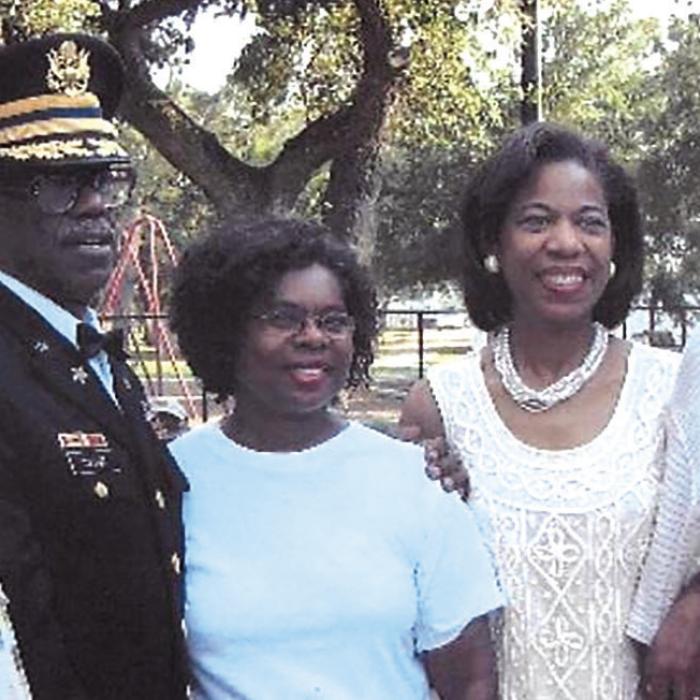
One of Fayette County’s most successful daughters honed her high-profile career with lessons from growing up in Schulenburg
A Occasional Feature by ELAINE THOMAS
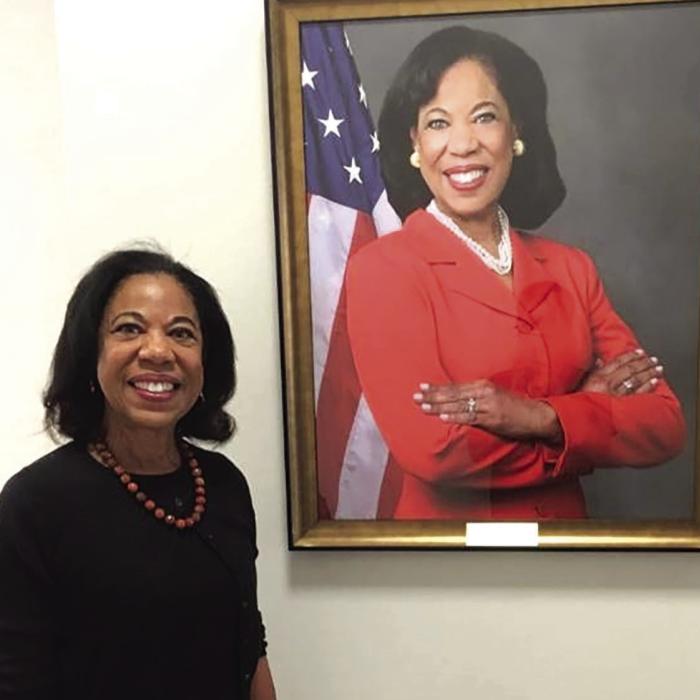
When Arleas Upton Kea joined the Federal Deposit Insurance Corporation (FDIC) in 1981, she didn’t expect to one day retire from the mammoth Washington, D.C., independent federal corporation. Continually stepping up to take on new roles of increasing responsibility and tackling the associated challenges tested her business acumen.
Arleas was happy at the FDIC because she was realizing her ambition in life: to make a difference. “I love to tell people that I helped to ensure the safety and soundness of the nation’s banking system,” says Arleas, who was a newly-minted University of Texas lawyer 40 years ago when she was recruited by the FDIC. In her steady rise through the ranks, Arleas aided the FDIC in its mission: to insure deposits; examine and supervise institutions’ financial safety, soundness, and consumer protection; make large and complex financial institutions resolvable; and manage receiverships. Arleas was the first African American senior counsel, assistant general counsel, deputy general counsel and ombudsman in the FDIC’s legal division. She was also the first African American director of the operations division and deputy to the chairman and senior advisor to the FDIC chairman for external affairs. Most notably, Arleas was the FDIC’s first African American chief operating officer.
A prominent Washington, D.C., career seems a world away from the family’s farm on the dusty Oakland Road southeast of Schulenburg where Arleas grew up. She attributes her success to the solid foundation her parents, Henry and Lillie Mae Upton, provided. Arleas’ father cut yards and did landscaping, while her mother worked for well-liked Schulenburg ISD teachers I.E. and Lila Clark. Arleas’ parents often were asked to work at special social events such as weddings and parties, too.
“I still marvel at my parents’ sophistication and vision.
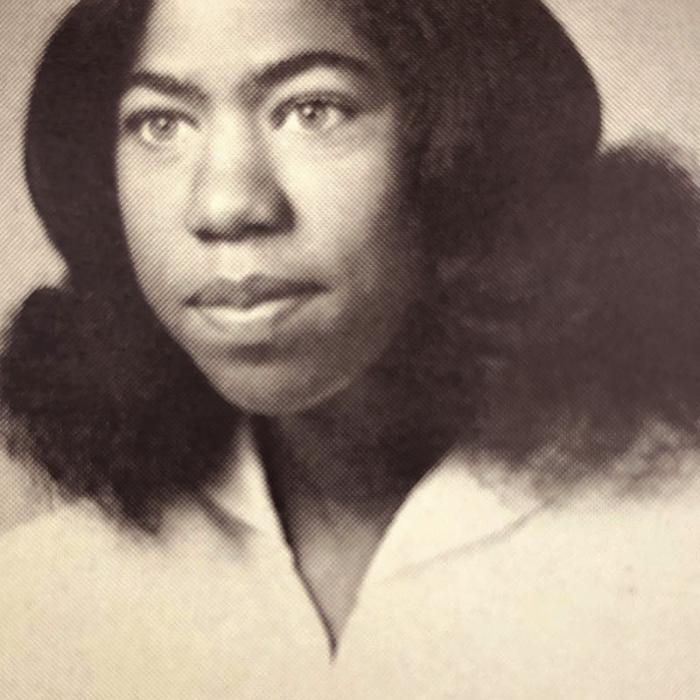
At Schulenburg High School, Arleas was a member of the National Honor Society for three years, serving as the club’s president for two terms. She was a four-year member of the Future Homemakers of America and Dramatics Club. Named an outstanding student in her junior year, Arleas served on the student council for two years and was a member of the annual staff for three years, as well as the International Thespian Society and Future Teachers of America. In her senior year, Arleas received the DAR Good Citizen Award, served on The Shorthorn newspaper staff and was a Quill and Scroll member. Arleas also was a three-year member of the drill team and lieutenant in her junior year.
My father had about a sixth grade education; my mother maybe went to seventh or eighth grade. I think my parents transferred a lot of survival skills to not just me, but my siblings, as well. They did so by their actions, not just with words,” Arleas adds. “They instilled in us a sense of value, a sense of worth.”
Arleas recalls as a youngster getting very excited when she saw a Schulenburg water fountain identified with a sign saying ‘colored.’ However, she was puzzled when water coming out of the spout was not multi-colored. Her mother gently explained what the sign meant. “Then I remember her saying, ‘You know what? We’ve got water at home. Let’s go home.’ That was my first realization that I was colored.” Arleas remembers the family’s Sunday drives through the countryside and small towns. Her mother would prepare a picnic lunch of fried chicken, corn and potato salad that she’d serve on a tablecloth spread on the ground on the side of the road. Before heading back to the farm, the Uptons would occasionally stop for ice cream as a treat. “It was in the days when we had to go around the back and order ice cream from the kitchen. I made the mistake of going in the front door and, even though I had money, I came back crying. I told my dad, ‘They won’t let me buy ice cream.’ “He said something along the lines of, ‘If people ignore you that’s bad, but when they tell you ‘no’ they are engaging with you and you have their attention. Then you’re talking; you have a basis for discussion. Go back in there and politely ask again.’ I did and that time, I came back with the ice cream.” On another occasion, Arleas remembers holding out the cash to pay for an item in a downtown store. The clerk told her, ‘Oh, no, don’t touch my hand. Put your money on the counter.’ “Some people have described me as unflappable,” Arleas says. “That doesn’t mean that things don’t bother me. It means I can muster up a lot of inner strength and courage.”
“My dad used to say, ‘Don’t get so far down that you miss the next blessing that God is trying to send you.’” A deacon in St. James Missionary Baptist Church in Schulenburg where Arleas and her siblings were baptized, Mr. Upton prayed long prayers. Church services were sometimes all-day events. “Everybody teases me because I do the same. I pray before everything that I do. Really, that’s one of my secrets to success,” admits Arleas. She has continued to make worship a priority for herself and her children, son Chase and daughter Arlyce Mallory.
In 1964, whenArleas entered first grade, she rode the bus to J.A. Greene School on St. John Road in Schulenburg. Though a small child, she’d overheard her elders discussing a monumental shift that would soon take place, making her uneasy. On the morning of Sept. 7, 1965, a bus accompanied by several police cars pulled up in front of J.A. Greene to transport Arleas and the other African American students across town to Schulenburg’s white school.
“I still remember the butterflies in my stomach and not knowing what to expect or really knowing what it all meant,” Arleas recalls. The desegregation of schools was prompted by the landmark law Title VI, Civil Rights Act of 1964. It prohibited discrimination on the basis of race, color, or national origin in any program or activity that received federal funds or other federal financial assistance. Schools not complying with the law were subject to the loss of funds for school bus transportation, lunchroom commodities and milk program, as well as educational programs such as the National Defense Education Act (NDEA) that provided funding to improve schools and promote postsecondary education.
Arleas hit her stride in her new surroundings, excelling in both sports and academics. Jennifer Farek Prihoda, another former Schulenburg student several years younger than Arleas, remembers her as a smart, lovely, elegant young lady with natural leadership abilities.
Arleas recalls that her mother’s employers, Schulenburg teachers I.E. and Lila Clark, provided local students with a perspective of opportunities beyond the city of approximately 2,300 people.
“Mr. and Mrs. Clark brought a certain glamor and awareness of the arts and culture to Schulenburg. Mr. Clark was the director of the high school’s one-act plays. His students competed regularly at the state level in the University Interscholastic League (UIL) and won many awards. When I played the witch in Hansel and Gretel in 1975, I was named an all-state actress. Mr. Clark also taught us journalism, good skills that I’ve used throughout my business career.
“In addition to teaching in the classroom, Mrs. Clark arranged for a school bus to take us places. One year it was San Antonio to see a hockey game. Another time, we rode the bus to see a play at Jones Hall in Houston. Those trips were something that not a lot of Schulenburg kids would have normally done. In later years, when I got to the University of Texas in Austin, that broader exposure to the world beyond Schulenburg helped me be successful,” Arleas explains.
At the commencement exercises for the Schulenburg High School Class of 1975, Arleas was selected by her fellow students to give the senior class address on Shorthorn Field. She was the first African American student to do so.
Her future was full of possibilities!
Arleas was so enamored with acting that she briefly considered pursuing a career on the stage. Then she reconsidered and planned to be a teacher. However, her dreams beckoned her to reevaluate that plan, too.
“In the 11th or 12th grade, I participated in debate and persuasive speaking and went to the state UIL competition. It’s about that time that I started watching TV shows about lawyers. I began thinking that maybe that was a better, easier route to be able to make a difference and change society, to help people who needed help. So, by the time I graduated, I had declared myself pre-law,” Arleas recalls.
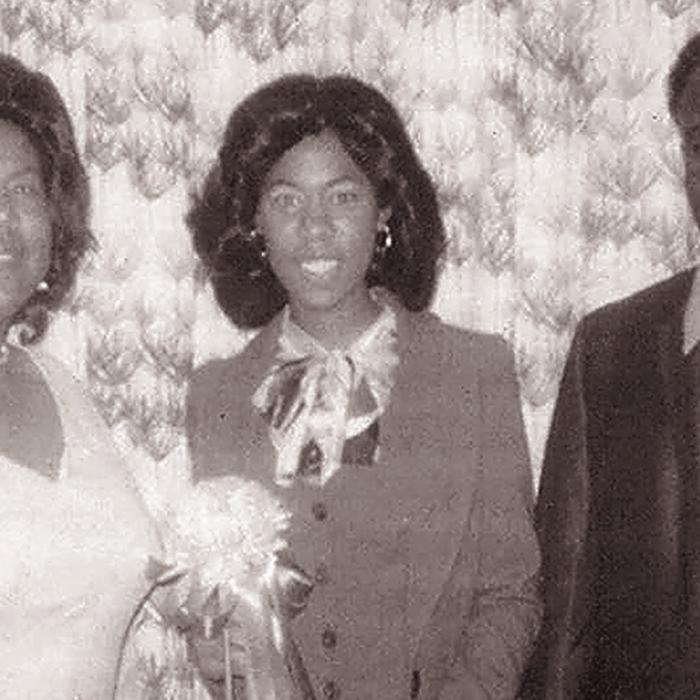
After one year of college in San Marcos at what was then Southwest Texas State University, Arleas transferred to the University of Texas in Austin in 1976. She had found her niche.
“UT was rather a surreal experience because the university campus is not only bigger than Schulenburg; it has its own zip code. Having declared a major made it a little easier to find my way, though. I joined a sorority, Alpha Kappa Alpha, which helped me to be around girls all upward bound.” “Some of the classes had 200 or 300 students, so I would always try to sit near the front, ask questions and go to see the professors after class. I also served as a resident assistant in the athletic wing of Jester Dormitory when Darrell Royal was the coach and future football greats Earl Campbell and Raymond Clayborn were at UT. They were all very nice to me. They treated me like a little sister, but it was very demanding.”
Arleas was instrumental in starting a pre-law association in undergraduate school. As a student leader, she was instrumental in integrating organizations and was eager to provide feedback or participate in programs. Her major was government.
Arleas was invited to become a member of the Orange Jackets, the oldest women’s service organization on campus. She also was selected as a Good Fellow. In the Leon Green Society, she was honored to serve as a distinguished Community Fellow, representing both the legal profession and the community.
When Arleas was enrolled in UT’s Plan II Honors Program, she had the opportunity to design her own class, choose her own professor and select her student colleagues. She and her friend, Donna Blackshear, decided to approach the most famous person on the UT campus.
Barbara Jordan, who had recently retired from Capitol Hill and returned to teach in UT’s LBJ School of Public Affairs, was experiencing some health issues. When the eager young women were turned away by a secretary, they looked up Barbara Jordan’s course schedule and stationed themselves close to the doors that provided handicap access to faculty.
“Low and behold, about 45 minutes later, Barbara Jordan got out of her car and walked toward the door. We didn’t want to be too forward, but we greeted her and told her who we were and why we wanted to talk to her. She smiled and invited us up to her office for coffee. When Barbara Jordan introduced us to her secretary, we acted like we’d never seen her before.
“That’s how Donna and I started on such an incredible journey with Barbara Jordan. The course we set up was monitoring the Texas legislature. We reported to her once a week, and when we wrote our final papers, she gave us an A. My relationship with Barbara Jordan continued. It was she who recommended that I consider going to Washington, D.C., when I graduated.
“She said to me, ‘Don’t stay too long. Come back because Texas will need you.’ I haven’t made it back yet, but I’m still trying to benefit everything that I’ve done and go home often. Barbara Jordan taught me how to be a confident speaker, how to have a booming voice if I needed it. She just had such a presence. What a tremendous impact she had on me!”
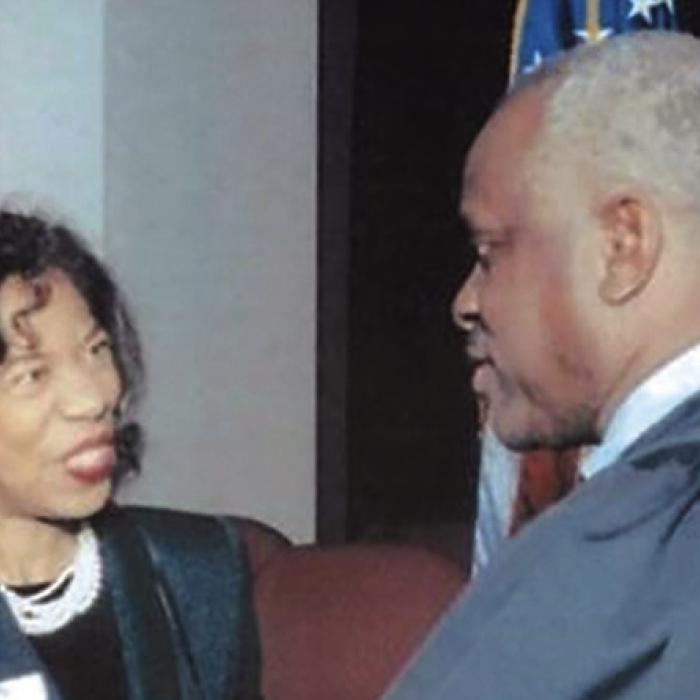
During her Washington career, Arleas earned accolade after accolade. Although she appreciated the recognition, it wasn’t money or prestige that fueled her calling.
“I’m officially retired now, but I still continue to grow as a person. I’m constantly learning. I like interacting with young people because I can teach them while I’m learning from them, too. That makes life fun.”
Schulenburg classmate Glynis Tietjen Porter isn’t surprised by Arleas’ success.
“Arleas was an achiever back then and we all knew she would do well after high school; we just didn’t know how well!” Glynis says.
For more stories, please visit www.elainethomaswriter.com/ blog/ and sign up to receive new posts or call Elaine at 979-263-- 5031.