Leo Wick’s TLC of the Fayette County Fair
There are volunteers and then there are volunteers
By ELAINE THOMAS The Fayette County Record
The Fayette County Fair doesn’t just happen. It takes an association of committed doers with different skillsets and expertise to pull off the longstanding, annual, local event’s topdrawer entertainment, exciting carnival, stunning queen’s contest, skillful displays of creative arts and outstanding livestock/ poultry shows.
Leo J. Wick epitomizes the dedication of that brigade of loyal volunteers.
On the brink of oblivion
Some years ago, the Fayette County Fair Association was in deep trouble.
“The fair was broke. There was no money left in the bank to put on another fair,” Leo recalls.
County and city officials, who were disgruntled with the fair board, refused to offer an iota of assistance, plus there were serious problems at the fairgrounds that would be costly to fix. The site had a dilapidated, neglected appearance not unlike the fair’s bank account. The old buildings and fencing were well past their prime. Due to poor drainage, water stood in large puddles and filled deep ruts made by vehicles that had been stuck trying to maneuver what passed for roads on the fairgrounds. Not only were these conditions a prime breeding ground for mosquitoes, they were also an eyesore.
Had the Fayette County Fair run its course? Was it time to say that it couldn’t be resurrected? There were differing opinions, of course.
Rather than expending more energy on finger-pointing or wringing his hands, Leo stepped up to the plate.
“The fair was going to fold if somebody didn’t take it over, so I did,” says Leo, who has served as co-manager as well as board president several times over the years.
The self-employed well service operator from Cozy Corner south of La Grange, who is now retired, reasoned that mending the relationships with city and county officials could be accomplished over time. The pressing issue was coming up with cash to pay the bills that would be incurred before the fair could be held that fall.
“I went to see Chester Creuzbaur, the president of La Grange State Bank, to talk over the situation. Mr. Creuzbaur gave me a $7,000 loan for the fair on my signature,” Leo recalls. “I understood that if the fair didn’t make a $7,000-plus interest profit, I would have to pay the loan back myself.”
Taking out a personal loan on behalf of the Fayette County Fair Association was a gutsy move for Leo, who continually juggled his customers’ needs with his commitment to the annual community event. His wife, Barbara, who scheduled much of his work and did the books for their small business, said her husband’s loyalty to the Fayette County Fair was carved in stone.
“During the week of the fair and the week after the fair, Leo didn’t have time to go out on calls. I would always tell customers who wanted him to come out and look at their well or windmill that they’d have to wait until after the fair. If they couldn’t wait, I told them they’d have to find somebody else to do the work,” Barbara says.
With a young family and bills that didn’t take a hiatus during the Fayette County Fair, his wife sometimes felt uneasy about the sacrifice that this devotion to the fair represented.
In Leo’s life, God was first, followed by his family, the Fayette County Fair and his business.
Barbara Kalina, longtime fair association secretary, has admired Leo’s willingness to do whatever needs to be done for a long, long time.
“For example, any time there was a leak or a broken water line and he got a call, Leo always said, ‘I’ll be right there.’ He still does,” adds Barbara.
A farm boy from High Hill
In addition to serving on the Fayette County Fair Board, Leo has co-chaired the livestock department with Kent Ohnheiser for many years. He’s certainly qualified to do so.
Leo’s parents, Frank J. and Ottilia Fritsch Wick, farmed a mile south of St. Mary’s Catholic Church at High Hill. Leo and his brother, Frank Jr., and sisters, Annie and Carolyn, who walked to church on Sunday with their parents, all received their first through eighth-grade education at St. Mary’s School. All the Wick children helped with the farm work, including picking cotton and corn.
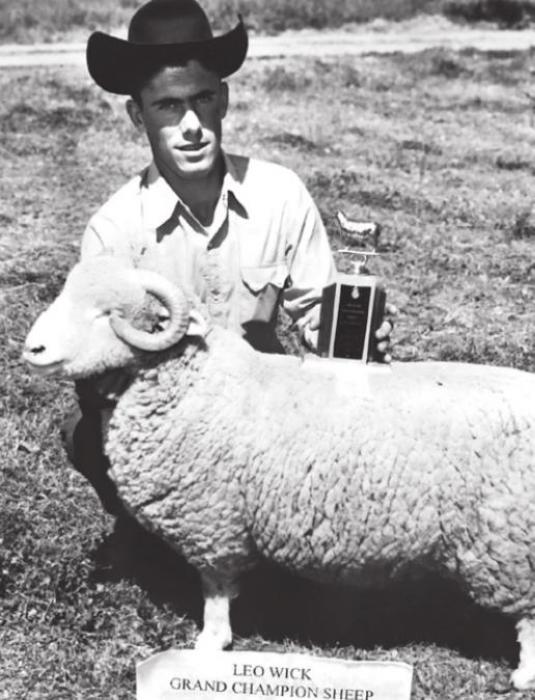
When Leo entered Schulenburg High School, he joined the Future Farmers of America chapter. The Wicks’ neighbor, Jack Herzik, who showed Dorset sheep all over the state, as well as Kansas and Oklahoma, encouraged Leo to start raising them and he did. When he began exhibiting sheep, he became very successful with his herd of about 20 head. He became a tough competitor to beat.
Leo showed one ewe in five different shows and won five grand championships including the Fayette County Fair! In 1961, at the 34th edition of the Fayette County Fair, Leo won all the Dorset sheep categories, as well as first place with his Hampshire aged ram and Southdown aged ewe.
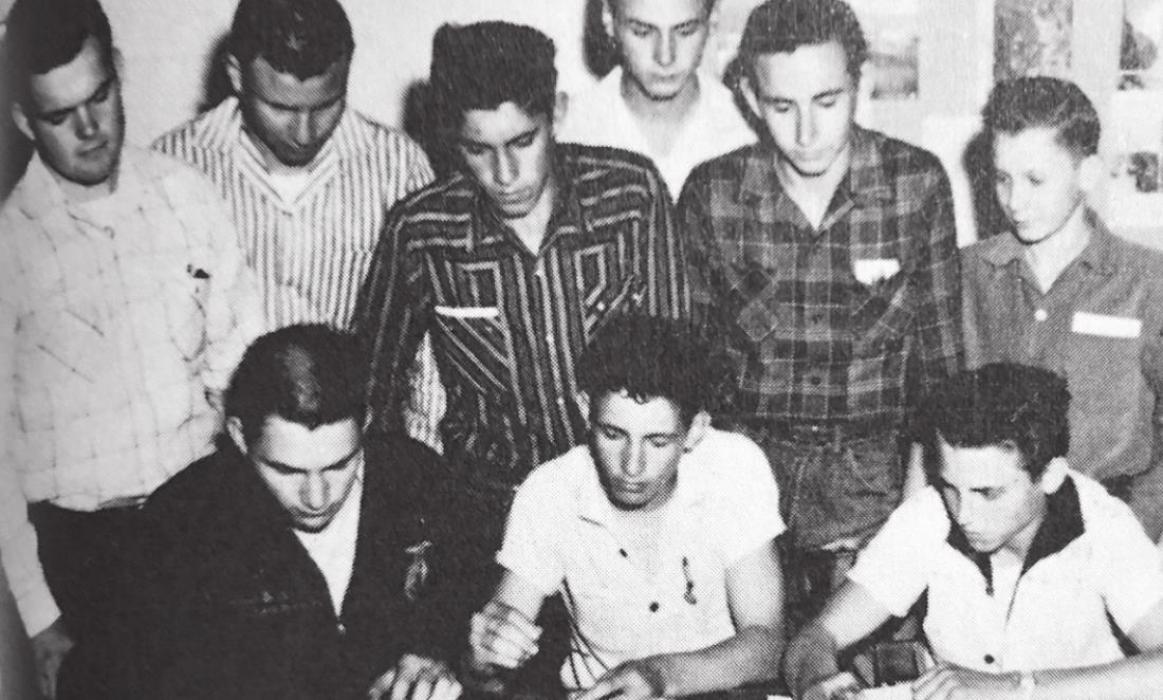
At the 1961 Texas FFA Conference, six Schulenburg FFA members received the prestigious state degree of Lone Star Farmer. They were: Don Henderson, Paul Oeding, Thomas Antosh, Leslie Krause, Charlie Pauler and Otto Jochen Jr.
Their classmate, Leo Wick, was recognized with the FFA national degree of American Farmer, an even greater honor. The organization’s highest award, which went to only one member out of every 1,000 FFA boys, was conferred on Leo at the National FFA Convention in Kansas City. Leo earned the prize based on his outstanding project program, leadership achievements and participation in local and state FFA activities.
He drove to the meeting with his sponsor and his wife, Mr. and Mrs. Elmo Meyer, in the Schulenburg High School vocational agriculture department’s pickup. Mr. Meyer, who had led the local school’s program for 13 years, was also recognized. He received the Honorary American Farmer degree for building a thriving vocational agriculture program. Through Mr. Meyer’s tenure in 1961, 87 Schulenburg chapter students had been awarded State Farmer degrees. Leo was his 10th student to receive an FFA national American Farmer degree.
Sheep were a big part of Leo’s life. He became so proficient at shearing that he received calls to work for farmers who lived far beyond the boundaries of Fayette County. His personal record is shearing 100 head in one day. The five to seven pounds of wool produced was generally stuffed into six-foot burlap bags and sold in Florence, Texas.
“I guess I have sheared a couple of thousand sheep over the years,” Leo says. He also sold breeding stock, plus other sheep that were butchered for mutton.
Even though he focused more on sheep in his early farming days, Leo was at home with other farm animals shown at the fair.
“The competition was friendly. I learned a lot from watching the judging, too,” he says.
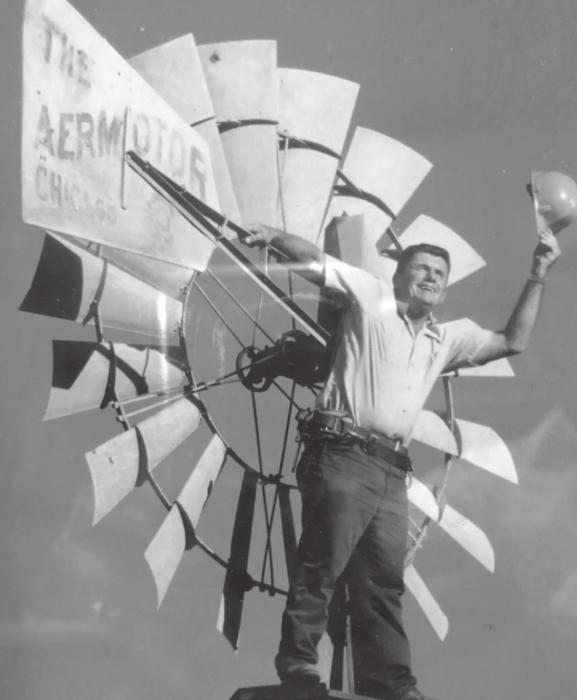
Early on when Leo was involved with the Fayette County Fair, he was employed by Norbert Nordhausen, a Schulenburg plumber and worked on water wells and windmills. Leo also worked for Fayette Electric before opening his own business with his brother, Frank.
Rebuilding relationships
So what happened after Leo invested his $7,000 loan in the Fayette County Fair? With cash in hand to pay immediate expenses, the board threw itself into the annual preparations for the event.
Then Leo turned his attention to mending fences with the county and city. He was successful and once again, both governments agreed to support the fair. Then Leo began approaching friends, neighbors and business associates who could help to address the pressing physical issues at the fairgrounds.
“I just asked,” Leo says modestly.
He must have done so nicely because he garnered a great deal of cooperation. ACME Brick Co. installed effective drainage throughout the grounds. Dean Ward sent a maintenance crew with roller trucks to flatten the parking area and blade out fly ash so the field had a base. Jim and Dennis Schnell donated gravel and George Kana hauled it. Several buildings were relocated by Kana Bros. Charlie Rau of La Grange Cement donated cement for the floors of new buildings. Bob Weeren of Weeren Storage built the fair office. Center Supply donated pipe and sucker rod that volunteer welders, supervised by Harvey Schmidt, used to build permanent pipe rail fences. Ray’s Crane Service installed a big metal sign at the entrance. Leo says if he has overlooked any other businesses that contributed to the fair’s rebirth without the expectation of payment for their services, it’s an oversight. He has never forgotten how local business owners came together at a difficult time in the fair’s history.
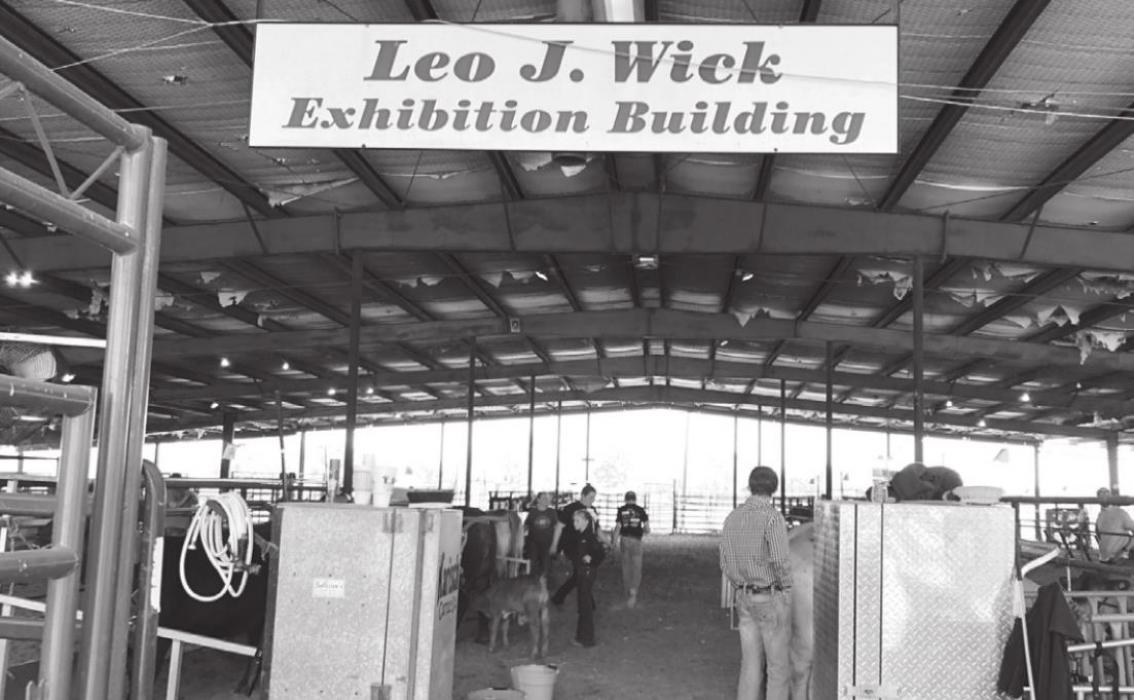
The construction of new structures took place over a number of years. This included the Marge Rosenberg Stage, a new ladies’ restroom, expansion of the German-Czech Mart, additions to the men’s and ladies’ restrooms, a new hog barn, a new poultry/ rabbit barn, a new token booth and the addition of the Leo J. Wick Exhibition Building. The site’s electrical and plumbing were updated and expanded, too.
New events gradually were added to the fair’s entertainment lineup such as the rodeo, truck pull and the womanless talent show in which Leo has participated several times. In 1968, for example, the momentum continued to build with raffles for a 1968 Chevrolet Camaro, lot #71 in the Pecan Grove subdivision on the Colorado River and a General Electric 23-inch television. The Triumphs, The Velvets and Blumes Orchestra played at dances held on Thursday, Friday and Saturday nights during the fair that year.
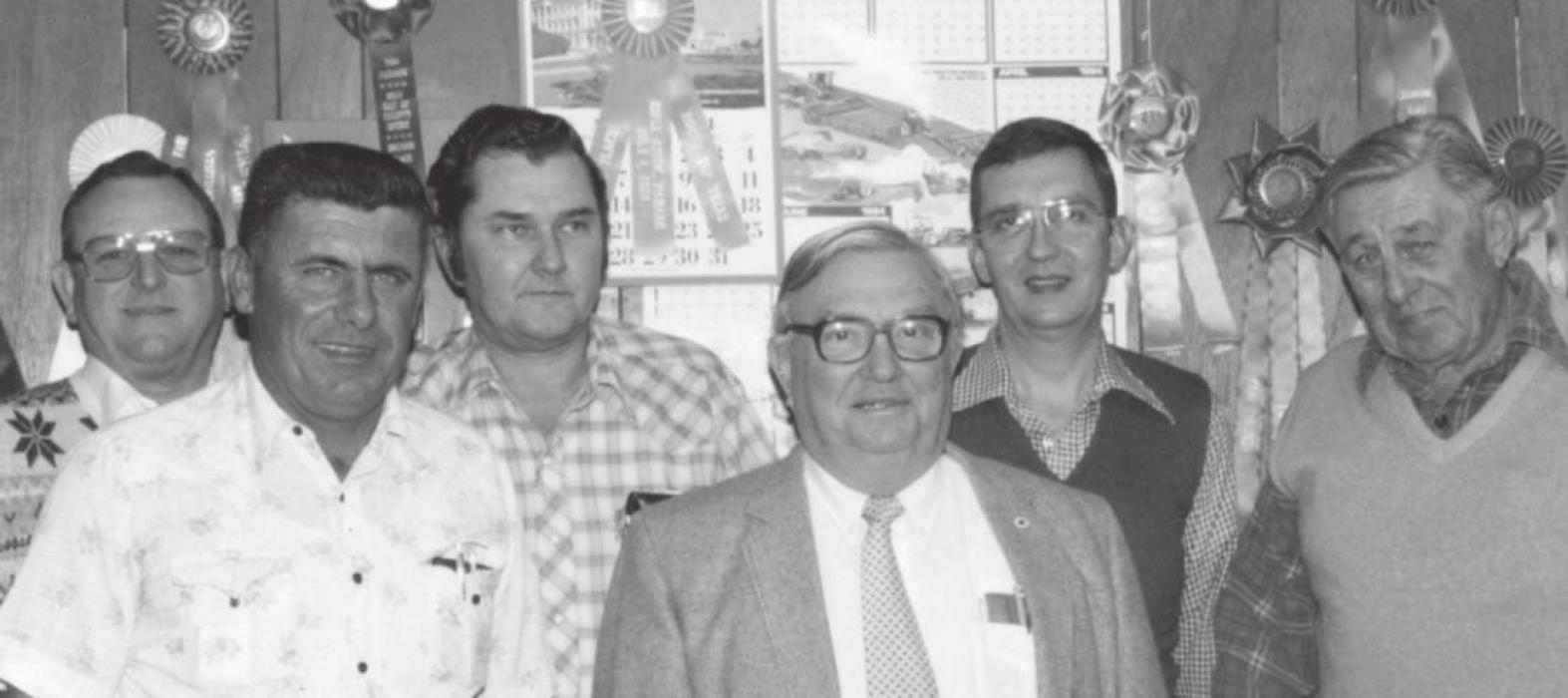
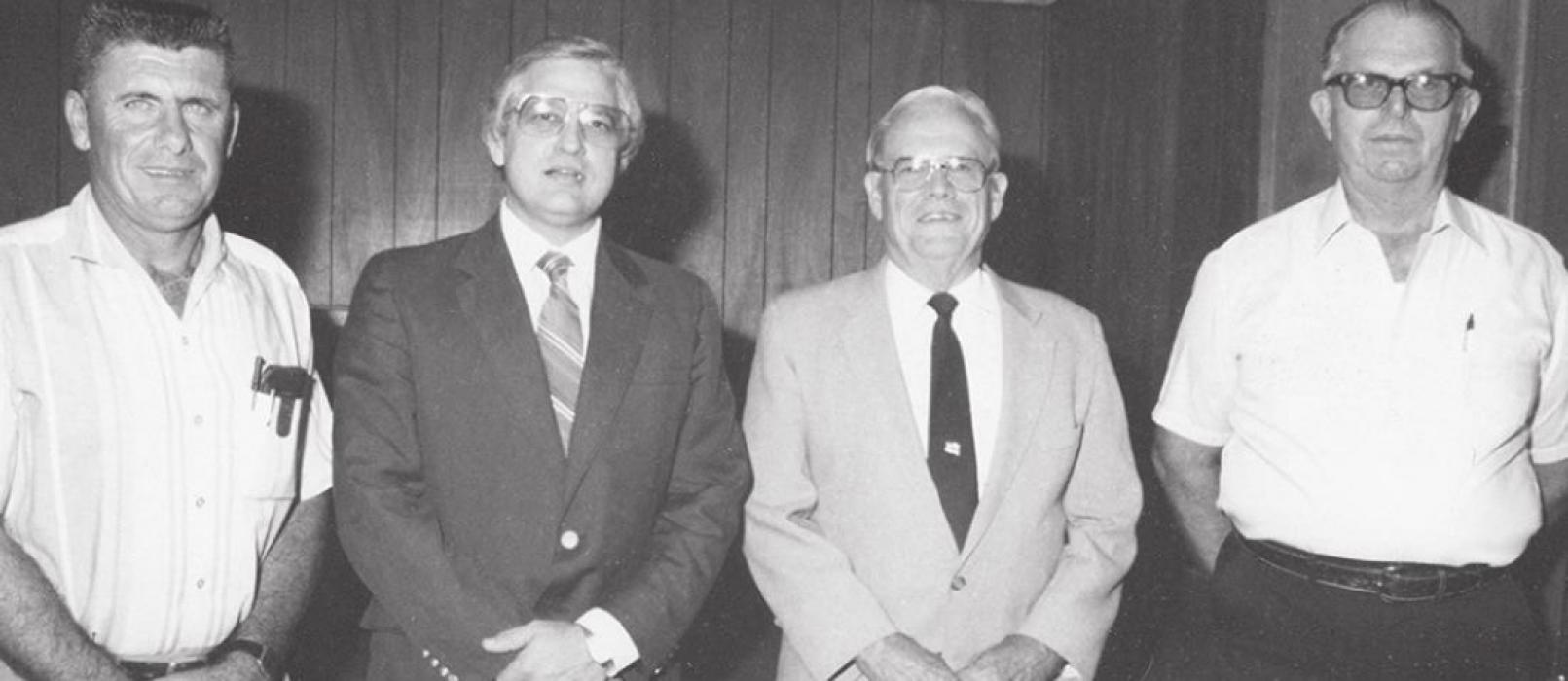
Although many volunteers have lent a hand over the years, those who worked shoulder-to-shoulder with Leo the longest were: Marge Rosenberg, Billy Koehl, Calvin Kuehn, Harvey Dippel, Theo Svec, Wilbur Hackebeil and Ken Ohnheiser.
Laughing out loud
Leo has enjoyed some lighter moments during the years as he has overseen the redevelopment of the fairgrounds, served on the board and supervised the agriculture department. One year during the fair, he got a phone call at 5 a.m. to say a dairy cow was wandering around the carnival. Her rope had come loose, so she went for an unsupervised stroll. It didn’t take long for Leo to round her up!
Another time, a group of volunteers painting the floor in the fair office managed to paint themselves into a corner because they had started at the door. The same group got a little confused over who-was-doing-what when it came to spreading cement for the bandstand. Leo noticed that the day after he’d chatted with them they were still waiting. When he asked about the delay, they realized that no one had ordered the cement!
Sometimes events transpired at the fairgrounds that made Leo anxious. He felt bad when a youngster broke an arm backing his livestock entry out of a trailer. Leo doesn’t get uptight if an animal gets loose and makes a break for it, heading out of the fairgrounds in the direction of the Colorado River. He says there’s never been one yet that hasn’t been apprehended in a day or two.
Leo has watched generations show their livestock and young people mature into adults. It gives him pleasure to meet people who once showed livestock at the fair and they are glad to see him. He also is gratified when the judges from Texas A&M and representatives of other fairs are complimentary of the Fayette County Fair’s livestock department. Through his years of experience, he has picked up some good ideas that he’s always willing to share. For example, young people working with their livestock at home might want to play a radio loudly. That way, when their entries are unloaded at the fairgrounds, the noise of the carnival and the crowds won’t faze them.
Reassessing his priorities
In 1986 when he was 45 years old, Leo was diagnosed with hairy cell leukemia after a foot injury wouldn’t heal. At M.D. Anderson Hospital in Houston, he was the youngest of 10 participants who took part in a clinical drug trial. He was the only one who made it.
“I beat cancer,” Leo says.
The leukemia returned in 2005 and Leo beat it again.
After these life-threatening medical experiences, it’s natural that Leo reassessed his priorities. They came out the same. What’s most important to Leo is his faith, followed by his family, the Fayette County Fair and his work.
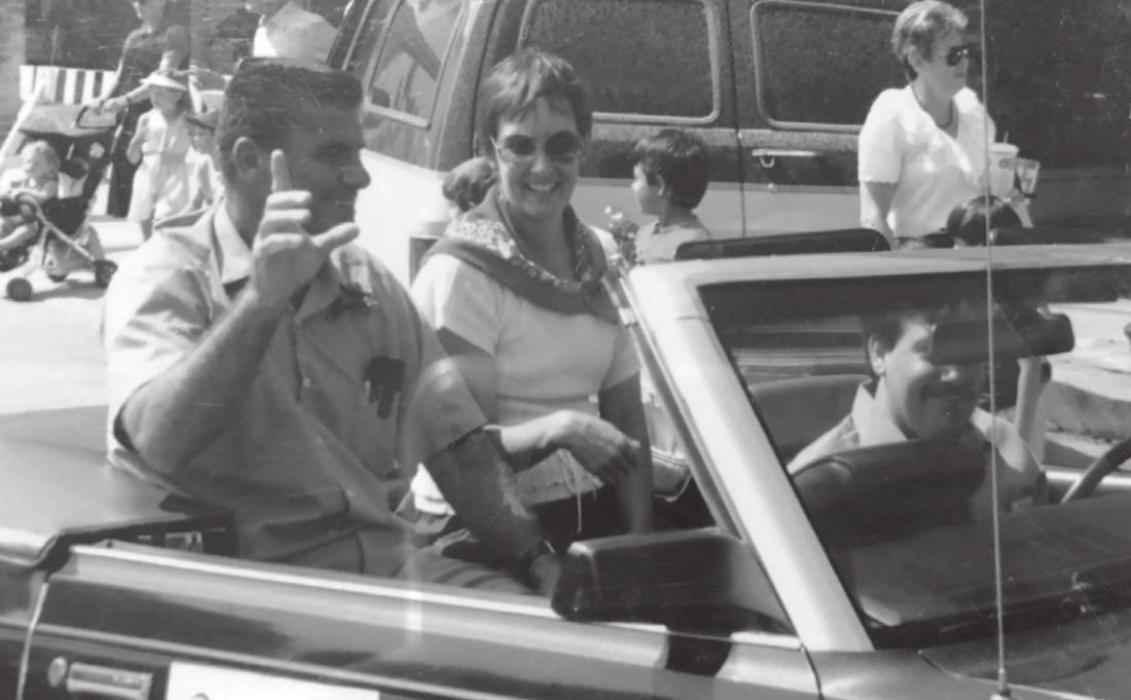
For his efforts on behalf of the Fayette County Fair, Leo was named parade marshal in 1986.
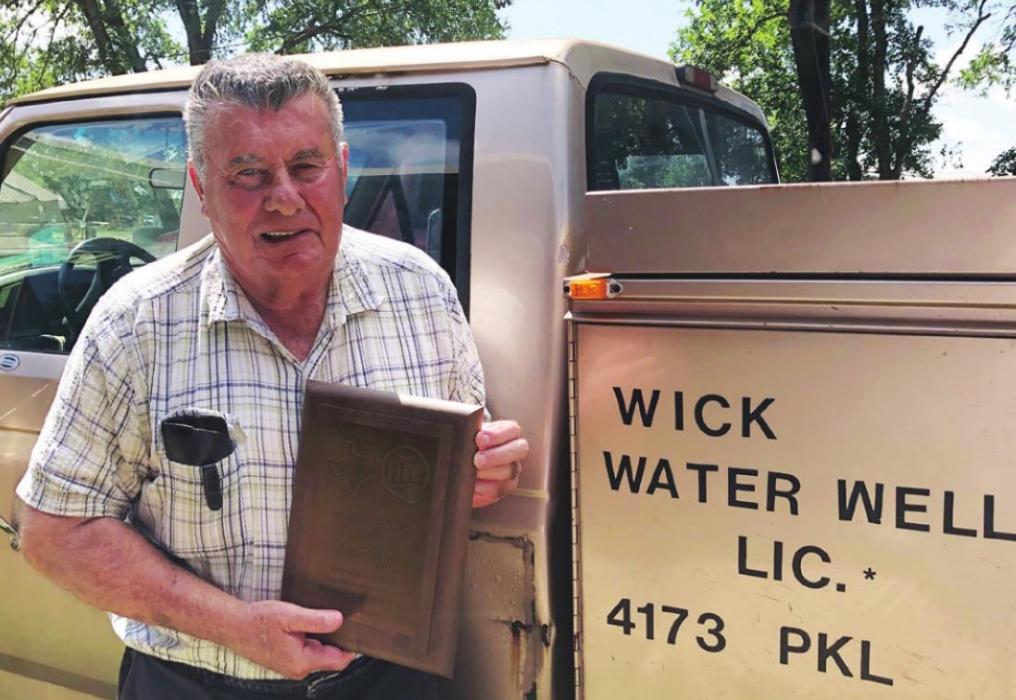
In 2002, the Texas Association of Fairs & Events chose Leo as statewide volunteer of the year and formally installed him in the Miller Lite/TAFE Hall of Fame. The description that accompanied his award mentioned that locally he had earned the nickname of Mr. Fix-It. Not only could he repair equipment and plumbing, he could mend working relationships.
After volunteering with the organization for over half a century, Leo was named a life member of the Fayette County Fair Association in 2010.
Summing it up
“Leo is the prototype of the modest man,” says Dr. Elva Keilers. “He fixed our water well issues through the years and never let us down.”
Fayette County Fair Association secretary Barbara Kalina adds, “Leo is a simple, hardworking, caring, quiet man. He has so much knowledge, especially about the fairgrounds and the livestock area. Leo is one of those people who doesn’t have a whole lot to say so when he speaks, you need to listen.”
Leo’s wife, Barbara, adds, “While I have never really understood why Leo does it, I have always been proud of what he has accomplished on behalf of the fair.”
As he watches preparations for the 2021 event fall into place, Leo, who has served the Fayette County Fair faithfully for 60 years, takes the comments in stride.
“Yes, there’s a lot more for people to do these days. But the fair is still important and it’s still important to me. It’s part of who I am,” Leo explains.
If you’d like to read more stories written by Elaine, visit www.elainethomaswriter.com/blog/ and sign up to receive new posts twice a month. You can also call Elaine at 979-263-5031.