


The Legacy of the La Grange Ladies Cemetery Association
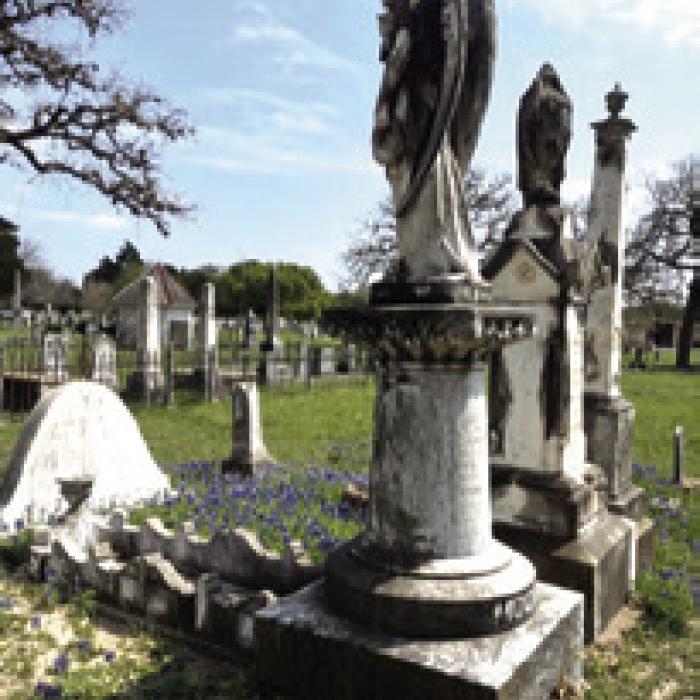
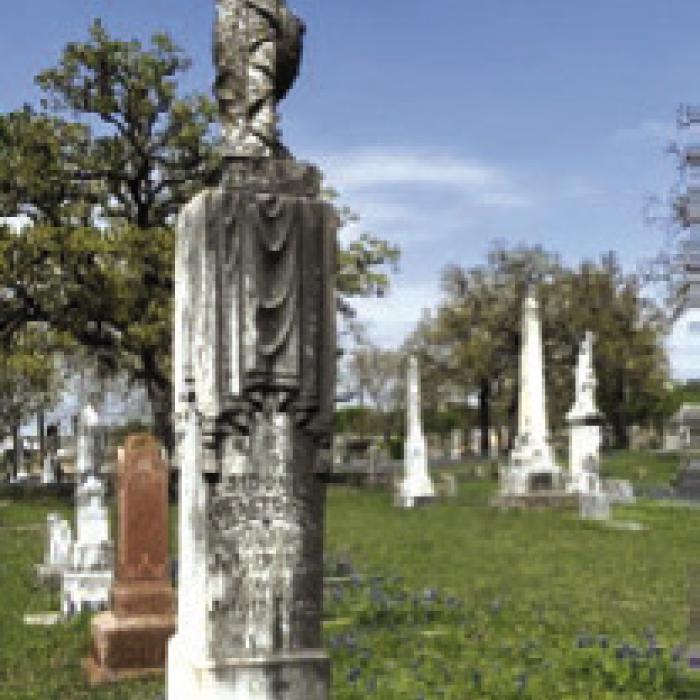
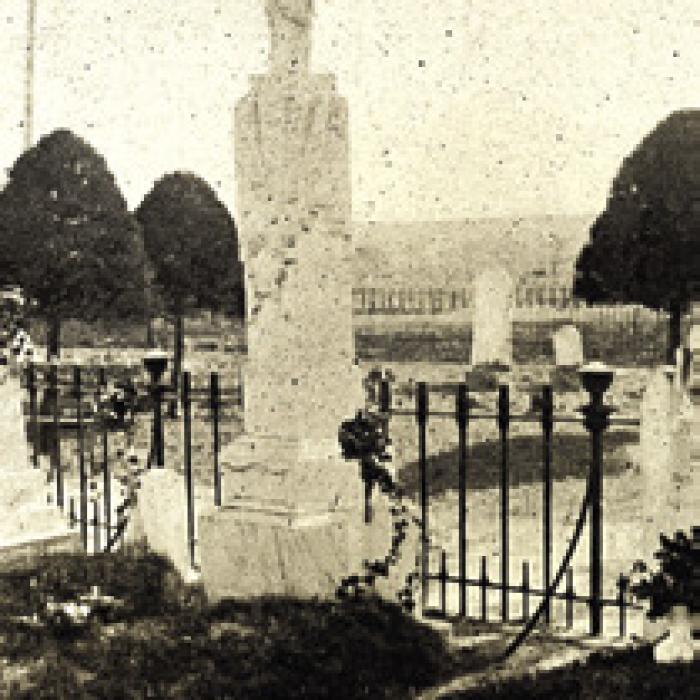
City Cemeteries Were Filled With Cattle, Hogs, Weeds and Unmarked Graves Before Local Ladies Stepped Up
Board members of the La Grange Ladies Cemetery Association must have lost sleep 45 years ago when they wrestled with whether or not to end their organization’s proud century-old tradition of active civic service.
In the First National Motor Bank meeting room at 7 p.m. on April 13, 1978, the organization’s officers put the tough decision to a vote. Secretary Verlene Citzler wrote in the minutes, ‘Mrs. Marjorie Williams reported from the city meeting. Advised by (attorney) John D. Marburger to turn over care of the city cemetery to the city. The bookkeeping too complicated for us to be in this business. Mrs. Verna Reichert moved that we take this advice and seconded by Mrs. Willmann. Motion carried.’
“Yes, that’s my mother’s handwriting,” Annette Citzler says, glancing at the last page of the official minutes of the Ladies Cemetery Association. “As Mom noted, the Ladies Cemetery Association’s finances were complex by that time, plus the oversight and administration of the cemetery was no small chore.”
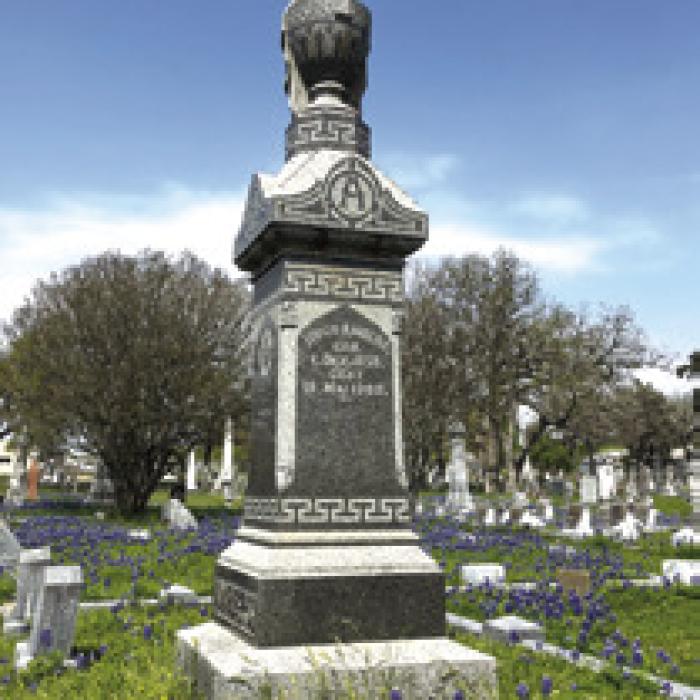
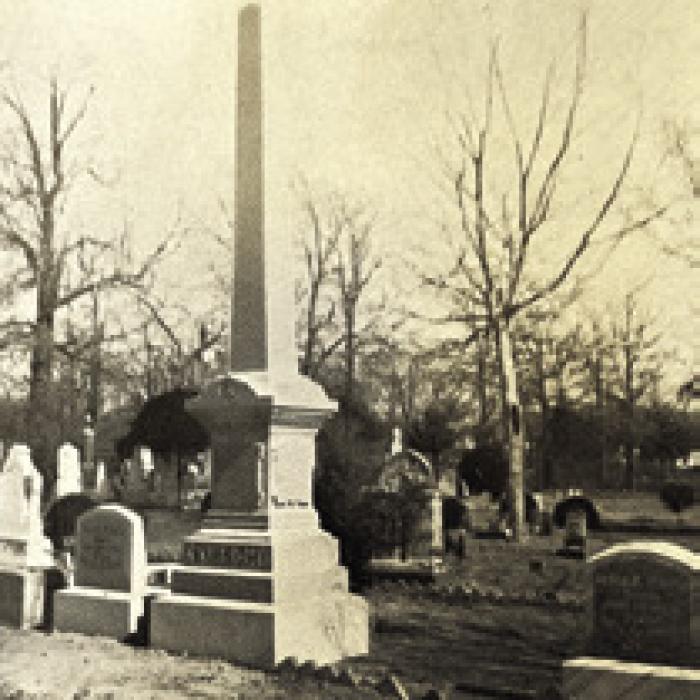
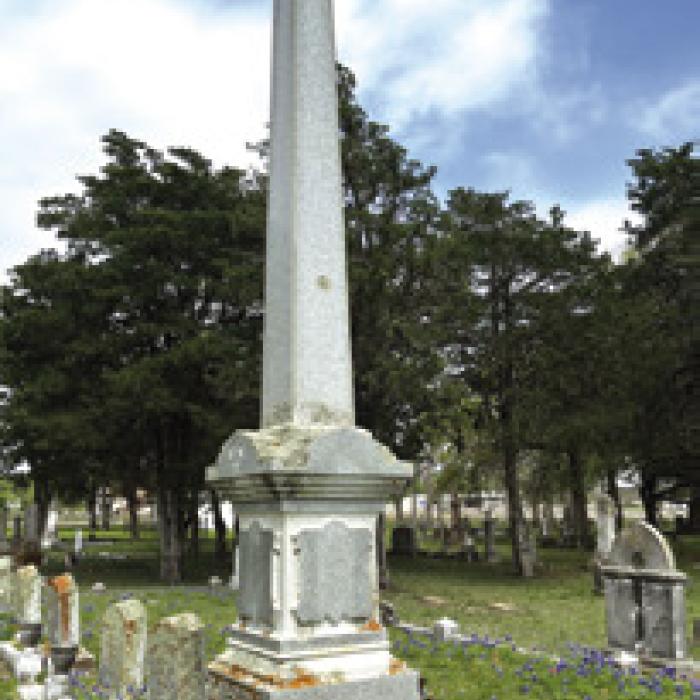
After La Grange was incorporated on July 3, 1854, the existing burial ground that had been set aside was conveyed by its trustees to the city. The Ladies Cemetery Association was formed 19 years later on April 17, 1873, to aid in the upkeep of the city’s graveyard.
Charter members, mostly the wives and daughters of prominent local men, were: Mrs. L. W. Moore, Mrs. J. S. Powell, Mrs. Louis Robinson, Miss Hannah McPeters, Olivia Dancy, Mrs. J. W. Dancy, Ann Matthews, Mrs. T. W. Yates, Mrs. B. Timmons, Bettie Stiehl, Pattie Davidson, Mrs. J. W. White, Mrs. W. B. Cross and Mrs. J. P. Ledbetter.
The group held its first Decoration Day in 1894 on the third Thursday in April, a tradition it held onto so tightly in future years that town shopkeepers closed their businesses for a time so all who were interested could attend.
The Ladies Cemetery Association’s responsibility grew as the city purchased new cemetery land in 1884, 1908, 1918, 1920, 1949, 1953, 1965 and 1970. As the cemetery’s footprint expanded and the number of graves that needed tending increased, so did the population of La Grange. According to the Texas Almanac, the city had 1,165 people in 1870 and 3,092 inhabitants by 1970.
“Not only was La Grange growing, but several of the women serving on the board had families at home and fulltime jobs. Women were in the workforce to stay by that time. Other board members were older and no longer able to volunteer as much time to providing oversight as they had once done. On top of that, hiring a reliable sexton had become increasingly difficult because of the modest salary the association could pay,” Annette recalls.
“I remember my parents talking about this course of action at length before the vote was taken. They were concerned whether the city would look after the cemetery like the Ladies Cemetery Association had done. Sonny Stolz, whose family monument business had always had a strong connection to the cemetery, was the mayor at the time. Dad had served as city manager for many years but had gone to work at the LGISD. Mom had a full-time job in health care, but my parents agreed, as much as they regretted it, the time had come.”
After the Ladies Cemetery Association’s momentous decision in 1978, it took weeks before The La Grange Journal ran the news. An article on an inside page of the May 10 issue stated that the Ladies Cemetery Association had voted to withdraw from active supervision of La Grange cemeteries. This historic announcement was squeezed in beside news items announcing the postponement of a Fayette County Water Control and Improvement District meeting and a presentation that the Fayetteville Lions Club and Chamber of Commerce were co-hosting.
The Ladies Cemetery Association may have gone out with virtually a whisper, but it had been a formidable force for good during its heyday.
Its First 22 Years
A La Grange Journal article published April 25, 1895, carried excerpts from the Decoration Day speech of lawyer, soldier and newspaperman General William G. Webb.
He said, “They started out with the purpose of aiding in the good work, but the city council turned the whole matter (cemetery upkeep) over to them and gave them full control.”
Mr.Webb recalled that when he visited the graveyard in 1872, the fence was broken down, and the overall appearance of the cemetery was forlorn.
“The weeds, and particularly the nut-bearing grass, had spread all over it and even ruined most of the shrubs and flowers which the hands of the living had planted at the graves of their loved ones. Only a few graves had been lately given attention. In fact, those who desired to keep the graves of their loved ones in order, and to beautify them saw it was useless on account of the hogs and cattle having access to them. This distressing situation gave rise to the Ladies Cemetery Association,” he noted.
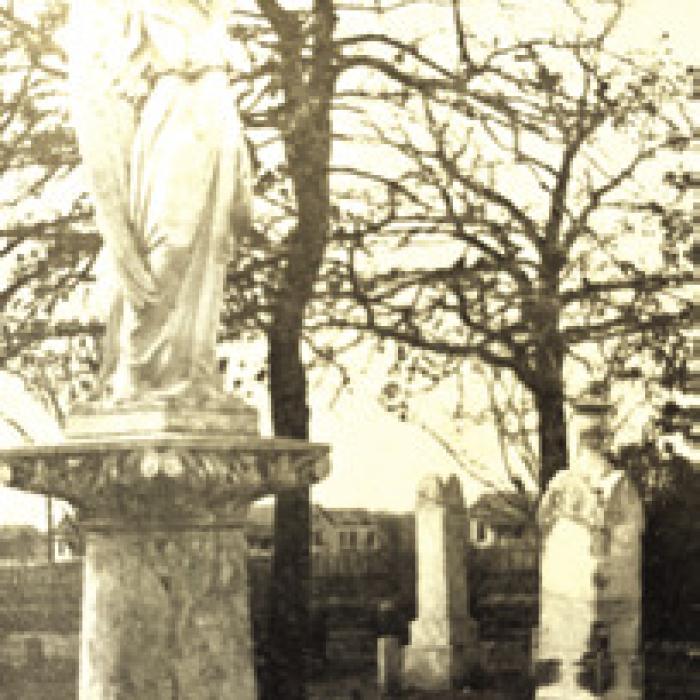
Mr. Webb, who was among the city leaders that transferred the cemetery over to the city, complimented the Ladies Cemetery Association on its many accomplishments to date. During their first 22 years of shouldering responsibility for the upkeep of the local cemetery, the women had built a summer house with seating for the comfort of visitors, prepared new wooden headboards to be placed on graves that had no identification and replaced crumbling markers.
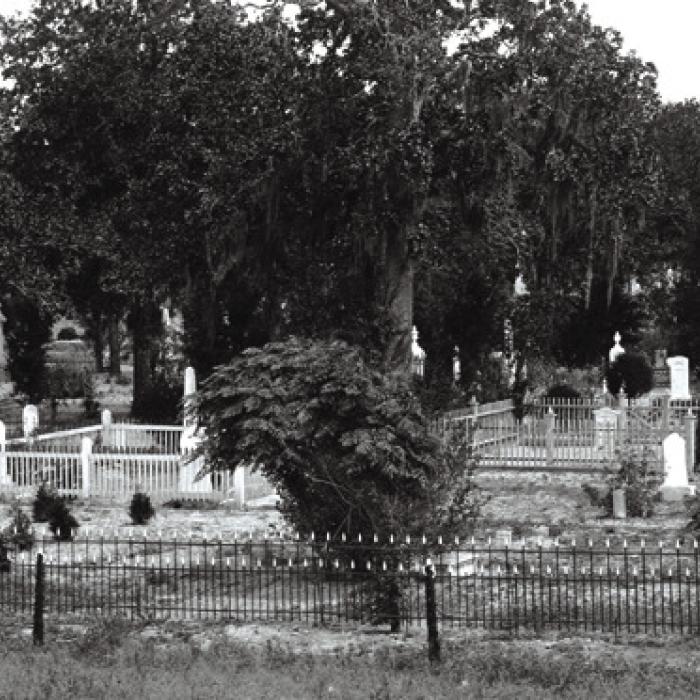
Six iron benches were added to the grounds, an iron fence was built around the property at an expense at $2,531.51, and iron hitching posts were added as a convenience for visitors. The ladies saw to it that the walks and graves were kept clean and the shrubbery trimmed as needed. After the city extended water to the cemetery at a cost of $300, the association provided a hose to offer fresh water for drinking and watering the graveyard’s landscaping.
Through their early fundraising efforts, which included selling memberships, the Ladies Cemetery Association had sufficient funds to hire a sexton at a cost of $100 to $300 per year to perform much of the heavy work. Dues were $2 per year per family in 1895.
When Mr. Webb gave his address that year, the fence fund had a balance of $381 and other cash on hand stood at $46.25. The records showed that in its first 22 years of service, the Ladies Cemetery Association had spent a total of $5,835.97 to fulfill their mission. (That sum is equivalent in purchasing power today to about $183,155.33, according to www.officialdata.org.)
Mr. Webb concluded that passengers traveling through town on both railways and other visitors to La Grange, often admired the beauty of the La Grange Cemetery. When credit was given to the Ladies Cemetery Association for creating such an attractive burying ground, non-residents were greatly surprised.
Taking the Lead
The La Grange women are remembered for organizing the first Ladies Cemetery Association in Texas and assisting other Texas towns to start similar groups. In fact, two other Ladies Cemetery Associations were formed in Fayette County, one in West Point and the other in Fayetteville.
The ladies of West Point organized a Cemetery Association in early 1908 with Mrs. C.A. Young as president; Mrs. C.W. Moore, vice president; and Mrs. J.W. Johnson, secretary/ treasurer. They planned to erect an ‘iron front’ on their cemetery by May 1, 1908, when Decoration Day ceremonies were to be held. The Woods Cemetery was to be decorated in the morning and the Plum Grove Cemetery in the afternoon.
According to a back issue of The Fayetteville Fact newspaper, in March 1916, local ladies there were preparing for Decoration Day services on the second Sunday in April. The group was still going strong in January 1964 when The La Grange Journal carried a notice saying the Fayetteville Ladies Cemetery Association would meet at the home of Mrs. Laura Forres.
A website search shows at least one Ladies Cemetery Association is still active in Texas.
Old News Snippets
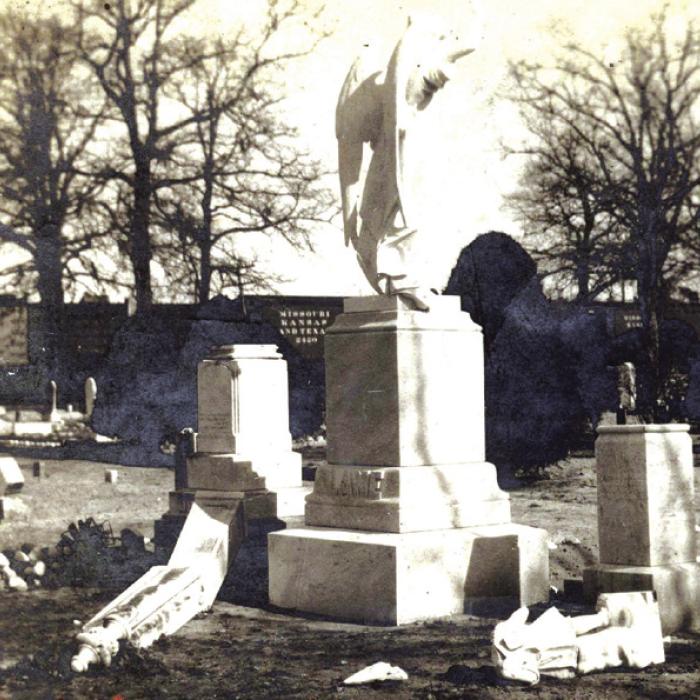
A grievous attack on the La Grange Cemetery took place during the night of Wed., Feb. 9, 1908, when more than 60 graves and copings (narrow overhangs on the top of gravestones) were broken, turned over or torn loose. Citizens of La Grange were outraged when the vandalism was discovered the next morning. City Marshal Will Loessin and Constable Lee Smith began their investigation immediately by making plaster of paris impressions of footprints at the scene. On Saturday morning, the perpetrator, a disgruntled former railroad worker, was arrested. A news report in The La Grange Journal stated that besides being very drunk, he had smoked a pipe of hops before starting his rampage. Less than a month later, the president and secretary of the Ladies Cemetery Association ran an ad in The La Grange Journal thanking Mr. O.E. Stolz of La Grange Marble Works for ‘his extreme kindness and valued assistance in repairing the serious damage recently done to our cemetery.’
In 1914, some older residents met to try and identify the numerous unknown or unmarked graves in the La Grange Cemetery. As late as 1938, it was estimated that there were well over 500 unmarked graves in the old cemetery and 150 in the new section. Creating markers for graves that had none or others where the identification had become indistinct, presented another ongoing challenge for the association.
Damage to the cemetery’s fences was a constant source of aggravation. It was noted in 1915 that the fence repairs were satisfactory. Therefore, Mr. Schott’s $1.50 bill for labor and Farmers Lumber Company’s $1.95 invoice for lumber would be paid from the fence fund. In addition, making ordinary repairs such as gate latches had to be discussed and approved, as noted in the association’s May 1, 1919, minutes published in The La Grange Journal. In 1953, a tree fell on the cemetery fence, necessitating more repairs. Bohot Welding Shop charged $10 for the repairs, a bill that the association approved for payment.
City of La Grange archivist Rox Ann Johnson, whose mother, Dorothy Albrecht, was the last treasurer of the Ladies Cemetery Association, recalls board members were always on the lookout for vintage pieces of wrought iron to repair damaged fence. An old piece that wasn’t suitable served as a backdrop for Rox Ann’s wedding in October 1978 at her grandparents’ home.
In preparation for Decoration Day each year, the Ladies Cemetery Association notified the public that the hauling of sand or other material to the graveyard must be completed by Sat., April 14, 1923, in preparation for the annual observance the following Thursday. At the annual program, often held at the Methodist Church, prayers, hymns, music and a formal address were offered. Afterward, attendees made the traditional walk to the cemetery, where they placed flowers on the graves. In 1918-1919, the Spanish flu epidemic forced the cancelation of Decoration Day commemorations. In later years, when attendance at the weekday remembrance events dwindled, observances moved to the weekend.
Landscaping issues needed constant attention. In 1950, city workers removed a dead tree at the entrance to the new cemetery but refused to cut down a large oak that was still living. Instead, they agreed to trim it. The same year, the Ladies Cemetery Association purchased a power lawnmower at a cost of $99.50.
City of La Grange officials worked closely with the Ladies Cemetery Association throughout its history. At a 1946 city council meeting, the city fathers voted to ‘take care’ of the water bills of the Ladies Cemetery Association. In 1960, council voted to add $35 per month to the $40 it was already contributing to the Ladies Cemetery Association to pay the sexton.
Employing a sexton was another issue the Ladies Cemetery Association dealt with by advertising for bids in the newspaper. In May 1919, it was decided to elect Herman Schaefer for the post at a salary of $60 per month. When eight bids were received for the sexton position in 1930, the board elected Fritz Wittmann. The following year, when 11 bids were submitted, Mr. Wittmann was reelected. In 1950, Max Rother was reelected sexton at a salary of $150 per month. He had done such a good job the prior year that he also received a $50 bonus. By 1964, three sextons, Chas. Hengst, Emil Thuemler and Edmund Anders, were employed by the Ladies Cemetery Association.
The women who served on the association’s board early on had a head for business, as did subsequent generations of female La Grange volunteers who managed the upkeep of the city’s cemetery. In addition to memberships, donations, such as a $200 gift at Christmas in 1925 from the Light, Ice, Water Company, were a big help. In 1930, the Ladies Cemetery Association had put aside enough money to buy a $50 bond at the John Schuhmacher State Bank bearing 4¼% interest semiannually.
A perpetual care fund was established on June 6, 1928. By 1948, $6,200 was held at the Second National Bank of Houston. A total of $2,900 was invested in Series G bonds and another $200 had been reinvested in bonds for an impressive total of $9,300.
The establishment of a memorial fund in 1965 enabled the Ladies Cemetery Association to accept monetary contributions in honor of a friend or loved one, another fundraising measure.
Century of Service
The Ladies Cemetery Association celebrated its 100th anniversary in 1973 by securing a Texas State Historical Marker for the cemetery, restoring the summer house and the house at the Nellie Mann grave in the old cemetery. It also updated and reprinted its 1910 booklet available at the Fayette Public Library in the Fayette Heritage Museum and Archives. This impressive publication is dedicated to ‘our silent city.’
When the city took over the upkeep of the La Grange cemetery system in 1978, those holding perpetual memberships were assured that the funds were invested wisely. A group of trustees appointed to manage the account included: Homer Eck, Mrs. Marjorie Williams, John D. Marburger, Lester von Rosenberg and Richard Cernosek.
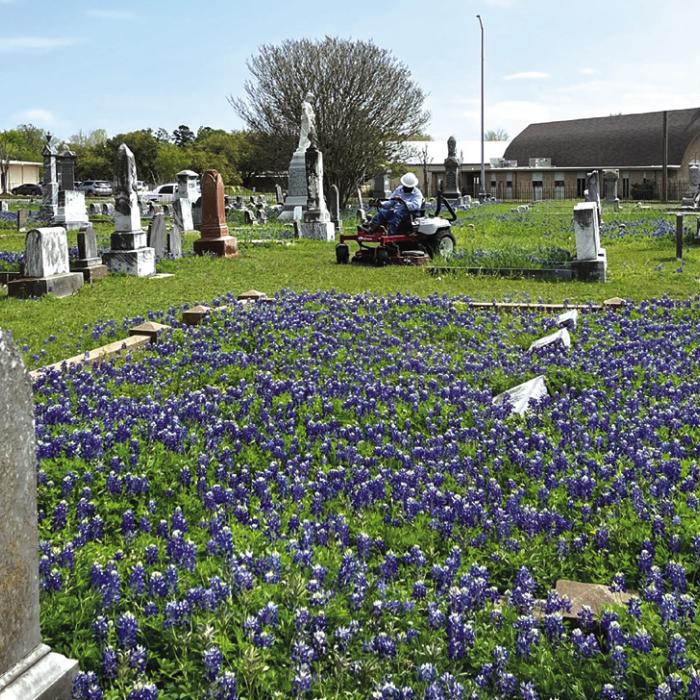
The Ladies Cemetery Association members would be pleased to know the City of La Grange continues their work with respect and dignity. It will never be finished.