


Herbicide Residue, Hydroponic Cucumbers and Beer for Snails

Last week, I ended this column with my concern about herbicide residue in a new garden spot.
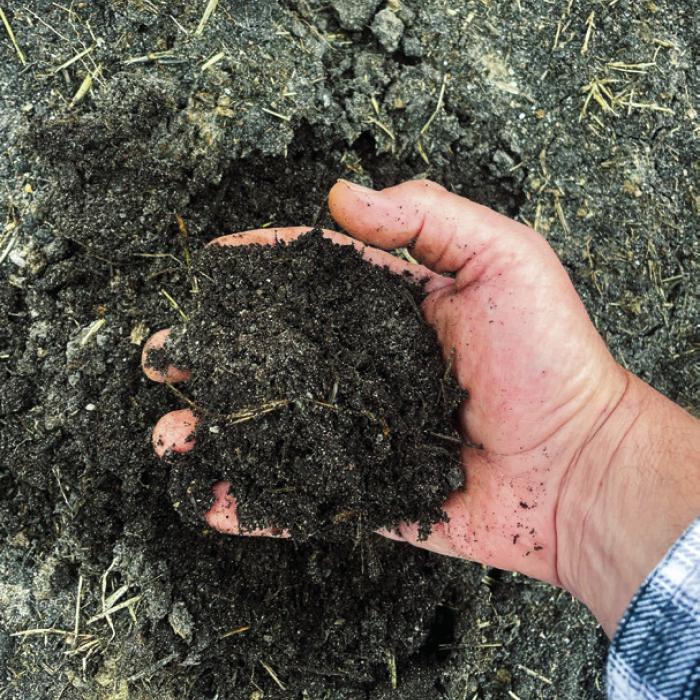
For the past several winters, I have been feeding hay to my cows in an area just across the fence from my main garden. Almost a foot of rich compost lies on top of the soil in this spot, where the cows stomp around and mix their manure and urine with old hay.
Most of the hay comes from my dad’s pasture of native prairie grasses, and he has not sprayed herbicide on it in many, many years. But I had to purchase some hay the last few years, and I’m not sure whether it was sprayed with broadleaf herbicide.
If there is herbicide residue in the soil, it will kill or stunt most of the vegetable crops I want to grow in this spot. Broadleaf herbicides do not affect species of grass plants like corn, sorghum, wheat or other true grains.
Last week Janessa and I planted some blue corn in this patch. Instead of planting in rows, we planted in circles to set up a “three sisters” garden with corn, beans and (hopefully) squash. As soon as the corn gets up to about knee high, I’m going to plant some pole beans among the stalks. This method of using beans to test for herbicide residue is called a “bioassay.” If there is herbicide residue, the beans might sprout, but the leaves will start “cupping” before the plant turns brown and dies. If it doesn’t die, I’ll plant the squash on the edges of the circles.
Either way, we should at least produce a crop of corn.
What happens if I do have an herbicide problem? I’ve read you can speed up the herbicide break-down process by planting grain crops like corn or sorghum. I hope it doesn’t come to that. I really want to grow a big patch of pumpkins a winter squash in this spot.
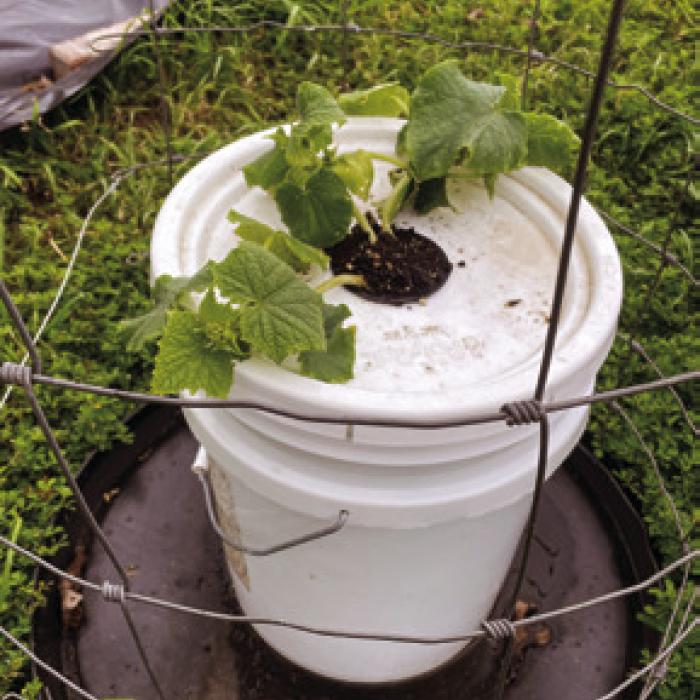
In other garden news, my neighbor down the road, Joe Fietsam, brought me one of his homemade hydroponic growing setups for cucumbers. The contraption consists of a fivegallon bucket with a hole cut into the lid. A small basket called a “Net-Pot” filled with potting soil sits in the hole. He fills the bucket with water so that the bottom of the basket just touches the water level. He doesn’t grow the cucumbers from seed in the bucket; instead, he uses transplants. The root tips should just touch the water.
But plants can’t grow in water alone. They need nutrients. Fietsam uses a mix of 1 tablespoon of Masterblend 4-18-38 fertilizer, one tablespoon of calcium nitrate and a half tablespoon epsom salt. As the plant grows, it will use up the nutrients, and the water level will drop. Fietsam said he checks the water level every week or so and adds some as needed. About every other time or every third time he adds water, he gives it another dose of nutrients.
Fietsam also built a homemade trellis out of some field fence and a lid from a molasses tub. Fietsam said he’s going to try to grow a few tomatoes in the buckets this year., These cucumber plants looks great, and I can’t wait to see how well it produces. I have some cucumbers growing in my garden as well. It will be interesting to see how they compare.
On Monday I chatted with a fellow gardener who lives in La Grange. He complained about snail problems in his garden. Snails don’t bother my garden. I occasionally see a few small snails. But I live out in the country. My parents live in Schulenburg, and they have some giant snails. They seem to be more of a problem in towns. I taught my dad a trick for catching snails a few years ago, and it works well for him. I hear this works for slugs, too.
Apparently, snails love beer as much as I do. To catch them, fill up some old short tuna cans with stale beer and place them every few feet on the soil in your garden beds. At night, the snails crawl up the side of the can to reach the beer then fall inside and drown. My dad catches them by the hundreds this way.
Fresh beer probably works, too. But why in the world would you waste perfectly good beer on catching snails? Instead, save the last swallow of beer from your can, or that half a bottle of warm beer you didn’t drink fast enough.