


Gardening: The Story of How a Russian Tomato Was Named After a Black American


When the Soviet Union fell on Christmas Day in 1991, few Russians knew anything about running a business. The Soviets ruthlessly punished anyone who tried improving their lot in life through private enterprise.
So when Mariana Danilenko and her mother started a seed company in Russia in 1992, she arranged a threeday visit to Southern Exposure Seed Exchange in Mineral, Virginia, to learn how to run a seed company. Danilenko brought along seeds from 170 varieties of heirloom tomatoes grown in Russia. One of them was named “Pol Robeson.” This large tomato starts out as a brick-red fruit before the skin turns black as it matures. It has since developed a cult following among tomato growers in the United States (especially among gardeners of certain political persuasions).
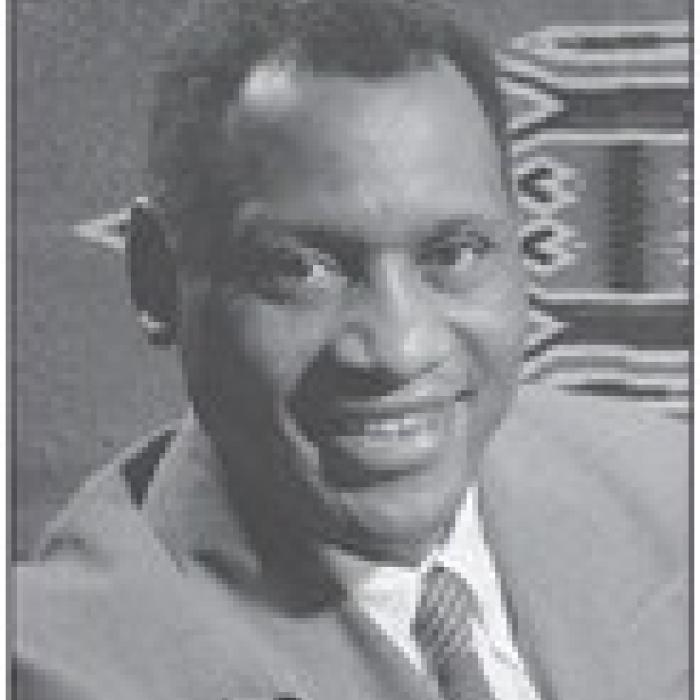
Paul Robeson was one of the most famous African-Americans during his lifetime. Born the son of runaway slaves in 1898, Robeson was among the first African-Americans to enroll at Rutgers University. He played professional football during the early years of the NFL and then earned a law degree from Columbia Law School. His biggest fame came as an actor and opera singer, and he used his fame to campaign for African-American civil rights.
But he never grew tomatoes toes as far as I can tell. So how does a Russian tomato get named after a black man from the United States? Well, besides the skin color, Paul Robeson was famous in Russia.
In the 1930s, Robeson befriended a number of socialists and communists in the United States who supported the civil rights movement. Through these connections, he visited the Soviet Union in 1934, where he famously proclaimed to the press, “Here, I am not a Negro but a human being for the first time in my life ... I walk in full human dignity.”
He also befriended a great many American and European Jews, including Albert Einstein. Robeson often compared the plight of the Jews in Europe in the 1930s and 40s to that of African-Americans seeking civil rights in the United States.
Robeson was a cheerleader for Stalin. In an interview with The Daily Worker in 1935, he stated, “From what I have already seen of the workings of the Soviet Government, I can only say that anybody who lifts his hand against it ought to be shot! It is the government’s duty to put down opposition to this really free society with a firm hand.”
“Like many Americans who visited the Soviet Union in the 1930s, Robeson was entranced by what he saw,” James Kirchick wrote in a 2019 editorial in The Washington Post. “That his own country treated black men such as him so abysmally made the superficial equality of the communist system even more alluring. Yet his understandable anger at the United States blinded him to the many injustices of Joseph Stalin’s regime.”
In 1943 Robeson met the Yiddish poet and communist Itzik Feffer. He returned to the Soviet Union in 1949 to meet Feffer, along with the Jewish actor and director Solomon Mikhoels, but they were nowhere to be found. Unbeknownst to Robeson, the Soviets had arrested Feffer, Mikhoels along with several other Jewish intellectuals in one of Stalin’s purges.
Feffer was held with little food, and the Soviets were careful to let Robeson see him in this condition. So they fattened him up for a few days before allowing the meeting. Martin Duberman describes this episode in his biography of Robeson: “Finally, on the eve of Robeson’s departure, (Robeson’s) persistent inquiries produced Feffer (who, unbeknownst to Robeson, had been arrested on December 24, 1948). Feffer was brought, unaccompanied, to Robeson’s hotel. Paul later told his son – pledging him to silence during his lifetime – that Feffer, through mute gestures, had let him know that the room was bugged. The two kept their talk on the level of superficial pleasantries, while communicating essential facts through gestures and a few written notes. Mikhoels, Robeson learned, had been murdered by the secret police; other prominent Jewish cultural figures were under arrest; there had been a massive purge of the Lenningrad Communist Party and of many in the Moscow Party, and Feffer’s own likely fate (here he drew a hand across his throat) would be execution.”
The meeting was publicized in the U.S. and Russia, so the Soviets waited three years to execute Feffer during the infamous Night of the Murdered Poets. Robeson never spoke of this encounter even though he spent the rest of his days praising the Soviet Union. Robeson won the Stalin Prize in 1952. The Soviets used him in propaganda critical of racial injustice in the United States. He died in 1976.
By that time the American Civil Rights movement cemented the legacies of people like Jackie Robinson (who was critical of Robeson), Martin Luther King Jr. and Malcom X. Robeson became better known in Russia than his native country. And for some reason, Russian gardeners named a dark red tomato after him.
Seed catalogs gush poetically about this black tomato and the plight of Paul Robeson, but I’ve never seen one mention the episode of Itzik Feffer. I, for one, think the tomato should be renamed in his honor.
I also find it amusing that Americans might not know anything about this tomato were it not for the collapse of the Soviet Union and entrepreneurial seed collectors like Mariana Danilenko, who would have been shot under the regime that Robeson praised.