


Gardening: Bamboo at Janecka’s Place and Pelleted Carrot Seeds

Part 2 of a column about my visit to retired Fayette County Judge Ed Janecka’s place in Dubina.
Before our wander through Janecka’s vegetable garden, we stopped to view the main reason for my visit: the Judge’s majestic thicket of bamboo.
There is something magical about an old stand of bamboo.
“Sometimes I think I might see a panda bear walking around in there,” he said.
Janecka couldn’t remember when he first planted the bamboo.
“Maybe 15 or 20 years ago,” he speculated.
The canopy of the small forest stands over 40 feet tall. The species Janecka is growing is a “running” bamboo, meaning it spreads like a grass from underground rhizomes that can burrow or “run” through the dirt several feet a year away from the mother plant. In fact, bamboo is a member of the grass family of plants. They are just a giant grass. Other bamboo species are called “clumping” bamboo – they spread just inches a year and grow in clumps.
Bamboo timber can be used for many purposes. I’m thinking about using some to make trellises for growing pole beans and peas. I’ve seen some beautiful privacy fences made from bamboo as well.
Janecka’s patch of running bamboo sits near the middle of his 50-acre property. It will take many years to spread to his neighbor’s property. Without human or panda intervention, it will eventually get there, though. That’s the main reason why Janecka asked me to come by – to cut it back and take some off his hands. That’s also why running bamboo is considered an invasive species.
I do not recommend planting running bamboo on your property, unless you don’t mind having a bunch of neighbors mad at you when the bamboo spreads to their property. Some people install barriers in the ground around the bamboo patch to keep it from spreading. Bamboo rhizomes spread in the top 12 inches of soil. Metal plate or solid plastic buried 18 to 24 inches deep should keep it from spreading. However, the smallest gap in the barrier will allow the bamboo to run. A yearly routine of chopping out the runners around the patch will also keep it contained, but that’s a lot of work.
Fortunately, clumping bamboo does not present these problems. If you are interested in bamboo, plant one of the clumping varieties.
Bamboo plants can be expensive to buy, however. One Texas nursery near Houston that specializes in bamboo advertises seven gallon pots for $75 a piece. You’ll probably want to shop around.
This week in the garden
I planted some carrot seed about two weeks ago on the day after that hard frost. I thought we would have a window of mild weather for good germination, but it has gotten a little cold this week and I’m hoping the seeds sprout. Ideally, carrots germinate in soil temperatures between 50 to 85 degrees F. But they can germinate in soil as cold as 40 degrees. I got my fingers crossed.
I’m growing several varieties of carrots this fall and winter. I planted some “Oxheart” and “Nantes half-long” carrots about a month ago, and the tops are about 10 inches tall now. Some of the Nantes half-longs are almost ready to eat as baby carrots right now.
“Oxheart” is an old French variety that grows into a stocky, bluntly shaped root weighing up to a pound each. They will purportedly grow in really tough soil, so this may be a good variety to try for you blackland gardeners. I bought the seed from Baker Creek (rareseeds.com). I grow “Nantes half-long” carrots every year. They have been very dependable in my sandy soil. The seed is almost always available on racks at garden centers and farm and ranch stores.
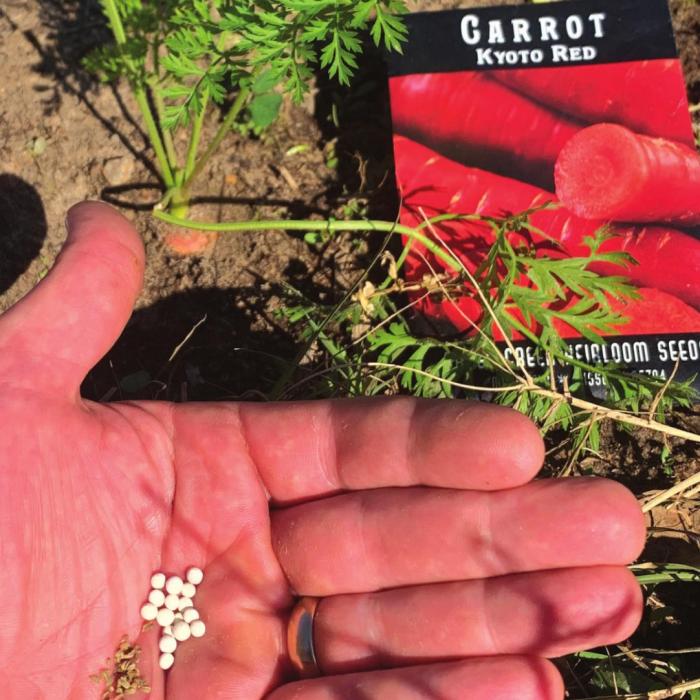
The varieties I planted two weeks ago are “Kyoto Red,” “Parisienne,” and “St. Valery,” which I also bought from Baker Creek.
“Kyoto Red” is a Japanese red carrot variety dating from the 1700s. The roots are a deep scarlet color and can supposedly reach 12-18 inches in length when grown in rich, loose soil. Kyoto Red purportedly contains high levels of antioxidants and other potential cancer-fighting nutrients.
“Parisienne” is an old heirloom carrot once popular in the markets of Paris, France. These carrots form a cute ball-shaped root. “St. Valery” is supposed to be one of the best-tasting carrots available. The roots supposedly grow 10-12 inch and two to three inches thick.
This fall, for the first time, I planted pelleted carrot seed, and I’m hooked. Carrot seed is so tiny. I always have a hard time evenly spreading them in the bed. Pelleted seed are coated with an inert material that makes them bigger, round and uniform. You can easily space the seeds properly. Once they get up and growing, you won’t have stray plants in between rows that you have to thin. It saves time and seed. Many mail-order and online seed houses offer pelleted carrot and lettuce seeds. Give them a try.
If you have any questions or comments about gardening, contact me at andy@fayettecountyrecord.com.