


Frederick William Grasmeyer: Fayette County’s First German Settler
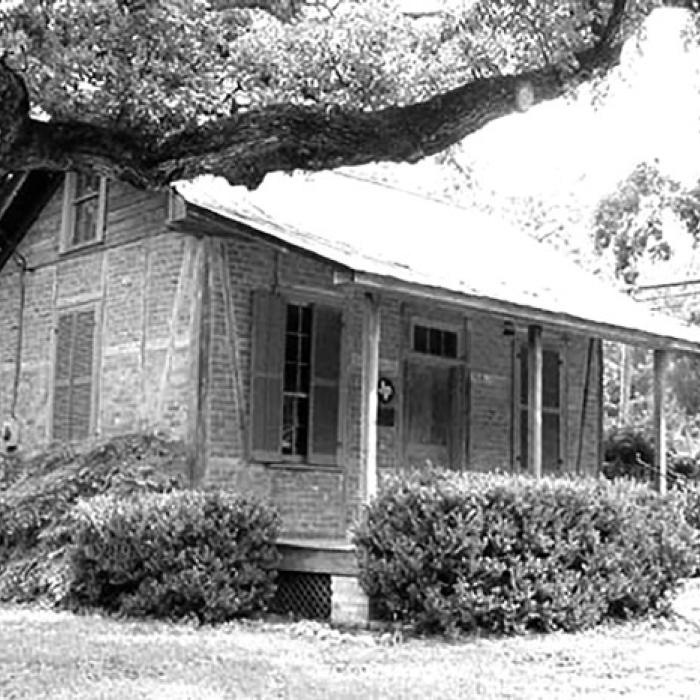
Frederick William Grasmeyer was born on Christmas Day 1800 in Hamburg Germany. He was one of the first German citizens to immigrate to Texas and the first to acquire land in present day Fayette County. On August 4, 1831 he received title to a quarter league of land (1107 acres) in Stephen F. Austin’s Little Colony. Grasmeyer’s land was along the Colorado River about midway between the La Bahia Road and the town of Mina (Bastrop). He established a trading post, cotton gin and mill on his homestead and built a river landing for his ferry boat.
Grasmeyer’s Ferry was used to help the colonists escape the Mexican army and the Comanche Indians during the Texas Revolution. One of Grasmeyer’s neighbors related that after the fall of the Alamo the settlers knew there was nothing for them to do but run. The families gathered together and were camped in a field when Comanche warriors stampeded and stole their horses and then came back and surrounded the group. The men with their guns and the women with sticks went out to make a stand. After a while the Indians rode off towards Grasmeyer’s gin. He had hidden a lot of his goods under the cotton and expected it all to be burned but the Indians only cut the gin bands.
On December 14, 1837, the Congress of the Republic of Texas took two actions that were of vital importance to F. W. Grasmeyer. President Sam Houston signed the bill creating Fayette County and the Colorado Navigation Company was incorporated.
The county was carved out of the Mexican municipalities of Mina and Colorado. Grasmeyer’s Ferry was chosen as the western boundary line between Mina (Bastrop) and Fayette County. One of the first acts the new county government undertook was to define a network of “highways” in the county and the road from La Grange to Bastrop by Grasmeyer’s Ferry was the first listed. However, overland travel in early Texas was often difficult and dangerous and Grasmeyer envisioned great economic benefits for himself and Austin’s entire colony if the Colorado River could be used to easily transport goods and people from the coast to Austin and back. The most serious drawback to navigation of the Colorado was “the raft,” a miles long mass of timber and debris choking off the river before it reached the Gulf of Mexico. For nearly two decades Grasmeyer and the Colorado Navigation Company attempted to keep the river open to the Gulf with little success. The outbreak of the Civil War and the coming of the railroads brought about the end of navigation on the Colorado.
In the early 1850s Grasmeyer moved to La Grange and was involved in several businesses, investment ventures, and many real estate deals. He also owned interests in silver mines in New Mexico.
The first three months of 1861 brought turmoil to Fayette County as the citizens struggled with the secession movement prior to the Civil War. On March 21, 1861 a scathing editorial against the character of Frederick Grasmeyer was printed in the local newspaper. The writer alleged that “Grass” was a traitor to Texas going all the way back to the Texas Revolution and then pronounced him as an abolitionist in hiding and accused him of secretly plotting to free slaves. One witness stated that during the Revolution of 1836 Sam Houston ordered that Grasmeyer be brought in for questioning but “Grass” could not be found because he was hiding with the MexicanArmy. Weeks later Grasmeyer distributed his rebuttal in a lengthy broadside entitled “F.W. Grasmeyer’s Vindication.” He disputed each and every charge against him and included a letter from Sam Houston stating that Houston found “not a single fact” that implicated Grasmeyer “in the slightest degree” and Houston hoped that Grasmeyer would “not be annoyed further in relation to these base reports.” Many of the accusers in the original article also confessed that the allegations were either incorrect or that they never said them. Citizens from Fayette and Colorado counties both signed proclamations declaring Frederick William Grasmeyer innocent of treason.
Grasmeyer returned to his family in Germany several times over the years, the last being in 1885 when he was nearly 85 years old. Two years later he was diagnosed with breast cancer and traveled to San Antonio for surgical treatment. The surgeons removed two large tumors but Grasmeyer was too aged and frail to survive. He died on May 2, 1887 and his body was brought back to La Grange by train. He was laid to rest in the Old La Grange City Cemetery.
At the time of his death Grasmeyer had numerous land holdings throughout central Texas and his substantial estate was divided among quite a few people in the States and abroad. He left a sizeable donation and his extensive personal library to start a library association in La Grange The remainder of his estate went to his niece and her husband who moved to Fayette County from Russia.