


A Fayette County Farm Boy Set His Sights on Serving in the Marines
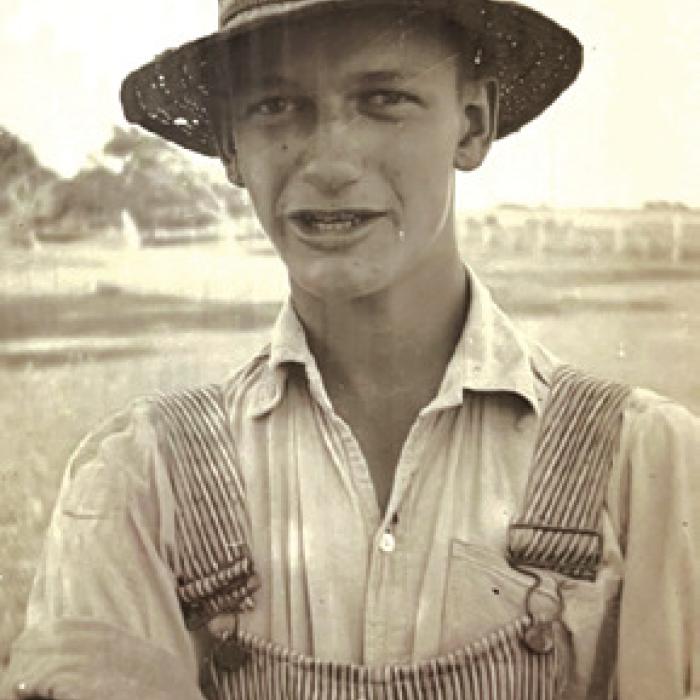
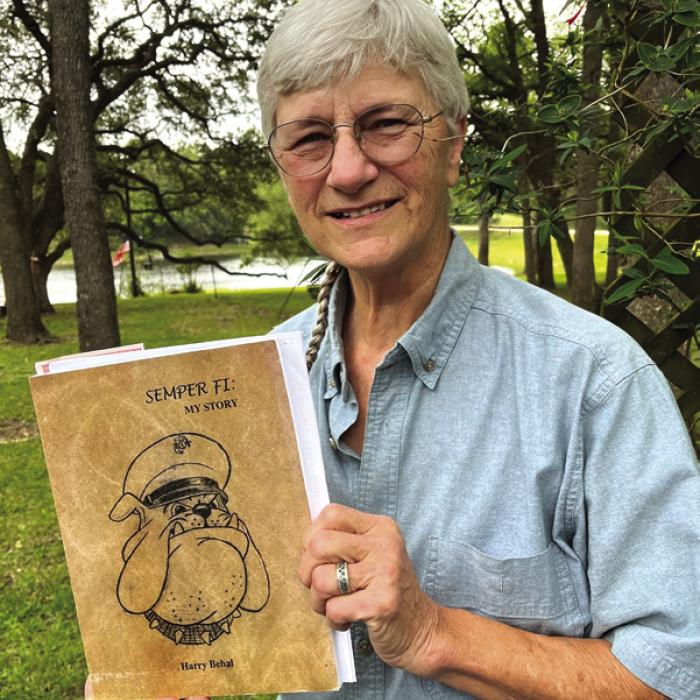

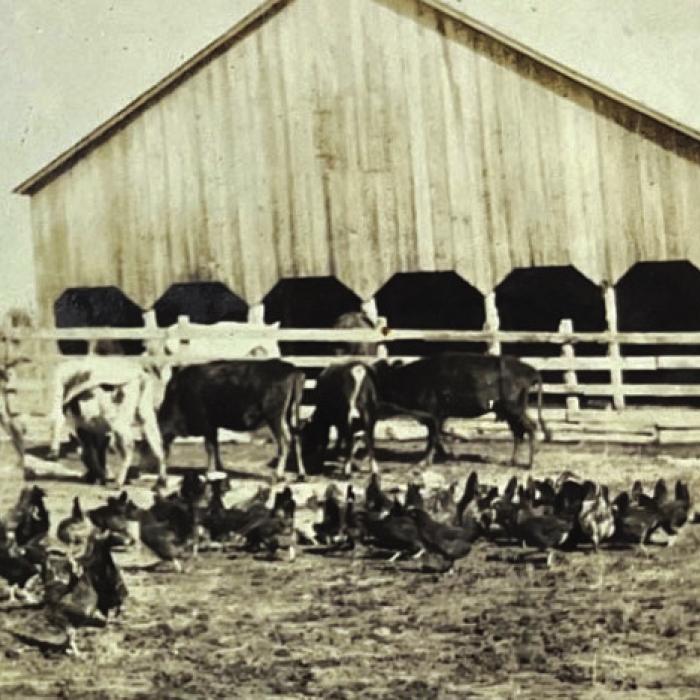
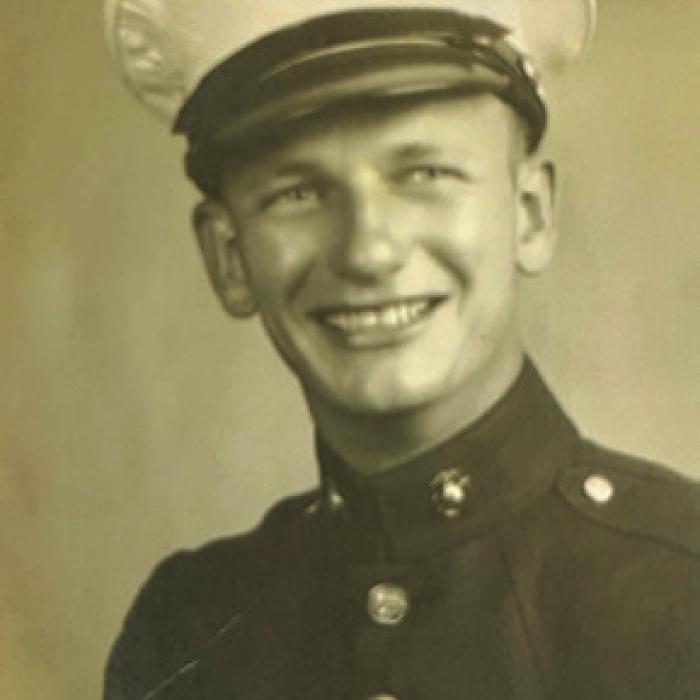
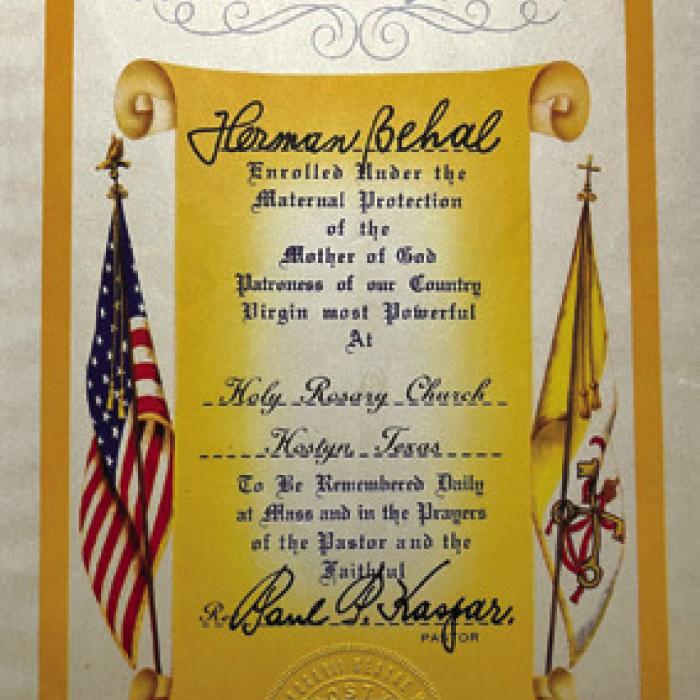
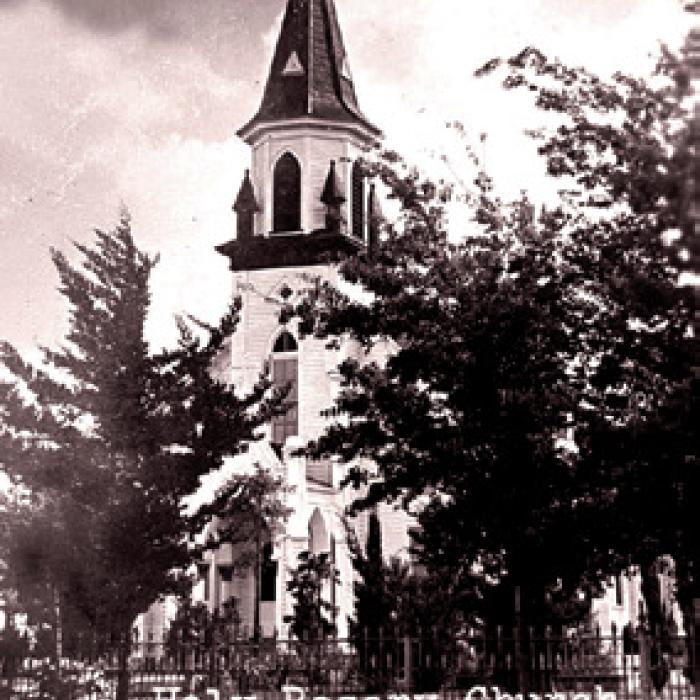
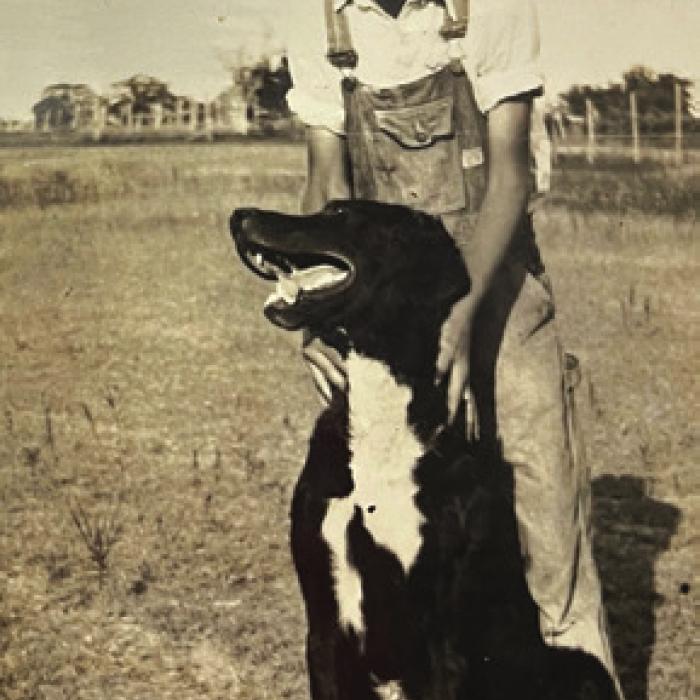
Harry, who learned to play the cornet by ear as a teen, loved music. At local dances, he’d gladly take the place of a musician who was taking a break. He hoped to join the U.S. Marine Band but failed the sight reading test. Instead, he was assigned to field music – playing bugle calls such as reveille, a very small part of his service but one that gave him pleasure. Mary Behal of La Grange treasures the copy of her dad’s autobiography. When Harry Behal finally decided to share his memories in 2005, he described his life as a U.S. Marine during World War II with clarity and wit. Harry Behal, who grew up on the family farm on FM 609 near the Cedar community, helped his father build a barn that’s still standing 80-plus years later. Corporal Harry Joseph Behal’s three brothers were in uniform during World War II. Lewis and Jimmy were in the Army, while Robert, who was too old for active duty, joined the Texas Militia (home guard). Harry recalled his mother’s pride in the little banner she hung in the window at home in the Cedar community. Its three blue stars represented the service of her three boys on active duty. The Behal family were members of Holy Rosary Church at Hostyn where Harry was an altar boy. He didn’t mind serving during funerals because it was customary for the families of the deceased to give the altar boys 25¢ or 50¢ each for their assistance. That was a small fortune for a farm boy who saw very little cash. When Harry entered the Marines, his name was entered on the church’s roll of honor and he was remembered daily at Mass and in prayers. Harry’s grandfather, Simeon Behal, a native of Moravia, is buried in the Hostyn cemetery. Harry was a typical Fayette County country boy of the 1930s. He helped with farm chores, and loved the outdoors and animals. He walked to school at Hostyn and rarely missed church there on Sundays.
Harry Behal’s memories of his life-altering decision to enlist in the Marine Corps during World War II
A Occasional Feature by ELAINE THOMAS
One day in 1941, Harry Behal got off work at his $18-a-week job at the Flatonia Motor Company in Flatonia, Texas, and stopped by the local cafe for a cold longneck beer. He idly picked up a Marine Corps recruiting brochure lying on a table and read it, even though the attitude of most Americans at the time was to let Europe fights its own wars.
Harry set the promotional piece back down and didn’t think anything more about it for a while. But months later, following the bombing of Pearl Harbor on Dec. 7, 1941, in Fayette County and across the country, patriotism began to bloom in earnest. The war was all people talked about.
In February 1942, when three of Harry’s coworkers were drafted into the U.S. Army, a big by-invitation-only going-away party was hastily planned. (The by-invitationonly stipulation was necessary because some of the attendees were school teachers, and in those days, it wouldn’t have looked good for them to be seen living it up in public.)
Held at a local dance hall on a Saturday night, the partygoers shared good food and lots of beer while a Nickelodeon played dance music. Harry brought a pint of Four Roses (Kentucky Straight Bourbon Whiskey) to the party, declaring he didn’t plan to take any of the hooch back home at the end of the evening.
Harry wasn’t the only one who partied hard that night. He and his buddies talked and talked and talked, comparing branches of the service. Harry could hold his own in the loud conversation because he knew something about the Army. His older brother, Louis, who had enlisted in 1935 because civilian jobs were so difficult to find during the Great Depression, had shared glimpses of his enlisted life with his family.
A coworker of Harry’s had a friend in the Navy and another guy knew a little about the Army Air Corps.
With liquid inspiration and patriotism firing his enthusiasm, Harry recalled some particulars from the brochure he’d read about the Marines. He had been impressed that when the brochure was printed in 1938, the Marines Corps was the only branch of the U.S. Armed Forces that could go into any country in the world without a declaration of war.
The U.S. had embassies worldwide and many had Marine guard detachments in them. Harry also found it fascinating that all major warships, battleships, heavy cruisers and aircraft carriers had Marine detachments onboard. He marveled that the Marine Corps was so small and lean before World War II with only 17,000 officers and men.
Right then and there, Harry Behal talked himself into it. He announced in no uncertain terms that he was joining the U.S. Marine Corps. After all, he was 21, footloose and fancy- free and his country needed him. Why wait to be drafted?
The world-class hangover he was nursing in the morning didn’t stop him from catching a ride to his family’s farm in the Cedar community. Mrs. Woody, the office manager at Flatonia Motor Company where Harry worked, and her husband always invited the young man along because she and her husband knew he didn’t own a car. It was not an inconvenience since Mrs. Woody’s family, the Hoffmans, lived near Harry’s folks.
Harry was still slightly hungover when he informed his parents that he had decided to join the Marines. His mother and father, Frank and Louisa Rainosek Behal, took his big announcement in stride. It went unspoken that Harry would likely have qualified for a deferment from military service had he come home to work on the family farm. After all, his mother and dad, who were in their sixties, were still managing the 100 acres, plus caring for the dairy cattle and a huge flock of poultry. It wasn’t easy at their age.
When Harry returned to work on Monday, he informed his employer, Frank L. Wotipka, of his decision even though his pre-employment agreement specified he would give two weeks’ notice should he want to quit. His boss, who was a World War I veteran, accepted Harry’s decision and applauded the young man’s patriotism.
The post office in La Grange was Harry’s first stop because there was always an Army recruiting poster out front, and sometimes recruiters were there in person. Since no one seemed to know anything about how to sign up for the Marines, Harry took a postal worker’s advice and hopped on a bus to Austin. The Greyhound on that route was not full-grown but a smaller, multi-passenger vehicle resembling those seen in funeral processions.
At the Austin post office, an Army recruiter rubbed Harry the wrong way when he scoffed at the youth’s determination to join the Marines. Undeterred, Harry took the advice of an older gentleman who told him there was no Marine recruiter in Austin. He’d have to go to San Antonio.
So that’s what Harry did. His bus arrived in San Antonio late in the afternoon, so he checked into a cheap hotel near the depot that charged $1.25 to $1.50 per night. Harry carried no luggage since he had expected to be back in La Grange that night. The next morning after he’d eaten breakfast in a greasy spoon and gotten a shave in a nearby barbershop, Harry had yet another unpleasant encounter. This time a Navy recruiter tried to talk the fresh-faced country boy into joining his branch of the service.
Wandering back by the barbershop where he’d gotten his shave a little earlier, Harry got into a conversation with the barber. He quickly solved Harry’s problem, sending him off in the correct direction. The U.S. Marine Corps Recruiting station was in the Bedell Building two blocks away.
Hot dog! Harry happily told the recruiter he was joining the Marines to see some action, an acceptable patriotic sentiment after the Pearl Harbor attack. The physical examination went fine until Harry tried to read the eye chart. He flunked and left San Antonio a very dejected young man. However, he didn’t give up and went back to retake the test a few weeks later. Harry flunked again but was told he could try once more. By this time, Harry had memorized the eye chart and passed the third time with flying colors, so to speak.
Even though he could barely discern the color yellow, Harry even got a passing grade on the color blindness test. He was in! He went back to the farm in Fayette County to await his orders.
A penny postcard arrived in the mailbox informing Harry that he was to report for induction at 0800 hours, Mon., May 18, 1942, at the same location where he had signed up.
On Sunday evening, he shook hands with his papa and gave his mama a little hug and a kiss on the cheek, the customary expressions of warm affection in his family. Then Harry got a ride to San Antonio with his brother Jimmy and his family, who had been visiting at the farm that day.
At the appointed time and day, Harry was sworn into the U.S. Naval Service as a regular, meaning he had committed to four years. Harry was very proud that he was a United States Marine. He had a lot to learn and learn he did.
Harry went on to serve in the Pacific Theater for three years. His tour of duty took him to the islands of New Caledonia, Guadalcanal, Guam, Okinawa and Japan. He received a letter of commendation for his performance on the front lines as an artillery forward observer during the battle for Okinawa Shima with infantry regiments of the Sixth Marine Division. He was a member of the Tokyo Bay Occupation Force. His artillery battalion and the Fourth Marine Regiment were the first aggressors to occupy Japan in its 3,000-year history.
All his life, Harry took pride in being a Marine. In his book, he wrote, “United States Marine. To those who do not know what that title means it has little value. But to its possessor, that title has a value beyond price. The title is not freely granted. It must be earned.”
Harry’s Daughter
Also Has Memories
Mary Behal of La Grange recalls the conversation she attempted to start with her father when studying World War II in her high school history class. Although he hadn’t talked about World War II in the past, Mary thought her dad would surely tell her what it was really like when she pressed him for answers.
“Dad got real quiet and finally told me, ‘You know, I could tell you a bunch of stuff, but you wouldn’t understand, so just go by what your history books say,’” Mary says. “Dad didn’t start loosening up and sharing his memories until after he started attending Marine reunions.”
Late in life, when he finally resolved to share his World War II memories, Harry wrote a book entitled SEMPER FI: MY STORY – Harry Behal. (The Fayette County Heritage Museum and Archives has a copy on file.)
In the carefully crafted narrative of almost 170 pages that includes photos, Harry wrote he was recollecting his experiences so his descendants, those living and yet to be born, and those interested in a young Marine’s life, could at least begin to understand what he had experienced in World War II. He also stated that he wanted to put his sea stories together to show the stupidity of war.
Mary’s copy of the book in which Harry peeled back layer upon layer of his past is beginning to fall apart.
“I can get it rebound,” Mary says as she flips through the pages. While the book’s spine shows wear and tear, Harry Behal’s recollections will forever remain ‘spit and polished’ just like the veteran who wrote them.
“My dad was a very humble man,” she adds. “He never wanted to bring attention to himself. In his book, he mostly talks about his buddies.”
As for Mary, she never forgets to wear a poppy on Memorial Day in honor of her father and all those who fought for their country’s freedom.