


Fall is Tree Planting Time
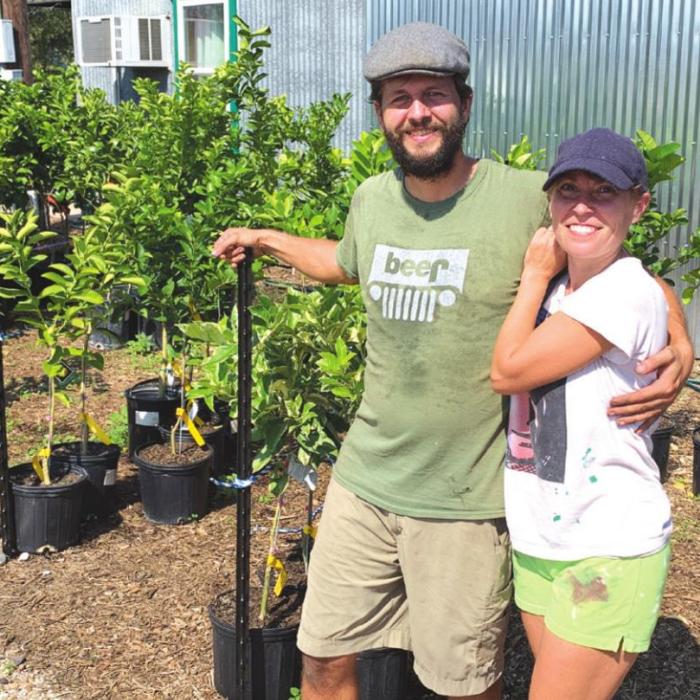

It’s tree planting time, so my wife Janessa and I took a trip to some local nurseries this week to buy some trees.
I highly recommend purchasing trees from local nurseries and not big box stores. The people working at big box stores likely have little expertise planting trees or knowledge about which varieties grow best in your area.
Friday after work, I stopped by Tim Patrick’s place on Main Street in La Grange across from Care Inn. Patrick sells a variety of Texas native trees and a few fruit trees. I was in the market for fruit trees, so I bought a Santa Rosa plum tree from him. From what I understand, Santa Rosa and Methley are the two varieties of plum that grow best here.
Patrick also had a variety of peach and apple trees. Tim’s specialty is Texas natives, however. He had some Montezuma cypress trees for sale and several varieties of oak trees. He also offers some unique native flowering trees.
Saturday, Janessa and I headed south to Flatonia. A friend of mine from Schulenburg suggested we visit Paul’s Plants in Flatonia. Paul Lucas and his wife Veronica recently moved from the Dallas area and established a tree nursery in Flatonia at 204 N. Faires Street. They offer a great selection of citrus trees.
I’m attempting to plant some citrus in the ground this year. Citrus cannot handle cold weather. In Texas, citrus really only grows well in the Rio Grande Valley. People in Houston can get away with growing citrus in the ground as well. Elsewhere, Fayette County included, it’s much safer to grow citrus in pots so you can move them to a protected location in the winter.
There are two varieties of citrus that can take a little cold weather: satsuma oranges and Meyer lemon trees. Paul’s Plants in Flatonia sells both. Paul cautioned me, however, that planting any citrus in the ground in central Texas is always a risk. Some folks might remember the winter of 1983. I don’t, because I was only a year old then, but my grandmother has a picture of her house in Schulenburg from that winter with a real snowman in the front yard. That was the same year when half of the citrus trees in South Texas died from cold weather, almost ruining the State’s citrus industry. Just keep that in mind if you decide to roll the dice like me.
Most citrus trees are grafted onto rootstock of a different species to make them hardier. Many citrus are grafted onto dwarfing rootstock so that the trees grow into a smaller, more manageable size. It’s probably a good idea to select trees with dwarfing rootstocks even if you want to plant them in the ground, so that its easier to give them a little protection in the winter with blankets or a small greenhouse-like structure. I bought two satsuma orange trees and one Meyer lemon tree. My research indicates these trees should get no taller than about 10 feet at full maturity. I also bought a variety of pear tree called “Pineapple” from Paul. He said the fruits are sweet, semisoft with a hint of pineapple flavor. The variety is also resistant to fire blight, a pesky disease that affects many pear trees.
Paul seems to care a lot for his customers. I told him I work for the newspaper, but I didn’t leave him any contact information. He must have taken the trouble to look me up online and found my email address. When I got home and checked my email, I found that he sent me a few tips about tree planting that he forgot to tell me at the nursery, which I’ve included at the end.
From Flatonia, we traveled to The Herb Cottage, a magical little country nursery near Moravia. Cindy Meredith has been running the place for many years. She sells a huge variety of medicinal and culinary herbs. She also has an interesting collection of cacti and succulents.
The sweet aroma of almond verbena hits you as soon as you get out of the vehicle at her place. A majestic 20-year-old specimen stands nearly as tall as her house, covered in white flowers and abuzz with bees and butterflies. We immediately bought three little pots of almond verbena to plant around our house. We also bought some bay laurel trees from her (at only $5 a piece). Bay laurel is what the herb bay leaf comes from. This Mediterranean plant grows very well in Texas, from what I understand. I plan to use the bay laurel and almond verbena as part of a multispecies hedge. Both species are evergreen and get about the same size.
Fall is a great time to plant thyme, lavender, rosemary and other finicky perennial herbs that don’t like our Texas heat and humidity. Cooler weather in fall allows them to develop better roots than when you plant them in the spring. We also bought a pot of patchouli and a pot of spilanthes, also known as the toothache plant.
I’ve heard of spilanthes before but never tried it. During our visit, Meredith gave Janessa and I each a leaf to chew on. Wow - that’s all I can really say to describe it. The herb has a flavor that I can’t quite pin down. More importantly, after a few seconds of chewing, a strange numbness set into my mouth, like getting a shot of Novocaine from the dentist. It lasted about 30 minutes for me. Janessa said her mouth didn’t start feeling normal again for a few hours. The plant grows a pretty flower that looks like a little red and yellow-fringed gum drop.
Tree Tips from Paul
Here are some tips for planting container trees, especially citrus trees, from Paul Lucas:
“All container trees you plant should ultimately be at a depth so the soil line of the container it was grown in will be even with the soil line of the ground it is planted into. This ensures the most similar environment for the tree which it has already grown and accustomed itself to. Additionally, this ensures any soil pest resistance inherent in the rootstock is not circumvented by soil piling up past the graft union and touching the normally more sensitive scion/fruit stock.
“Mulching is highly encouraged, but specifically for citrus trees, you should leave a mulchfree perimeter of a foot or two around the base. I have read this recommendation from several sources online, and I was skeptical myself, but I have had at least one customer attribute the death of their citrus tree to mulching right up to the base.”