

David Koether is One Happy Knapper


Creating Arrowheads gives this Fayette County Resident Satisfaction and a Deeper Appreciation for our Country’s Aboriginal History
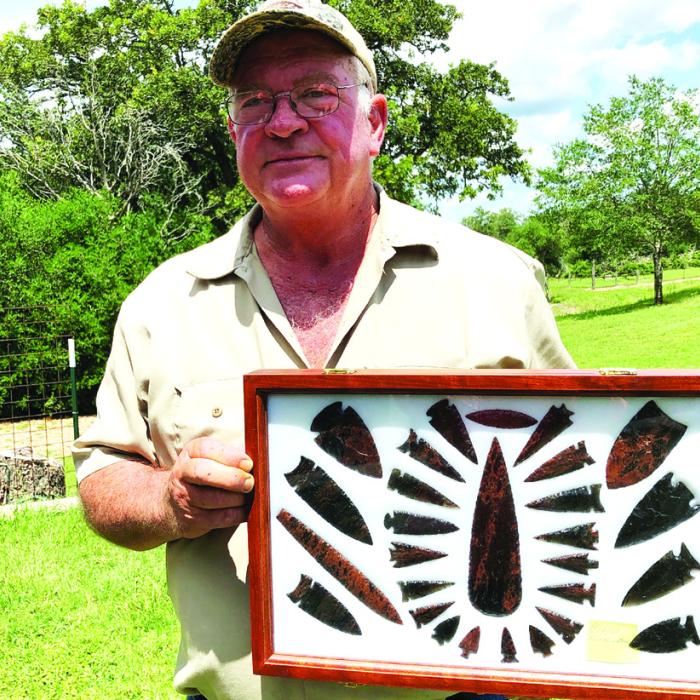
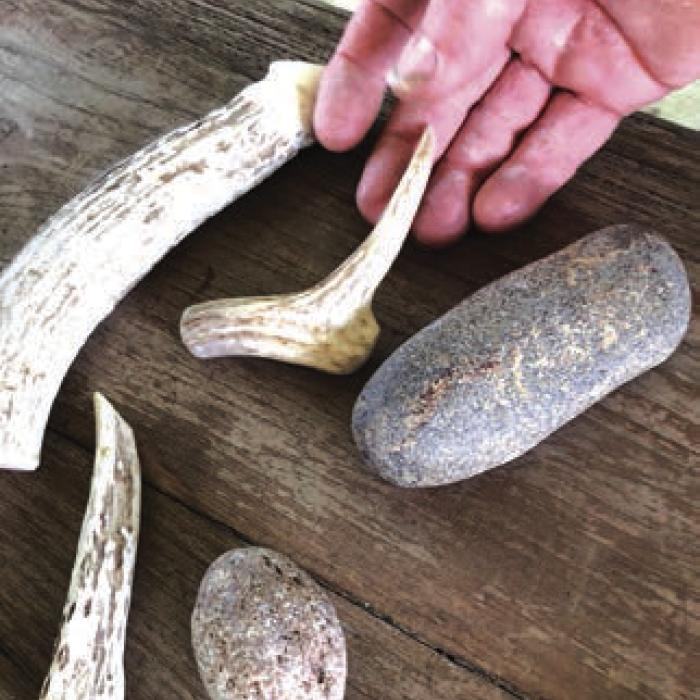
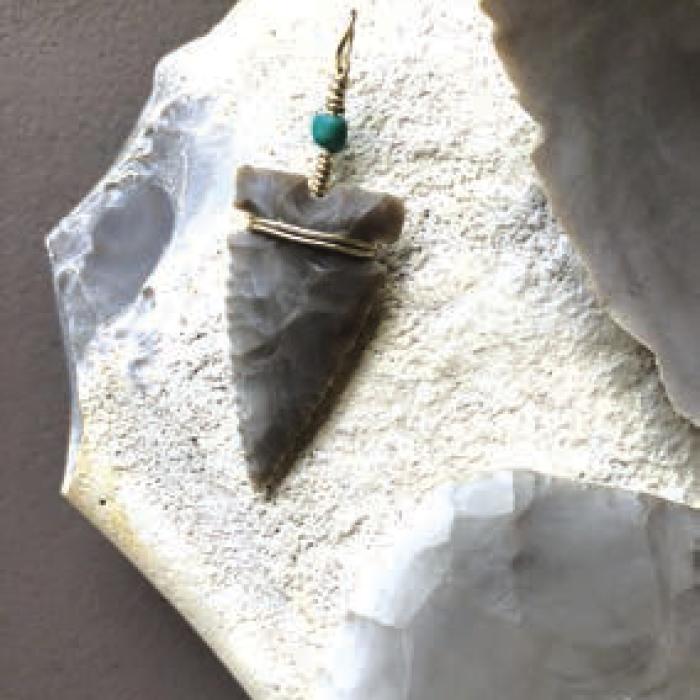
David Koether shapes small pieces of solid rock to create arrowheads, which makes him a knapper. After finding a couple of arrowheads on land that he and his wife, Gesine, own northeast of La Grange, he had the urge to search for others. However, most property in Texas is privately owned and trespassing is prohibited by law.
“So I decided I’d make my own,” explains the retired oilfield industry machinist from Houston.
That’s how he became interested in knapping.
Gaining Knapping
Know-How
David started by watching how-to-knap YouTube videos in 2015. He picked up the cheapest and most readily available rock to practice the techniques demonstrated. But the stones on their driveway were bull rock and working with them was so frustrating that David almost quit before he really began.
“I didn’t know I was knapping the hardest rock known to man until I watched a You-Tube video that mentioned that not all rock is created equal. I thought rock was rock. This guy explained that even a caveman could make arrowheads with the right rock. I was using the wrong rock.”
Abundant South Central Texas rocks are not the quality of those in the San Antonio-Austin area. David soon learned that rock from the Texas Hill Country, such as Georgetown or Pedernales, was highly desirable. In fact, David says Pedernales in Spanish means Flint River. Texas Hill Country rock he finds at specialty stores or online has made all the difference in his success.
“There is an arrowhead in every rock. Just remove all the rock except the arrowhead,” he says with a smile. When David pays attention to a rock’s secrets, surprises sometimes appear that take his knapping in unexpected direction.
David also experimented with knapping thick wine and beer bottle bottoms with surprisingly pleasing results. He also got many painful glass cuts in doing so. That’s the downside of the cheap, readily available product.
Taking His Own Sweet Time
When he started knapping, David would spend all day chipping away on one arrowhead until its lines were straight, its thickness pleasing and its edges sharp. Although he lost sight of one eye when he was a child, he manages the close-up, tedious work with no problem.
“Now, if the angels are with me and it’s going my way, it can take me anywhere from 30 minutes to a couple of hours. You have to listen and look at the rock, though. You don’t know what it’s going to be until it’s finished and you drop it in your pocket. Until then, it’s just another rock.”
David estimates it has taken him somewhere between three and five years to hone his skill. He doesn’t sell the arrowheads that he makes.
“This is not a hurry, hurry activity. Rushing would take the pleasure out of it,” he says. David is content to expand his stunning collection while also sharing some of his creations with family and friends.
“Ethically, every arrowhead that I make and give away should be signed or etched with my initials,” adds David, who has no interest in misrepresenting his creations.
“David is very self-critical,” says his wife, Gesine. “He’s always saying he can do better or find better rock.”
Disposing of the
Byproduct
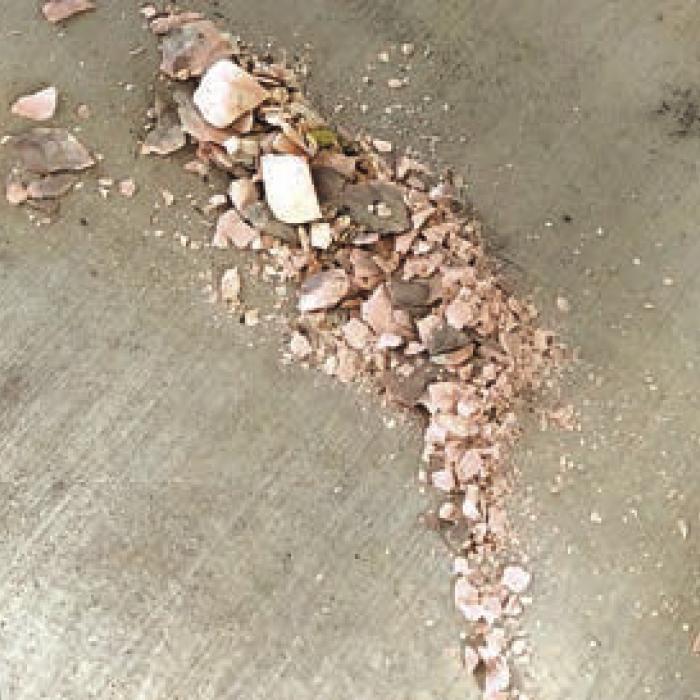
David is in awe of the Native Americans’ artifacts that demonstrate their skill in creating tools they used for hunting. That’s why he is careful not to dump the small, sharp byflakes from his knapping on the gravel road leading into their place. He wants to ensure that an arrowhead hunter in the distant future doesn’t get excited at the prospect of having found traces of an actual American Indian knapping site.
“I’ll put a penny or piece of metal on my pile that would quickly dispel that idea. If someone ever comes across it, they’ll know right away, it was just some 21st-century guy who liked knapping,” David explains.
Knapping also satisfies a fantasy David had as a youngster growing up in Melbourne, Florida.
“As a little boy, I wanted to be a pirate and find gold doubloons along the coast. That never happened and that desire sort of slipped my mind when I grew up. So now in retirement, I’m making treasures of a different kind.”
Knapping
Arrowheads
Is Rewarding
New finds of ancient arrowheads are still being made. Enthusiasts’ go-to information source is “Overstreet Indian Arrowheads Identification and Price Guide,” which is updated annually. While some arrowheads pictured in the book are worth a great deal of money, that’s not what intrigues David. His interest is in their history.
“Just the thought of finding an artifact that another human being made 10,000 or 15,000 years ago is exciting,” David says.
“The hide rotted away, the glue rotted away, the stick on the arrow rotted away, but you’re holding the stone in your hand. Think about that.”
Fayette County has several other knapping enthusiasts. David encourages those interested in knapping to visit sites such as www.flintknapper. com that lists upcoming shows referred to as knapins, plus background information on the modern art form.
Upcoming events are also listed on www.texascachemagazine. com. Be sure to remember the difference between shows featuring modern knapping creations and artifacts/antiquities.