


The Blurry Line of Historic Preservation
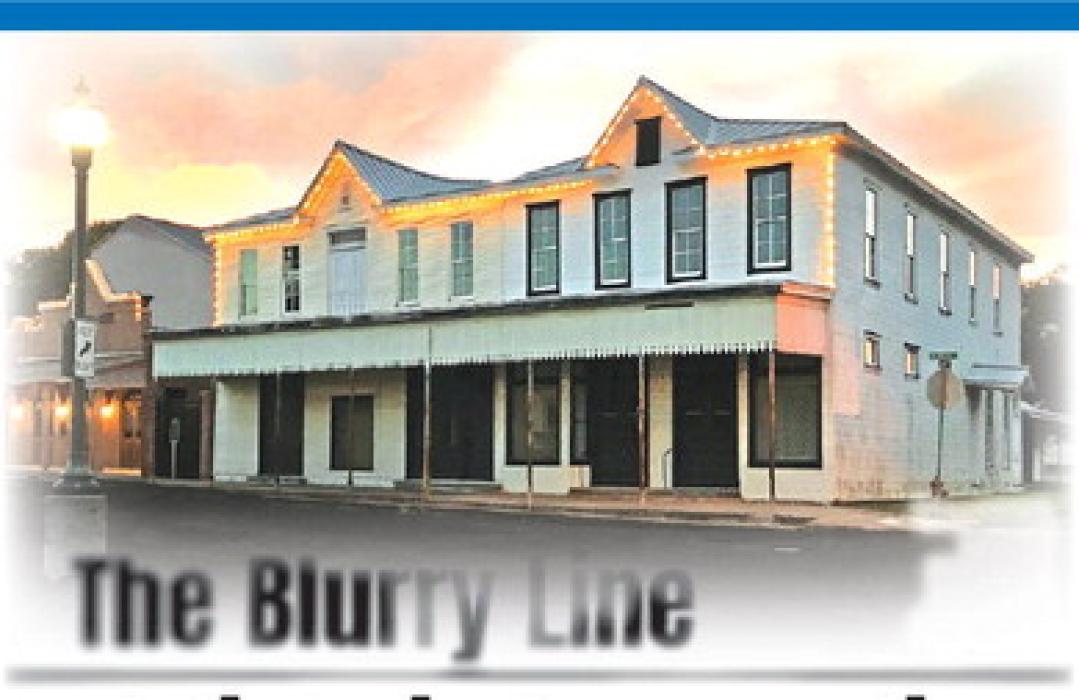
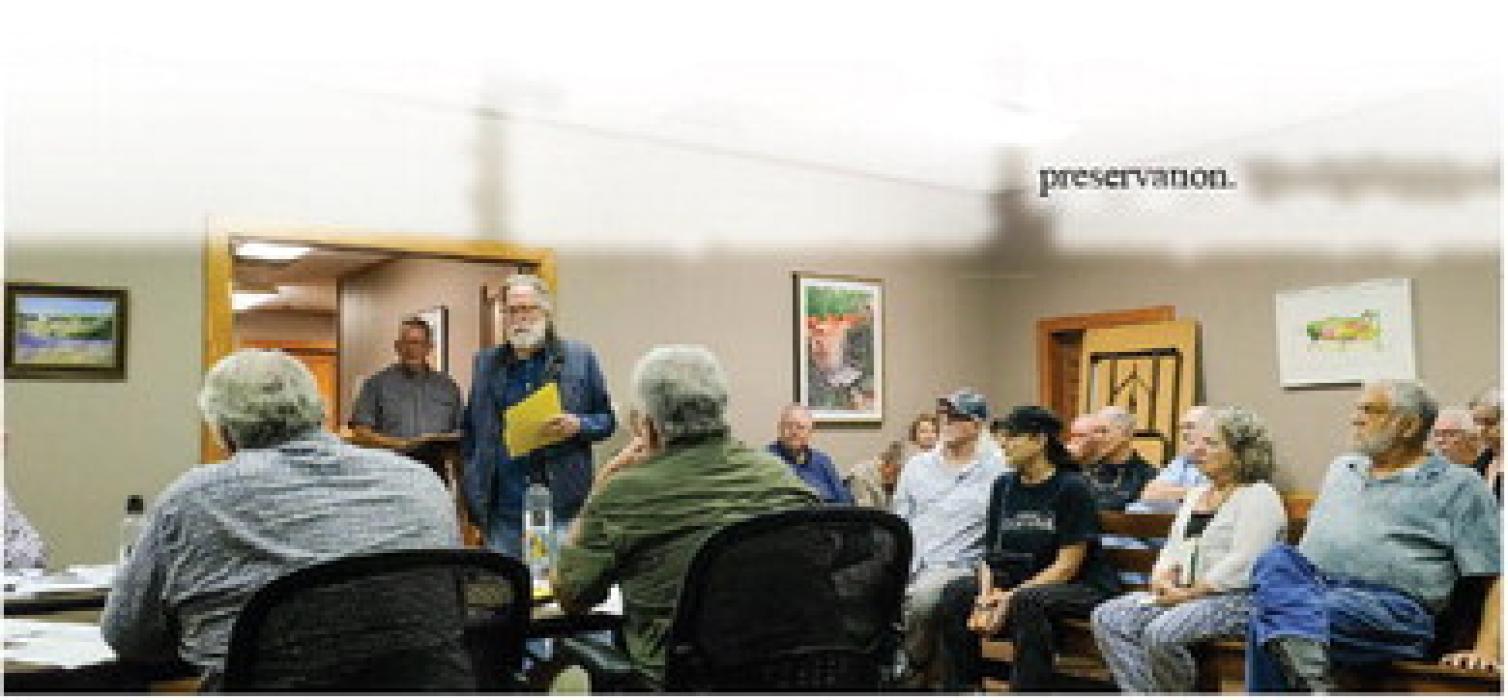
The Fayetteville City Council voted Monday night to approve the Fayetteville Community Center’s permit request to demolish and rebuild the old E.J. Knesek Building in the downtown historic district.
The Fayetteville Community Center organization formed in 2018 to bring a performing arts center to the town. They later purchased the Knesek Building with the goal of restoring it as a community events center with a new theater to be built behind the building. The 4-0 vote came after about two hours of contentious discussion. Fayetteville’s Historic Preservation Board voted 3-2 on Oct. 26 to recommend against the Community Center’s plans. At the beginning of the meeting, Mayor Mike Stroup announced his wish to remove the items concerning the Knesek Building from the agenda and to return the request to the Historic Preservation Board.
“I didn’t feel like we had all the information,” Stroup said after the meeting. “Did the Community Center do all the steps that’s required in the ordinance? You need a report from a historical engineer. If you can’t preserve it, you have to try to sell it to someone else who can. They never gave us a report about any of that stuff.”
Members of the Council, however, wished to hear the request from the Fayetteville Community Center. The discussion began with a report from the Historic Preservation Board about their Oct. 26 decision.
“Nine times out of ten, we’re approving colors for buildings and signs,” said Lisa Simpson, president of the Fayetteville Historic Preservation Board. “The importance of this is different.”
Simpson asked the Council to delay their decision and require the Community Center to obtain an opinion from a historic preservation engineer, as required by the town’s historic preservation ordinance. In addition, she said, the ordinance states that if the owners wish to demolish a building, they must first try to sell it to someone willing to attempt preservation.
“The ordinance was set up to preserve these buildings,” she said. “That’s an iconic, historic cornerstone building in the historic district. Before it’s demolished, there are several more steps that I think need to be addressed.”
Preservation Board Member Pat Johnson read letters from Carolyn Heinsohn of the Fayette County Historic Commission and Greg Smith of the Texas Historical Commission, who argued for the building’s preservation without demolition. The Knesek Building once housed the “Vestnik” Czech newspaper printed by the SPJST, then later the Fayetteville Fact newspaper. At various periods the building housed a barber shop, furniture store and the Buckhorn Saloon. The upstairs had also served as a dancefloor. In more recent years, the downstairs housed a funeral home and hardware store. Julie Stroup spoke in favor of preserving the building and memories that have been made there.
“People in this room went to funerals there,” she said. “Maybe they got a haircut at the barbershop with their grandpa. The fact that there will be a new building that looks like this building is wonderful. But it’s not going to be the same building.”
Suzy Seriff, a Fayetteville resident and Professor of Anthropology at University of Texas, also spoke in favor of preservation.
“Part of the cultural heritage of this town are the authentic buildings and cultural heritage inside those buildings,” Seriff said. “It just can’t be replaced with something new and still be the same thing. It’s what we call in the business a ‘Disney-fication’ of the real, authentic structure.”
Representatives from the Fayetteville Community Foundation said they have exhausted all reasonable efforts to preserve the structure as it stands today.
“From the very beginning, we knew the facade was important and something that needed to be saved,” said Jerry Herring, president of the Fayetteville Community Center.
Herring said the building’s foundation had failed and needed to be completely rebuilt. In order to do so, the building had to be lifted several feet in the air so that workers could excavate soil and pour a new concrete foundation. But he said no contractors were willing to guarantee against the building’s collapse if they tried to raise it.
“We worked on this for about nine months actively trying to solve the foundation issues,” Herring said. “Finally, we hit a wall and thought the best compromise would be to dismantle the building, put in a new foundation, and reuse what we could.
“Our plan is, if you drove by in two or three years from now, you would think they just painted the building,” he added. “We’d also add back the porch which was historically there but had been taken off at some point.”
At their meeting last month, the Historic Preservation Board recommended that the Community Center hire Patrick Sparks, a historic preservation engineer. Sparks was unable to visit the site in-person, but Herring said Sparks reviewed the plans for the building, photographs and soil reports.
“Patrick told us the building could absolutely be saved – any engineer will tell you it can be saved – if you have unlimited funds,” Herring said. “He’s talking $500,000 and up just to get there. We don’t have donor money to spend on it. It’s impractical, and in our mind, it’s unreasonable.”
Herring played a recording of a phone conversation with Sparks about the condition of the building.
“By the time you re-clad it, strengthen it and replace some of the framing, you will have very little of the original building left,” Sparks said. “I’m not seeing a really compelling argument to keep it as it is.”
“You don’t want your grandkids, you don’t want your friends, you don’t want anyone you know in that building if you leave it as it is,” said Fayetteville businessman and Community Center board member Fred Roberts.
“Why aren’t we working on resurrecting that building for use?” Roberts said. “Instead, we’re talking about, ‘If you can’t do it then why don’t you sell it.’ Number one, you can’t sell it. If you sell it, you have to declare what’s wrong with that building.”
Attorney David Ewers, who also serves on the Community Center board, spoke about flaws in the historical preservation ordinance. The ordinance requires property owners to properly maintain historic structures, but Ewers said Knesek Building’s previous owner allowed the building to decay without any intervention from the City.
“Anytime the government tries to have any influence over private property rights, there’s got to be a compelling reason,” Ewers said. “The compelling reasons are health, safety and welfare.”
Councilman Neal Doty said the Community Center should have worked more closely with the Historic Preservation Board on the project.
“I agree, Mr. Ewers, that too much government sucks,” Doty said. ”But in a community like this, we really should be able to reach some kind of compromise position so they feel like they’re involved.”
Doty questioned why the Community Center did not present Sparks’ report to the Historical Preservation Board before the meeting. He called the Community Center’s latest plan to demolish the building as a “Hail Mary.”
“There’s been a lot of stress on the rules,” Roberts said, addressing the members of the Historical Preservation Board. “How many years have you served on the historic committee and how many years are you allowed to serve?”
“We’re not bringing this up now,” said Johnson. “We are serving our limits.”
“I think you’ve served past your limits,” Roberts said.
“If you want to be on the board, you can be on the board,” said Simpson. “All of our limits have expired.”
Stroup called for an end to that line of discussion. At that point, Johnson walked out of the room. Herring said his group received quotes ranging between $1.9 to $3.7 million to preserve the existing building.
“We have the money to do what we’re proposing,” Herring said. “Our compromise is to dismantle what’s there and build it back the same.”
Councilwoman Kathy Griffith moved to table the items for 30 days. Herring said his organization would prefer a yes or no decision that night.
“We’re in a situation where we have a major fundraiser in February,” Herring said. “If we haven’t done anything, it’s going to kill the momentum of this project. If you put us into a delay mode, we’re probably going to have to cancel that and re-think whether we move forward with this.”
Councilman Cade Burks moved to approve the demolition permit. Counclman Kelly Brooks seconded the motion. It passed with Burks, Brooks, Griffith and Councilwoman Pam Fritsch Reynolds voting in favor. Doty abstained from voting. It passed 4-0.
After the meeting, Mayor Stroup told the Record that the episode highlighted some problems with the town’s Historic Preservation Ordinance.
“I think we found some weakness in the ordinance,” Stroup said. “We’re going to take a look at the ordinance and get our city attorney to look at it. If we want to be a historic town, we can’t keep losing buildings. But on the other hand, people have to take better care of these buildings. Before you tear it down, we need to have an appeal, I think. It was a contentious meeting and people feel very passionate. Our local historians and the people from the Community Center are both very passionate. But we made a decision and now we’re going down that road.”